It’s a question that comes up sooner or later for almost anyone who hikes, camps, road-trips, or keeps emergency gear in the car: is it smarter to buy a pre-made kit, or build a survival kit piece by piece?
Spend a few minutes in an outdoor store or scroll through Amazon, and it’s easy to see the appeal. Compact all-in-one kits promise a lot in a small package: a multitool, knife, fire starter, whistle, flashlight, compass, paracord, and a handful of other items tucked into a neat case. For a new camper, that can feel like an easy win. 🏕️
The catch is that convenience and capability are not always the same thing. Some pre-made kits are genuinely useful as backup gear or beginner-friendly starting points. Others look more impressive than they actually are once they’re opened, tested, and compared to better standalone gear.
That’s where a little buyer guidance helps. The goal isn’t to dismiss pre-made kits or pretend every person needs a custom-built backcountry setup. It’s to understand what these kits actually do well, where they fall short, and how to tell whether one makes sense for your style of outdoor use.
In this guide, the focus is on the all-in-one survival kit category as a whole, using a popular example to show what’s typically included, what matters most, and how to turn a basic kit into something far more dependable.
Quick Take: The Verdict on Pre-Made Survival Kits
For readers who want the short version, pre-made survival kits are usually worth it when they’re used with the right expectations.
They make the most sense for:
- Beginners: A pre-made kit gives new hikers and campers a simple way to get familiar with essential survival gear without having to research every single item from scratch.
- Backup Use: These kits work well in a glove box, trunk organizer, daypack, tackle box, or van drawer as secondary emergency gear.
- A Base to Upgrade: Many kits are best viewed as a starter platform. The case and the basic hardware are already there, which makes it easy to swap in better tools over time.
- Gift Giving: For a newer outdoor person, a compact emergency kit can be a thoughtful, practical gift that feels useful right away.
Where they tend to disappoint is in component quality. Budget-friendly kits often include entry-level tools that are fine for light use, but not always the kind of gear an experienced backpacker, hunter, overlander, or regular backcountry traveler would choose on purpose.
So yes, they can absolutely be worth buying. But the smartest way to think about them is this: a pre-made survival kit is rarely the final answer. It’s usually the starting point. 🔥
What’s Inside? A Look at a Typical All-in-One Survival Kit
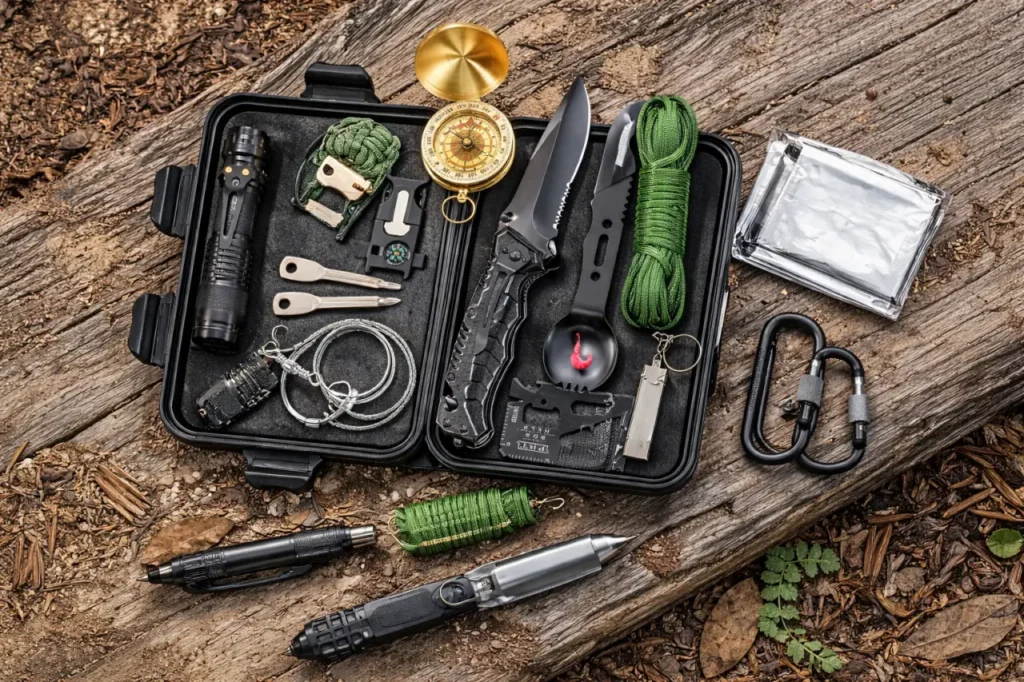
To see how these kits are put together, it helps to look at a representative example. A common option in this category is the 30-in-1 Emergency Survival Gear Kit, a compact hard-shell kit sold on Amazon with a wide mix of tools and accessories.
The exact pieces vary from brand to brand, but most kits in this category are built around the same basic idea: cover as many emergency needs as possible in a small, affordable package.
That usually means a mix of cutting tools, fire-starting tools, simple navigation aids, signaling gear, and a few shelter or warmth items. On paper, that sounds solid. In practice, the usefulness depends on the quality of the pieces and how realistically the kit matches the situations it’s meant for.
Tools & Repair
This is usually the biggest section of the kit, and for good reason. In a real roadside or trail-side problem, small repair tools can matter just as much as “survival” gear.
- Multitool Pliers: Usually the most useful item in the case. A compact multitool can handle small repairs, pinch hot cookware, trim cordage, tighten hardware, or help with improvised fixes around camp.
- Folding Knife: Often a small lock-blade folder for basic cutting tasks like opening packaging, trimming cord, shaving tinder, or handling food prep in a pinch.
- Wire Saw: A flexible pocket saw meant for cutting branches. These are common in budget kits, though performance varies a lot.
- “Tactical” Pen: A metal pen with a hard tip, often marketed for glass breaking or emergency use.
- Flathead/Phillips Head Keychain Tool: A tiny screwdriver-style piece for minor adjustments.
Why it matters: Small repairs are part of real outdoor life. Tent zipper issues, loose stove screws, broken pack hardware, stubborn knots, and splintered kindling all show up more often than dramatic wilderness scenarios. A decent multitool earns its keep fast. 🛠️
That said, not every tool in this section is equally valuable. The multitool is usually the star. The wire saw and tactical pen are often more questionable. Those items may still have a place, but they tend to be the first things experienced users mentally downgrade.
Fire Starting
Fire-making gear is one of the main selling points in almost every all-in-one survival kit, and it makes sense. Fire supports warmth, morale, signaling, and in some settings, cooking.
- Ferrocerium Rod (“Ferro Rod”): A compact fire starter that throws hot sparks when scraped.
- Striker: Usually a small steel scraper paired with the ferro rod.
- Bellows: A telescoping metal tube used to blow air into a small flame or coal bed without having to crouch close to the fire.
Why it matters: A ferro rod is reliable, weather-resistant, and doesn’t depend on fuel. That makes it a strong backup tool, especially in a kit that may sit unused for months in a vehicle or pack.
The limitation is that a ferro rod is only as useful as the person using it. Creating sparks is easy. Turning those sparks into a real flame in damp, windy, cold conditions is another story. That’s why the best kits are the ones that eventually get supplemented with easy ignition sources and better tinder. 😊
Shelter & Warmth
A lot of buyers focus on tools first, but from a practical survival standpoint, warmth and weather protection matter just as much.
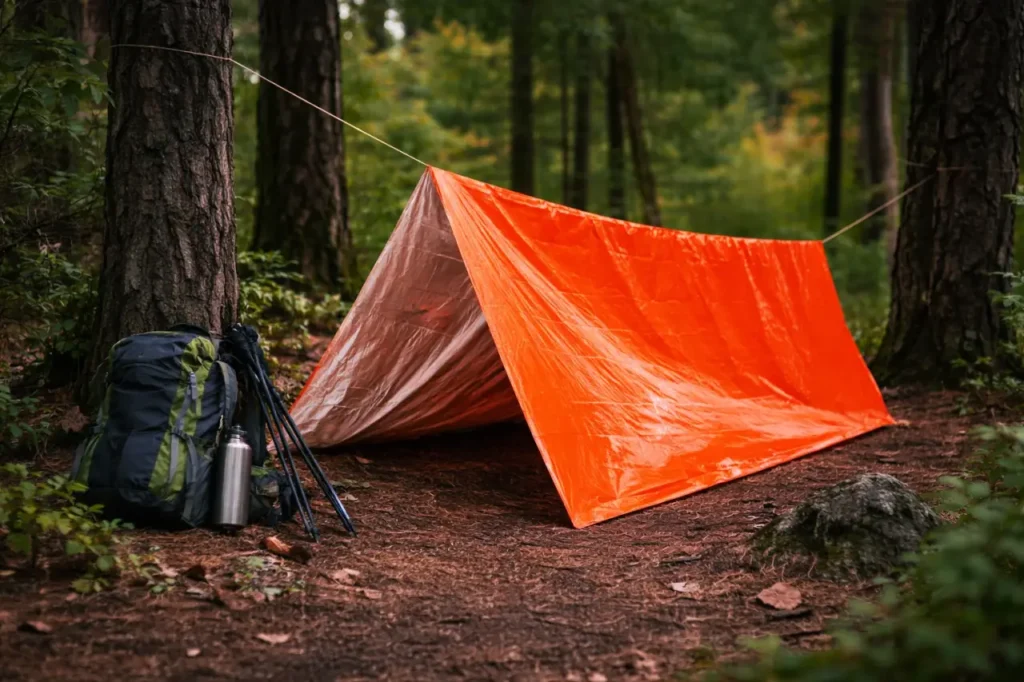
- Emergency Mylar Blanket: A lightweight reflective blanket meant to reduce heat loss and provide basic weather protection.
Why it matters: This is one of the least flashy items in the case, but often one of the most important. If a hike runs late, a car breaks down in winter, or rain and wind show up unexpectedly, a Mylar blanket can make a real difference.
It’s not cozy shelter. It’s noisy, thin, and limited. But for the space it takes up, it delivers excellent emergency value. In many kits, this is one of the items most worth keeping even if everything else eventually gets upgraded.
Navigation
Navigation pieces in budget kits are usually simple, and that simplicity is both their strength and their limitation.
- Button Compass: A very small compass used for general direction-finding. Sometimes it’s built into a bracelet, lanyard, or plastic attachment.
Why it matters: A basic compass is still better than guessing. If someone gets turned around on a side trail, in fog, or in the dark, even a simple direction reference can help stop bad decisions from getting worse.
The tradeoff is precision. A tiny button compass is not a substitute for a real baseplate compass, map skills, or GPS navigation. It’s a backup orientation tool, not a serious route-finding system.
Signaling & Light
This category matters more than a lot of people expect. In many emergencies, staying visible and easy to locate is more useful than trying to “survive” in a dramatic sense.
- Flashlight: Usually a small LED light with modest output.
- Emergency Whistle: A lightweight, high-decibel signaling tool.
- Signal Mirror: Sometimes included, sometimes not, but very useful when present.
Why it matters: A whistle is one of the best ounce-for-ounce safety tools in any survival kit. It travels farther than a human voice, uses less energy, and works whether someone is hurt, lost, or just trying to get attention fast.
The flashlight is also practical, but in most budget kits it’s one of the first items that ends up feeling underpowered. It may be fine for rummaging in a trunk or checking a dark trail junction, but it often won’t compare well to even a modest modern headlamp.
Cordage & Miscellaneous
These are the odd pieces that may not look dramatic in the case, but often end up being surprisingly useful.
- Paracord Bracelet: A wearable length of cord that can be unraveled when needed.
- Carabiners: Small utility clips for attaching gear or organizing items.
Why it matters: Cordage solves all kinds of problems. It can secure a tarp corner, lash broken gear, replace a shoelace, hang food away from camp critters, improvise a clothesline, or help stabilize a splint.
The key thing to remember is that these included accessories are usually meant for light-duty utility. The carabiners in these kits are generally not load-rated climbing gear, and the amount of paracord is useful but limited.
For readers who want a convenient place to start, this type of compact kit can still offer decent value.
| The All-in-One Survival Kit: A Quick Overview | |
|---|---|
| Product | 30-in-1 Emergency Survival Gear Kit |
| Best For | Beginners, car kits, backup emergency gear, gifts |
| What’s Inside | Multitool, knife, fire starter, emergency blanket, flashlight, whistle, compass, wire saw, paracord, and more. |
| Pros | Affordable, convenient, compact, good variety of basic tools. |
| Cons | Component quality is entry-level; lacks comprehensive first aid and water purification. |
| Price Tier | $ |
The Pros and Cons of All-in-One Survival Kits
A compact emergency kit can be genuinely useful, but only if the strengths and weaknesses are clear from the start.
The Pros: Why a Pre-Made Kit Might Be for You
- Convenience and Simplicity: This is the biggest reason these kits sell so well. There’s no need to compare ten multitools, five fire starters, and three different cases. The basics arrive in one package, already organized and ready to stash in a vehicle or pack.
- Affordability: Buying a multitool, knife, emergency blanket, whistle, compass, flashlight, and ferro rod separately can add up quickly. A pre-made survival kit usually costs much less than assembling even a modest DIY version from branded components.
- Low-Stress Entry Point: For beginners, a pre-made kit removes decision fatigue. Instead of wondering what’s essential and what’s overkill, there’s a clear starting list right in front of you. That can be especially helpful for someone building a first day-hiking kit or roadside emergency setup.
- Compact Organization: A hard-shell or zippered case keeps small pieces together, which matters more than it sounds. Loose whistles, batteries, and fire starters disappear fast in a trunk, duffel, or overstuffed pack. A single compact case is easy to grab and easy to check.
- Good Backup Value: A lot of emergency gear is there “just in case.” In that role, a pre-made kit makes a ton of sense. It doesn’t need to be perfect to be useful. It just needs to be available when something goes sideways. 🚙
The Cons: Where These Kits Fall Short
- Variable Component Quality: This is the biggest downside. Inexpensive kits almost always involve compromises. Blades may be soft, compasses may be less accurate, flashlights may be dim, and plastic pieces may feel less durable than better standalone gear.
- Questionable Filler Items: Some kits include pieces that look tactical or impressive but don’t add much real value. A wire saw might work, but awkwardly. A tactical pen may look tough, but be less useful than extra tinder, better batteries, or a stronger headlamp.
- No Personalization: A stock kit doesn’t know whether the user hikes in the desert, drives snowy backroads, camps with kids, needs medication, or wears contacts. That matters. Good emergency gear becomes much more useful when it reflects the actual person carrying it.
- Weak First-Aid Coverage: Many all-in-one kits include very little medical gear. Maybe a couple of bandages, maybe less. That is rarely enough for blisters, cuts, sprains, or common outdoor issues.
- Water Gaps: Water treatment is one of the most common omissions in budget kits. That’s a big one. For any setup meant to support real outdoor emergencies, the ability to make water safer to drink should be part of the system.
The honest middle ground is this: many pre-made kits are not bad. They’re just incomplete. Once that’s understood, they become much easier to use wisely.
How to Upgrade and Personalize Your Pre-Made Kit
The smartest use of a pre-made survival kit is to treat it like a framework, not a finished system.
The case is already organized. The basic categories are already covered. That saves time and money. Then the kit can be improved where it matters most, based on the way it’s actually going to be used.
Here are the best early upgrades:
- Add a Real First-Aid Kit: This should be near the top of the list. A useful first-aid setup should include wound care, blister care, medications, gauze, tape, and any personal medical needs. Even for short hikes, this matters more than a lot of novelty tools.
- Include Water Purification: A small squeeze filter and a few purification tablets dramatically improve the usefulness of the whole setup. Water is one of the biggest missing pieces in many pre-made kits, and fixing that gap makes the kit feel much more legitimate.
- Upgrade the Blade: The included knife may handle light chores, but a more dependable blade can make camp tasks, emergency cutting, and food prep easier and safer. This doesn’t need to be expensive. It just needs to be trustworthy.
- Swap the Flashlight for a Headlamp: A headlamp usually beats a tiny handheld flashlight in almost every practical outdoor situation. It frees both hands, works better while moving, and is far easier to use when dealing with camp chores or first aid after dark.
- Add More Cordage: A paracord bracelet is nice, but it’s not much. A real bundle of cord or bank line gives the kit far more shelter, repair, and camp-use flexibility.
- Improve Fire Starting: Keep the ferro rod as backup, but add a lighter and dependable tinder. In real-world conditions, that combination is faster, easier, and more realistic for most people.
- Carry a Better Compass: If navigation is genuinely part of the use case, a real baseplate compass is a worthwhile upgrade. A button compass still has value, but it’s not the tool most people would want to rely on when direction really matters.
- Personalize the Contents: This is where a generic kit becomes your kit. Add medications, allergy treatment, a snack bar, a list of emergency contacts, spare glasses if needed, hand warmers for cold regions, or anything else that fits the actual environment and use pattern.
That upgrade path is what makes these kits appealing. Instead of starting with an empty list, there’s already a foundation in place. Over time, weak links can be replaced until the whole thing becomes far more dependable. 🧭
Who Is a Pre-Made Survival Kit Best For?
Not every outdoor person needs one, but there are a few users these kits fit especially well.
- The Day Hiker: For shorter hikes on established trails, a compact emergency kit can be a practical backup layer. It doesn’t replace the Ten Essentials, but it can add useful redundancy in a small footprint.
- The Car Camper or Van-Lifer: This may be one of the best use cases. A pre-made kit tucked in a glove box, center console, cargo bin, or van drawer gives quick access to tools, warmth items, and signaling gear during roadside delays or weather surprises.
- The Casual Outdoor Enthusiast: Someone who camps a few weekends a year, spends time fishing, does occasional trail walks, or keeps emergency gear in the family SUV may get more value from a simple pre-made system than from building an elaborate custom kit.
- The Beginner Emergency Planner: For someone starting a go-bag, car emergency bin, or small preparedness setup at home, these kits can provide a useful hardware base without overcomplicating the first purchase.
On the other hand, there are people who should probably skip the budget-kit route or at least approach it differently.
A highly experienced backpacker will often prefer better, lighter, more specialized pieces. A winter traveler may need far more warmth-focused gear. Someone doing remote trips should care a lot more about navigation, water treatment, shelter reliability, and first aid than most pre-made kits provide.
That doesn’t make the kits useless. It just means the best buyer is usually someone who values convenience, compact backup coverage, and an easy starting point more than premium performance.
Final Verdict: A Smart Investment When Used Correctly
So, are all-in-one survival kits worth it?
Yes—when they’re treated as practical backup gear or a beginner-friendly starting point, not as a complete answer to every emergency.
That distinction matters. A pre-made kit is not a magic box. It won’t replace knowledge, judgment, route planning, weather awareness, or high-quality specialized gear for serious backcountry travel.
What it can do is make preparedness much more approachable.
A kit like the 30-in-1 Emergency Survival Gear Kit gives a lot of people something they otherwise wouldn’t have at all: a compact case with usable basics already assembled. For a trunk kit, a day-hike backup pouch, a beginner gift, or a foundation to improve over time, that’s real value.
The best approach is simple. Buy it with clear eyes. Open it. Learn what each tool does. Test the pieces that matter. Keep the useful items, replace the weak ones, and fill in the obvious gaps—especially first aid, water treatment, lighting, and personalization.
Used that way, a pre-made survival kit is not a gimmick. It’s a practical first layer. And for a lot of outdoor setups, that first layer is exactly what helps turn “maybe later” preparedness into something real. 😊
Frequently Asked Questions (FAQ)
Q: What is the single most important item in a survival kit?
A: There usually isn’t one single most important item, because the answer changes with the situation. On a cold, wet evening, shelter and warmth may matter most. If someone is lost, signaling and navigation may matter more. In many realistic outdoor emergencies, the most important combination is a way to stay warm, a way to call attention to your location, and the knowledge to use both effectively.
Q: Is a pre-made survival kit enough for hiking?
A: Usually not by itself. It can be a strong backup layer, but it should sit alongside the rest of a smart hiking setup. Water, weather layers, navigation, food, lighting, and first aid still matter. A compact kit can support those needs, but it shouldn’t be the only safety system in the pack.
Q: Are the tools in budget survival kits actually usable?
A: Many are usable, but not all are equally good. A multitool, whistle, Mylar blanket, and ferro rod often offer decent value. Small flashlights, button compasses, and wire saws can be more hit-or-miss. That’s why testing the contents matters before relying on them.
Q: Where is the best place to store my survival kit?
A: The best place is wherever it’s most likely to be needed and easiest to reach. For many people, that means one kit in the car and another in a hiking daypack or camping bin. A kit buried under loose gear at the bottom of a trunk is less useful than one that can be grabbed quickly.
Q: How often should a survival kit be checked?
A: At least twice a year is a good baseline. It’s smart to check batteries, inspect tools for rust or damage, replace expired first-aid items, rotate food if any is stored inside, and make sure nothing has quietly gone missing after a trip.
Affiliate Disclosure: GearForTheOutdoors.com participates in affiliate programs, including REI, Amazon, REI Outlet, Garage Grown Gear, evo, and other trusted partners. When you purchase through our links, we may earn a small commission at no extra cost to you. That helps support our content and keeps our recommendations useful, practical, and free.
Disclaimer: This post is for informational purposes only. Always verify current product details, fit, availability, safety information, and manufacturer warranties before purchase or use. Outdoor conditions and gear performance can vary depending on setup, weather, terrain, and experience level.