Outdoor gear clutter rarely starts with one big mess.
It usually builds in small, ordinary ways. A tent gets dropped in the garage after a late drive home. Wet layers stay in the car longer than they should. The stove ends up in the wrong tote. A headlamp disappears into a jacket pocket. A sleeping bag stays stuffed because unpacking can wait until tomorrow. Then the next trip shows up, and getting ready feels harder than it should. 😅
That is why good gear organization matters.
Not because every shelf has to look polished. Not because every bin has to match. And not because storage should become its own hobby.
It matters because a good system makes outdoor life easier in real, noticeable ways. Packing gets faster. Gear lasts longer. The house feels less cluttered. The trunk is easier to load. Camp setup feels calmer. And when a free weekend opens up, it becomes much easier to head out without first tearing through the whole house.
This guide is built around that kind of setup. The goal is not perfect organization. The goal is a system that feels natural, useful, and easy to keep using.
Why Bother With Gear Organization?
A lot of outdoor gear is awkward by nature.
Some of it is bulky. Some of it is soft and slippery. Some of it is tiny and easy to lose. Some of it should stay dry. Some of it needs airflow. Some of it belongs in the house between trips, while some of it makes more sense staying half-packed and ready to go.
That is why outdoor gear gets messy faster than regular household stuff. It is not just “clutter.” It is gear with different shapes, different care needs, and different use patterns all fighting for space at once.
A better system helps because it solves a few specific problems:
- It cuts down pre-trip stress. You are not hunting for batteries, fuel, stakes, or your water filter ten minutes before leaving.
- It protects expensive gear. Tents dry properly. Sleeping bags keep their loft. Packs, shells, and pads are less likely to get crushed or mildewed.
- It makes gear easier to maintain. You can see what needs washing, restocking, or replacing before it becomes a problem.
- It makes quick trips easier to say yes to. A day-hike kit or car-camping setup works much better when the basics are already grouped together.
- It keeps you from buying the same thing twice. A bad system hides what you already own.
That last one matters more than most people expect. A lot of “gear creep” is really just poor visibility.
The Three Pillars of Gear Organization: Sort, Store, and Systematize
Most good gear setups come down to three simple steps.
- Sort: Pull everything out and group it by how it is actually used. Sleeping gear with sleeping gear. Camp kitchen gear with camp kitchen gear. Hiking layers with hiking layers. Packs, lighting, water gear, repair items, and first-aid supplies all get their own lane.
- Store: Once everything is grouped, give each category a real home. That could be a shelf, a tote, a duffel, a drawer, or a wall hook.
- Systematize: This is what keeps the whole setup from sliding back into chaos. A good system makes it obvious where gear goes after a trip and easy to grab before the next one.
That is the real difference between gear that is technically “put away” and gear that actually feels organized.
Part 1: At-Home Gear Organization Systems
Home storage is where every trip begins and ends. If this part feels scattered, the rest usually does too.
The Gear Room, Garage, or Closet
A dedicated gear room is great, but it is not necessary. Most people do just fine with one main gear zone.
That might be one wall in the garage. It might be a closet plus one shelf unit. It might be a mudroom corner with hooks, boots, and a couple of bins. What matters most is not the size of the space. It is whether the system keeps outdoor gear from being spread across too many places.
When the tent is in one closet, the stove is in a kitchen cabinet, the packs are behind a bedroom door, and the camp kitchen is still half in the trunk, the system is already working against you.
Try to create one main home base. Then let everything else support that.
Heavy-Duty Shelving
If there is one upgrade that solves a surprising number of storage problems, it is good shelving.
Shelves do three useful things right away. They get gear off the floor. They make categories visible. And they create natural limits, which helps keep one bin or one pile from slowly spreading into another.
For most outdoor setups, open steel or wire shelving works especially well. It handles weight, it allows airflow, and it is easier to adapt as your gear collection changes.
A few simple rules help:
- Keep heavier, frequently used bins around waist to chest height.
- Store backup or seasonal gear higher or lower.
- Avoid stacking soft goods in unstable piles.
- Leave a little breathing room for damp-prone gear.
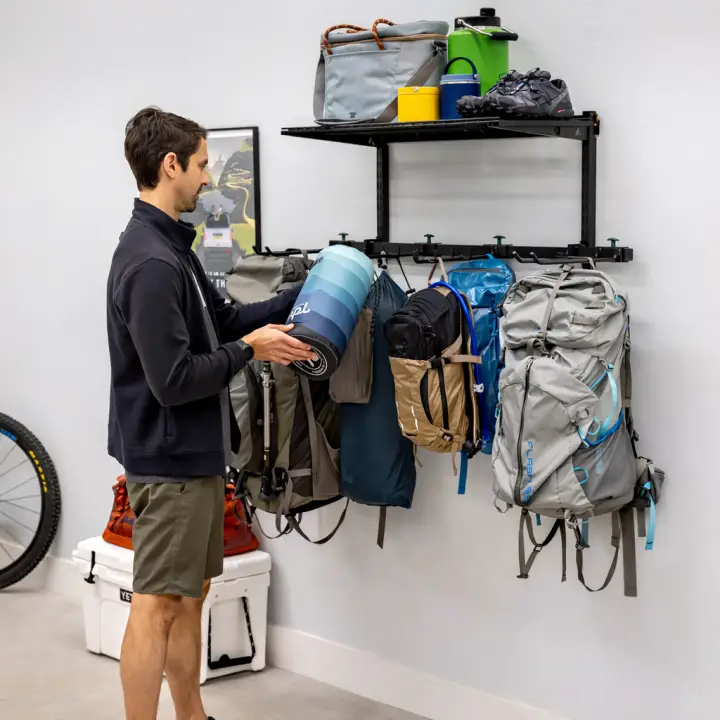
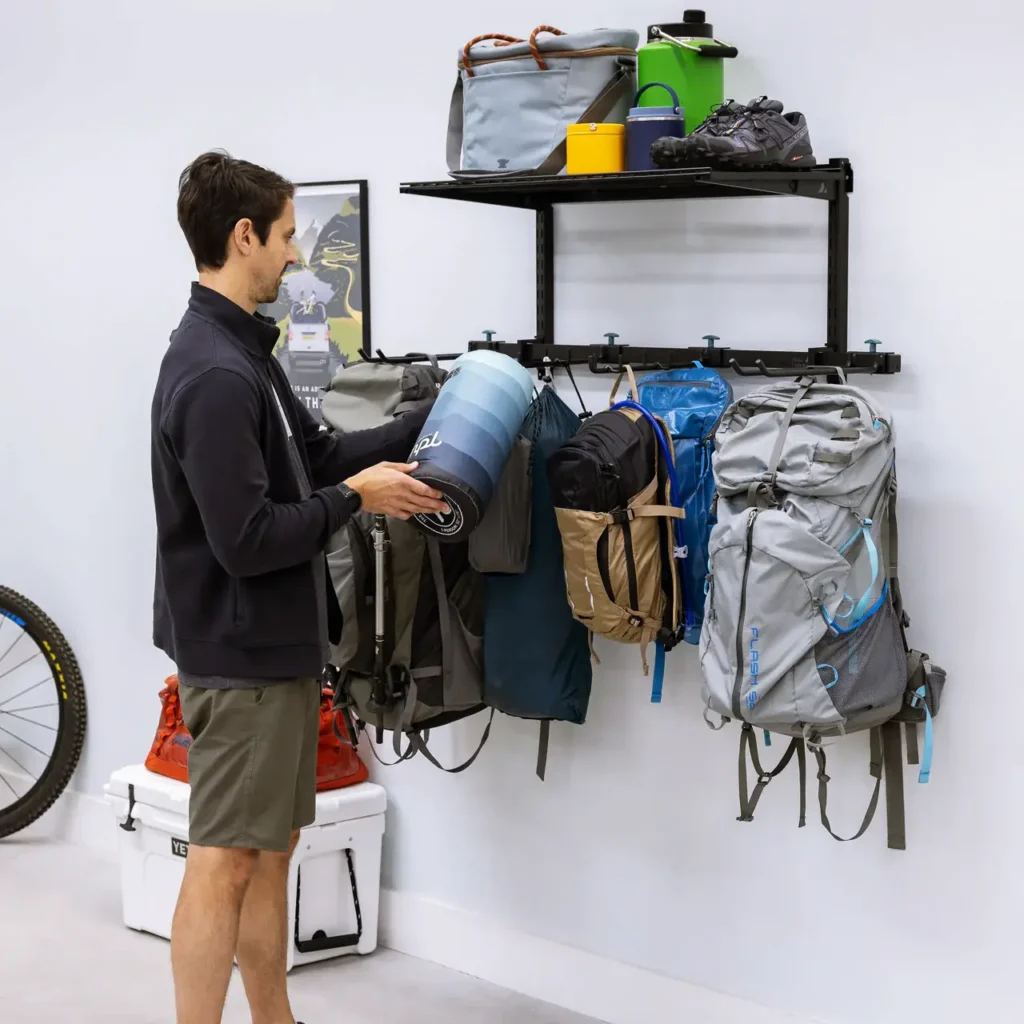
If wall storage fits your space better than freestanding shelves, StoreYourBoard’s G-Hike & Camp + Shelf is built specifically for hiking and camping gear storage and is meant to organize that gear in one wall-mounted system.
The Bin System: Your Best Friend
Bins are usually the real backbone of a working outdoor gear organization setup.
They keep categories contained. They protect gear from dust and grime. They make it easier to carry gear from the shelf to the car. And they help stop the slow drift toward one giant pile of unrelated outdoor stuff.
| Bin Feature | Why It Matters | Best For |
|---|---|---|
| Clear Bins | Lets you see the contents at a glance, reducing the need for perfect labeling. | Grab-and-go kits like “First Aid” or “Camp Lighting” where you might need to find one specific item quickly. |
| Opaque Bins | Protects gear from UV light, which can degrade fabrics and plastics over time. Presents a cleaner, more uniform look. | Long-term storage, especially for items stored in a garage or shed with windows. |
| Latches | Keeps dust, moisture, and pests out. Secures contents during transport. | Virtually all gear storage, but especially important for clothing, food-related items, and delicate equipment. |
| Wheels | Makes it easy to move very heavy bins without lifting. | Extra-large bins used for heavy gear like cast-iron cookware, climbing ropes, or a complete car camping setup. |
Hard-sided storage boxes make the most sense for gear that gets moved often. If bins are regularly going from the garage to the trunk and back again, sturdier storage usually holds up better over time. The Dometic GO Hard Storage 50L is a good example: Dometic describes it as waterproof, dustproof, stackable, and built with integrated handles and latches for storage and transport.
For lighter home-only storage, simpler stackable bins are often enough. The important thing is not chasing the perfect container. It is using a small number of repeatable sizes and giving each one a clear job.
Create Activity-Based Kits
This is where gear organization starts becoming genuinely useful. 🎒
A lot of people store gear in broad categories like “camping” or “hiking.” That sounds organized at first, but in practice it often turns into mixed bins full of unrelated items.
A better approach is to build kits around how the gear is actually used.
Example Kit Ideas:
- Car Camping Kitchen Kit: Camp stove, fuel, pots, pans, utensils, plates, mugs, cutting board, spices, soap, sponge, and trash bags.
- Backpacking Kitchen Kit: Lightweight stove, fuel canister, spork, lightweight pot, water filter.
- Day Hiking Essentials Kit: The Ten Essentials, including a headlamp, small first-aid kit, water filter, fire starter, knife, and navigation tools.
- Camp Comfort Kit: Hammock, camp chairs, lanterns, string lights, portable speaker, hatchet.
- Climbing Kit: Ropes, harness, shoes, helmet, belay devices, chalk bag.
This works because people pack by trip, not by abstract category.
A car-camping weekend needs one version of ready. A day hike needs another. A backpacking overnight needs another. When the gear is already grouped that way, packing becomes much more natural.
Pro Tip: Label bins on more than one side, not just the lid. Once bins get stacked, side labels matter much more than people expect.
How to Store Specific Types of Gear
Some gear is forgiving. Some really is not.
A few habits here make a big difference over time.
- Tents & Shelters: Never store a tent wet. Let it dry fully before putting it away. Once dry, store it loosely rather than tightly compressed for long stretches.
- Sleeping Bags & Quilts: Store them loose in a breathable sack, not crammed in their small stuff sack.
- Sleeping Pads: Self-inflating pads usually do better stored unrolled with the valve open. Air pads and closed-cell foam pads are more forgiving, but they should still go away dry.
- Backpacks: Empty every pocket, loosen straps, and avoid leaving heavy items stuffed inside between trips.
- Clothing & Footwear: Wash dirty technical layers before long-term storage. Let boots dry fully before putting them back on the shelf.
This is the least glamorous part of the system, but it is one of the most important. A strong setup is not just about where gear lives. It is also about how gear gets reset after a trip.
Part 2: On-the-Go Organization for Your Car or Van
A good home system helps, but the handoff from shelf to vehicle matters too. A messy trunk can undo a lot of good organization very quickly.
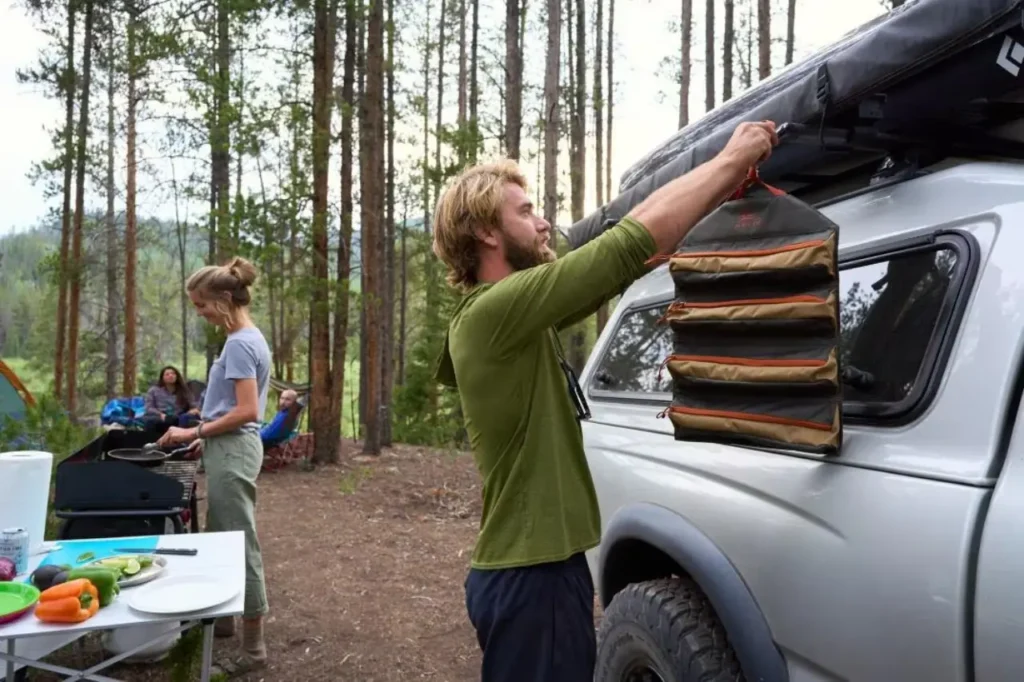
The Camp Kitchen Chuck Box
Camp kitchen gear is one of the easiest categories to lose control of.
Utensils, lighters, stove parts, coffee gear, spices, scrubbers, dish towels, and cleanup supplies all tend to spread out if they are not stored together. That is why a dedicated kitchen box makes such a difference.
The goal is simple: open one box and have the core kitchen setup ready.
It does not need to be fancy. A sturdy tote with a few pouches inside works well. A drawer system works too. What matters is that the basics stay together.
The GSI Outdoors Destination Kitchen Set 24 fits that idea well because it keeps many of the small camp-kitchen tools in one compact case instead of letting them drift loose through multiple bins and pockets.
Trunk and Cargo Area Systems
Vehicle organization works best when you think in layers.
The key question is not just what comes with you, but when you will need it.
- Shelter should be easy to reach.
- Rain layers and lighting should not be buried.
- Loose items should not be rolling around the whole cargo area.
- The first hour at camp should be easy to set up from what is most accessible.
A few practical upgrades help a lot here.
Soft-Sided Organizers
Soft-sided storage works well for the middle layer of gear: extra layers, loose camp shoes, charging cables, dog gear, groceries, and all the items that do not belong in the main camp bins but still travel often.
This is where something flexible can work better than another rigid box. It adapts to awkward spaces, packs down more easily, and helps keep the trunk from turning into a pile of loose “just throw it in” items.
Stackable Boxes for the Vehicle
If you like a more modular trunk setup, stackable hard boxes are one of the most useful upgrades.
The Front Runner Wolf Pack Pro is built specifically around loading, organizing, and transporting outdoor gear, with a stackable shape and secure latching lid. That kind of design is useful when you want the cargo area to stay contained instead of turning into a mix of soft bags and loose equipment.
Overflow Storage Outside the Cabin
Sometimes the best way to organize the inside of the vehicle is to move some of the bulk outside of it.
On longer trips, family trips, or smaller vehicles, interior space gets crowded fast. That usually leads to soft goods, jackets, and loose camp items being stuffed wherever they fit. At that point, outside cargo starts making much more sense.
Yakima’s EXO GearLocker is a strong example because it gives you cargo-box style storage with hitch-mounted access, which is much easier to reach than a roof box for many setups. Yakima describes it as combining roof-box functionality with hitch-mounted ease-of-access for hauling gear to camp and beyond.
Smart Interior Hanging Storage
One of the easiest places to gain usable space is often the empty area behind the seats.
The Luno Cargo Hammock is a simple but smart example. Luno describes it as a seatback-mounted gear shelf with multiple pockets and storage space, and the brand also highlights it as a good place to keep jackets, extra layers, and blankets up and out of the way.
Pack Smart for Arrival, Not Just Departure
A lot of people pack for the drive instead of packing for the moment they arrive.
That is usually where frustration begins.
If rain is moving in, the tarp or tent should be easy to grab. If you arrive near dark, headlamps and warm layers should not be buried under kitchen gear. The first hour at camp goes much better when the setup is loaded in the order it will actually be used.
A simple rule helps here:
- Shelter
- Rain or warmth layers
- Lighting
- Camp chairs
- Kitchen basics
That one shift can make camp setup feel much calmer.
Part 3: In-Camp and On-the-Trail Organization
Even a well-packed trip can start feeling messy once gear is in use. Camp life has a way of spreading things around unless there is a simple place for the small essentials to live.
Backpack Organization
Backpack organization should make the day easier, not more complicated.
The point is not to create a beautiful-looking pack. The point is to know where the important things are, especially when weather shifts, daylight fades, or a break is shorter than expected. 🌲
- Stuff sacks and dry bags: Great for separating sleep gear, layers, food, and emergency items.
- Packing cubes: More useful on travel-heavy or clothing-heavy trips than on stripped-down day hikes, but still helpful when you want more structure.
- Ditty bags: Useful for toiletries, electronics, repair items, or first-aid supplies.
The Sea to Summit Ultra-Sil Dry Bag works especially well for this kind of organization because it adds weather protection without much bulk, and the translucent fabric makes it easier to tell what is inside without emptying the whole pack.
Campsite Organization
A campsite does not need to look polished to work well. It just needs a few predictable places for important things to land.
- Use the tent pockets for headlamp, phone, glasses, and keys.
- Keep one soft bag near the tent entrance for layers and loose clothing.
- Set a defined kitchen zone instead of letting food and utensils spread everywhere.
- Get a few small items off the ground whenever possible.
The Nite Ize Gear Line Organization System is a great small solution here. REI describes it as a sturdy loop with attached S-Biner clips for hanging camp gear, which makes it useful for keeping lanterns, mugs, lightweight layers, or other camp essentials close at hand instead of scattered around the table or ground.
The Go-To Duffel
A durable duffel solves a very common camp problem: soft gear with no home.
Camp clothes, extra socks, rain layers, camp shoes, beanies, and all the loose end-of-day items need somewhere to land. One large duffel works like a temporary camp closet and helps keep those things from spreading into the tent, the trunk, and every nearby surface.
The Patagonia Black Hole Duffel 55 L is a strong fit for that job. REI describes it as weather- and abrasion-resistant and roomy enough to keep gear organized for weekend outings or longer trips, which is exactly what makes a gear duffel so useful in camp.
Small Fixes That Prevent Bigger Messes
Not every useful organization tool needs to be a big one.
Sometimes the things that keep a system together are the small items that stop little messes before they grow. Cord wraps, tie-downs, tiny pouches, and a designated place for odds and ends often do more for everyday order than one more large storage box.
That is one reason products like Nite Ize Gear Ties are handy. REI describes them as bendable, reusable ties for organizing cords, devices, and tools, which makes them useful for extension cords, charging cables, bundled poles, rolled tarps, and other awkward items that always seem to unravel at the wrong moment.
Final Verdict: Start Small, Stay Consistent
The best outdoor gear organization system is not the fanciest one.
It is the one that makes it easier to pack, easier to unpack, and easier to keep using after a long drive home or a wet weekend at camp.
That usually means starting smaller than you think.
Start by sorting everything.
Then fix one problem first.
Maybe that is the camp kitchen.
Maybe it is the trunk that never stays under control.
Maybe it is the pile of loose hiking essentials.
Maybe it is the sleeping gear that keeps getting stored badly between trips.
Fix one category well, and the rest usually becomes easier to see.
A few labeled bins, one better duffel, a real place for packs and pads, and a simple reset routine after every trip can change the whole feel of trip prep. The house feels less cluttered. The car feels more usable. Camp setup feels less frantic. And the next trip feels much easier to start. 😊
That is really what good outdoor gear organization is for.
Not perfection.
Not matching containers.
Not garage photos.
Just fewer barriers between everyday life and getting outside.
Frequently Asked Questions (FAQ)
Q: What’s the best way to store a down sleeping bag?
A: Store it loose, not compressed. A large breathable storage sack, mesh sack, or cotton pillowcase is much better than a small stuff sack for long-term storage. A cool, dry closet is usually best.
Q: Clear vs. opaque storage bins: which is better?
A: Both work well for different reasons. Clear bins are helpful when quick visibility matters. Opaque bins usually look cleaner and can be better for longer-term storage in bright garages or sheds. A mix of both often works best.
Q: How can I keep track of what’s in each bin?
A: Use large, simple labels and keep the wording practical. “Camp Kitchen,” “Lighting + Batteries,” and “Day Hike Essentials” work much better than vague labels. For bins with lots of small pieces, an inventory list inside the lid makes restocking easier.
Q: Any tips for organizing gear in a small apartment?
A: Focus on vertical space and hidden storage. Under-bed bins, over-door hooks, tall shelving, and one small gear zone can go a long way. Group gear by trip type instead of tiny item category so it stays easier to manage.
Affiliate Disclosure: GearForTheOutdoors.com participates in affiliate programs, including REI, Amazon, REI Outlet, Garage Grown Gear, evo, and other trusted partners. When you purchase through our links, we may earn a small commission at no extra cost to you. That helps support our content and keeps our recommendations useful, practical, and free.
Disclaimer: This post is for informational purposes only. Always verify current product details, fit, availability, safety information, and manufacturer warranties before purchase or use. Outdoor conditions and gear performance can vary depending on setup, weather, terrain, and experience level.