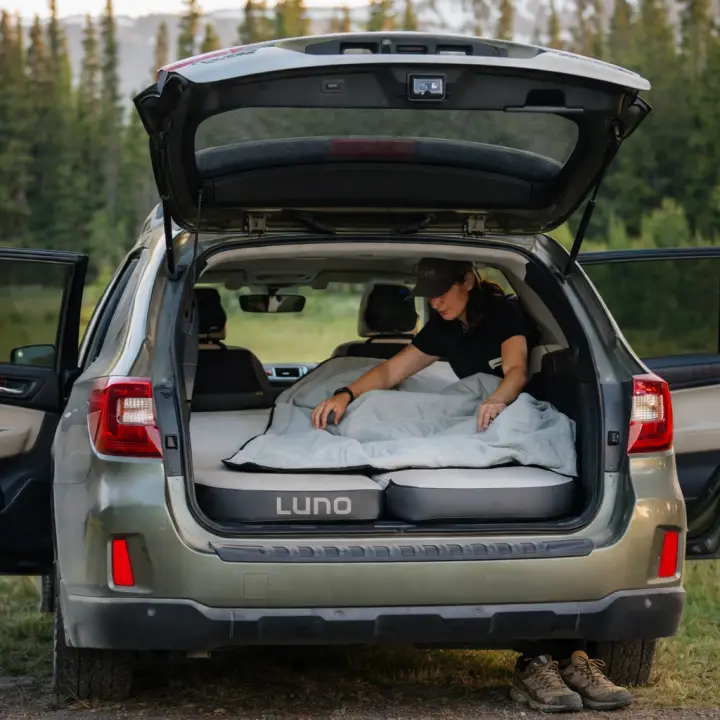
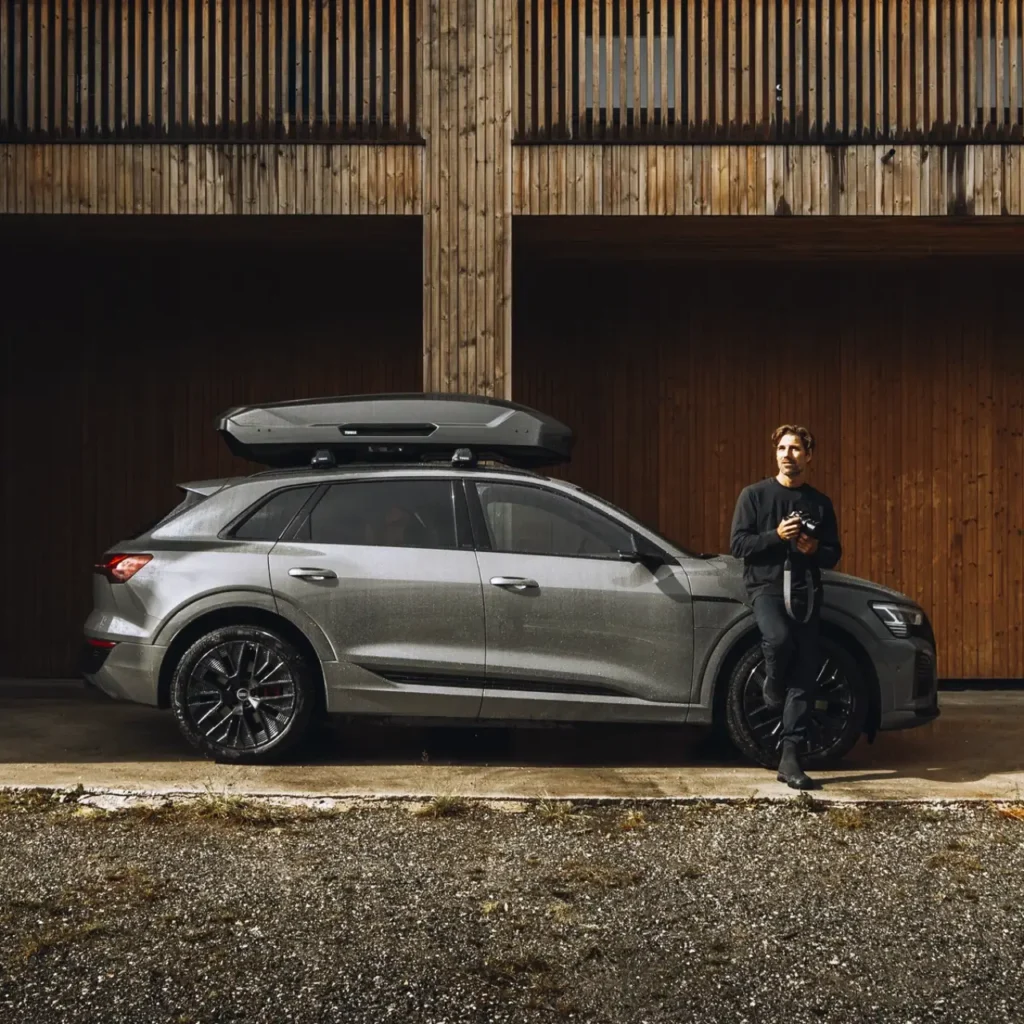
A packed car can make the first hour of a camping trip feel harder than the campsite itself. The cooler blocks the rear window, sleeping bags spill into the back seat, and every snack stop requires unpacking half the trunk.
A roof cargo box moves bulky gear out of the passenger area without requiring a larger vehicle. That extra space can mean better visibility, more legroom, easier access to essentials, and fewer loose items shifting around whenever the road gets rough.
The challenge is choosing a roof storage system that actually fits your vehicle and the way you travel. A sleek cargo box may be ideal for sleeping bags, tents, and luggage, while an open basket works better for muddy bins, awkward equipment, and items that do not belong inside the cabin. 🚙
The products below cover several useful setups, from polished hardshell boxes for frequent road trips to a rugged basket for oversized camp gear. Each option is currently represented by an active product model from brands available through GearForTheOutdoors.com affiliate partners.
Our Top Picks for Roof Cargo Boxes
| Product | Best For | Capacity | Opening | Price |
|---|---|---|---|---|
| Thule Motion 3 L | Best Overall | 16 cu. ft. | Dual-Side | $$$$ |
| Yakima SkyBox NX LG | Best All-Around Alternative | 16 cu. ft. | Dual-Side | $$$ |
| Yakima LoadWarrior | Best for Bulky and Dirty Gear | Open Basket | Open | $$ |
| Thule Pulse 2 L | Best Simple Hardshell Box | 16 cu. ft. | Passenger-Side | $$ |
| INNO Wedge 660 | Best Low-Profile Design | 11 cu. ft. | Dual-Side | $$$ |
For most families and frequent road trippers, the Thule Motion 3 L offers the most polished balance of usable space, secure closure, aerodynamic shaping, and convenient access.
The Yakima SkyBox NX LG is the strongest alternative for shoppers who want similar capacity with a flat interior floor and straightforward mounting system. Travelers carrying muddy totes, firewood, oversized coolers, or oddly shaped gear should look more closely at the Yakima LoadWarrior.
Deep Dive: The Best Roof Storage Solutions
A cargo carrier should solve a packing problem without creating a new one. That means it needs to fit your crossbars, clear the rear hatch, stay within the vehicle’s roof-load limit, and hold the type of equipment you actually bring.
The best option is not always the largest box. A properly sized carrier that is easy to mount, load, and store will usually be more useful than an oversized model that stays in the garage because it is difficult to handle.
Thule Motion 3 L: Best Overall
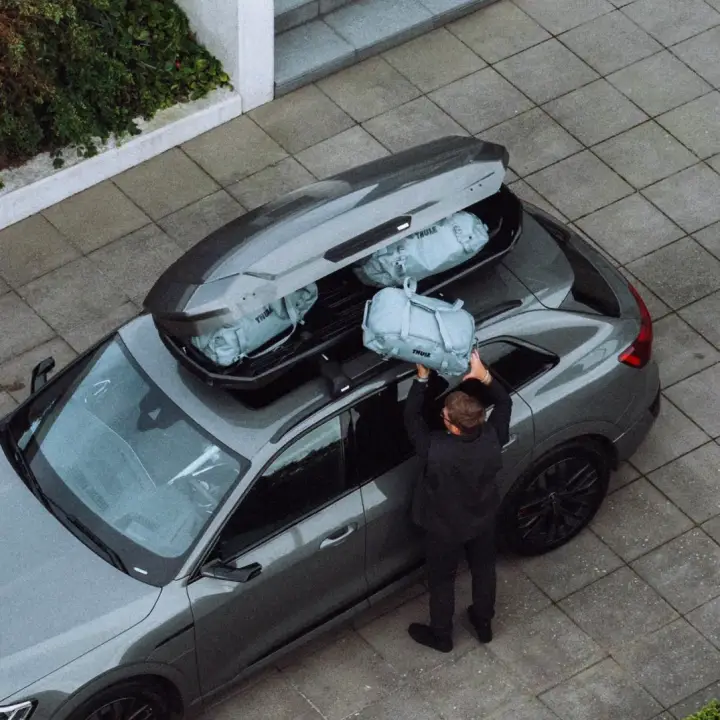
The Thule Motion 3 L is a strong choice for families, car campers, and road trippers who expect to use their roof box regularly. Its 16-cubic-foot capacity provides meaningful storage without reaching the oversized proportions of extra-large boxes intended for full-size SUVs and vans.
That space works especially well for sleeping bags, duffels, tents, folding camp chairs, blankets, and other bulky items that consume trunk space long before they reach the vehicle’s weight limit.
The box has a forward-leaning, wing-shaped profile designed to reduce drag while preserving rear-hatch clearance. A wide exterior handle makes the lid easier to operate, even when the box is mounted on a taller crossover or SUV. 🏕️
Thule’s PowerClick mounting hardware tightens around compatible crossbars and signals when the clamps have reached the correct tension. This is particularly helpful for travelers who remove the box between trips and do not want to second-guess the installation each time.
The SlideLock system separates the opening and locking functions. The lid automatically locks into place and provides an indication when it has closed correctly. Dual-side access also allows loading from whichever side is safer or easier.
| Spec | Value |
| Capacity | 16 cubic feet |
| Exterior Dimensions | Approximately 77 x 35 x 17 inches |
| Load Capacity | Up to 165 lbs., subject to vehicle and rack limits |
| Weight | Approximately 44 lbs. |
| Opening | Dual-Side |
| Mounting | PowerClick quick-mount system |
Best for: Frequent road trips, family camping, ski travel, and drivers who value quick installation and polished hardware.
Consider another option if: You only need extra storage once or twice a year, have very limited garage space, or prefer a lower-priced box with fewer premium features.
Pros
- Dual-side access simplifies loading
- Secure, confidence-inspiring closure system
- Aerodynamic shape is well suited to highway travel
- Useful capacity for most small families
- Tool-free mounting hardware
Cons
- Premium price
- Large enough to require substantial storage space at home
- Awkward for one person to lift onto a tall vehicle
Yakima SkyBox NX LG: Best All-Around Alternative
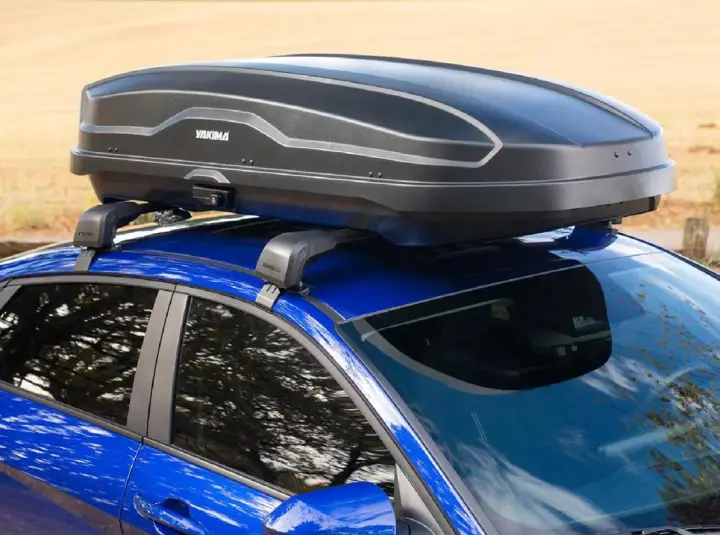
The Yakima SkyBox NX LG offers 16 cubic feet of storage in a shape that works well for camping equipment, road-trip luggage, skis, and snowboards. It is especially appealing for travelers who want a spacious interior without complicated hardware or excessive height.
One of its most useful features is the flattened interior floor. Bulky equipment tends to sit more naturally when mounting components do not protrude far into the cargo area. It may sound like a small detail, but it matters when packing rectangular duffels, tents, camp tables, or tightly organized gear bags.
A removable torque-limiting knob helps prevent overtightening during installation. Once the box is secure, the knob can be removed so it does not occupy cargo space or catch on soft equipment. Integrated tie-down points allow lighter items to be secured inside the box rather than sliding around through every curve. 🧭
The metal opening handle feels more substantial than the small plastic latches found on some less expensive carriers. Dual-side opening makes it possible to work from the passenger side at a roadside stop or from either side at a campsite.
Its 75.5-inch length is slightly easier to accommodate than many ski-oriented boxes that stretch beyond 80 inches. It can carry skis and snowboards up to approximately 175 centimeters, but travelers with longer equipment should check the internal dimensions before buying.
| Spec | Value |
| Capacity | 16 cubic feet |
| Exterior Dimensions | 75.5 x 35 x 16 inches |
| Crossbar Spread | 24–36 inches |
| Weight | 47 lbs. |
| Opening | Dual-Side |
| Mounting | Universal hardware with removable torque-limiting knob |
Best for: Families, campers, and road trippers who want a roomy, versatile box with a flat interior floor.
Consider another option if: You carry skis longer than approximately 175 centimeters or want the lightest box possible for frequent removal.
Pros
- Flat interior creates more usable packing space
- Dual-side access
- Integrated tie-down points
- Strong metal opening handle
- Good hatch-clearance design
Cons
- At 47 pounds, lifting and storage may require two people
- Premium price despite costing less than some top-tier competitors
- Not designed for especially long skis
Yakima LoadWarrior: Best for Bulky and Dirty Gear
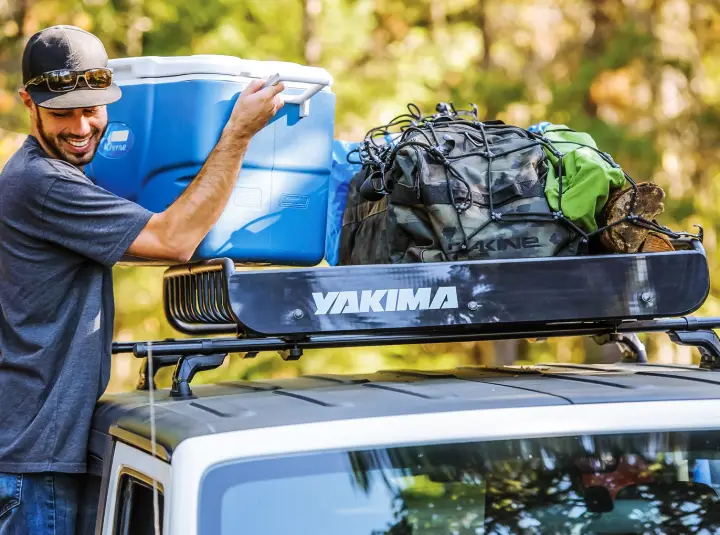
An enclosed cargo box is not always the most practical answer. Muddy storage bins, firewood bundles, oversized coolers, recovery gear, and equipment with irregular shapes can be difficult to fit inside a rigid shell.
The Yakima LoadWarrior provides an open steel platform with raised sides, allowing gear to be arranged and secured in ways that would not be possible inside a hardshell box. Its 44-by-39-inch footprint is compact enough for many crossovers and SUVs while still creating a useful loading area.
The basket uses weather-resistant steel and includes a wind fairing to reduce some of the noise created by the open frame. Universal mounting hardware works with Yakima StreamLine crossbars and many factory or aerodynamic bars.
An optional 18-inch extension increases the basket’s length and cargo area by about 40 percent. Yakima gear mounts can also be attached to the basket, making it useful for setups that change between camping, biking, paddling, and winter travel. 🔧
The trade-offs are important. The basket itself does not protect gear from rain, dust, road salt, or theft. Equipment needs to be secured with appropriate straps or a fitted cargo net, and weather-sensitive items should be placed inside waterproof bags or sealed containers.
Open baskets also create more wind noise and drag than streamlined cargo boxes, particularly when loaded with tall or uneven equipment.
| Spec | Value |
| Capacity | Open cargo area |
| Exterior Dimensions | 44 x 39 x 6.5 inches |
| Crossbar Spread | 24–32 inches |
| Weight | 25 lbs. |
| Opening | Open basket |
| Mounting | Universal mounting hardware |
Best for: Bulky storage bins, dirty equipment, coolers, overlanding gear, and loads that do not fit neatly inside a traditional cargo box.
Consider another option if: Weather protection, locked storage, low wind noise, or maximum fuel efficiency matters more than packing flexibility.
Pros
- Accepts awkwardly shaped equipment
- Durable steel construction
- Lighter than most hardshell boxes
- Optional extension adds useful cargo space
- Compatible with several rack-mounted accessories
Cons
- No built-in weather protection
- Cargo must be strapped down carefully
- Locking bracket is sold separately
- More wind noise and drag than an enclosed box
Thule Pulse 2 L: Best Simple Hardshell Box
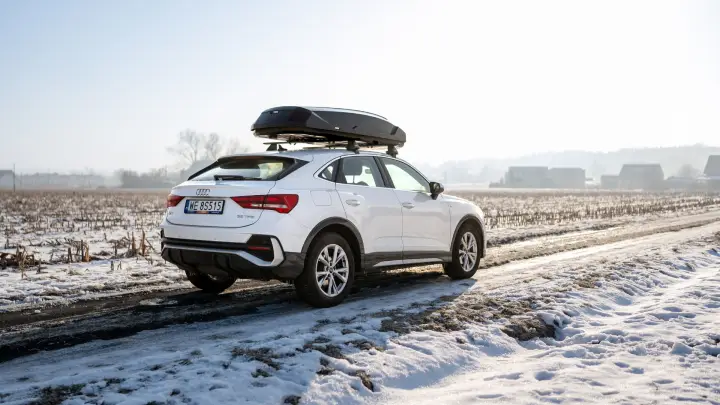
The Thule Pulse 2 L is designed for travelers who want dependable enclosed roof storage without paying for every premium feature found on the Motion series.
Its 16-cubic-foot capacity provides enough room for weekend camping gear, family luggage, snow equipment, and bulky soft goods. The shape is straightforward and practical, making it suitable for commuting, day trips, and occasional longer journeys.
Passenger-side opening is less flexible than a dual-side lid, but it encourages loading away from traffic when parked along a road. The central locking system is designed so the key can only be removed when the locking points have engaged correctly.
The FastGrip mounting system tightens from inside the box and does not require a complicated tool kit. For travelers who plan to install the carrier at the beginning of a season and leave it mounted for several trips, it offers a useful balance of simplicity and security. 🚗
The main compromise is convenience. You cannot switch sides when a campsite, garage wall, or parking space limits access. The lid and mounting hardware are also less refined than those on Thule’s premium boxes.
| Spec | Value |
| Capacity | 16 cubic feet |
| Load Capacity | Up to 165 lbs., subject to vehicle and rack limits |
| Opening | Passenger-Side |
| Mounting | FastGrip mounting system |
| Security | Central locking system |
| Best Use | Camping, road trips, luggage, and winter gear |
Best for: Drivers who want a straightforward, secure hardshell box at a lower price than premium dual-opening models.
Consider another option if: You frequently park in tight spaces, need access from both sides, or remove and reinstall the box often.
Pros
- Useful 16-cubic-foot capacity
- Enclosed protection from weather and road grime
- Simpler and more affordable than premium Thule boxes
- Secure central locking system
- Good option for occasional family travel
Cons
- Opens only from the passenger side
- Less polished hardware than the Motion 3
- Still requires significant storage space when removed
INNO Wedge 660: Best Low-Profile Design
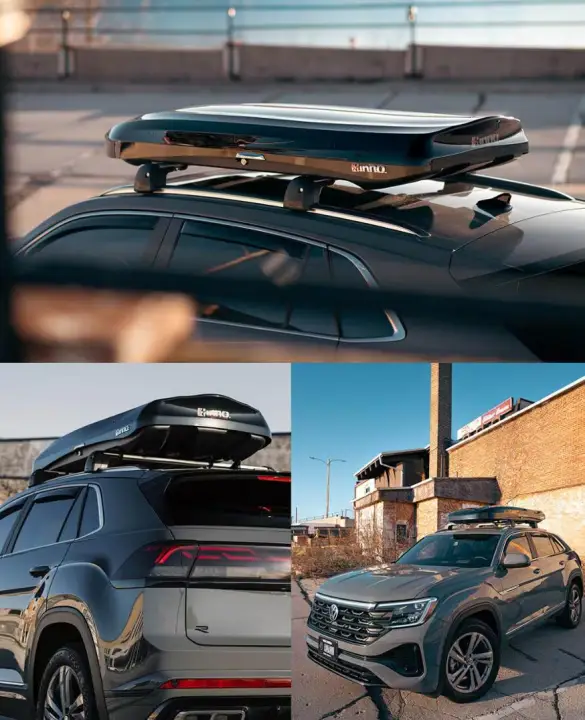
Tall cargo boxes provide generous internal volume, but they also increase vehicle height and expose more surface area to the wind. The INNO Wedge 660 takes a different approach with a lower, sleeker profile designed for travelers who value aerodynamics and clean vehicle lines.
Its long shape is particularly useful for skis and snowboards. The box can accommodate approximately six to eight pairs of skis or four snowboards, depending on their dimensions and how they are packed.
The lower roofline also works well for lightweight camping gear such as sleeping pads, compact tents, folding chairs, and duffel bags. However, its 11-cubic-foot capacity is noticeably smaller than the 16-cubic-foot boxes in this guide. Large family tents, thick sleeping bags, and rigid storage bins may be difficult to fit.
INNO’s Memory Mount system is designed to make removal and reinstallation easier after the initial adjustment. The box opens from either side and uses a safety-lock system that prevents the key from being removed until the box is secured. 🎿
The Wedge 660 makes the most sense when the shape of the cargo matters more than maximum volume. Skiers, snowboarders, couples, and drivers of wagons or smaller SUVs are more likely to benefit from its proportions than a family carrying large quantities of camping equipment.
| Spec | Value |
| Capacity | Approximately 11 cubic feet |
| Exterior Dimensions | Approximately 80 x 33 x 11 inches |
| Load Capacity | Up to 110 lbs., subject to vehicle and rack limits |
| Weight | Approximately 42 lbs. |
| Opening | Dual-Side |
| Mounting | Memory Mount system |
Best for: Ski and snowboard trips, couples, wagons, smaller SUVs, and drivers who prefer a low-profile carrier.
Consider another option if: You need maximum space for family camping equipment or regularly pack tall, rigid items.
Pros
- Low-profile aerodynamic shape
- Dual-side opening
- Fits skis and snowboards
- Easy-to-repeat mounting setup
- Clean appearance on smaller vehicles
Cons
- Less cargo volume than 16-cubic-foot boxes
- Long shape may create hatch-clearance issues on some vehicles
- Premium price for its usable capacity
How to Choose the Best Cargo Box for Your Vehicle
A roof box needs to fit more than your camping gear. It must also fit your vehicle, roof rack, storage space at home, and normal loading routine.
Before comparing colors or brand names, answer four practical questions:
- What gear needs to go on the roof?
- How much weight can the vehicle and rack safely support?
- How far can the rear hatch open with the box installed?
- Where will the carrier be stored between trips?
Those answers will narrow the options faster than starting with capacity alone.
Hard-Shell Boxes vs. Soft-Shell Bags vs. Roof Baskets
Each roof storage style solves a different problem.
Hard-shell cargo boxes provide the best combination of weather resistance, aerodynamics, security, and highway comfort. They are ideal for luggage, sleeping gear, tents, skis, and other equipment that needs protection.
Their main disadvantages are cost, weight, and storage. Even a medium-size box can occupy a large section of a garage wall or shed.
Soft-shell cargo bags are less expensive and can usually be folded when not in use. They make sense for occasional travel, apartment living, and situations where storing a rigid box would be difficult.
They provide less protection from heavy rain, theft, abrasion, and shifting cargo. Some models can mount to side rails or a bare roof, while others still require crossbars. The manufacturer’s instructions should always determine the correct setup.
Roof baskets are best for rugged or oddly shaped loads. They allow easy access and can carry bins, coolers, firewood, spare tires, and equipment that would be difficult to place inside a box.
Everything in a basket must be secured independently and protected from weather when necessary. An open basket is not a substitute for waterproof storage.
Size and Capacity: How Much Space Do You Need?
Cargo-box capacity is measured in cubic feet, but the shape of the box is just as important as the number.
A long, shallow box may hold skis and folding chairs while struggling with a large family tent. A taller box may swallow bulky sleeping bags but occupy more roof space and create more drag.
Use these ranges as a starting point:
- 10–14 cubic feet: Suitable for couples, smaller cars, winter equipment, and compact weekend setups.
- 15–18 cubic feet: The most versatile range for family camping, road-trip luggage, and general outdoor use.
- 19 cubic feet or more: Best for large families, extended trips, full-size SUVs, vans, and especially bulky gear.
Lay out the items that will normally travel on the roof before buying. Measure the longest and tallest pieces rather than relying only on total volume.
A slightly narrower box can also leave room on the crossbars for a bike rack, kayak carrier, or ski mount. This can be more useful than filling the entire roof with one wide box.
Fit and Compatibility: Will It Work with Your Car?
Fit should be confirmed before ordering. A box may physically sit on the roof and still interfere with the hatch, exceed the crossbar range, or overload the vehicle.
Check the following specifications carefully.
Roof Rack System
Most hardshell cargo boxes and baskets require crossbars. Side rails alone are generally not enough.
Confirm that the carrier’s mounting hardware is compatible with the shape and dimensions of the crossbars. Factory bars, round bars, square bars, and wide aerodynamic bars can require different clamp ranges.
Manufacturer fit guides are helpful, but the vehicle, roof rack, and cargo carrier should be treated as one complete system.
Crossbar Spread
Crossbar spread is the distance between the front and rear crossbars, usually measured from the center of one bar to the center of the other.
Every cargo box has a minimum and maximum supported spread. Adjustable factory bars may need to be repositioned before installation. Fixed mounting points offer less flexibility, making this measurement especially important.
Hatch Clearance
Open the rear hatch fully and measure from the front crossbar to the highest forward point of the open hatch. Compare that measurement with the clearance requirements provided by the cargo-box manufacturer.
A box that contacts the hatch can damage the vehicle’s paint, rear spoiler, glass, or powered liftgate.
Roof-Load Capacity
The lowest weight limit in the system controls the entire setup.
That may be the limit of the vehicle roof, factory rails, crossbars, mounting feet, or cargo carrier. Add together:
- The roof rack
- The empty cargo box or basket
- Every item placed inside or on top
A cargo box rated for 165 pounds does not mean the vehicle can safely carry 165 pounds of gear. If the roof system supports 150 pounds and the rack and box weigh 65 pounds together, only 85 pounds remain for cargo.
Key Features to Look For
Dual-Side Opening
Dual-side access is one of the most useful upgrades on a roof box. It allows gear to be loaded from the safest side of the vehicle and makes it easier to reach equipment positioned near either edge.
Tool-Free Mounting
Quick-mount clamps save time and reduce installation errors. Torque indicators or limiting knobs are especially helpful because overtightening can damage components while undertightening can allow the box to move.
Secure Closure
Look for a system that prevents the key from being removed until the lid is properly closed. Multiple locking points are preferable to a single latch, especially on longer boxes.
Interior Tie-Down Points
Even inside a closed box, gear can slide during hard braking or sharp turns. Tie-down points help keep the load balanced and prevent equipment from pressing against the lid.
Rear-Hatch Clearance
A well-designed mounting track allows the box to move forward far enough to clear the hatch while remaining properly supported by both crossbars.
Tips for Packing and Using Your Roof Cargo Box
A cargo box can improve comfort inside the vehicle, but it also raises the center of gravity and changes how the car responds to wind. Thoughtful packing matters.
Keep Heavy Gear Inside the Vehicle
Use the roof for bulky, relatively lightweight equipment:
- Sleeping bags
- Pillows
- Clothing duffels
- Tents
- Sleeping pads
- Folding chairs
- Blankets
- Empty coolers
Keep dense items low and inside the vehicle whenever possible:
- Water containers
- Full coolers
- Cast-iron cookware
- Tools
- Batteries
- Portable power stations
Heavy roof cargo affects handling more than the same weight placed low in the vehicle.
Distribute Weight Evenly
Place most of the weight between the crossbars. Avoid concentrating the load at the extreme front or rear of the box.
A common guideline is to place roughly half the weight between the bars, with the remaining weight divided between the front and rear sections. Follow the carrier manufacturer’s instructions whenever they specify a different distribution.
Use internal straps to prevent sleeping bags, tents, and duffels from sliding into one end of the box.
Protect Moisture-Sensitive Gear
Hardshell boxes are highly weather-resistant, but they should not be treated as submersible dry boxes.
Down sleeping bags, electronics, important documents, and dry clothing should be packed in dry bags or waterproof liners during sustained rain. Soft cargo bags require even more careful waterproofing.
Check the Mounting Hardware
Check every clamp and latch before leaving home. Stop after the first 15 to 20 miles and inspect the setup again, particularly after installing the carrier for the first time.
Continue checking the box at fuel stops, trailheads, and each morning of a multi-day trip. Rough roads and large temperature changes can affect straps and mounting components. 🔍
Measure the New Vehicle Height
Measure the vehicle from the ground to the highest point of the installed carrier. Keep the number visible near the dashboard.
The added height matters at:
- Parking garages
- Hotel entrances
- Drive-thrus
- Car washes
- Ferry decks
- Low tree branches
- Campsite shelters
- Residential garages
Remove roof cargo before entering an automatic car wash.
Adjust Your Driving
A roof carrier changes the vehicle’s aerodynamics and may increase sensitivity to crosswinds. Leave more following distance, slow down before curves, and avoid sudden steering inputs.
Follow the speed limit specified by the carrier, rack, and vehicle manufacturers. The lowest published limit should take priority.
Frequently Asked Questions
Do cargo boxes reduce gas mileage?
Yes. A roof cargo box adds weight and aerodynamic drag, so fuel economy or electric-vehicle range will usually decrease.
The impact varies with vehicle shape, box profile, wind, speed, and loading. Highway driving at higher speeds generally produces the largest difference because aerodynamic resistance increases rapidly as speed rises.
Removing the box when it is not needed can reduce unnecessary drag.
Can a cargo box be used without a roof rack?
Most hardshell cargo boxes require crossbars and cannot be mounted safely to a bare roof.
Some soft cargo bags are designed for vehicles with side rails or include straps that pass through the door openings. Use only the attachment method approved by the manufacturer, and never improvise with loose rope or generic straps.
How do you know whether a cargo box will fit a vehicle?
Start with the manufacturer’s fit guide, then verify the measurements yourself.
Confirm:
- Crossbar shape and width
- Minimum and maximum crossbar spread
- Rear-hatch clearance
- Vehicle roof-load capacity
- Box length and width
- Overall vehicle height after installation
Fit can vary between trim levels and factory roof packages, even within the same vehicle model.
Are roof cargo boxes waterproof?
Most hardshell boxes are highly water-resistant rather than completely waterproof. They should protect normal camping gear through typical rain and road spray, but small amounts of moisture may enter during severe weather or prolonged high-speed driving.
Soft bags provide less dependable protection and should be paired with waterproof inner bags for clothing, bedding, and electronics.
Can suitcases go inside a roof cargo box?
Yes, provided they fit without forcing the lid closed and do not push the total load over the system’s weight limit.
Soft-sided luggage is usually easier to arrange than rigid suitcases. Several smaller duffels also make better use of curved cargo-box interiors than one large rectangular case.
Should a cargo box stay on the vehicle all year?
It can, but removing it when it is not needed reduces wind noise, drag, UV exposure, and wear on the mounting system.
Long-term outdoor exposure can fade the finish and age plastic components. Store the box in a dry, shaded location, preferably supported by a wall rack or ceiling hoist that does not distort the shell.
Can a roof box carry food?
Sealed, shelf-stable food can be transported in a roof box, but temperature-sensitive items should remain inside a cooler.
Roof boxes can become very warm in direct sun. Avoid storing pressurized containers, medications, electronics, and anything that may be damaged by heat.
The Final Verdict
The right roof storage setup should make the entire trip easier, not simply create more capacity.
The Thule Motion 3 L is the best overall choice for travelers who want a spacious, secure, and easy-to-use cargo box for frequent camping trips and highway travel. Its dual-side opening, polished mounting system, and practical 16-cubic-foot capacity make it suitable for a wide range of vehicles and trip styles.
The Yakima SkyBox NX LG is an excellent alternative with similar capacity, a flat interior floor, and straightforward installation. It is particularly useful for families packing duffels, tents, sleeping gear, and winter equipment.
For rugged loads that would be awkward or messy inside a closed box, the Yakima LoadWarrior offers far more flexibility. The Thule Pulse 2 L provides a simpler enclosed option, while the INNO Wedge 660 is better suited to skis, snowboards, and lower-profile setups.
Whichever style fits your vehicle, load lighter gear on the roof, keep dense equipment low inside the cabin, and verify every weight and fit requirement before driving.
A well-chosen cargo carrier gives passengers room to settle in, keeps the rear window clear, and makes it easier to reach the gear needed at the next trailhead, campground, or roadside stop. That is the real upgrade: not packing more, but traveling with less clutter and fewer compromises.
Affiliate Disclosure: GearForTheOutdoors.com participates in affiliate programs, including REI, Amazon, REI Outlet, Garage Grown Gear, evo, and other trusted partners. When you purchase through our links, we may earn a small commission at no extra cost to you. That helps support our content and keeps our recommendations useful, practical, and free.
Disclaimer: This post is for informational purposes only. Always verify current product details, fit, availability, safety information, and manufacturer warranties before purchase or use. Outdoor conditions and gear performance can vary depending on setup, weather, terrain, and experience level.