Finding the right eating utensil for camp is a small decision that can turn into a surprisingly annoying one. A full-size fork and spoon from the kitchen work, but they take up more space than needed. Cheap plastic sporks are light, but they can feel flimsy, flex too much, and wear out fast. Premium titanium sporks solve some of that, but they usually do one job only—and sometimes cost more than expected for such a simple item.
That tension between weight, function, and simplicity is exactly why utensil-multitools keep showing up in outdoor kits. For hikers, campers, overlanders, and anyone trying to keep gear streamlined, even a tiny item has to justify its place. 😊
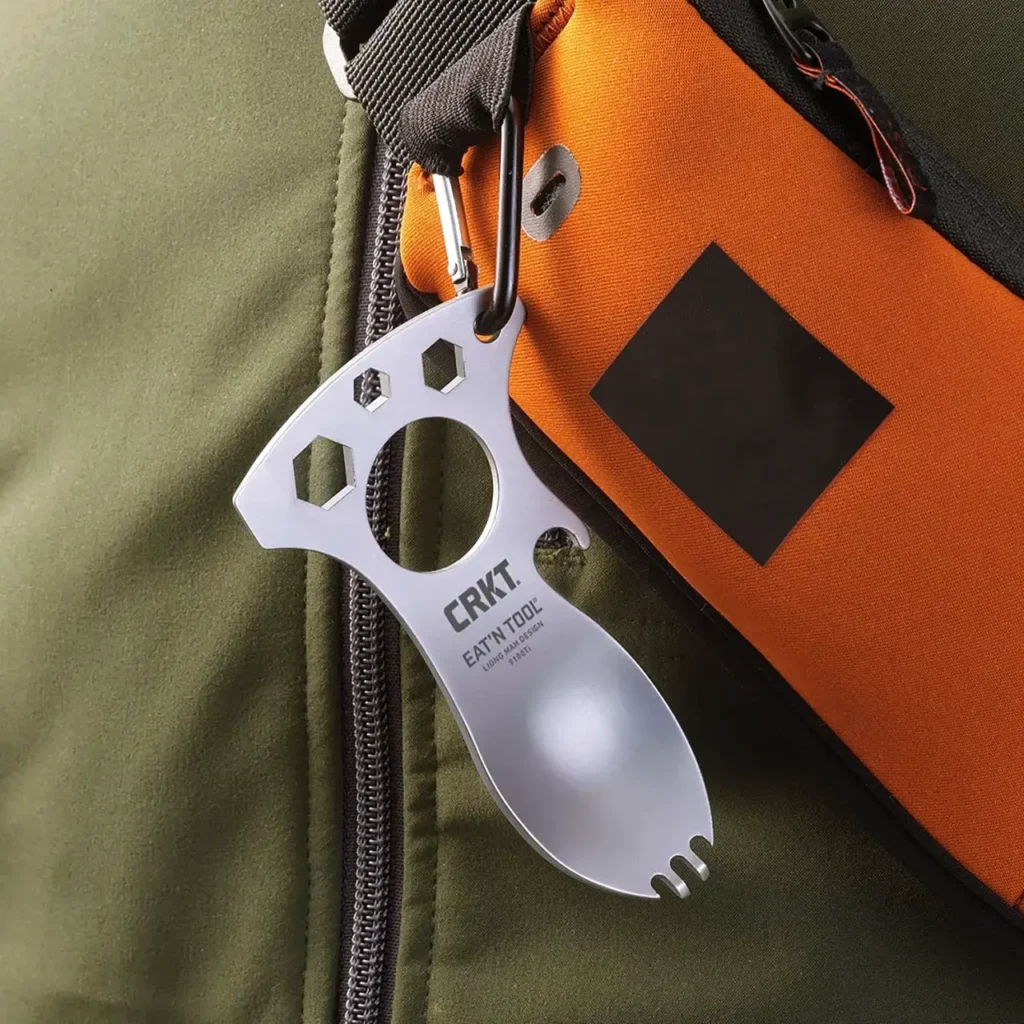
The CRKT Eat’N Tool Outdoor Spork, designed by Liong Mah, has stayed popular for years because it promises a little more than a standard camp utensil. It works as a spork, but also adds a bottle opener, screwdriver tip, and a few wrench cutouts—all in one compact piece of stainless steel.
On paper, that sounds like the kind of smart minimalist design outdoor gear fans tend to love. In actual use, though, the question is a little more specific: does it make trail meals easier, or does it mostly win on novelty?
This review breaks down what the CRKT Eat’N Tool does well, where it feels compromised, how it compares to other camp utensils, and who it actually makes sense for.
Quick Verdict: The CRKT Eat’N Tool at a Glance
No time for the full deep dive? Here’s the short version.
The CRKT Eat’N Tool is a genuinely useful piece of gear for the right kind of outdoors person—especially someone who values simplicity, durability, and low weight more than dining comfort. It is compact, tough, affordable, and easy to clip onto a pack or stash in a camp box. The bottle opener is legitimately handy, and the overall design feels rugged enough to last for years. ⛺
The tradeoff is easy to spot once a meal starts. The spoon bowl is shallow, the fork tines are short, and the 4-inch length can be awkward when eating from deep freeze-dried meal pouches. It works, but it does not feel as natural or comfortable as a dedicated spork or long-handled spoon.
Verdict: For ultralight backpackers, day hikers, minimalists, and anyone who wants a durable backup utensil with a little extra utility, the Eat’N Tool is a strong value. For campers who care most about comfort while eating—especially with pouch meals or soups—a dedicated titanium or long-handled utensil will be the better pick.
| Feature | Our Take | Rating |
|---|---|---|
| Weight & Portability | At just 1.5 oz, it’s an easy fit for minimalist kits and everyday carry. | ★★★★★ |
| Eating Performance | Functional, but the shallow spoon and short tines feel compromised. | ★★★☆☆ |
| Durability | Single-piece stainless steel construction feels almost impossible to damage. | ★★★★★ |
| Multi-Tool Utility | The bottle opener is excellent; the other tools are useful in more limited situations. | ★★★☆☆ |
| Value | Tough, affordable, and versatile enough to justify its spot in a lot of kits. | ★★★★★ |
| Overall | A smart minimalist utensil and one of the better backup camp tools around. | ★★★★☆ |
Ready to keep a camp utensil simple? You can usually find the CRKT Eat’N Tool on Amazon for a solid price.
A Feature-by-Feature Breakdown
The CRKT Eat’N Tool makes more sense when it is looked at as a compact gear solution, not just a spork. Each part of the design pulls some weight, even if not every feature will matter to every user.
The Spork End
This is still the main event, and it is also where the biggest compromises show up.
The Eat’N Tool combines a shallow spoon bowl with three short fork tines. That layout is enough for plenty of common trail foods, but it does not feel especially refined.
- The Spoon: It is wide enough for oatmeal, chili, rice dishes, and camp mac and cheese, but the bowl is shallow. That means thinner foods like soup or broth-heavy meals take a little more care. It works, though it is not especially graceful.
- The Fork Tines: The tines can stab chunks of food and help with noodles or pasta, but they are short and fairly stubby. That keeps the tool compact, but it also makes the fork side feel more “good enough” than excellent.
For most simple outdoor meals, that is fine. Granola, scrambled eggs, pasta, beans, chili, and reheated leftovers are all manageable. The bigger issue shows up with tall, narrow freeze-dried meal pouches. Because the tool is short, fingers can end up brushing sauce, oil, or food residue around the rim before reaching the bottom. 😅
That alone will not ruin the tool for most people, but it is the clearest reason some campers eventually move to a longer utensil for primary meal use.
The Multi-Tool Handle
This is the feature that gives the Eat’N Tool its identity.
Instead of being just another camp spork, it adds a few practical extras without any hinges, pivots, or moving parts. That matters. Simplicity is part of the appeal here.
- Bottle Opener: This is the strongest non-eating feature on the tool. It is easy to access, well integrated, and works the way it should. At camp, after a trail day, or during a casual picnic, that is a useful feature—not just decoration.
- Flathead Screwdriver / Pry Tip: The flattened tip at the end is sturdy enough for light-duty tasks like tightening a stove screw, scraping burnt bits off cookware, or prying open something small and stubborn. It is not a replacement for a real tool kit, but it can be useful in the kind of quick fix situations that happen around camp.
- Hex Wrenches: The three metric wrench cutouts—6 mm, 8 mm, and 10 mm—are highly situational. For some users, they may never come into play. For others, they could line up with a bike setup, stove component, or small repair task. Since they do not add moving parts or meaningful weight, they are easy to accept as a “nice if needed” feature.
This is where the Eat’N Tool earns some respect. Even when not every tool gets used regularly, the design avoids feeling gimmicky because the extra features are built into a strong one-piece body.
The Carabiner
The built-in carabiner is convenient, but it needs one very clear warning:
It is not load-bearing.
It is not for climbing, hammock suspension, recovery setups, or anything related to body weight or safety. It exists for simple gear attachment only.
Used correctly, though, it is one of the better parts of the design. It makes it easy to clip the tool to a pack loop, lunch bag, keyring, camp tote, or cook set. Small gear is easy to misplace, especially around camp tables, tailgates, and kitchen bins. The carabiner helps prevent that. 👍
For a utensil this small, simple carry convenience matters more than it might seem.
Materials, Size, and Weight
The CRKT Eat’N Tool is made from 3Cr13 stainless steel, a budget-friendly steel that tends to do well in the kinds of environments camp gear actually sees. It offers solid corrosion resistance, handles moisture well, and feels tough enough for repeated rough use.
The finish is bead-blasted and slightly textured, which helps it feel less slick than polished metal when wet or greasy.
Here are the practical size details:
- Material: 3Cr13 stainless steel
- Weight: 1.5 ounces (43 grams)
- Dimensions: 4 inches long and 2.4 inches wide
That weight is one of its biggest selling points. At 1.5 ounces, it stays light enough for backpacking, but still feels sturdier than bargain-bin plastic utensils or thin throwaway alternatives.
The Eat’N Tool in the Wild: Real-World Use Cases
Specs matter, but camp gear only proves itself when it gets packed, clipped, used, dropped, washed, and packed again. The CRKT Eat’N Tool has a few situations where it feels especially well matched—and a few where its limitations are easier to notice.
For the Ultralight Backpacker
This is where the Eat’N Tool makes the most sense.
Minimalist backpackers tend to like gear that handles more than one task without adding extra weight or complexity. That is exactly the pitch here: a compact utensil that also opens bottles and covers a few tiny repair jobs. It is light, durable, and simple enough to trust for the long haul. 🎒
The weak point is meal-pouch performance. If most dinners come from freeze-dried bags, the short length can get annoying fast. For hikers who mostly eat from pots, bowls, or lower-profile containers, that issue matters less.
That makes the Eat’N Tool a better fit for backpackers who value compactness and durability first—and a less obvious fit for those who want the cleanest, easiest pouch-meal experience.
For the Car Camper
In a car camping setup, weight matters less, so eating comfort usually becomes more important. That does not make the Eat’N Tool irrelevant. It just changes its role.
Instead of being the obvious primary utensil, it works really well as a backup piece. Toss one into the camp kitchen bin, glove box, cook tote, or picnic setup and there is always a spare available. It is also the kind of tool that handles camp abuse well—bouncing around in drawers, getting dropped on gravel, or ending up damp at the bottom of a storage box.
For casual car campers, that rugged backup value is a big part of the appeal.
For the Van-Lifer or Overlander
This is another smart use case.
Van life and overland kits tend to reward compact, multi-use gear. Space is limited, drawers are shallow, and the best tools are often the ones that do enough while taking up very little room. The Eat’N Tool fits that mindset well. 🚐
It is easy to clean, easy to stash, and easy to keep clipped where it will not disappear into a pile of gear. For quick roadside meals, coffee breaks, or a stripped-down kitchen setup, it feels right at home.
It is also durable enough that there is little reason to baby it. That matters in vehicle-based travel where gear often gets knocked around.
For the Day Hiker and Picnicker
This may be the most underrated use case of all.
For day hikes, packed lunches, roadside stops, trail snacks, and impromptu picnics, the Eat’N Tool works really well. It is small enough to disappear on the outside of a pack and useful enough to earn that spot. If lunch is pasta salad, oatmeal, fruit, yogurt, or something from a deli container, it handles the job without fuss.
And yes, the bottle opener makes just as much sense here as it does anywhere else.
Pros and Cons: The Honest Truth
The CRKT Eat’N Tool does a lot with very little. But like most minimalist gear, its strengths come directly from the compromises it makes.
What We Like
- Incredibly lightweight: At 1.5 ounces, it is easy to justify for backpacking, day hiking, or everyday carry.
- Extremely durable: The one-piece stainless steel design feels tough, simple, and dependable.
- Affordable: It gives a lot of practical value without asking for premium-spork money.
- Bottle opener works well: This is not a throwaway feature. It is one of the best-executed parts of the design.
- Easy to carry: The built-in carabiner makes storage and access simple.
- Strong minimalist appeal: It combines multiple functions in a compact format without becoming complicated.
What Could Be Better
- Shallow spoon bowl: Fine for thicker meals, less satisfying for soupier foods.
- Short fork tines: Good enough for basic use, but not especially refined.
- Messy with deep pouches: The short overall length can be frustrating with freeze-dried meals.
- Wrench cutouts are niche: Some users may never use them.
- Ergonomics are a little awkward: It can feel less natural in the hand than a dedicated spoon or fork.
None of those drawbacks are hidden. This is not one of those tools that disappoints because it overpromises. It actually delivers pretty honestly—you just need to like what it is trying to be. 🙂
How It Compares: CRKT Eat’N Tool vs. The Alternatives
The Eat’N Tool only really makes sense when compared against the other directions a camper or hiker could go.
| Utensil Type | Key Advantage | Key Disadvantage | Best For |
|---|---|---|---|
| CRKT Eat’N Tool | Ultralight, durable, multi-tool function, low cost. | Compromised eating performance, short handle. | Minimalists, backpackers, as a backup. |
| Titanium Spork (e.g., Toaks, Snow Peak) | Extremely lightweight, excellent eating feel, long-handled options. | Single-function, can be expensive. | Ultralight purists who prioritize the eating experience. |
| Plastic Spork (e.g., Light My Fire) | Very cheap, lightweight. | Prone to breaking (especially in cold), less durable, plastic waste. | Budget campers, short-term use. |
| Full-Size Cutlery Set (e.g., GSI Outdoors) | Full fork, spoon, and knife; best eating experience. | Heavy, bulky, more to clean and keep track of. | Car campers, camp chefs, comfort-focused campers. |
| Swiss Army Knife + Spork | More capable tools (blade, scissors, etc.). | Much heavier, more expensive, two separate items. | Those who need a true multi-tool and a separate utensil. |
The easiest way to think about it is this:
- If weight, simplicity, and toughness matter most, the CRKT Eat’N Tool is a smart pick.
- If meal comfort matters most, especially for backpacking dinners, a long-handled titanium spoon or spork will likely feel better.
- If the goal is a more comfortable camp kitchen setup, a full cutlery set makes more sense.
That is why the Eat’N Tool works best when it is chosen for the right reason. It is not the best utensil overall. It is one of the better minimalist utensil-tools.
Who Should Buy the CRKT Eat’N Tool? (And Who Shouldn’t?)
The CRKT Eat’N Tool is easiest to recommend when the use case is clear.
This is the right tool for you if:
- You count ounces and want a compact utensil that does a little more.
- You like simple gear with no moving parts and very little that can go wrong.
- You want a durable backup utensil for camping, road trips, work lunches, or emergency kits.
- You appreciate gear that can clip onto a pack and stay easy to find.
- A built-in bottle opener sounds genuinely useful, not just amusing. 🍴
You may want something else if:
- Most meals come from deep freeze-dried pouches.
- You care more about eating comfort than multi-use utility.
- You want a true multitool with pliers, scissors, or a knife blade.
- You prefer a full-size fork-and-spoon feel while camping.
- Shallow spoons tend to irritate you more than they should.
That last point matters more than it sounds. Some gear flaws are easy to ignore on paper and strangely annoying in daily use. If a short utensil already sounds frustrating, there is a good chance that instinct is right.
Final Verdict: A Modern Classic for the Minimalist
The CRKT Eat’N Tool is not trying to be the most comfortable utensil in camp. It is trying to be a compact, durable, lightweight solution that covers the basics and adds a few helpful extras. On that front, it succeeds very well.
Its real strength is not that it does everything. It is that it does enough, stays simple, and feels tough enough to live in a pack, cook box, van drawer, or glove compartment for years. That kind of practical durability is part of what keeps this tool relevant. 🏕️
The spoon is shallow. The fork is basic. Deep meal pouches are awkward. All of that is true.
But it is also affordable, easy to carry, almost ridiculously durable, and more useful than many single-purpose camp utensils. For minimalists, backup-kit builders, and anyone who likes practical gear that earns its keep without taking up much space, the Eat’N Tool still holds up.
It may not be the primary utensil for every trip, but it is exactly the kind of small, dependable piece of gear that makes sense to keep around.
Frequently Asked Questions (FAQ)
Is the CRKT Eat’N Tool dishwasher safe?
Yes. Since it is made from stainless steel, it can go in the dishwasher for easy cleanup at home.
Is the carabiner on the Eat’N Tool safe for climbing?
No. It is strictly for clipping the tool to gear. It is not rated for climbing, rigging, or any load-bearing use.
How much does the Eat’N Tool weigh?
It weighs about 1.5 ounces (43 grams), which makes it a strong option for lightweight backpacking and compact camp kits.
What is the CRKT Eat’N Tool made of?
It is made from a single piece of 3Cr13 stainless steel, chosen for durability and corrosion resistance.
Is the spoon deep enough for soup?
Not really. It will work in a pinch, but the shallow bowl is much better suited to foods like oatmeal, pasta, chili, or rice dishes than broth-heavy meals.
Who designed the Eat’N Tool?
The Eat’N Tool was designed by Liong Mah of Palm Bay, Florida, for CRKT (Columbia River Knife & Tool).
Affiliate Disclosure: GearForTheOutdoors.com participates in affiliate programs, including REI, Amazon, REI Outlet, Garage Grown Gear, evo, and other trusted partners. When you purchase through our links, we may earn a small commission at no extra cost to you. That helps support our content and keeps our recommendations useful, practical, and free.
Disclaimer: This post is for informational purposes only. Always verify current product details, fit, availability, safety information, and manufacturer warranties before purchase or use. Outdoor conditions and gear performance can vary depending on setup, weather, terrain, and experience level.