A bear canister is rarely the piece of backpacking gear anyone looks forward to carrying. It’s rigid, heavier than a food bag, and takes up a surprisingly large chunk of pack space.
But in bear country, the right canister does something far more important than save your dinner. It keeps bears from being rewarded for approaching campsites—and in many backcountry areas, an approved container is required.
The trick is choosing one that fits the way you actually backpack.
A weekend solo hiker doesn’t need the same capacity as someone carrying six days of food through the Sierra. A thru-hiker may happily pay more to shave half a pound. And someone who alternates between overnights and weeklong trips may care more about flexibility than absolute weight.
For most backpackers, the BearVault BV500 Journey remains the best all-around choice. It holds enough food for longer trips, lets you see what’s inside, opens without tools, and costs far less than premium carbon-fiber alternatives.
But it isn’t automatically the best choice for everyone.
The BV450 is easier to live with on short trips, the BV475 hits a useful middle ground, the REI Co-op Traverse Modular can adapt to different trip lengths, and the Bearikade Weekender is the standout for backpackers willing to spend significantly more to carry less.
🌲 One thing comes before every recommendation in this guide: check the rules for the exact place you’re hiking. Certification and park approval aren’t always identical. Yosemite, for example, maintains its own list of allowed containers.
Our Top Bear Canister Picks at a Glance
| Bear Canister | Best For | Capacity | Weight | Why It Stands Out |
|---|---|---|---|---|
| BearVault BV500 Journey | Best Overall | 11.5 L | 2 lbs. 8 oz. | Great balance of capacity, weight, and usability |
| BearVault BV450 Jaunt | Best for Weekend Trips | 7.2 L | 2 lbs. 1.6 oz. | Smaller and easier to pack for short solo trips |
| BearVault BV475 Trek | Best Mid-Size Option | 9.3 L | 2 lbs. 4 oz. | Excellent middle ground between BV450 and BV500 |
| REI Co-op Traverse Modular | Best Adjustable Option | 6.75 / 11.25 L | 2 lbs. 8 oz. / 3 lbs. 9.1 oz. | Two practical capacities in one system |
| Bearikade Weekender | Best Premium Lightweight Pick | About 10.6 L | Just over 31 oz. | Big weight savings for high-mileage hikers |
The Quickest Way to Choose
Choose the BV500 if you want one canister that can handle most multi-day backpacking trips.
Choose the BV450 if most trips are solo weekends and pack space matters more than maximum capacity.
Choose the BV475 if the BV450 feels a little tight but the BV500 feels bigger than necessary.
Choose the REI Traverse if trip length changes frequently and being able to resize the canister matters more than carrying the lightest setup.
Choose the Bearikade Weekender if every ounce matters and the price isn’t the deciding factor.
In-Depth Bear Canister Reviews
BearVault BV500 Journey: Best All-Around
Specs:
- Capacity: 11.5 liters / 700 cubic inches
- Weight: 2 lbs. 8 oz.
- Material: Polycarbonate
- Dimensions: 8.7 x 12.7 inches
- Opening: Tool-free screw-top lid
- Best Use: Longer solo trips and short shared trips
The BearVault BV500 Journey gets the fundamentals right.
Its 11.5-liter capacity is large enough for a substantial food carry without moving into the truly heavy end of the category. REI positions it for roughly seven days of solo backpacking, although real-world capacity will depend heavily on how compactly meals are packed.
That volume is especially useful on the first night.
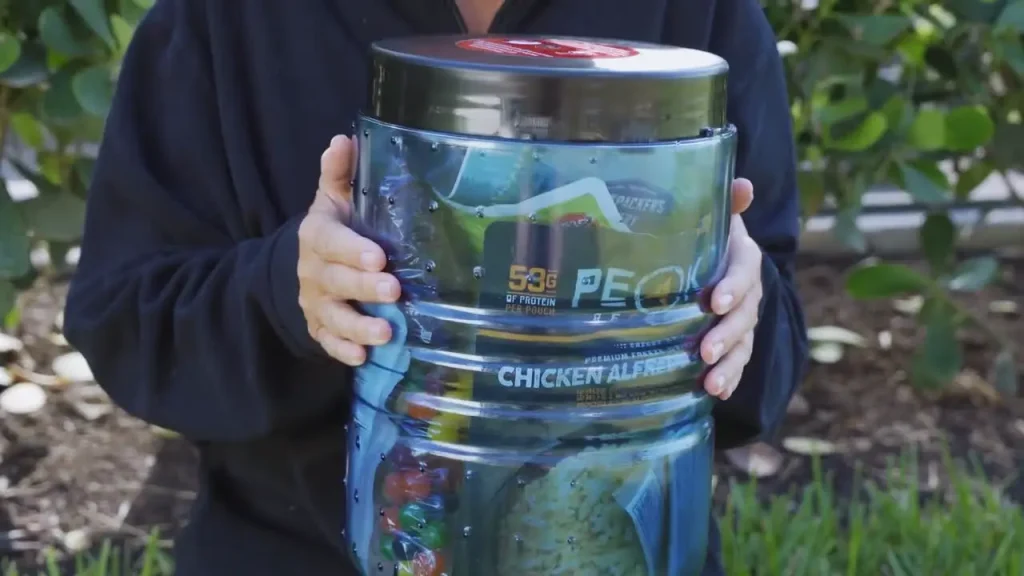
Bear canisters always seem spacious when they’re empty. Add breakfast, snacks, several freeze-dried dinners, toothpaste, sunscreen, trash space, and a few bulky food packages, and that empty cylinder fills surprisingly fast.
The BV500 gives you more breathing room than smaller models.
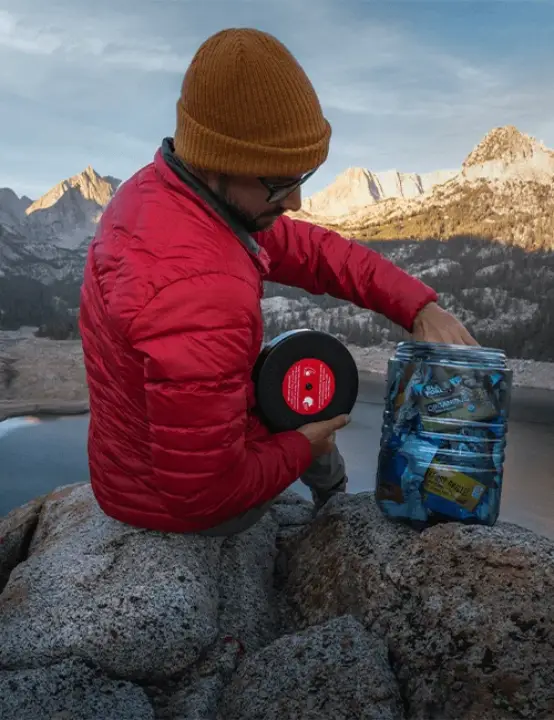
Its transparent body is another genuinely useful feature. Instead of pulling everything out to find one snack buried near the bottom, you can rotate the canister and see where it is.
After a long hiking day, that little convenience feels bigger than it sounds.
The wide opening helps too. There’s enough room to reach inside, move food bags around, and use the available space efficiently rather than working through a narrow neck.
🥾 The tool-free lid also keeps things simple. No quarter. No screwdriver. No special key. Push the tabs and unscrew the lid.
The trade-off is bulk.
A BV500 occupies a big section of a backpack and keeps occupying it even after half the food is gone. Hikers with 55- to 65-liter packs will generally have an easier time than ultralight backpackers trying to fit everything inside a 40-liter pack.
That fixed size is the main reason not to automatically buy the largest BearVault.
Who it’s best for: Backpackers who regularly take four- to seven-day trips or want one canister that covers the widest range of outings.
Who should skip it: Hikers whose trips are almost always one to three nights.
Pros:
- Excellent usable capacity
- Transparent body
- Wide opening
- No tool required
- Good capacity-to-weight ratio
- Can work as a camp stool when properly closed
Cons:
- Bulky inside smaller backpacks
- Fixed size doesn’t shrink as food disappears
- More capacity than many weekend hikers need
If the goal is to buy one bear canister and stop thinking about it, the BV500 is still the safest starting point for most backpackers.
See the BearVault BV500 and current price at REI
BearVault BV450 Jaunt: Best for Weekend Trips
Specs:
- Capacity: 7.2 liters / 440 cubic inches
- Weight: 2 lbs. 1.6 oz.
- Material: Polycarbonate
- Dimensions: 8.7 x 8.3 inches
- Opening: Tool-free screw-top lid
- Best Use: One- to four-day solo trips
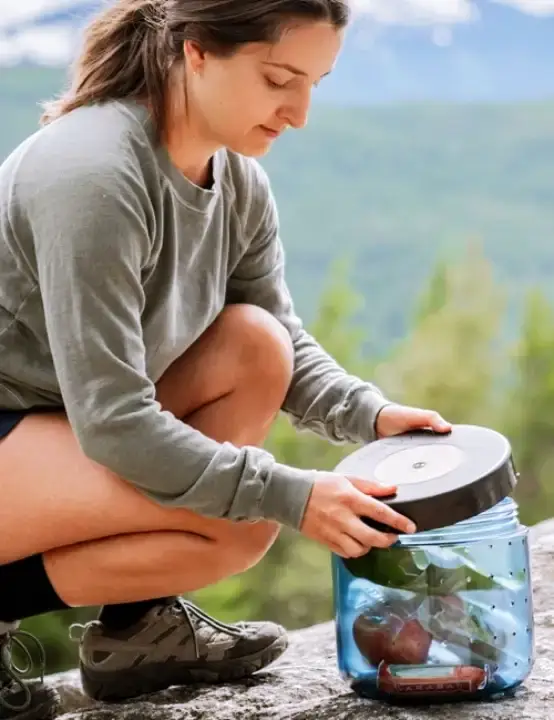
The BearVault BV450 Jaunt is what the BV500 looks like after removing the capacity many weekend backpackers rarely use.
Same basic shape.
Same transparent shell.
Same wide opening.
Same tool-free lid.
But it’s much shorter.
That matters inside a backpack.
The BV450 is easier to fit horizontally in many packs, which opens up more options for organizing a quilt, puffy, cookware, rain gear, and other bulky items around it.
REI describes the BV450 as suitable for roughly four days of solo food or a weekend for two.
For a carefully packed solo menu, that’s realistic enough as a planning reference—but food choices make a huge difference.
Commercial packaging wastes space quickly. Repacked dehydrated meals, tortillas, bars, nuts, and calorie-dense snacks are much easier to work with.
🏕️ The BV450 feels particularly well matched to the way many recreational backpackers actually travel: Friday afternoon at the trailhead, two nights outside, and back by Sunday.
Why carry an extra-tall container if that capacity is almost always empty?
The downside appears when trips get longer.
Once toiletries, trash, and all the little scented items are added, 7.2 liters can start feeling tight much sooner than expected.
Who it’s best for: Solo hikers who mostly take overnight and weekend backpacking trips.
Who should skip it: Anyone regularly carrying four or more full days of food.
Pros:
- More compact than the BV500
- Good weight for a hard-sided canister
- Transparent
- Tool-free opening
- Easy to organize
- Better fit in many smaller packs
Cons:
- Capacity gets tight on longer trips
- Limited usefulness for two people
- Same relatively wide diameter as larger BearVault models
If the BV500 feels like carrying an empty bucket by the final morning, the BV450 is probably the better fit.
Compare BearVault sizes at REI
BearVault BV475 Trek: Best Mid-Size Option
Specs:
- Capacity: 9.3 liters / 565 cubic inches
- Weight: 2 lbs. 4 oz.
- Dimensions: 8.7 x 10.5 inches
- Material: Polycarbonate
- Opening: Tool-free screw-top lid
- Best Use: Multi-day solo backpacking
The BV475 Trek might be the most interesting BearVault for backpackers who keep getting stuck between the BV450 and BV500.
The BV450 is wonderfully compact—but its capacity can become restrictive.
The BV500 has plenty of room—but plenty of backpackers don’t need 11.5 liters on most trips.
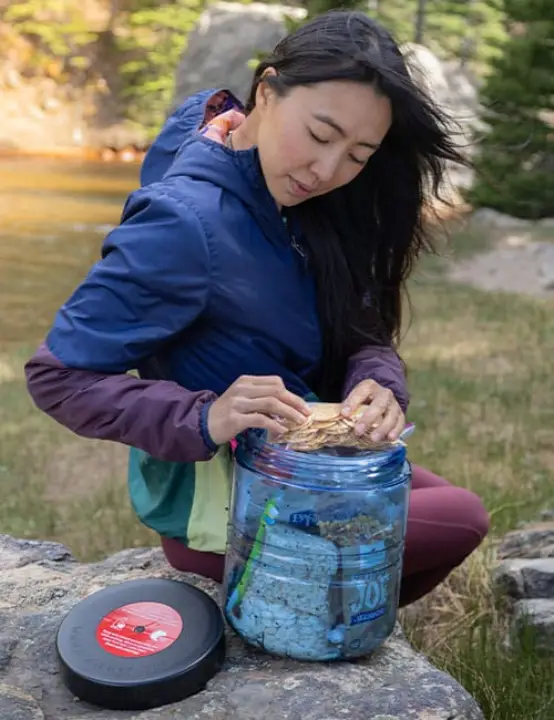
The BV475 lands in the middle with 9.3 liters of capacity at 2 pounds 4 ounces. REI lists it for roughly five to six days of food and notes that its shorter profile can fit sideways in many packs.
That combination is compelling.
You get noticeably more room than the BV450 without carrying the full height of a BV500.
For three- to five-night solo trips, that’s often the sweet spot.
🌲 The shorter profile can also make pack organization easier. Instead of a tall cylinder dominating the main compartment, the canister can fit more naturally among softer gear.
Like the other BearVaults here, it has clear sides, a wide opening, and a lid that doesn’t require tools.
That makes the differences between these three models mostly about how much unused volume you’re willing to carry.
And for many backpackers, 9.3 liters is simply closer to the amount of space actually needed.
Who it’s best for: Solo backpackers who regularly take three- to six-day trips.
Who should skip it: Hikers who usually travel for only a weekend—or consistently need maximum food capacity.
Pros:
- Useful middle-ground capacity
- Lighter and shorter than the BV500
- More forgiving than the BV450
- Transparent body
- Tool-free opening
- Easier to fit sideways in many packs
Cons:
- Still bulky compared with soft food storage
- Doesn’t save a huge amount of weight versus the BV500
- Adds another size decision to an already crowded BearVault lineup
For a backpacker who looks at the BV450 and thinks too small, then looks at the BV500 and thinks probably more than necessary, the BV475 is the one to pay attention to.
Compare BearVault sizes at REI
REI Co-op Traverse Modular Bear Canister: Best Adjustable Option

Specs:
- Large Capacity: 11.25 liters / 686 cubic inches
- Small Capacity: 6.75 liters / 412 cubic inches
- Large Weight: 3 lbs. 9.1 oz.
- Small Weight: 2 lbs. 8 oz.
- Material: Polycarbonate
- Dimensions: 9.1 x 13 inches / 9.1 x 8 inches
- Opening: Tool-free two-step locking system
The REI Co-op Traverse Modular tackles one of the most annoying things about bear canisters: you normally have to choose one fixed size before the trip begins.
With the Traverse, you don’t.
Use the smaller 6.75-liter configuration for a short outing or assemble the full 11.25-liter configuration for longer trips. As food disappears, the sections can nest together to free up room inside the pack.
That’s genuinely useful.
Imagine starting a six-day trip with the pack stuffed tight. By day four, half the food is gone—but with a conventional canister, the same large cylinder is still occupying the same space.
The Traverse lets you reclaim some of it.
The translucent shell also keeps food visible, and the two-step locking system opens without a separate tool.
So why isn’t it the best overall pick?
Weight.
In full-size mode, the Traverse weighs 3 pounds 9.1 ounces—more than a pound heavier than the BV500 for nearly the same capacity. Even the small configuration weighs 2 pounds 8 ounces.
That’s a substantial penalty when climbing all day.
The opening mechanism is another consideration. Some users find the two-stage lock perfectly straightforward, while others report that it’s harder on the hands than expected. REI’s current customer rating sits at about 3.6 out of 5, notably lower than the BearVault models above.
🎒 So the Traverse makes the most sense when space flexibility matters more than weight.
Who it’s best for: Backpackers who alternate between short and long trips and dislike carrying unused canister volume.
Who should skip it: Anyone prioritizing low pack weight.
Pros:
- Two practical capacities
- Can become more compact during a trip
- Translucent body
- No coin required
- Included carry bag
- Doubles as a camp stool
Cons:
- Heavy
- Larger diameter
- Closure gets mixed feedback from users
- Newer models always warrant an extra check against destination-specific rules
The Traverse solves a real problem—it just asks you to carry more weight to solve it.
See the REI Co-op Traverse and other current bear canisters at REI
Bearikade Weekender: Best Premium Lightweight Option
Specs:
- Capacity: About 650 cubic inches / roughly 10.6 liters
- Weight: Just over 31 oz.
- Diameter: 9 inches
- Length: 10.5 inches
- Construction: Carbon-fiber composite
- Opening: Quarter-turn fasteners
- Best Use: High-mileage and lightweight backpacking
The Bearikade Weekender answers a question ultralight backpackers eventually ask:
How much would it cost to make this big plastic cylinder noticeably lighter?
Quite a lot.
But the weight savings are real.
The Weekender provides roughly 10.6 liters of capacity while weighing just under two pounds.
Compare that with a BV500 at roughly 2.5 pounds or the full-size REI Traverse at more than 3.5 pounds, and the reason long-distance hikers pay attention becomes obvious.
Half a pound might not transform a casual overnight.
Carry it over a mountain pass.
Then another.
Then another.
Do that for several hundred miles, and ounces start feeling very different.
⛰️ The carbon-fiber construction is what makes the low weight possible, but it’s also what pushes the price into an entirely different category.
This is not a value pick.
It’s a specialist piece of gear for backpackers who use a bear canister often enough—or hike far enough—that reducing carried weight justifies the expense.
The opening requires a coin or similar flat object, so access isn’t quite as effortless as the BearVault lid.
That feels like a minor inconvenience compared with the bigger decision: whether saving those ounces is worth several hundred dollars.
Who it’s best for: Thru-hikers, high-mileage backpackers, and dedicated lightweight hikers.
Who should skip it: Occasional backpackers who need a canister only a few times per year.
Pros:
- Outstanding capacity-to-weight ratio
- Under 2 pounds
- Useful size for longer trips
- Durable construction
- Particularly appealing for high-mileage routes
Cons:
- Very expensive
- Requires a coin or similar tool
- Difficult to justify for occasional use
For someone counting ounces across hundreds of trail miles, the Weekender can make sense. For everyone else, a BearVault leaves a lot more money available for the rest of the gear list.
How to Choose the Best Bear Canister for You
The easiest mistake is choosing a canister by capacity alone.
A better decision comes from four questions:
Is it accepted where you’re going?
Will all the food and scented items fit?
Will it fit comfortably inside your backpack?
Is the weight reasonable for the kind of trip you’re taking?
Answer those four and the shortlist becomes much smaller.
IGBC Certification: Start With Your Destination
Before buying anything, check the regulations for the trail, park, or wilderness area where the canister will actually be used.
The Interagency Grizzly Bear Committee (IGBC) maintains a list of certified bear-resistant products, but certification isn’t the same as universal acceptance.
Individual land managers can maintain their own rules.
Yosemite National Park, for example, publishes a specific list of containers allowed in its wilderness. As of July 2026, that list includes the BearVault 450, 475, and 500, Bearikade Weekender models meeting its criteria, the Garcia Backpackers’ Cache, and Counter Assault Bear Keg, among others.
That’s why the correct order is always:
Choose the trip → check the rules → choose the canister.
Not the other way around.
Volume & Capacity: Food Isn’t the Only Thing Going Inside
A rough starting point:
| Capacity | Good Starting Point For |
|---|---|
| 6–7 L | Overnight to short solo trips |
| 7–9 L | Weekend to roughly 4-day trips |
| 9–10 L | Multi-day solo trips |
| 11–12 L | Longer solo trips or short shared trips |
These numbers are intentionally approximate.
A carefully repackaged menu can use dramatically less space than several bulky commercial food packages.
The bigger mistake is forgetting everything besides meals.
Depending on the regulations where you’re hiking, the canister may also need to hold toothpaste, lip balm, sunscreen, soap, medications, trash, and other scented items. Yosemite explicitly treats items such as toiletries, cosmetics, medications, trash, and drinks as food-storage items.
Trail Tip: Do a full packing test at home—not just with food, but with everything that will need to go inside overnight.
If the lid barely closes in the kitchen, choose the next size up.
Weight: Think in Terms of Trail Miles
Bear canisters are heavy enough that even modest differences matter.
But paying a premium to save weight only makes sense when that weight savings matters to the trip.
For an occasional weekend backpacker:
BV450 or BV500: sensible.
For someone regularly covering long mileage:
BV475: lighter middle ground.
For a thru-hiker carrying a canister for hundreds of miles:
Bearikade: much easier to justify.
Don’t chase ounces just because a lighter model exists.
Spend money where it noticeably improves the kind of backpacking you actually do.
Shape & Packability
Capacity tells you how much food fits inside.
Dimensions tell you whether everything else still fits in the backpack.
That’s why the BV475 deserves more attention than its simple capacity number suggests.
At 10.5 inches tall, it’s shorter than the BV500 and REI specifically notes that it fits sideways in most packs.
A canister that fits horizontally can be easier to organize around than one that runs vertically through most of the main compartment.
🎒 Before removing the tags, put the canister inside the pack you actually use.
Then add:
- Sleeping bag or quilt
- Shelter
- Puffy
- Rain gear
- Cook kit
- Extra layers
A canister isn’t truly the right size if fitting it means everything else has to hang awkwardly from the outside of the pack.
Opening Mechanism
This sounds minor at home.
It doesn’t feel minor when it’s 35°F, your fingers are cold, and breakfast is locked inside.
BearVault: tool-free tabs.
REI Traverse: two-step tool-free lock.
Bearikade: quarter-turn fasteners requiring a coin or similar object.
No system is perfect.
If hand strength is limited or cold-weather backpacking is common, try opening the canister several times before committing to it.
Practical Tips for Using Your Bear Canister
A great canister used incorrectly isn’t much help.
Pack every required scented item.
Food is only part of the equation. Toiletries, sunscreen, trash, medication, soap, lip balm, and other scented products may need to go inside too.
Repackage food before the trip.
Boxes and oversized bags waste space.
Use simple resealable bags and remove unnecessary packaging.
Put the first day’s food somewhere accessible.
Food that will be eaten before storage is required doesn’t necessarily need to spend the hiking day buried at the bottom of the canister. Follow local regulations, but avoid repeatedly unpacking everything just to reach lunch.
Keep the canister closed whenever you’re not actively using it.
An open bear canister is just a very heavy bucket.
Store it where it can’t roll away.
Avoid cliffs, steep slopes, streams, lakes, and other places where a bear could push the container somewhere unreachable.
Keep it out of the tent.
Food storage belongs away from the sleeping area and in accordance with local campsite guidance.
Don’t tie a rope to it overnight.
The smooth shape is part of what makes a hard-sided canister difficult for an animal to carry.
Use the empty space during the day.
As food disappears, cookware or other gear can ride inside the canister while hiking.
Practice opening it before the trip.
Especially with cold hands.
Especially if the opening mechanism is new.
And definitely before discovering at sunrise that breakfast is locked inside.
Frequently Asked Questions
Do I really need a bear canister?
If the land manager requires one, yes.
Some wilderness areas require hard-sided bear-resistant containers. Others allow different storage methods.
Yosemite requires approved bear-resistant food storage throughout its wilderness.
Always check the official rules for the exact destination before leaving home.
What’s the difference between a bear canister and a bear sack?
A canister is rigid.
A bear-resistant sack is flexible and substantially easier to pack.
That doesn’t mean the sack can automatically replace a canister.
Some land managers accept soft-sided bear-resistant storage and others don’t, so destination rules should make that decision.
Can a bear canister replace a bear hang?
Where approved canisters are allowed or required, yes—and they remove many of the frustrations associated with finding appropriate trees and building a proper hang.
In some places, hanging food is not permitted at all. Yosemite, for example, requires approved canisters in its wilderness rather than hanging food.
Can a bear open an approved canister?
Bear-resistant doesn’t mean indestructible.
Certification indicates that a product has passed recognized testing, but proper use still matters.
Close it correctly and follow the storage recommendations for the specific area.
Can I sit on my bear canister?
Many hard-sided models can double as stools when properly closed.
It’s convenient at campsites without logs or rocks—but check the manufacturer’s instructions for the exact model before routinely using it as furniture.
Can I rent instead of buying?
Absolutely.
Renting is often the smarter choice if bear-country backpacking only happens once every year or two.
Many parks and gateway outfitters rent approved containers, and renting also removes the problem of storing a big plastic cylinder at home for the other 50 weeks of the year.
Which BearVault size should most people buy?
For short solo trips: BV450.
For multi-day trips: BV475.
For maximum versatility and longer food carries: BV500.
That simple progression is more useful than automatically choosing the largest canister.
Our Final Verdict
A good bear canister shouldn’t make the trip more complicated than it needs to be.
It should hold everything that needs protection, fit cleanly into the backpack, open without a wrestling match, and meet the regulations for wherever the trail leads.
For most backpackers, the BearVault BV500 Journey still checks those boxes better than anything else.
Its 11.5-liter capacity gives you room for longer trips, the transparent body makes food easier to organize, and the tool-free lid removes one more small hassle at camp.
But don’t automatically buy the BV500 just because it’s the most versatile.
If most trips are quick weekends, the BV450 is smaller and easier to pack.
If three- to five-night trips are the norm, the BV475 may actually be the sweet spot. It gives you much of the BV500’s useful capacity without taking up quite as much room.
The REI Co-op Traverse Modular is worth considering if changing trip lengths make fixed-volume canisters frustrating, although its extra weight is a real compromise.
And the Bearikade Weekender belongs in a different conversation entirely: expensive, impressively light, and easiest to justify when every ounce will be carried for a very long way.
There isn’t one perfect bear canister.
There’s a right size for the food you’re carrying, the pack you’re using, and the trail ahead.
Get those three things right, verify the local rules, and the canister becomes exactly what it should be: one less thing to think about once camp is set. 🌲
Ready to narrow it down? For most backpackers, comparing the BV450, BV475, and BV500 side by side is the easiest way to see which size makes sense. See current BearVault options at REI.
Affiliate Disclosure: GearForTheOutdoors.com participates in affiliate programs, including REI, Amazon, REI Outlet, Garage Grown Gear, evo, and other trusted partners. When you purchase through links on this site, GearForTheOutdoors.com may earn a small commission at no extra cost to you. That helps support practical, useful outdoor gear content and keeps it freely accessible.
Disclaimer: This post is for informational purposes only. Always verify current land-management regulations, approved bear-resistant container lists, product details, availability, safety information, and manufacturer instructions before purchase or use. Outdoor regulations and gear availability can change, and requirements may vary by park, forest, wilderness area, season, and specific backcountry zone.