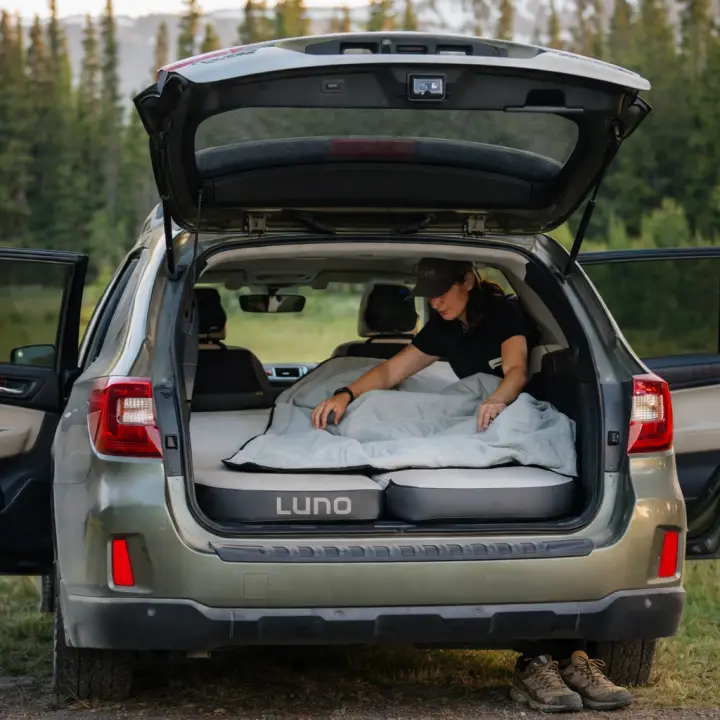
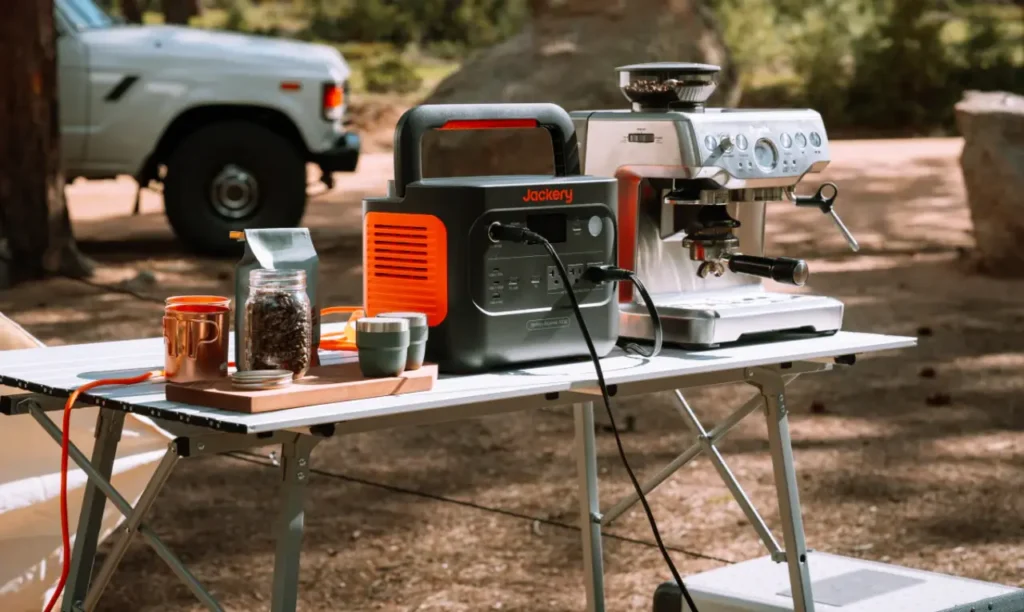
Car camping has a way of making comfort feel worth packing. A better mattress, colder food, softer lighting, a real morning coffee setup, maybe even a laptop for route planning or photos at camp—none of that feels excessive when the car is doing the hauling. 😊
That is exactly why portable power stations have become such a useful part of modern camping setups. They give campers quiet, fume-free power for the gear that makes camp feel smoother and more livable, especially on multi-day trips.
The tricky part is sorting through the specs. Watt-hours, output, recharge speeds, battery chemistry, surge power—on paper, a lot of models start to blur together fast.
This guide keeps the same practical focus as the original, but the product list has been updated around brands that fit the current GearForTheOutdoors affiliate mix and models that are still actively sold online. The goal is simple: help readers find the best portable power stations for car camping based on the way they actually camp, not just the biggest numbers on a product page.
Our Top Picks for Car Camping Power Stations
Here’s a quick look at our favorite portable power stations for car camping.
| Model | Capacity | Output | Weight | Best For |
|---|---|---|---|---|
| EcoFlow RIVER 2 Pro | 768 Wh | 800 W | 18.2 lbs | The All-Around Performer |
| Jackery Explorer 300 Plus | 288 Wh | 300 W | 8.27 lbs | Ultimate Portability |
| EcoFlow DELTA 2 | 1024 Wh | 1800 W | 27 lbs | Power-Hungry Campers |
| Goal Zero Yeti 500 | 499 Wh | 500 W | Grab-and-go compact class | Reliability & Brand Trust |
| Jackery Explorer 1000 v2 | 1070 Wh | 1500 W | Lightweight high-capacity option | Extended Trips & Van Life |
How to Choose a Portable Power Station for Camping
Before diving into the reviews, it helps to know which specs actually matter at camp. The right power station is not always the biggest or most expensive one. It is the one that fits the trip, the gear list, and the way power gets used over a couple of days outside.
Capacity (Watt-Hours): How Much Power Do You Need?
Think of watt-hours (Wh) as the size of the battery’s fuel tank. The higher the number, the more total energy the unit can store.
Here are a few rough examples:
- Smartphone: 10-15 Wh per charge
- Laptop: 50-80 Wh per charge
- LED Camp Lights: 5-10 W (so 20-40 Wh over 4 hours)
- Portable Fridge/Cooler: Averages 40-60 W when running. Over a 24-hour period, it might consume 400-700 Wh depending on the ambient temperature and efficiency.
Capacity Tiers:
- Small (Under 300 Wh): Best for weekend trips where the main goal is charging phones, headlamps, cameras, and maybe a small speaker.
- Medium (300-1000 Wh): The sweet spot for many car campers. This range can comfortably handle personal electronics and, in many cases, an efficient 12V fridge for a weekend.
- Large (1000+ Wh): Better for longer trips, more demanding camp kitchens, van life, work-from-camp setups, or group trips where multiple devices stay plugged in.
A helpful way to think about it: if the setup includes a powered cooler or fridge, capacity matters a lot more than people expect. 🔋
Output (Watts): What Can You Power?
If watt-hours tell how long a power station can run gear, watts tell what it can run at all.
You need the power station’s output rating to be higher than the wattage of the device you want to plug into it.
- Low-Wattage Devices: Phone chargers (10W), LED lights (5W), laptops (65W)
- Mid-Wattage Devices: Blenders (300-600W), projectors (150W), electric blankets (200W)
- High-Wattage Devices: Coffee makers (800-1200W), electric kettles (1500W), hair dryers (1800W)
It is also worth watching for continuous versus surge power. Continuous is what the station can deliver steadily. Surge is the brief boost some appliances need when starting up. Fridges, pumps, and some kitchen gear can all benefit from that extra margin.
For simple charging, output rarely becomes a problem. Once camp coffee, coolers, and cook gear enter the picture, it becomes one of the most important specs in the whole comparison.
Battery Chemistry: LiFePO4 vs. Lithium-Ion
Battery chemistry matters because it affects lifespan, durability, safety, and long-term value.
- LiFePO4 (LFP – Lithium Iron Phosphate): This is the modern standard for many of the best camping power stations. LFP batteries are stable, durable, and often rated for thousands of cycles before significant degradation.
- Lithium-Ion (NMC – Nickel Manganese Cobalt): Older models often used NMC. It is lighter and more energy-dense, but usually does not last as long as LFP.
For most campers buying a new unit today, LFP is the easy recommendation. It is better suited to repeated camping use, longer ownership, and the kind of real-world charging cycles that happen over years of trips. 😊
Ports and Outlets: Plug It All In
Take inventory of what usually gets charged at camp.
- AC Outlets: Best for laptops, camera chargers, coffee gear, and standard household plugs.
- USB-A: Still useful for smaller accessories and older charging cables.
- USB-C (PD): One of the most useful modern features. A 100W USB-C port is especially helpful for laptops, tablets, and newer devices.
- 12V DC (Car Port): A big one for campers using portable fridges, inflators, and car-compatible gear.
A good port layout can make a medium-size power station feel much more capable than the raw numbers suggest.
Recharging Methods: Wall, Car, and Sun
Most portable power stations recharge in three main ways:
- AC Wall Outlet: Usually the fastest option.
- 12V Car Charger: Slower, but useful for topping off while driving.
- Solar Panels: The best option for longer stationary trips and real off-grid use.
Fast wall charging is especially helpful for camping. Being able to recharge a unit while packing the car the night before a trip is one of those features that quickly feels essential.
The Best Portable Power Stations for Car Camping in Detail
EcoFlow RIVER 2 Pro – Best All-Around Performer
The EcoFlow RIVER 2 Pro still lands in one of the most useful size classes for car camping. It is large enough to be genuinely helpful, small enough to move around camp without much effort, and fast enough to recharge that it does not become a hassle between trips.
| Spec | Value |
|---|---|
| Capacity | 768 Wh |
| Output | 800 W (1600 W X-Boost) |
| Weight | 18.2 lbs |
| Battery Type | LiFePO4 (LFP) |
| Ports | AC, USB-A, USB-C, DC, car port |
Why It’s a Great Choice:
The RIVER 2 Pro remains one of the easiest power stations to recommend because the balance is so strong. Its 768Wh capacity is enough for a lot of real weekend use, while the 800W output covers the basics comfortably and gives enough flexibility for more than just phones and lights.
The fast recharge is still one of its best features. EcoFlow lists the RIVER 2 Pro with 0-100% wall charging in about 70 minutes, which is genuinely convenient for short-notice trips. The LFP battery and X-Boost support add even more long-term value.
Real-World Use:
This is a strong fit for a long weekend with a 12V fridge, lights, phones, laptops, and a few camp comfort extras. It is also a good match for campers who want one station that feels capable without jumping to a heavier 1000Wh-plus class. 🌲
Pros & Cons:
- Pros:
- Very fast AC charging
- Useful mid-size capacity for real camping trips
- Long-life LFP battery
- Strong port mix, including USB-C
- Cons:
- Fan noise can be noticeable under heavier load
- Not the best choice for very power-hungry kitchen setups
Who It’s Best For:
Campers who want one versatile, do-most-things-well power station for weekends, road trips, and general backup use.
Jackery Explorer 300 Plus – Ultimate Portability
Some campers do not need a big battery box. They just need something light, dependable, and easy to throw in the car.
That is where the Jackery Explorer 300 Plus makes a lot of sense.
| Spec | Value |
|---|---|
| Capacity | 288 Wh |
| Output | 300 W (600 W Surge) |
| Weight | 8.27 lbs |
| Battery Type | LiFePO4 (LFP) |
| Ports | 1 AC, USB-A, USB-C, car port |
Why It’s a Great Choice:
The Explorer 300 Plus is still a very appealing small-format option because it keeps the footprint tiny without feeling outdated. Jackery lists it at 288Wh with 300W output, and it still includes a 100W USB-C connection, which makes it much more useful for modern electronics than many older compact units.
At just over 8 pounds, it is easy to carry from the car to the picnic table, easy to stash in a tote or storage bin, and easy to justify for trips where power needs stay simple.
Real-World Use:
This is a smart choice for charging phones, cameras, headlamps, tablets, a laptop, and other smaller devices over a weekend. It is not a fridge power station and it is not meant to anchor a camp kitchen. But for personal electronics, it is tidy, light, and very practical. 😊
Pros & Cons:
- Pros:
- Extremely portable
- Great for smaller vehicles and minimalist kits
- Strong 100W USB-C for its size
- Modern LFP battery
- Cons:
- Too small for cooler/fridge-heavy setups
- Only one AC outlet
Who It’s Best For:
Weekend campers, festival campers, and anyone who mainly wants dependable charging for personal devices without adding much weight or bulk.
EcoFlow DELTA 2 – Power-Hungry Campers
If the RIVER 2 Pro is the sweet spot for many campers, the DELTA 2 is the step up for people who want fewer compromises.
| Spec | Value |
|---|---|
| Capacity | 1024 Wh |
| Output | 1800 W (2700 W Surge, up to 2200W with X-Boost) |
| Weight | 27 lbs class |
| Battery Type | LiFePO4 (LFP) |
| Ports | 6 AC, multiple USB-A and USB-C, car port, DC outputs |
Why It’s a Great Choice:
EcoFlow’s DELTA 2 remains one of the strongest medium-large options for car camping because it combines useful battery size with genuinely capable output. At 1024Wh and 1800W, it can do much more than charge gadgets. It can support real camp appliances, powered coolers, and more demanding setups without feeling like a full-size van build battery system.
Fast charging is another big advantage. EcoFlow says it can charge from 0-80% in about 50 minutes and 0-100% in around 80 minutes, which is excellent for a station in this class. That makes it especially attractive for campers who use one unit for both home backup and travel.
Real-World Use:
This is the pick for campers who want to run a fridge, charge multiple devices, plug in coffee gear or a small appliance, and stop worrying about every single watt. It also fits very well in family camp setups or longer trips where more gear stays powered throughout the day. ⛺
Pros & Cons:
- Pros:
- Strong 1024Wh capacity
- High 1800W output for demanding gear
- Excellent recharge speeds
- LFP battery with good long-term value
- Cons:
- Heavier than mid-size weekend-focused units
- More than many casual campers actually need
Who It’s Best For:
Campers who want enough power for fridges, camp kitchen extras, and longer weekends without jumping into oversized overland-only systems.
Goal Zero Yeti 500 – Reliability & Brand Trust
Goal Zero still carries a lot of weight with campers for one simple reason: the brand has a long outdoor track record, and the Yeti line has been a familiar part of camping and overland setups for years.
The current Yeti 500 is a better fit for this list than the older version because the platform has been updated.
| Spec | Value |
|---|---|
| Capacity | 499 Wh |
| Output | 500 W (1000 W Surge) |
| Weight | Compact grab-and-go size |
| Battery Type | LiFePO4 (LFP) |
| Ports | Multiple device charging ports including AC and USB options |
Why It’s a Great Choice:
Goal Zero’s newer Yeti 500 gives campers a more current option than the older lower-output models that used to dominate this size range. Goal Zero highlights 499Wh capacity, 500W AC output, 1000W surge, faster charging, and a more durable LFP-based platform in the updated generation.
That makes it a much better match for today’s camping needs, especially for people who want something from a proven outdoor-focused brand and like the idea of staying inside the Goal Zero ecosystem.
Real-World Use:
The Yeti 500 works well for a typical weekend setup with lights, phones, camera batteries, laptops, and moderate camp power needs. It is more capable than ultra-compact models, but it still feels much easier to move and pack than 1000Wh-class units. 🌤️
Pros & Cons:
- Pros:
- Trusted outdoor brand
- Updated output compared to older compact Yetis
- Better battery tech than past generations
- Solid middle-ground option for weekend camping
- Cons:
- Usually not the value leader on raw specs
- Less ideal for heavy appliance use than 1000Wh-class models
Who It’s Best For:
Campers who value brand trust, straightforward usability, and a proven outdoor reputation more than chasing the most aggressive spec-to-price ratio.
Jackery Explorer 1000 v2 – Extended Trips & Van Life
For campers who want a bigger step up without moving into very heavy, premium overland-only systems, the Jackery Explorer 1000 v2 is one of the more compelling current options.
| Spec | Value |
|---|---|
| Capacity | 1070 Wh |
| Output | 1500 W |
| Weight | Lighter than many mainstream alternatives in its class |
| Battery Type | Long-life modern platform |
| Ports | AC, dual 100W USB-C, USB-A, more |
Why It’s a Great Choice:
Jackery positions the Explorer 1000 v2 as a lighter, updated 1000Wh-class unit with 1070Wh capacity and 1500W output, plus very fast charging and dual 100W USB-C ports. That combination makes it especially appealing for camping because it offers enough headroom for more serious gear without immediately feeling oversized.
It is also the kind of model that fits nicely between car camping and van life. It has enough power for more ambitious travel, but it still feels portable enough for people who are not building a permanent electrical system into a vehicle.
Real-World Use:
This is a strong choice for extended trips, mobile work, road travel with a fridge, and campers who want room for coffee gear, cameras, laptops, lights, and other daily-use electronics without constantly managing battery anxiety. 🚐
Pros & Cons:
- Pros:
- Strong 1000Wh-plus capacity
- More output than many smaller camping-focused units
- Fast recharge times
- Useful dual 100W USB-C setup
- Cons:
- More than most weekend campers need
- Not as compact as true grab-and-go options
Who It’s Best For:
Longer-trip campers, van travelers, and anyone who wants a more capable portable power setup without jumping to a very large, very heavy system.
Practical Tips for Using Your Power Station
- Keep it out of direct heat: A shaded, ventilated spot is much better for long-term battery health than leaving the unit baking in a hot vehicle or on a sunny camp table.
- Use the 12V port wisely: If a portable fridge is part of the setup, using the dedicated car-style output is often one of the most efficient ways to power it.
- Recharge while driving when possible: Car charging is slower than wall charging, but it can make a noticeable difference on road-trip-style camping.
- Store it partially charged: For longer-term storage between trips, a partially charged battery is usually better than leaving it completely full or completely empty.
- Match the station to the trip: A lightweight 300Wh unit can be perfect for a quick overnight. A bigger trip with a fridge and camp kitchen may justify 1000Wh or more. 😊
Frequently Asked Questions
What size power station do I need for a camping fridge?
For a typical 12V camping fridge or cooler, around 500Wh is a reasonable starting point for shorter trips, but 750Wh to 1000Wh gives much more breathing room for a weekend, especially in hotter conditions.
Can I charge a power station from my vehicle while driving?
Yes. Most current portable power stations support car charging through a 12V vehicle connection, though it is slower than wall charging.
Is LiFePO4 really worth it for camping?
For most buyers today, yes. LFP batteries usually offer much better cycle life and long-term durability than older chemistries, which makes them a strong fit for repeated camping use.
Do I really need 1000Wh for car camping?
Not always. If the trip is mostly about charging small electronics, a compact unit can be enough. Once a fridge, coffee setup, work gear, or several people enter the mix, a 1000Wh-class model starts to make much more sense.
Final Verdict: Powering Your Next Adventure
The best portable power station for camping is the one that matches the way camp actually runs.
For many campers, that means a mid-size station that can handle lights, phones, laptops, and maybe a fridge without becoming a giant box that is annoying to move. For others, it means enough output to support coffee gear, longer trips, or a more complete rolling basecamp.
For most readers looking for the best portable power stations for car camping, the EcoFlow RIVER 2 Pro remains one of the strongest all-around choices because it balances size, speed, useful output, and real-world versatility so well. The Jackery Explorer 300 Plus is the better call when portability matters most. If the setup includes a fridge, kitchen extras, or longer stays outside, the EcoFlow DELTA 2 and Jackery Explorer 1000 v2 both offer a much more comfortable margin. And for shoppers who value a trusted outdoor power brand, the Goal Zero Yeti 500 stays in the conversation for good reason.
A good power station does not just charge devices. It makes camp easier, cleaner, quieter, and more flexible—and that is exactly why it has become one of the most useful upgrades in modern car camping.
Affiliate Disclosure: GearForTheOutdoors.com participates in affiliate programs, including REI, Amazon, REI Outlet, Garage Grown Gear, evo, and other trusted partners. When you purchase through our links, we may earn a small commission at no extra cost to you. That helps support our content and keeps our recommendations useful, practical, and free.
Disclaimer: This post is for informational purposes only. Always verify current product details, fit, availability, safety information, and manufacturer warranties before purchase or use. Outdoor conditions and gear performance can vary depending on setup, weather, terrain, and experience level.