First-aid gear rarely gets the same attention as a new tent, a warm sleeping bag, or a pair of trail shoes that finally fits just right. But when a scraped shin, a kitchen nick, a blister, or a sting shows up in the middle of a trip, that small red case suddenly matters a lot. 😊
That’s also where many campers and hikers get stuck. Building a kit from scratch can feel oddly complicated. It’s easy to overthink what to pack, forget a few basics, and keep putting it off until the next trip is already on the calendar.
That’s exactly why pre-built kits are so useful. The Coleman 205-Piece All-Purpose First Aid Kit is one of the most common starter options out there, and for good reason. It’s affordable, easy to find, and organized in a way that makes sense for real-world use.
But does it actually work well outdoors? Is it enough for camping weekends, trail days, road trips, and the little mishaps that tend to happen once everyone settles into camp?
This review takes a close look at what’s inside, where the kit works best, where it falls short, and how to turn it from a basic pre-made option into something much more useful for camping, hiking, and everyday vehicle readiness. 🏕️
Quick Verdict: An Excellent Foundation
For most campers, families, van-lifers, and casual hikers, the Coleman 205-Piece First Aid Kit is a smart buy. It covers the basics well, stores them in a case that’s easy to keep organized, and removes a lot of the friction that comes with building a first-aid kit from nothing.
Its biggest strength is not that it does everything. It’s that it gives you a clean, practical foundation for the most common minor injuries: cuts, scrapes, blisters, stings, and basic wound care. The case is sturdy, the layout is easy to understand, and the included supplies make sense for daily life and beginner-friendly outdoor trips.
It does have limits. There are no oral medications, the included tools are fairly basic, and the full case is bulkier than many hikers will want in a small trail pack. But as a starter kit for car camping, day trips, home use, or a vehicle emergency stash, it gets a lot right for the price. 👍
| The Gist |
|---|
| What It Is: A comprehensive, 205-piece first aid kit designed for common, minor injuries. |
| Best For: Car camping, day hiking, home and vehicle preparedness, and as a base for a custom kit. |
| Key Features: Crush-resistant case, excellent “EZ-Find” organization, latex-free bandages, and hiker-friendly molefoam. |
| The Takeaway: For the price, it’s one of the best and most practical starter kits on the market. It covers the essentials so you can focus on adding the personal touches. |
What’s Inside? A Deep Dive into the 205 Pieces
The “205 pieces” headline sounds big, but piece counts can be a little misleading in first-aid kits. A large total often includes lots of individual bandages, wipes, and small consumables rather than a broad range of serious medical tools.
That doesn’t make the Coleman kit bad. It just means the real question is not the number. The real question is whether the contents match the kinds of small injuries and annoyances that actually happen around camp, on short hikes, and during road travel. In that respect, this kit is put together pretty well. 😊
The Case & Organization
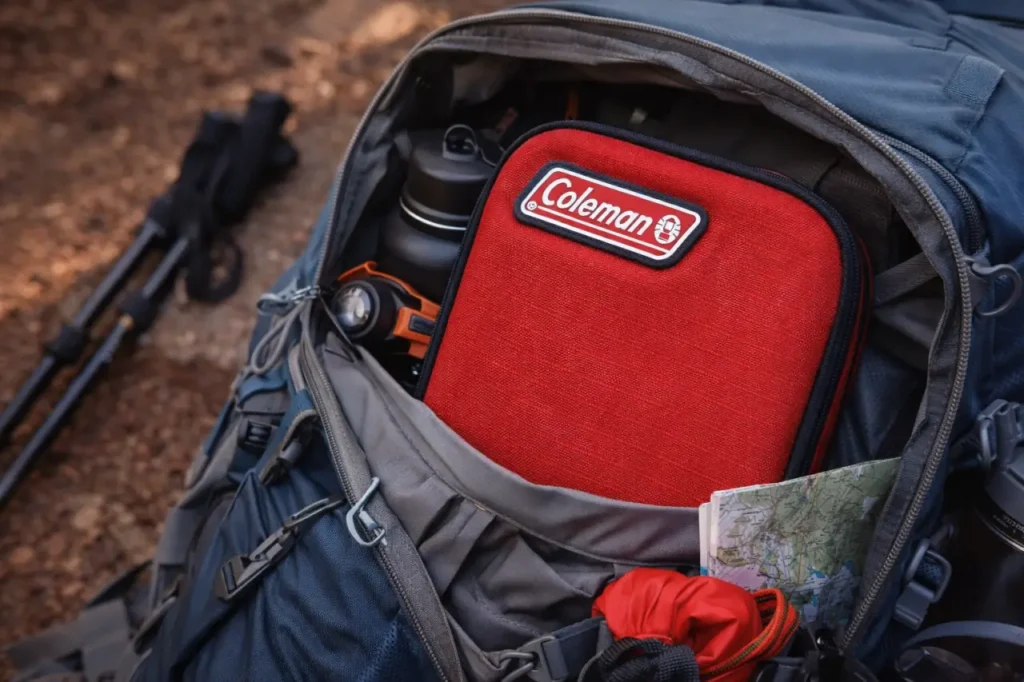
The case is one of the best parts of the whole package. It uses a semi-hard, crush-resistant shell that holds its shape better than a soft zip pouch, which matters when it gets tossed into a gear bin, packed under camp kitchen supplies, or stored in a crowded trunk.
Inside, the layout is simple and practical. Coleman’s “EZ-Find” system uses labeled sections and clear compartments so supplies are easy to identify at a glance. That may not sound exciting, but it makes a real difference when someone has a bleeding knuckle, a kid is upset, or the light is fading and nobody wants to dump a whole kit onto a picnic table.
This style of organization is especially helpful for beginners. Instead of feeling like a mystery pouch full of random bandages, the kit feels approachable. That makes it more likely to be used correctly, restocked when needed, and kept in regular rotation instead of forgotten in a closet.
Wound Care & Bandages
This is where the Coleman kit feels strongest. It includes a broad mix of bandages and dressing materials suited to the kinds of minor injuries that happen most often outdoors.
- Adhesive Bandages (Latex-Free): There’s a generous assortment of sizes and shapes, including standard strips, fingertip styles, and knuckle bandages. That variety matters because small cuts on hands, fingers, and knees rarely fit one universal shape very well.
- Gauze Pads & Roll: These help with larger scrapes, cuts that need more coverage, or situations where a regular adhesive bandage just won’t do the job. They also give the kit some flexibility for cleaning, cushioning, and wrapping.
- Butterfly Wound Closures: These are a strong inclusion for a budget-friendly kit. They can help pull the edges of a small cut together and are useful to have on hand for minor wounds that are a little more awkward than a standard bandage can handle.
For common camp mishaps, this section of the kit does the heavy lifting. It’s not designed for major trauma, but for ordinary cuts, abrasions, and skin-level injuries, it covers the basics well. 🩹
Antiseptics & Cleaning
A first-aid kit becomes much more useful when it helps with wound cleaning, not just wound covering. Dirt, grit, sweat, sunscreen, and camp grime all make proper cleaning more important once you step outside.
- Antiseptic Towelettes: These are the kind of item that gets used constantly. They’re quick, compact, and useful for cleaning around a wound before dressing it.
- Alcohol Prep Pads: These are better for sterilizing small tools than for cleaning open wounds directly. They’re handy to have, especially if tweezers or scissors need a quick wipe-down first.
This part of the kit is practical rather than fancy, which fits the overall approach. It’s built for the kind of first aid most campers actually perform: clean the area, deal with the cut or scrape, cover it, and get back to the day.
Specialty Items & Tools
This is where the kit starts to stand out from cheaper, more generic options that rely almost entirely on piles of adhesive bandages.
- Moleskin: This is one of the most useful items in the whole kit for hikers. Blisters can turn a good trail day into a long, miserable walk back to the trailhead. Having molefoam on hand for hot spots is a genuinely valuable detail.
- Sting Relief Wipes: These are helpful for bug bites and stings around camp, especially during warmer months when mosquitoes, wasps, and other insects tend to show up right when everyone is finally trying to relax.
- Safety Pins, Scissors & Tape: None of these tools are premium, but they’re useful. They round out the kit and make it more functional for basic dressings and small field fixes.
- Nitrile Gloves: A small inclusion, but an important one. Gloves are easy to forget when building a kit from scratch, and they matter anytime someone is helping another person with a wound.
- Finger Splints: This is a surprisingly thoughtful addition for a mass-market kit. A jammed finger or awkward hand injury is not unusual around camp, especially with firewood, coolers, and camp setup.
These items make the Coleman kit feel a little more intentional than many entry-level kits in the same general price range. 😊
What’s Missing? The Obvious Gaps
No pre-made first-aid kit covers everything, and this one definitely leaves room for improvement.
The biggest omission is oral medication. There are no pain relievers, allergy medications, anti-diarrhea tablets, or antacids. That’s common for liability and packaging reasons, but it still means the kit feels incomplete until those items are added.
That matters because many of the most common camp problems are not cuts at all. Headaches, sore muscles, mild allergic reactions, stomach trouble, and dehydration-related discomfort are often more likely than a deeper wound on a simple weekend trip.
The kit also is not built for serious trauma. There’s no tourniquet, no full-size pressure dressing, and nothing that would make this appropriate as a dedicated backcountry trauma kit. That’s not really a knock against it, because that’s not what it claims to be. Still, it’s worth being clear: this is a minor-injury kit, not a comprehensive wilderness medical setup.
Real-World Scenarios: Where the Coleman Kit Shines
The easiest way to judge a first-aid kit is to stop thinking about the packaging and imagine where it will actually live. In the case of the Coleman kit, a few uses stand out right away.
The Ideal Car Camping Companion
This is probably the most natural fit. For car camping, bulk and weight matter a lot less than convenience and coverage. The Coleman case is easy to keep in a camp bin, kitchen tote, glove box area, or side compartment where it stays protected and easy to grab. 🚙
It handles the kinds of small camp injuries that happen all the time:
- A scrape from slipping on gravel near camp.
- A finger nick during dinner prep.
- A splinter from firewood or a picnic table.
- A blister that starts after a short trail walk in the wrong socks.
- A bug bite or sting that needs a little quick relief.
For that style of use, the kit feels well matched. It’s organized enough that it won’t become a mess after one use, and sturdy enough to survive being packed with the rest of camp gear.
A Solid Base for Your Day Hiking Pack
As a full kit, it’s not especially sleek for hikers who care about trimming bulk. The case is better suited to a larger daypack or to keeping in the car as backup. Still, the contents themselves are absolutely useful for day hiking.
That makes the Coleman kit a great source kit. In other words, it works well as a home base from which a smaller trail kit can be built. A few bandages, antiseptic wipes, moleskin, sting relief wipes, and gauze pads can be moved into a zip bag or ultralight pouch for trail days, while the full case stays in the vehicle for the drive home or post-hike cleanup.
That kind of flexibility adds a lot of value. Instead of buying separate kits for every use, this one can become the main supply hub for several smaller setups.
The “Just-in-Case” Kit for Your Vehicle or Van
For many people, this may be the best use of all. The Coleman kit is extremely well suited to permanent vehicle storage. It’s compact enough to tuck under a seat or into a trunk organizer, but complete enough to handle everyday incidents far beyond outdoor trips.
That includes things like:
- playground scrapes,
- roadside cuts,
- minor sports injuries,
- travel blisters,
- and day-to-day family mishaps.
For van life, it also fits the broader reality of life on the road. A van first-aid kit often needs to bridge outdoor use and normal daily use, and this one does that well. It’s not overbuilt, but it’s practical in a way that fits real travel. 🛻
Pros and Cons at a Glance
| What We Like (Pros) | What Could Be Improved (Cons) |
|---|---|
| ✅ Excellent Organization: The EZ-Find system with labeled pockets is a game-changer for finding supplies quickly. | ❌ No Medications: You’ll need to add your own pain relievers, allergy meds, and other personal pills. |
| ✅ Great Value: You get a huge number of useful supplies for a very reasonable price. | ❌ Bulky for Backpacking: The case is too large and heavy for anyone counting ounces on the trail. |
| ✅ Durable Case: The semi-hard shell protects the contents from being crushed in a full pack or car. | ❌ Basic Quality Tools: The included scissors and tweezers are functional but not high-end. |
| ✅ Comprehensive for Minor Injuries: It covers almost every common cut, scrape, and bug bite scenario. | ❌ Not for Serious Trauma: It is not equipped for severe bleeding or major medical emergencies. |
| ✅ Includes Moleskin: A huge plus for preventing and treating blisters on the trail. |
How to Customize Your Coleman First Aid Kit
This is where the kit becomes much more compelling. Out of the box, it’s a good general-purpose starter option. With a few thoughtful upgrades, it becomes much more personal, much more capable, and much better aligned with the way different people actually camp and hike.
Step 1: Add Your Personal Medications
This is the first upgrade to make. A small waterproof pill pouch, mini organizer, or clearly labeled medication bag can turn the kit into something far more useful right away.
Add single-dose packs or small labeled quantities of:
- Pain & Fever Reducer: Ibuprofen (Advil) and/or Acetaminophen (Tylenol).
- Antihistamine: Diphenhydramine (Benadryl) for allergic reactions.
- Anti-diarrhea Medication: Loperamide (Imodium).
- Antacid: For heartburn after a rich campfire meal.
- Any personal prescription medications you require.
These are the items many people end up needing first, especially on longer drives, family trips, and warm-weather weekends. Even a very well-organized wound kit feels incomplete without them. 💊
Step 2: Level-Up Your Blister Care
The included molefoam is a strong start, but hikers who spend longer hours on trail will probably want more.
- Add More Moleskin: A larger sheet gives more flexibility and lets you cut custom shapes ahead of time.
- Include Blister Pads: Hydrocolloid blister bandages can make a huge difference once a blister has already formed.
- Consider Leukotape: This is a favorite for hot-spot prevention because it sticks well and holds up better than many standard tapes.
If hiking is a regular part of your trips, this is one of the smartest places to customize the kit. A small foot problem can derail a whole weekend faster than many people expect.
Step 3: Beef Up the Tools
The included tools are serviceable, but not especially refined. Upgrading them makes the kit nicer to use and more dependable when it matters.
- Better Tweezers: Fine-point tweezers help a lot with splinters, ticks, and tiny debris.
- Trauma Shears: Small medical shears are easier to use and more versatile than the included scissors.
- Irrigation Syringe: This is one of the most useful upgrades for wound cleaning. Flushing out dirt with clean water is often more effective than simply wiping a wound surface.
These upgrades are especially worthwhile if the kit will live in a vehicle or camp bin rather than a minimal trail pack, since space is less of a concern there.
Step 4: Consider Your Environment & Activity
The smartest first-aid kits reflect where they’re going. A desert day-hike kit, a family campground kit, and a shoulder-season van kit do not all need exactly the same extras.
- Tick Key: A must-have in tick-heavy regions.
- Wound Closure: Steri-Strips can expand what the kit can handle for slightly wider cuts.
- Electrolyte Powder: Very useful for hot-weather trips or dehydration concerns.
- After-Sun Lotion/Aloe Vera: A simple but practical addition for sunny weekends.
This is where the Coleman kit makes a lot of sense. It’s affordable enough that customizing it doesn’t feel wasteful, and organized enough that those extra items can actually stay neat once they’re added. 😊
Alternatives to the Coleman Kit
The Coleman kit sits in a useful middle ground. It’s more organized and more complete than the cheapest generic kits, but it’s not trying to compete with specialized backcountry medical kits either.
- Pre-Made Specialist Kits (e.g., Adventure Medical Kits): Brands like AMK offer highly specialized kits (like the Mountain Series or Hiker kits) that are designed specifically for backcountry use. They are often lighter, more compact, and include higher-quality components and medications. They are also significantly more expensive. They represent the next step up for serious backpackers and mountaineers.
- The DIY Approach: Building your own kit from scratch allows for total customization and ensures every single component is high-quality and chosen by you. However, it is almost always more expensive and far more time-consuming. You have to source every item individually, which can be a major project.
For most people, the most practical route is still the hybrid one: Start with the Coleman kit, then customize it.
That approach works especially well for beginners, families, casual campers, and anyone who wants a dependable first-aid setup without spending hours researching every bandage and tool from scratch. It gives structure, coverage, and convenience right away, then leaves room to improve over time.
The Final Verdict: A Smart, Practical Starting Point
The Coleman 205-Piece First Aid Kit works best when it’s viewed for what it actually is: not an advanced wilderness medical system, but a highly practical starter kit for the kinds of minor injuries that happen most often during everyday outdoor life.
That makes it easy to recommend. The case is durable, the organization is genuinely useful, and the contents cover a wide range of cuts, scrapes, blisters, splinters, and stings without feeling chaotic or overcomplicated. For families, car campers, casual hikers, and anyone who wants a reliable grab-and-go kit in the car, it hits a very sensible sweet spot. 🏕️
It does need a few additions before it feels fully rounded. Medications are the biggest missing piece, and dedicated hikers may want better blister care plus upgraded tools. But that’s also part of the appeal. The Coleman kit gives a strong base without making the setup process feel expensive or intimidating.
For car camping, vehicle preparedness, and building out a personalized first-aid kit over time, this is one of the better starter options available. It’s organized, approachable, and useful in the ways that matter most.
Frequently Asked Questions (FAQ)
Is the Coleman first aid kit waterproof?
The semi-hard case is crush-resistant and water-resistant, so it can handle light moisture and the occasional splash. However, it is not fully waterproof. For boating, paddling, or very wet conditions, it makes sense to place it inside a dry bag for added protection.
Does this kit contain latex?
According to the manufacturer, the adhesive bandages in the kit are latex-free. That makes it a better choice for users who need to avoid latex in basic wound-care supplies.
How many people is this kit for?
It works well for a small group or family on a weekend trip, especially for common minor injuries. A group of 2 to 4 people is a realistic fit, though actual capacity depends on how often items get used and whether the kit is restocked between trips.
Is the Coleman 205-piece kit TSA-approved for air travel?
First-aid supplies are generally allowed, but the included scissors may be subject to current TSA rules depending on size and design. For smoother travel, it’s wise to place the kit in checked luggage or confirm the latest TSA guidance before flying.
Affiliate Disclosure: GearForTheOutdoors.com participates in affiliate programs, including REI, Amazon, REI Outlet, Garage Grown Gear, evo, and other trusted partners. When you purchase through our links, we may earn a small commission at no extra cost to you. That helps support our content and keeps our recommendations useful, practical, and free.
Disclaimer: This post is for informational purposes only. Always verify current product details, fit, availability, safety information, and manufacturer warranties before purchase or use. Outdoor conditions and gear performance can vary depending on setup, weather, terrain, and experience level.