In an era of GPS watches, satellite messengers, and mapping apps that can do almost everything short of hiking the trail for you, it is easy to assume the classic magnetic compass belongs in the past. But out on real terrain—where batteries drain faster in cold weather, screens crack, and thick forest or steep canyon walls can complicate digital navigation—a dependable compass still earns its place. 🧭
That is especially true for hikers, backpackers, hunters, outdoor educators, and anyone who wants a navigation tool that works without charging, updates, or signal. A good compass does more than point north. It helps build a stronger understanding of terrain, improves map-reading confidence, and adds an important layer of safety when plans get messy or visibility drops.
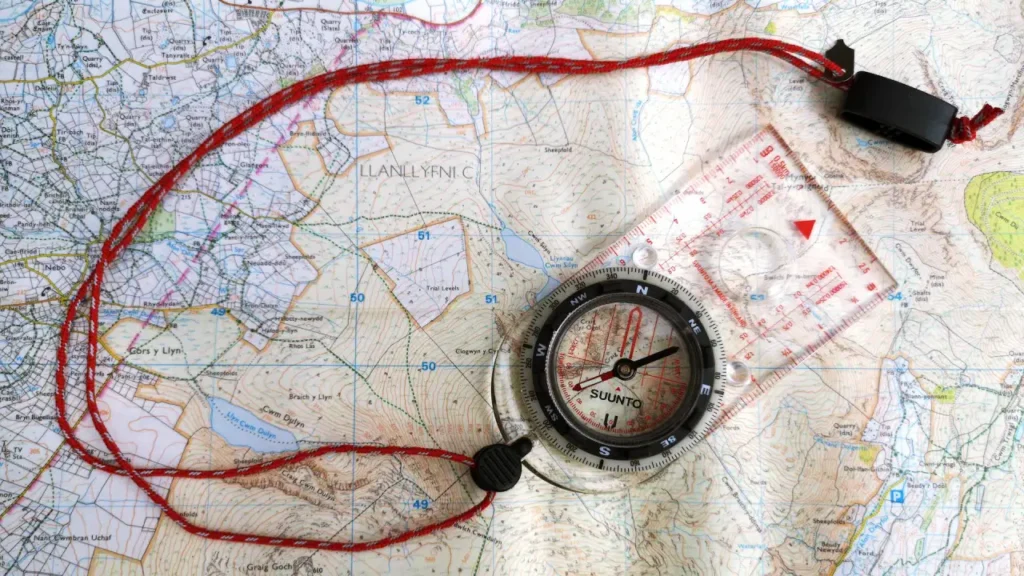
Among the many baseplate compasses available, the Suunto M-3 NH Compass has stayed relevant for a reason. It combines accurate sighting, adjustable declination, a clinometer, glow-in-the-dark markings, and a practical baseplate layout in one durable package. It is not flashy, and that is part of the appeal. It is a serious tool built for people who want dependable navigation without extra fuss.
This review breaks down what the Suunto M-3 NH does well, where it makes the most sense, and whether it is the right fit for your kit.
At a Glance: Suunto M-3 NH Quick Verdict
For readers who want the short version, the Suunto M-3 NH is a feature-rich mirrored baseplate compass that feels purpose-built for serious backcountry use. It offers the tools needed for more accurate navigation than a basic beginner compass, while still staying intuitive enough for hikers who are actively learning map-and-compass skills.
| Feature | Suunto M-3 NH Compass | Why It Matters |
|---|---|---|
| Type | Mirrored Baseplate Compass | Allows for highly accurate sighting of distant landmarks while simultaneously viewing the capsule. |
| Declination | Adjustable (Tool-Included) | Essential for correcting the difference between magnetic north and true north for precise map work. |
| Clinometer | Yes | Measures vertical angles, crucial for assessing slope steepness for avalanche safety or determining the height of an object. |
| Low-Light Use | Luminescent Markings | The bezel, direction of travel arrow, and needle have glow-in-the-dark points for use after sunset. |
| Key Features | Jewel Bearing, Sighting Mirror, Magnifier, Map Scales, Detachable Lanyard | A full suite of tools for reliable and advanced navigation in the backcountry. |
| Best For | Serious Hikers, Backpackers, Hunters, Outdoor Educators, SAR | Anyone who ventures off-trail or wants a dependable, feature-rich primary or backup navigation tool. |
| Price | $$ (Mid-Range) | A worthwhile investment for a critical piece of safety gear that can last a lifetime. |
| Where to Buy | Check Price at REI |
Why You Still Need a Real Compass in a Digital World
Before getting into the Suunto M-3’s details, it helps to step back and remember why a compass still matters at all.
Digital navigation is incredibly useful. There is no reason to pretend otherwise. A GPS watch, mapping app, or satellite communicator can make route-finding easier, faster, and more convenient. But convenience is not the same as redundancy, and redundancy matters in the outdoors. 😊
A compass gives you something electronics cannot: a simple, always-on navigation tool with almost no failure points. No battery anxiety. No software glitches. No need to ration screen brightness in cold weather. When visibility changes, when a route disappears under snow, or when a trail junction does not match what the app suggested, a compass and map can slow the situation down and bring clarity back.
There is also a skill-building advantage. Navigating with a compass forces more engagement with the landscape. Peaks start to matter. Drainages make more sense. Ridges, saddles, and aspect stop being abstract map symbols and become part of how the day is understood. That deeper awareness tends to make hikers not only safer, but calmer and more capable.
A compass also pairs well with digital tools rather than replacing them. A phone can provide coordinates. A GPS device can confirm position. But a paper map and a compass help with the bigger picture: terrain ahead, escape routes, water sources, elevation changes, and how the whole area connects. That broader awareness is often what keeps a manageable problem from turning into a long day.
An In-Depth Look at the Suunto M-3 NH Compass Features
The Suunto M-3 NH is more than a basic orientation tool. It is built for users who want precision, readability, and useful navigation features that actually matter in the field.
1. Sighting Mirror: Your Key to Accuracy
The folding mirror is one of the most important reasons hikers step up from a simpler baseplate compass to something like the M-3.
On a basic compass, it is possible to take a rough bearing by pointing the direction-of-travel arrow at a distant landmark and reading the dial. That works well enough for casual orientation. But when the goal is more precise travel—especially off trail—small errors can stack up fast. A slight mistake at the start can put someone far off line over distance. 🏔️
The sighting mirror helps solve that. It allows the user to keep a distant object aligned while also seeing the compass capsule reflected at the same time. That means a more accurate bearing on terrain features like a ridge point, saddle, summit, lookout tower, or isolated tree. For cross-country travel, poor visibility, or route confirmation in complicated terrain, that extra accuracy is not just a nice feature. It is one of the main reasons to carry a mirrored compass in the first place.
This is also one of the features that tends to age well. A mirror compass may feel like more than necessary on a front-country day hike, but when navigation needs become more serious, it quickly starts to feel like the right tool.
2. Adjustable Declination: The Non-Negotiable Feature
Adjustable declination is one of the Suunto M-3’s most valuable features, and for many users it is the dividing line between a true backcountry compass and a cheap backup.
Magnetic north and true north are not the same. The difference between them—declination—changes depending on where the trip takes place. If a compass is not adjusted properly, every bearing taken from the map can be off by several degrees. That may sound minor on paper, but across a mile or more of travel, it can mean ending up hundreds or even thousands of feet from the intended line.
The M-3 uses a simple tool-based adjustment system. A small key attached to the lanyard lets the user set declination directly on the compass. Once it is dialed in for the area, there is no need to keep doing the correction mentally every time a bearing is taken.
That “set it and go” advantage is easy to appreciate in bad weather, low light, or moments when decision-making already feels busy. It reduces mistakes, speeds up map work, and helps keep navigation more consistent. For serious hiking, backpacking, hunting, and instructional use, adjustable declination is not overbuilt—it is exactly what should be there.
3. Integrated Clinometer: Reading the Slope
Not every hiker needs a clinometer every weekend, but it is a legitimately useful feature in the right conditions.
The clinometer on the M-3 measures vertical angle, which means it can help assess slope steepness. That matters most in snow travel and avalanche terrain, where slope angle is a major safety factor. Many slab avalanches occur on slopes in a fairly specific angle range, so having a way to measure steepness objectively can support better terrain decisions. ❄️
Outside winter travel, the clinometer can still be useful for understanding terrain, estimating the height of an object, or simply learning more about the landscape. Many hikers will not use it every trip, but it is the kind of feature that adds real capability without making the compass harder to carry or use.
For mountaineers, snowshoers, backcountry skiers, outdoor educators, or anyone building more advanced navigation and terrain skills, it is a meaningful addition.
4. High-Quality Liquid-Filled Capsule & Jewel Bearing
A compass does not need a long list of fancy claims. It needs to settle reliably, read clearly, and stay accurate over time.
The Suunto M-3’s liquid-filled capsule helps dampen needle movement, so the needle settles more quickly instead of swinging around longer than necessary. In practical use, that means faster readings and less frustration when trying to work quickly in wind, uneven terrain, or cold conditions.
The jewel bearing matters too. It reduces friction at the pivot point, which helps the needle move smoothly and maintain accuracy over years of use. This is the kind of detail that does not grab attention in a product listing, but it is part of what separates a quality compass from a throwaway one.
In the field, small usability improvements matter. A needle that settles faster and behaves consistently makes navigation feel less fussy and more trustworthy—which is exactly what most hikers want from essential gear.
5. Luminescent Markings for Low-Light Navigation
Low-light navigation is where simple details start feeling important in a hurry.
The M-3 includes luminescent markings on the bezel, orienting arrow, and needle. After charging them with a headlamp or flashlight, these markings glow enough to make the compass easier to use in dim conditions.
This is helpful for early alpine starts, late returns to camp, unexpected delays, or cloudy weather that drains daylight faster than expected. It is not a flashy feature, but it is practical. Rather than fumbling constantly with a bright light just to verify orientation, the glow points make quick checks easier and less disruptive. 🌙
For hikers who often start before sunrise, finish after sunset, or travel in shoulder seasons with shorter days, it is a smart feature to have.
6. A Functional Baseplate with Magnifier and Scales
The M-3’s clear baseplate includes several tools that make map work easier and more precise.
The built-in magnifier is especially useful on detailed topographic maps, where tiny contour labels, trail markings, and symbols can be hard to read in flat light or with tired eyes. It is a small feature, but it genuinely adds convenience.
The included map scales—1:24,000, 1:50,000, and 1:62,500—are practical for many common maps, especially U.S. topo map use. The rulers in inches and millimeters also help with measuring distance and translating map spacing into a more realistic sense of what the route will feel like on foot.
These baseplate details are part of what makes the M-3 feel like a real navigation tool rather than just an emergency backup. It is designed to work with maps in a thoughtful, useful way.
How to Use the Suunto M-3 NH in the Field
A quality compass only helps if it gets used correctly. The Suunto M-3 is not difficult to learn, but a few core skills make a big difference.
Setting Your Declination
- Find Your Declination: Look at your topographic map; it’s usually printed in the margin. You can also find the current declination for your location online from NOAA. Note the degrees and the direction (East or West).
- Use the Key: Detach the small metal key from the lanyard. Insert it into the adjustment screw on the back of the compass capsule.
- Adjust the Scale: Turn the key until the small declination indicator scale (inside the capsule, below the main dial) is set to the correct number of degrees East or West of 0.
- Done! Your compass will now automatically correct for declination.
This is one of those setup steps worth doing carefully before leaving the trailhead. Once it is done, everything else gets smoother.
Taking a Bearing in the Field (Using the Mirror)
- Open the Compass: Open the mirror to about a 60-degree angle.
- Aim: Hold the compass flat and at eye level. Point the direction-of-travel arrow at your target (e.g., a distant peak).
- Align: While looking at your target through the sighting notch, glance down at the mirror.
- Turn the Bezel: Rotate the bezel (the dial) until the red outline of the orienting arrow (“the shed”) is perfectly aligned with the red north end of the magnetic needle (“put red in the shed”).
- Read the Bearing: The number on the bezel that lines up with the direction-of-travel arrow is your bearing. For example, 270°.
This process gets easier with repetition. At first it can feel a little deliberate and mechanical. After a few outings, it starts to feel natural.
Following a Bearing
- Set Your Bearing: Dial the desired bearing (e.g., 270°) to the direction-of-travel index line.
- Align the Needle: Hold the compass flat in front of you. Turn your entire body until the red magnetic needle is inside the red orienting arrow outline (“red in the shed”).
- Look Up: The direction-of-travel arrow on the baseplate now points exactly along your 270° bearing. Pick a landmark in that direction, walk to it, and repeat the process.
In real terrain, that last step matters more than many beginners expect. Rather than staring down at the compass while walking, it is usually better to identify a tree, rock, or terrain feature on the line ahead, move to it, and then check again.
Who is the Suunto M-3 NH Compass For?
The Suunto M-3 NH makes the most sense for hikers and outdoor users who want a reliable compass with real navigation capability—not just something to toss in a pack and forget about.
This compass is perfect for:
- Serious Hikers & Backpackers: Anyone who regularly ventures onto less-traveled trails or goes off-trail will benefit from its precision and features.
- Hunters & Anglers: Navigating through dense woods or to a remote fishing spot requires the accuracy a mirrored compass provides.
- Aspiring Mountaineers: The clinometer is an essential tool for assessing avalanche risk in snowy conditions.
- Outdoor Professionals & Educators: Guides, park rangers, and instructors need a reliable, durable tool they can trust and use for teaching.
- Anyone Learning Advanced Navigation: If you’re serious about mastering map and compass skills, this is a fantastic compass to learn with because it has all the necessary features.
It is also a strong choice for hikers who are past the “just in case” stage and want a compass they can actually build skills around. That is a different mindset than carrying a tiny backup compass clipped to a zipper. The M-3 is for readers who want to use the tool, not just own it.
This compass might be overkill for:
- Casual Day Hikers: If you stick exclusively to well-marked, high-traffic trails in local parks, a simpler, less expensive compass like the Suunto A-10 or Silva Starter 1-2-3 will be perfectly adequate for basic orientation.
- Ultralight Thru-Hikers: Some thru-hikers might opt for a smaller, lighter “button” or micro-compass to save every gram, accepting a significant loss in accuracy and functionality.
That does not make the M-3 excessive. It just means it is designed with a clear use case. For the right user, the added features feel justified. For the wrong user, they may simply go unused.
Alternatives to the Suunto M-3 NH
The Suunto M-3 is a strong option, but it is not the only compass worth considering.
- Suunto A-10 / A-30: These are Suunto’s entry-level baseplate compasses. They lack a mirror, adjustable declination, and a clinometer. They are lighter, more affordable, and great for beginners or as a simple backup, but not suitable for precise, off-trail navigation.
- Silva Ranger 2.0: The Silva Ranger is the M-3’s classic rival. It offers a very similar feature set: mirrored sighting, adjustable declination, clinometer, and luminescent markings. The choice between them often comes down to personal preference on the feel and layout, as both are excellent, high-quality instruments.
- Brunton TruArc 15: Brunton is another respected name in navigation. The TruArc 15 is their direct competitor to the M-3, featuring a global needle (works in both Northern and Southern hemispheres), a sighting mirror, and a clinometer. It’s a feature-rich alternative worth considering.
For many hikers, the real decision is not “Which top compass is best?” but “How much compass is actually needed?” If off-trail travel, poor visibility, winter terrain, or serious map work are part of the plan, the M-3 makes a strong case. If not, a simpler model may be enough.
Final Verdict: An Investment in Confidence and Safety
The Suunto M-3 NH Compass earns its reputation the old-fashioned way: by being useful, accurate, and dependable when conditions stop being convenient. 🧭
It is not a gadget built around novelty. It is a well-designed navigation tool that covers the features many backcountry users actually want—adjustable declination, precise sighting, solid readability, low-light usability, and a useful baseplate layout—without feeling cluttered or overcomplicated.
For serious hiking, backpacking, hunting, teaching, and backcountry travel, it hits a sweet spot. It offers more capability than a basic beginner compass, but it still feels approachable enough for someone committed to learning proper navigation. That balance is a big part of why it has remained such a trusted option.
Casual hikers on obvious trails may not need this much compass. But for readers who want a dependable tool that supports real navigation skills and can stay in the pack for years, the M-3 is easy to recommend. It is one of those small pieces of gear that quietly does an outsized job—especially when the terrain, weather, or route stops being simple.
Ready to add this essential piece of gear to your kit?
Frequently Asked Questions (FAQ)
What does “NH” in Suunto M-3 NH stand for?
“NH” stands for Northern Hemisphere. Most high-quality compasses are balanced for a specific hemisphere to account for the vertical dip of the Earth’s magnetic field. An NH model will work accurately throughout the Northern Hemisphere. Suunto makes “SH” models for the Southern Hemisphere and “G” (Global) models that are balanced to work anywhere.
Is the Suunto M-3 waterproof?
Yes, the compass is completely waterproof and very durable. The liquid-filled capsule is sealed, and it can handle being dropped in a creek or used in a downpour without any issues.
How often do I need to adjust the declination?
You should check and set the declination for the specific area you’ll be hiking in before every trip, or at least every time you travel to a new region. While declination changes slowly over time, it can be significantly different just a few hundred miles away. Always use the value printed on the most recent version of your map.
Can I use this compass with any map?
Yes. The Suunto M-3 can be used with any map. Its rulers and scales are particularly useful for standard topographic maps (like those from USGS or CalTopo), but the fundamental principles of taking and following a bearing will work with any map that has north indicated.
How is a mirrored baseplate compass different from a lensatic compass?
A lensatic compass (often used by the military) has a rear sight and a magnifying lens to read the dial, making it very accurate for shooting a bearing. However, it’s less intuitive for map work. A baseplate compass like the M-3 is designed to be placed directly on a map, making it much easier to plot bearings, measure distances, and orient the map to your surroundings.
Affiliate Disclosure: GearForTheOutdoors.com participates in affiliate programs, including REI, Amazon, REI Outlet, Garage Grown Gear, evo, and other trusted partners. When you purchase through our links, we may earn a small commission at no extra cost to you. That helps support our content and keeps our recommendations useful, practical, and free.
Disclaimer: This post is for informational purposes only. Always verify current product details, fit, availability, safety information, and manufacturer warranties before purchase or use. Outdoor conditions and gear performance can vary depending on setup, weather, terrain, and experience level.