Some gear feels built for a product cycle. This bivy feels built for bad weather. 🏕️
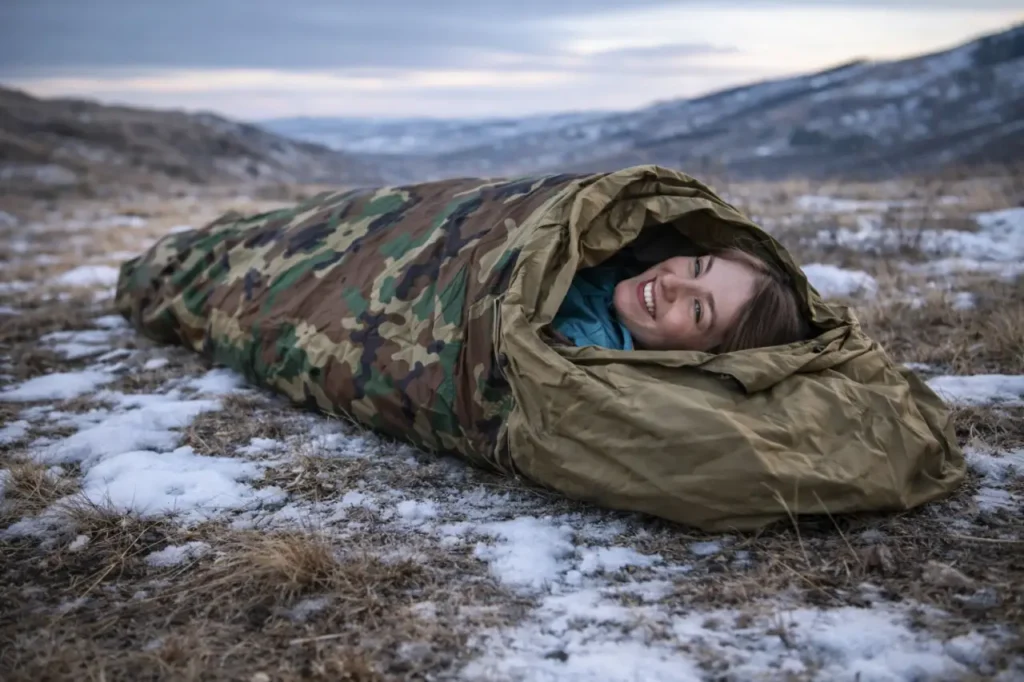
The genuine U.S. Military Surplus Gore-Tex Bivy Bag in Woodland Camo has a reputation that still holds up for a reason. It is simple, tough, weather-ready, and refreshingly free of gimmicks. Long before lightweight fabrics, fast-and-light trends, and premium shelter systems crowded the market, this bivy was already doing the basic job that matters most: helping keep a sleeper dry, protected, and functional in rough conditions.
That legacy still matters today. For campers, minimalist hikers, hunters, overlanders, and preparedness-minded buyers, the real question is not whether this bivy works. The real question is whether its strengths line up with the kind of trips, weather, and priorities that matter most.
For many people, the answer is yes. This is one of those rare pieces of surplus gear that still makes a lot of practical sense. It offers real Gore-Tex weather protection, military-grade durability, and a level of value that is hard to match in the modern outdoor market. The tradeoff, of course, is weight. This is not an ultralight shelter. It is a rugged one.
This guide breaks down what the authentic Gore-Tex bivy bag in woodland camo does well, where it falls short, who it suits best, and how to get the most from it in real-world use.
Quick Verdict: Is the Military Surplus Bivy for You?
Need the short version? Here it is.
The U.S. Military Gore-Tex Bivy Bag is a strong pick for anyone who cares more about durability, weather resistance, and practical value than shaving ounces. It is a proven waterproof/breathable outer shell for a sleeping bag, and it makes a lot of sense for car camping, hunting camps, bushcraft setups, vehicle kits, and emergency preparedness. For those uses, it is still one of the smartest budget buys in this category. 😊
It is not the right tool for every trip, though. Backpackers focused on low pack weight will likely find it too heavy. Campers who dislike tight shelter systems may also prefer the comfort and space of a tent.
| Perfect For | Consider Alternatives If… |
|---|---|
| Budget-conscious campers needing reliable protection | You are an ultralight backpacker counting every ounce. |
| Hunters, anglers, and bushcrafters who value toughness | You feel claustrophobic and prefer the space of a tent. |
| Car campers and overlanders building a robust sleep system | You need brand-new gear with a full manufacturer warranty. |
| Anyone building a serious emergency or vehicle kit | You primarily camp in dry, bug-free environments. |
What Exactly Is the Military Gore-Tex Bivy? A Look at Its Origins
This bivy makes more sense once its original purpose is clear. It was not created as a niche backpacking accessory for recreational campers. It was designed as part of the U.S. Military’s Modular Sleep System (MSS), a layered system built to handle serious exposure, changing weather, and a wide range of temperatures.
The MSS is meant to help keep a soldier warm, dry, and protected from temperate conditions all the way into deep cold. The full system includes four major parts:
- The Patrol Sleeping Bag: A lighter green bag designed for milder cold, generally down to about 30°F (-1°C).
- The Intermediate Cold Weather Sleeping Bag: A heavier black bag intended for colder conditions, generally down to about -10°F (-23°C).
- The Bivy Cover (This product): A waterproof, breathable outer shell.
- A Large Compression Stuff Sack: Used to pack the whole system down.
Within that setup, the bivy is the weather shield. It blocks wind, rain, snow, ground splash, and overnight moisture while helping protect the insulation inside. That matters because even a warm sleeping bag loses a lot of usefulness once moisture starts to build. A bivy like this helps preserve the performance of the rest of the sleep system while also adding a small warmth boost of its own, often estimated around 5-10°F. ❄️
Understanding “Military Surplus”
The word “surplus” matters just as much as the word “Gore-Tex.”
These bivies are generally not brand-new retail items. They are typically military gear that has already been issued and later sold into the surplus market. That is one of the biggest reasons the price can stay so attractive compared to a new civilian Gore-Tex bivy.
The Amazon listing describes this version as “Previously Issued / Good Condition.” In practical terms, that usually means:
- Fully Functional: Zippers, snaps, and seams should be present and working properly.
- No Major Defects: Large holes, serious tears, or major structural damage should not be part of the package.
- Signs of Use: Expect fading, light staining, marker writing, field wear, or a classic surplus smell that often fades with time and airing out.
That last part is worth keeping in perspective. Cosmetic wear is normal with military surplus gear. For many buyers, that is simply part of the deal rather than a dealbreaker. When the gear still performs, those imperfections often feel minor compared to the savings and durability on offer.
Deep Dive: Features of the Gore-Tex Bivy Bag in Woodland Camo
This bivy is straightforward, and that is part of its appeal. There are no flashy design elements here. Every major feature exists for weather protection, durability, and compatibility with the larger sleep system.
| Feature | Specification / Material | Why It Matters |
|---|---|---|
| Primary Fabric | 3-Layer Genuine Gore-Tex Laminate | Provides the “waterproof/breathable” magic. It blocks rain and snow from getting in while allowing water vapor (sweat) to escape. |
| Pattern | U.S. Woodland Camo | An effective, classic camouflage pattern for temperate forest environments. Ideal for hunters, wildlife photographers, or anyone preferring a low profile. |
| Dimensions (Approx.) | 82-85 inches long, 35 inches wide at the shoulders, 28 inches wide at the footbox | Offers a generous cut, easily accommodating a large winter sleeping bag and a sleeping pad inside the bivy. |
| Weight (Approx.) | 2.2 lbs (1 kg) | This is the main trade-off. It’s heavy for a bivy, but that weight translates directly to extreme durability. |
| Main Closure | Heavy-Duty, Two-Way YKK Zipper | Reliable and tough, these zippers are less likely to snag or fail. The two-way design allows for ventilation control. |
| Storm Flap | Snap-secured flap covering the main zipper | Provides a crucial secondary barrier against wind-driven rain, preventing water from seeping through the zipper coils. |
| Factory Seams | Fully Taped Seams | Every stitch in the fabric is a potential leak point. Waterproof tape applied at the factory ensures a completely sealed shelter. |
| Compatibility | Snaps for MSS Integration | While you can use any sleeping bag, snaps along the zipper allow it to be securely attached to the military patrol and intermediate bags. |
The Heart of the Bivy: 3-Layer Gore-Tex
The real story here is the fabric. A lot of bivy performance comes down to what the shell is made from, and this military surplus version earns its reputation because it uses a genuinely robust 3-layer Gore-Tex laminate.
- Outer Layer: A hard-wearing nylon face fabric in Woodland Camo. This is the layer that takes abuse from dirt, sticks, rough ground, and repeated field use.
- Middle Layer: The Gore-Tex membrane. This is the barrier that blocks liquid water while allowing moisture vapor to escape.
- Inner Layer: A protective scrim that helps shield the membrane from abrasion, grime, and oils from the inside.
That construction is one reason this bivy feels so dependable in messy conditions. It is not delicate. It is not built around minimal fabric. It is built to hold up when used hard, packed roughly, and dragged through real outdoor conditions where soft-touch ultralight gear can start to feel a little precious. 🌲
Real-World Uses: Where Does This Bivy Shine?
The military surplus Gore-Tex bivy works best when the trip or setup rewards toughness, simplicity, and weather protection more than low weight or roomy comfort. That is where it separates itself from lighter civilian bivies.
1. The Indestructible Car Camping / Overlanding Shelter
When the vehicle is close by, this bivy becomes much more appealing. Weight stops mattering, and durability moves to the front of the list.
Tossed in a trunk, truck bed, gear tote, or rooftop box, it creates a simple shelter option that can be deployed quickly if the weather changes or a basic sleep setup is needed fast. It works well on a cot, on a ground pad, under a tarp, or next to a basecamp fire ring when the night turns colder and wetter than expected.
For this kind of use, the bivy feels refreshingly uncomplicated. No poles. No complex pitch. No fragile pieces to baby. Just weather protection that can be unrolled and used. 🚙
2. The Minimalist Bushcraft & Hunting Companion
This is one of the clearest fits for the bivy.
Bushcraft camps, hunting setups, and low-profile woodland use tend to reward gear that can handle brush, rough surfaces, dirty conditions, and repeated use without drama. That is exactly the kind of environment where the military surplus bivy feels at home. The Woodland Camo pattern blends naturally into forested settings, and the tough outer fabric is much better matched to abrasive environments than many lightweight bivy alternatives.
For a user who wants a low-profile overnight shelter with a straightforward function-first design, this bivy still makes a lot of sense.
3. Enhancing Your Existing Sleep System
This bivy can also work as a performance upgrade for a sleeping bag that already does most of the job.
Used over a favorite 3-season bag, it adds full weather protection plus a bit of warmth. That can be especially useful in shoulder-season camping, wet environments, exposed windy camps, or trips where dew and ground moisture are likely to become part of the overnight equation.
The roomy dimensions also help here. Many users can fit both their sleeping bag and standard-width sleeping pad inside, which helps keep the full sleep system more protected from splash, mud, and shifting nighttime weather.
4. The Ultimate Emergency Shelter
This may be the most convincing use case of all.
Emergency blankets have their place, but they are often fragile, noisy, and disposable-feeling. This bivy is different. It is a real shelter component that can live in a vehicle, trailer, RV, workshop, or preparedness kit and still be ready when it is actually needed.
If someone gets stuck in a winter storm, stranded on a back road, delayed far from camp, or forced into an unplanned overnight, this bivy offers far more substantial exposure protection than a thin foil blanket. That kind of dependable backup is hard to overvalue. ⚠️
Pros and Cons at a Glance
This bivy does a lot well, but it also asks the buyer to accept some very clear compromises. Being honest about both sides is the best way to tell whether it belongs in a real kit.
| Pros | Cons |
|---|---|
| Bombproof Durability: Military-spec materials can withstand incredible abuse. | Heavy & Bulky: At over 2 lbs, it’s a non-starter for ultralight backpackers. |
| Excellent Weather Protection: Gore-Tex and taped seams provide a reliable waterproof, windproof shield. | Condensation Is Possible: All bivies can experience some internal moisture, especially in certain conditions. |
| Unbeatable Value: Offers premium Gore-Tex performance for a fraction of the cost of a new civilian bivy. | Surplus Condition Varies: You’re buying used gear. Expect minor cosmetic flaws or a “surplus” odor. |
| Spacious Cut: Roomy enough for a thick winter sleeping bag and pad. | Woodland Camo Isn’t for Everyone: The pattern is specific and may not be ideal for all users. |
| Simplicity: No poles, no guylines. Just unroll it and get in. | No Bug Netting: This is a weather shell, not a bug shelter. You’ll need a separate head net in buggy areas. |
Who Should Buy the Military Gore-Tex Bivy?
This bivy is best for the kind of buyer who looks at gear through a practical lens. It is not about sleek marketing, trend-driven materials, or chasing the lightest possible setup. It is about dependable use in rough conditions.
- Budget-conscious campers who still want serious weather protection. A new civilian Gore-Tex bivy can cost dramatically more. This surplus option gives many buyers access to similar weatherproof performance at a much friendlier price.
- Hunters, bushcrafters, and preparedness-minded users who are harder on gear. When gear may be dragged across rough ground, packed beside tools, or used in harsher conditions, durability matters more than polished design language.
- Vehicle campers and emergency planners who want a shelter that can sit ready for the moment it is needed. This bivy is an easy fit for trucks, overland kits, RV storage, and emergency gear bins because it is straightforward, proven, and sturdy.
Who Should Look for an Alternative?
Just as importantly, some buyers should pass on it without hesitation.
- Ultralight thru-hikers and ounce-counters. At more than two pounds, this bivy sits in a very different category from modern ultralight options. Brands like MSR, Outdoor Research, and Katabatic Gear make more appropriate choices for weight-focused trips.
- Campers who dislike confined sleep systems. Even a roomy bivy is still a bivy. If sleeping inside a narrow shell sounds uncomfortable or claustrophobic, a one-person tent will likely feel much better.
- People camping mostly in fair, dry, bug-light conditions. If the goal is simply keeping off dust or blocking a little breeze, a lighter splash bivy or even a groundsheet-based setup may be more sensible.
Practical Tips: How to Use and Care for Your Bivy
A surplus bivy can last a very long time, but a little practical knowledge makes a big difference. The biggest wins usually come from learning how to manage moisture, restore performance, and store the bivy properly between trips.
Tip 1: Master Condensation Management
Every bivy user should understand this before the first overnight. Condensation is not a sign that the bivy is defective. It is a reality of sleeping in a compact shelter where warm, moist air meets cooler fabric.
Even breathable waterproof fabrics can be overwhelmed under the wrong conditions, especially if airflow is poor or the user zips everything up tight overnight.
- Vent whenever possible: If rain is not blowing directly in, crack the zipper near the face to let moist breath escape.
- Choose camps with airflow: Damp depressions, creek edges, and stagnant low spots are more likely to trap moisture.
- Keep wet gear out of the bivy: Damp socks, jackets, and other wet layers add even more moisture to a small enclosed space.
A little ventilation usually goes a long way. 💨
Tip 2: Cleaning and Re-Waterproofing
Because this is surplus gear, some units may arrive dirty, dusty, or carrying a bit of storage odor. Performance can also improve noticeably if the durable water repellent finish on the face fabric is refreshed.
- Washing: Use a front-loading machine on a gentle cold cycle. Avoid regular detergent, bleach, and fabric softener, which can interfere with breathable waterproof fabrics. A product like Nikwax Tech Wash is the better choice.
- Restore DWR: If water no longer beads on the outer fabric, use a treatment like Nikwax TX.Direct after washing.
- Dry carefully: Low heat in a dryer for around 20 minutes can help reactivate and set the DWR treatment.
This step matters more than many buyers expect. A bivy with a tired DWR can still be waterproof, but the face fabric may soak up water instead of shedding it cleanly, which reduces comfort and breathability.
Tip 3: Smart Storage
Long-term storage is where many good outdoor fabrics quietly get damaged.
Leaving the bivy compressed for months at a time can create hard creases and extra stress in the laminate. It is better to store it loosely in a large breathable bag or hang it somewhere dry and out of the way.
That habit is simple, but it helps protect the Gore-Tex membrane and keeps the bivy in better shape for the long run.
The Final Verdict
The U.S. Military Surplus Gore-Tex Bivy Bag in Woodland Camo still earns its place because it understands its job and does it well. It is not trying to be sleek, ultralight, or luxury-oriented. It is trying to be durable, weather-resistant, and dependable in conditions where simpler, tougher gear still has a real advantage. 🏕️
That makes it easy to recommend for the right kind of buyer. Not for everyone, but very clearly for some. Car campers, hunters, bushcrafters, overlanders, and emergency-minded users will likely see the value right away. The weight is real, the surplus condition requires reasonable expectations, and bivy-style sleeping always comes with some tradeoffs. But the overall package remains impressive.
For anyone who wants proven Gore-Tex shelter performance without paying premium civilian bivy prices, this is one of the most practical classics still floating around the surplus market. It is rugged, useful, and refreshingly honest about what it is.
Frequently Asked Questions
Is the Military Gore-Tex bivy truly waterproof?
Yes. The 3-layer Gore-Tex construction and fully taped seams are designed to deliver full waterproof protection. If the outer fabric seems to absorb water instead of beading it up, the issue is usually the worn DWR finish rather than a failure of the waterproof membrane itself. Restoring that outer treatment helps the bivy perform the way it should.
How much warmth does a bivy sack add?
A bivy sack is commonly thought to add around 5-10°F (3-5°C) to a sleep system. That added warmth comes partly from trapping a bit of air, but more importantly from reducing wind exposure and helping protect sleeping bag insulation from moisture. In cold, damp, breezy conditions, that protection can make a noticeable difference.
Can I use any sleeping bag and pad with it?
Yes. Even though the bivy includes snap compatibility for the military MSS bags, it is roomy enough to work with most commercial sleeping bags. Most standard-width sleeping pads in the 20-25 inch range should also fit inside the bivy along with the bag, which helps keep the full setup better protected from wet ground and overnight weather.
What should I expect from a “previously issued” bivy?
Expect function first, cosmetics second. A previously issued bivy may show fading, light stains, marker writing, small repairs, or a musty surplus smell. Those signs of use are normal for military surplus gear. The important part is that the bivy remains structurally sound, weatherworthy, and usable.
Is it too heavy for backpacking?
For many modern backpackers, yes. At more than two pounds, it is much heavier than most civilian backpacking bivies. That does not make it unusable on foot, but it does mean it is better suited to trips where durability matters more than gram-counting, or where the pack weight is less critical overall.
Affiliate Disclosure: GearForTheOutdoors.com participates in affiliate programs, including REI, Amazon, REI Outlet, Garage Grown Gear, evo, and other trusted partners. When you purchase through our links, we may earn a small commission at no extra cost to you. That helps support our content and keeps our recommendations useful, practical, and free.
Disclaimer: This post is for informational purposes only. Always verify current product details, fit, availability, safety information, and manufacturer warranties before purchase or use. Outdoor conditions and gear performance can vary depending on setup, weather, terrain, and experience level.