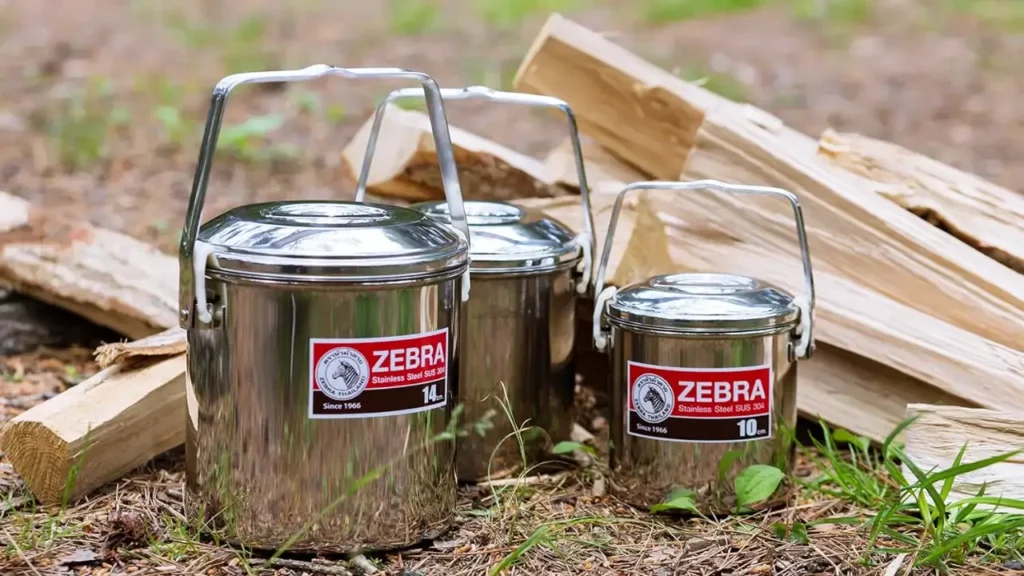
Some camp cookware is built for spreadsheets. It wins on ounces, packed size, or a long list of features. Then there’s cookware like the Zebra Loop Handle Pot—simple, tough, and quietly trusted by campers who care more about real-world reliability than trendy materials. 🔥
This pot has been around long enough to earn a reputation the hard way: repeated use over open flames, rough rides in overloaded gear bins, damp mornings at camp, and plenty of soot-blackened dinners under the trees. It’s not flashy. It’s not ultralight. It’s not trying to be anything other than a durable stainless steel camp pot that keeps doing its job. 🙂
That raises the real question. In a market full of titanium pots, nonstick cooksets, and compact backpacking systems, does this old-school billy-can style pot still make sense?
For plenty of campers, the answer is yes. This Zebra Loop Handle Pot review takes a closer look at where it shines, where it falls short, and who will actually appreciate it in a modern camp kitchen.
Quick Verdict: The Zebra Loop Handle Pot
The Zebra Loop Handle Pot is a strong pick for campers who want durability, versatility, and campfire readiness more than low weight. It feels more like a long-term tool than a short-term gear purchase. The stainless steel body handles rough use well, the bail handle works naturally over a fire, and the included inner dish adds more flexibility than many simple camp pots offer. 🍲
It is not a great match for ounce-counting backpackers. But for car campers, overlanders, canoe campers, bushcraft users, and anyone who enjoys cooking over flame or coals, it still makes a lot of sense. This is practical cookware with a loyal following for a reason.
| Feature | Rating & Notes |
|---|---|
| Durability | ★★★★★ (Excellent. Built from thick stainless steel, it can handle serious abuse.) |
| Versatility | ★★★★☆ (Great. Boils, simmers, steams, and bakes. Perfect for fire or stove.) |
| Weight | ★★☆☆☆ (Heavy. This is its main drawback for backpackers.) |
| Features | ★★★★☆ (Good. Locking handle, secure lid, and an included internal dish are all very useful.) |
| Value | ★★★★★ (Excellent. Affordably priced for a piece of gear that can last a lifetime.) |
| Best For | Car campers, overlanders, bushcraft, campfire cooking, budget-conscious adventurers. |
| Check Price | Check Price on Amazon |
A Deeper Look: What Makes the Zebra Pot a Classic?
The Zebra Pot follows a very old and very practical idea: a deep metal pot with a bail handle that can sit on a stove, ride in a gear box, or hang over a fire. That design has stuck around because it works. No extra complexity, no fragile coating, and no mystery about how it should be used. 🏕️
This style is often called a billy can or billy pot. The concept goes back to simple field cookware used for boiling water, making tea or coffee, heating soups, and cooking one-pot meals over wood fires. The loop handle makes it especially useful around camp because it can be suspended from a tripod, grill grate, or notched stick to manage heat more easily.
Zebra, a Thailand-based brand with decades of stainless cookware experience, refined that classic format into something more polished and more useful. The result is a pot that still feels simple, but not crude. It has a better lid system than many similar pots, a nicely fitted inner dish, and a build quality that helps explain why it became a favorite with bushcrafters, overlanders, and campers who prefer gear that lasts. 🙂
Key Features & Specifications Breakdown
The Zebra Pot is straightforward, but the details matter. A few design choices are what separate it from a random stainless pot at a discount store.
Tough-as-Nails Stainless Steel Construction
The pot is made from SUS 304 stainless steel, also called 18/8 stainless steel. That matters because it’s a proven cookware material: durable, food-safe, corrosion-resistant, and easy to live with in the outdoors.
Here’s what that means in practical use:
- Exceptional Durability: The walls are sturdy enough to handle being packed with other gear, knocked around in a vehicle, or used repeatedly over open flame without feeling delicate.
- Corrosion Resistance: Damp campsites, morning condensation, and occasional neglect are much less of a concern with 304 stainless.
- Safe & Non-Reactive: It won’t add strange flavors to food and doesn’t rely on a fragile nonstick coating.
- Easy to Clean: Campfire soot is messy, but the interior is straightforward to scrub. Abrasive cleaning is less stressful here than with coated cookware. 🧽
It does not heat as evenly as premium clad cookware, and it’s heavier than aluminum or titanium. But for many campers, that tradeoff is worth it because the material is so forgiving.
The Signature Loop Handle (Bail)
The bail handle is what gives this pot much of its personality and usefulness. It allows the pot to be carried, hung, repositioned, or lifted more easily than many side-handle cook pots.
That matters most in campfire cooking. Hanging a pot over a flame gives more control than setting it directly on a grate and hoping for the best. Raise it a little to simmer. Drop it a little lower to boil. It’s a simple system, but it works well. 🔥
The Zebra Pot also includes small plastic clips near the handle pivot that help keep the handle upright. That’s convenient on a camp stove, where a flopping metal bail can get annoying fast.
Important Note: Those plastic clips do not mix well with direct campfire heat. If this pot is going over open flame regularly, those clips are one of the first things many owners remove.
Smart Auto-Locking Lid System
This is one of the Zebra Pot’s most useful details. The lid doesn’t just sit loosely on top and rattle around in transit. Small side clips interact with the handle so the lid stays secured when the bail is up.
That sounds minor until the pot is bouncing around in a vehicle or packed with food, utensils, or coffee supplies inside. Then it starts to feel like a very smart piece of design. 🙂
Benefits of that system include:
- Less rattling during transport
- Better security when storing items inside the pot
- Less exposure to dirt, ash, and bugs around camp
- A more self-contained cooking setup in a camp box or vehicle drawer
For car camping and overlanding especially, that secure-lid setup adds real everyday usefulness.
The Versatile Internal Dish
Inside the pot is a shallow stainless dish that nests neatly on an internal ledge. This is one of the Zebra Pot’s best features because it adds flexibility without adding much complexity or bulk.
It can be used as:
- A Steaming Tray: Add water to the bottom and steam vegetables, dumplings, rice, or reheated food.
- A Plate or Bowl: Helpful for side dishes, snacks, or serving.
- A Double Boiler Insert: Useful for gently warming sauces or melting ingredients.
- A Small Cooking Surface: With care, it can handle small heating tasks on coals or over low heat. 🍳
This dish is one of the reasons the Zebra Pot feels more useful than a basic stainless billy can. It expands the pot from “water boiler and soup pot” into something more like a compact cooking system.
Zebra Pot Sizes and Capacities
The Zebra Pot is available in several sizes, and choosing the right one matters more than many buyers expect. A pot that works beautifully for solo coffee and oatmeal can feel cramped when cooking for two, while a large group-size pot can feel bulky for quick weekend use.
| Size (Diameter) | Capacity (Approx.) | Weight (Approx.) | Best For |
|---|---|---|---|
| 10 cm | 0.75 Liters / 0.8 Quarts | 1.1 lbs / 500g | Solo hikers, a small cook pot for one. |
| 12 cm | 1.4 Liters / 1.5 Quarts | 1.4 lbs / 635g | A great all-around size for 1-2 people. |
| 14 cm | 2.1 Liters / 2.2 Quarts | 1.8 lbs / 815g | Ideal for 2-3 people or for melting snow. |
| 16 cm | 3.0 Liters / 3.2 Quarts | 2.2 lbs / 1000g | The go-to for small groups, families, and basecamp cooking. |
For many campers, the sweet spot is the 12 cm or 14 cm model. Those sizes offer enough room for real cooking without becoming awkward to pack or handle. The 16 cm version makes more sense when cooking for a small group or building out a basecamp-style kitchen. 🏕️
Real-World Performance: Where Does the Zebra Pot Shine?
The Zebra Pot earns its reputation in the field, not on paper. It performs best in setups where durability, fire use, and flexibility matter more than shaving ounces.
Unbeatable for Campfire Cooking
This is where the pot feels most at home. Open flames, coals, grill grates, tripod cooking—this is the environment the Zebra Pot is naturally built for.
The thick stainless body handles uneven fire heat better than many lighter pots that feel twitchy or delicate over flames. It can rest on a grate, sit near coals, or hang from a bail. That flexibility matters when campfire heat is constantly shifting. Instead of fighting the fire, the pot works with it. 🔥
It’s especially good for the kind of camp meals that don’t require precision: boiling water, simmering chili, heating soup, making pasta, brewing coffee, cooking rice, or slow-cooking a simple stew while the light fades and the fire settles down. There’s something very natural about using this pot in that setting.
Capable on a Camp Stove
The Zebra Pot also works well on camp stoves. The flat bottom gives it a stable base, and the locking handle design is useful when moving it on and off a burner.
On a compact canister stove, it does best with boiling, simmering, and general one-pot cooking. On a two-burner camp stove, it’s easy to use as part of a more complete camp kitchen. It won’t feel as efficient or refined as a purpose-built backpacking pot with heat exchanger fins, but it doesn’t need to. 🙂
One thing to keep in mind is heat distribution. Because this is single-wall stainless steel, it can develop hot spots if used over aggressive heat for sautéing or delicate cooking. It’s happiest when used for liquid-heavy meals, simple boils, or lower-stress cooking tasks.
Perfect for Car Camping, Van Life, and Overlanding
This is arguably the Zebra Pot’s strongest use case. In vehicle-based camping, the weight penalty matters far less, and the benefits become much easier to appreciate.
It packs well into gear bins, handles rough roads without complaint, and doubles as storage during travel. The secure lid helps keep contents together, and the sturdy body means less worry about dents, crushed walls, or scratched coatings. 🚙
For campers building out a practical camp kitchen—especially one that mixes stove cooking with occasional fire cooking—the Zebra Pot fits naturally. It feels more like a durable camp tool than a fragile kitchen item brought outside.
The Pros and Cons: A Balanced View
The Zebra Pot does a lot well, but it is not for everyone. The strengths are clear, and so are the compromises.
Pros:
- Incredibly Durable: This pot is built for long-term use and rough handling.
- Excellent Value: It offers a lot of functional life for the price.
- Versatile Cooking System: The included inner dish makes it more flexible than many simple camp pots.
- Ideal for Campfires: The bail handle and stainless construction are a natural match for flame cooking.
- Secure for Travel: The lid-locking system is genuinely useful in real camp setups.
- Easy to Clean & Maintain: No delicate coating to baby and no special treatment required. 🙂
Cons:
- Heavy: This is the biggest drawback, especially for backpackers.
- Plastic Handle Clips Melt: A weak point if the pot is used over fire without modification.
- Handle Can Get Hot: Gloves, pliers, or a stick may be needed when cooking over flame.
- No Pour Spout: Pouring hot water or coffee can be a little messy if done carelessly.
None of these drawbacks feel hidden or surprising. That’s part of the appeal. The Zebra Pot is honest gear with very visible tradeoffs.
Popular Modifications: Making a Good Pot Great
One reason the Zebra Pot has such a loyal following is that it responds well to a few simple field-minded tweaks. These modifications are common because they solve very real annoyances without changing what makes the pot good in the first place. 🔧
- Remove the Plastic Clips: This is the most common change. If the pot is going over a campfire, the clips are better off removed before they melt. A pair of pliers is usually all it takes.
- Add a Lid Lifter: Replacing the lid knob with a metal ring or similar hardware can make the lid easier to lift when hot and less vulnerable around high heat.
- Create a Bail Notch: A small centered notch in the bail can help the pot hang more securely from a hook or stick.
These changes are not mandatory, but they reflect how people actually use the Zebra Pot. It’s one of those pieces of gear that invites small practical improvements rather than requiring constant fixes.
How It Compares: Zebra Pot Alternatives
The Zebra Pot has a distinct niche, and it helps to compare it with the main alternatives before buying.
- vs. Titanium Pots (e.g., TOAKS, Evernew): Titanium wins on low weight, and for backpackers that matters a lot. A titanium pot is much easier to justify on long miles. But titanium is usually more expensive, less forgiving around rough handling, and often worse at even heating. Choose titanium if cutting pack weight is the top priority.
- vs. Hard-Anodized Aluminum Sets (e.g., MSR, GSI Outdoors): Aluminum often offers a better balance of weight and heat performance. It’s a strong option for stove-based cooking. But many aluminum systems feel less bombproof, and coated surfaces need more care. Choose aluminum if lighter weight and smoother stove cooking matter more than campfire toughness.
- vs. Other Stainless Steel Pots (e.g., Stanley Adventure Cook Set): Stainless steel alternatives offer similar durability, but the Zebra often stands out because of its inner dish and lid-locking setup. Choose based on features, not just material. 🍳
The big picture is simple: the Zebra Pot is not trying to beat every alternative at every job. It is best viewed as a durable campfire-friendly stainless pot for campers who value rugged practicality.
Who Is the Zebra Loop Handle Pot Best For?
The Zebra Pot is especially well suited to campers who want gear that feels dependable, simple, and useful in a wide range of camp setups.
It’s a strong fit for:
- The Car Camper or Van-Lifer: Weight matters less, and the pot’s durability and versatility stand out more.
- The Bushcrafter or Campfire Cook: The bail handle and stainless build make open-fire cooking easier and more intuitive.
- The Budget-Conscious Outdoor Enthusiast: It offers long-term value without requiring premium cookware prices.
- The Group or Family Camper: Larger sizes work well for shared meals and simple basecamp cooking. 🙂
It’s probably not the best fit for:
- The Ultralight Thru-Hiker: The weight is hard to justify over long distances.
- The Fast-and-Light Alpine User: For missions where every ounce matters, lighter cookware is the better call.
- The Precision Camp Chef: If delicate sautéing and even heat are priorities, another pot may feel easier to use.
This is an important distinction. The Zebra Pot is not a universal best pot. It is a very good pot for a specific style of camping.
Final Verdict: A Timeless Piece of Camp Kitchen Gear
The Zebra Loop Handle Pot still holds up because it solves outdoor cooking needs in a simple, durable, low-drama way. It works over fire, works on a stove, handles rough travel well, and adds a little more versatility than its plain appearance suggests. 🏕️
Its biggest downside is obvious: it’s heavy. Campers who care most about low pack weight will find better options elsewhere. But for campers who want something sturdy, practical, and easy to trust around real camp use, that extra weight often feels like a fair trade.
This is the kind of camp kitchen gear that earns a permanent spot in a gear bin. Not because it is trendy, but because it keeps proving useful. For car camping, overlanding, canoe camping, bushcraft setups, and general campfire cooking, the Zebra Loop Handle Pot remains a smart and satisfying choice. 🙂
Ready to add a workhorse to your kit? You can find the most popular sizes here:
Frequently Asked Questions (FAQ)
What are the plastic clips on the handle for? Should I remove them?
The plastic clips help keep the handle upright, which is handy during stove use and general handling around camp. But they are vulnerable to direct fire heat and can melt if the pot is used over flames. If campfire cooking is the main goal, removing them before the first trip is the safer move. 🔥
What size Zebra Pot should I get?
The 12 cm model is a strong choice for one or two people doing basic camp cooking, coffee, or simple one-pot meals. The 14 cm size is often the most versatile all-around option for two people who want more room to cook. The 16 cm version works better for families, group meals, or basecamp-style setups where bigger batches make sense.
Can you cook directly in the coals with the Zebra Pot?
Yes. The stainless steel body is well suited for direct exposure to hot coals and campfire environments. That said, handling becomes more important in that kind of setup. Heavy gloves, a pot gripper, or a sturdy stick help make moving the pot much safer when it’s hot and sooty. 🙂
Is the SUS 304 stainless steel safe for cooking?
Yes. SUS 304 is a common food-grade stainless steel used in cookware and kitchen tools. It is non-reactive, durable, and does not rely on delicate nonstick coatings. For outdoor cooking, that makes it a reassuringly simple material.
Does the Zebra Pot come with a carrying case?
Usually, no. Most versions do not include a storage sack or case. Many campers simply store it in a kitchen box, tuck utensils or coffee gear inside, or use a basic stuff sack to contain soot after fire use. That simple storage style fits the pot’s practical design well.
Affiliate Disclosure: GearForTheOutdoors.com participates in affiliate programs, including REI, Amazon, REI Outlet, Garage Grown Gear, evo, and other trusted partners. When you purchase through our links, we may earn a small commission at no extra cost to you. That helps support our content and keeps our recommendations useful, practical, and free.
Disclaimer: This post is for informational purposes only. Always verify current product details, fit, availability, safety information, and manufacturer warranties before purchase or use. Outdoor conditions and gear performance can vary depending on setup, weather, terrain, and experience level.