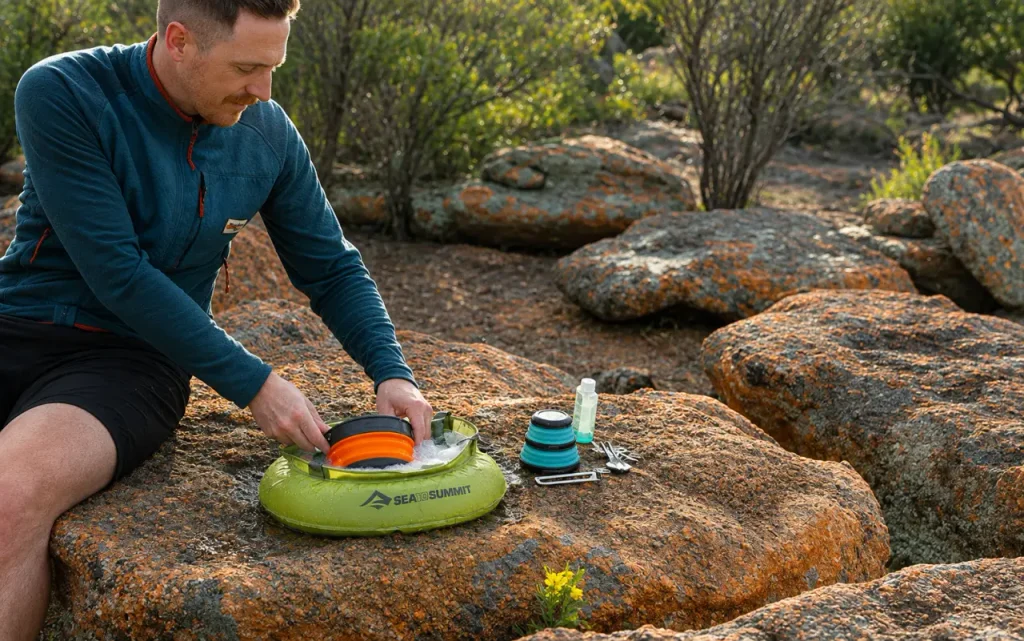
A good portable camping sink makes washing dishes, rinsing cookware, and keeping your camp kitchen clean easier—without taking up unnecessary space or turning cleanup into another chore.
For most car campers, a collapsible wash basin is all you need. It packs small, requires no power, and handles everyday dishes. If you prefer running water, a portable faucet and water jug offer more convenience. And for longer trips, a folding camp kitchen with a built-in sink provides a dedicated place to cook and clean up.
The best choice depends on what you’re washing, how much water you have, and how often you move campsites.
This guide compares three practical camping sink setups, explains where each one works best, and covers the details that matter before buying—including portability, freshwater storage, wastewater disposal, and overall value.
Best Portable Camping Sinks: Quick Picks
| Best For | Our Pick | Biggest Advantage | Main Tradeoff |
|---|---|---|---|
| Best Collapsible Camping Sink | Sea to Summit Kitchen Sink | Lightweight, compact, and simple to use | Needs sufficient water to stand upright |
| Best Portable Faucet System | Dometic GO Hydration Water Faucet + 11L Water Jug | Controlled running water without permanent plumbing | Higher cost; requires a separate basin |
| Best Camping Kitchen With a Built-In Sink | GCI Outdoor Master Cook Station | Integrated sink, cooking surface, and storage | Bulky; no built-in water supply |
Our recommendation: Choose the Sea to Summit Kitchen Sink if you mainly need to wash dishes. The Dometic GO system makes sense if you regularly want running water for cooking and cleanup. The GCI Outdoor Master Cook Station is better suited to campers building a dedicated outdoor kitchen.
None of these is a fully self-contained sink with both running water and wastewater storage. If that’s what you need, look for a portable sink with integrated freshwater and gray-water tanks rather than a standard camp kitchen accessory.
1. Best Collapsible Camping Sink: Sea to Summit Kitchen Sink
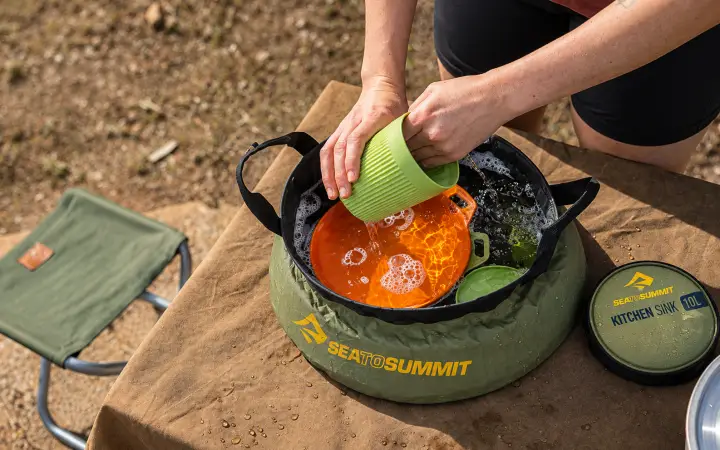
The Sea to Summit Kitchen Sink is a smart choice for campers who want a straightforward place to wash dishes without adding bulky equipment.
Made from waterproof recycled 70D nylon with taped seams, a reinforced rim, and a wide base, it provides a portable washing basin that folds into a compact storage pouch.
It’s especially useful for car campers who keep their kitchen supplies organized in a storage bin. When you’re finished washing dishes, the sink can be emptied, dried, and packed away without occupying much space.
The current Kitchen Sink comes in three sizes:
- 5L: Best for minimal cookware and small cleanup tasks.
- 10L: A useful middle ground for everyday camp dishes.
- 20L: More washing space for larger cookware and shared camp kitchens.
For most couples and weekend campers, the 10L version is a practical starting point.
Its approximately 15-inch-wide basin provides useful space for plates, utensils, and smaller cooking pots without requiring the storage room of a rigid plastic tub.
What Makes It Worth Choosing?
Simplicity is its biggest advantage.
There’s no pump, faucet, hose, or battery to manage. All you need is a source of clean water and a stable place to work.
The reinforced rim and webbing handles make the basin easier to manage, while the waterproof construction helps contain wash water.
But there’s an important limitation.
The Sea to Summit Kitchen Sink needs to be approximately 80% full to stand upright on its own.
That means the larger sizes aren’t necessarily better for campers trying to conserve freshwater.
A 20L sink provides more washing space, but keeping its flexible sides upright can require considerably more water than a smaller model.
If you want to wash dishes with just a small amount of water, a rigid plastic tub may be more practical.
The sink also has a maximum recommended water temperature of 140°F (60°C). Warm washing water is fine, but boiling water and bleach can damage its materials.
Who Should Choose It?
The Sea to Summit Kitchen Sink is best for campers who prioritize simple cleanup, compact storage, and minimal setup.
It’s particularly well suited to weekend car camping, solo trips, couples, and smaller camp kitchens.
Best for: Lightweight, uncomplicated camp dishwashing.
Main advantage: Packs small and requires no power or plumbing.
Main limitation: The flexible sides need enough water for stability.
Explore camp kitchen and cleanup gear at REI
2. Best Portable Camping Faucet: Dometic GO Hydration Water Faucet + 11L Water Jug
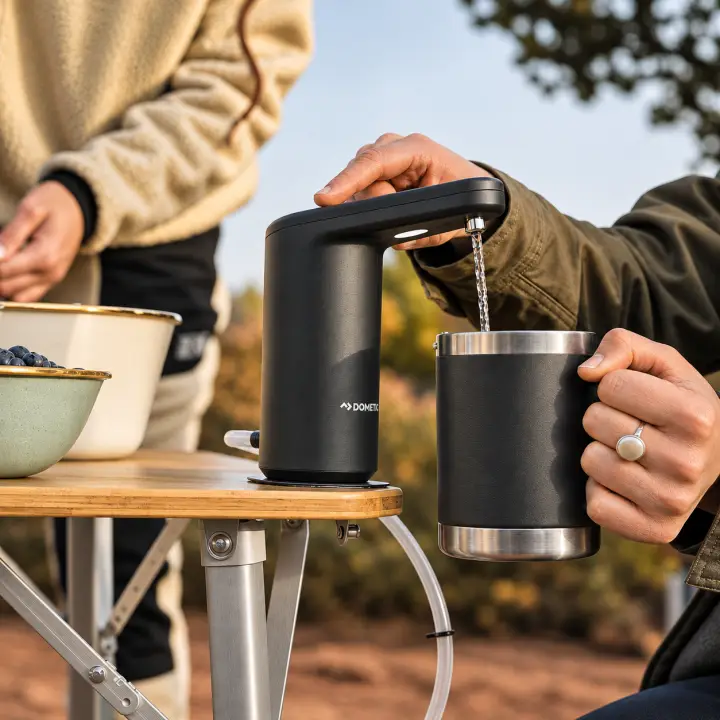
If you want running water at camp without installing a permanent sink, the Dometic GO Hydration Water Faucet paired with the Dometic GO Hydration Water Jug 11L offers a convenient, modular solution.
The rechargeable faucet pumps water directly from a container, allowing you to rinse dishes, wash hands, and fill cooking pots without repeatedly lifting a heavy jug.
Its touch-operated control starts and stops the water flow, while an automatic shutoff helps reduce unnecessary water use.
The faucet includes a magnetic base and mounting puck, making it easier to position near a washing area.
Paired with the 11L water jug, it creates a portable freshwater system that works well alongside a collapsible basin or dedicated camp kitchen table.
Why It Works Well for Car Camping
The Dometic setup offers much of the convenience of a kitchen faucet without requiring permanent plumbing.
The faucet uses a rechargeable battery rated to dispense up to 150 liters per charge under specified conditions.
That figure refers to the amount of water the pump can move—not how much water the jug holds or how many days a charge will last in every situation.
The 11L jug is designed for transporting and dispensing freshwater. It has carrying handles, multiple openings, and an included spigot.
The spigot is especially useful because the jug remains functional without the rechargeable faucet.
That gives you two ways to dispense water, depending on your setup and available power.
You can place the faucet beside a washing basin for dish rinsing or move it to another area for handwashing and food preparation.
This flexibility makes the combination attractive for organized car camping kitchens, overlanding setups, and frequent road trips.
Is the Dometic GO System Worth the Extra Cost?
Convenience comes at a price.
The faucet and jug are separate purchases. At approximately $100 for the faucet and $70 for the jug, the combination represents an investment of around $170 before taxes and shipping.
You also need a separate washing basin and a way to collect wastewater.
That makes it substantially more expensive than a basic water jug with a spigot and a plastic wash tub.
For occasional weekend camping, the simpler arrangement may offer better value.
However, if you regularly cook outdoors, wash hands throughout the day, or want controlled water delivery without lifting a container, the Dometic system becomes more appealing.
One detail worth considering is the faucet’s touch-sensitive control. It’s convenient when operating normally, but using touch controls with wet or soapy hands may be less straightforward than turning a mechanical tap.
The system also adds charging and tubing maintenance to your packing routine.
And because the faucet is a freshwater dispenser rather than a complete sink, it doesn’t solve wastewater collection on its own.
Who Should Choose It?
The Dometic GO system makes the most sense for campers who value convenience and regularly use running water for more than dishwashing.
It’s particularly well suited to couples, small families, overlanding, and organized car camping setups.
Best for: Portable running water without permanent plumbing.
Main advantage: Convenient, controlled water delivery from a compact rechargeable faucet.
Main limitation: Costs more than a standard jug and still requires a basin for washing and wastewater collection.
Check the Dometic GO Hydration Water Faucet
Check the Dometic GO Hydration Water Jug 11L
3. Best Camping Kitchen With a Built-In Sink: GCI Outdoor Master Cook Station
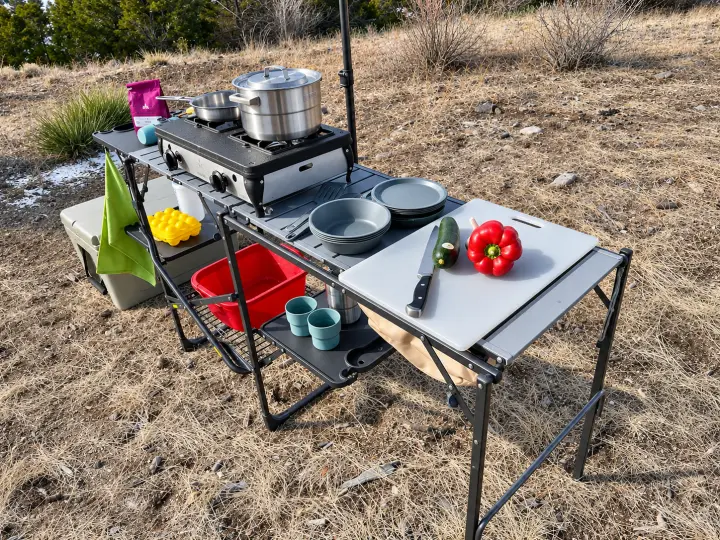
The GCI Outdoor Master Cook Station is a good option for campers who want a more organized outdoor kitchen rather than a standalone washing basin.
This folding station combines a heat-resistant aluminum countertop, a built-in collapsible sink with a drain, three side tables, a lower storage rack, and an adjustable lantern pole.
Instead of using a picnic table for cooking, washing, and storing equipment, you get a dedicated workspace designed around camp meal preparation.
That’s especially useful when you’re staying in the same location for several days and preparing full meals outdoors.
An Integrated Sink Without Permanent Plumbing
The Master Cook Station includes a soft-sided sink that folds away when not in use.
It’s suitable for light dishwashing, rinsing utensils, and smaller cleanup tasks.
A built-in drain allows water to leave the basin, but you’ll need a container underneath to collect wastewater.
The station doesn’t include a faucet, freshwater reservoir, pump, or gray-water holding tank.
This distinction matters because the Master Cook Station is a complete folding camp kitchen, not a self-contained washing system.
You can use a basic water jug to fill the sink or pair the station with a separate faucet for more convenient rinsing.
Its biggest advantage is the combination of washing space and a dedicated cooking surface.
The main countertop provides space for cooking equipment, while the side tables keep smaller items within reach.
A lower rack offers additional storage, helping keep your camp kitchen organized without spreading everything across a picnic table.
How Portable Is It?
The Master Cook Station folds flat using GCI Outdoor’s Slim-Fold design.
When folded, it measures approximately 21.7 × 5.9 × 34.8 inches and weighs around 22.4 pounds.
That makes it relatively manageable for a folding kitchen station, but significantly bulkier than a collapsible sink or compact water dispenser.
It requires dedicated cargo space, so it’s worth checking your vehicle’s available room before buying.
For quick overnight stops, unpacking an entire cook station may be unnecessary.
For a three-night campground stay or extended basecamp, having a dedicated cooking and washing area can justify the extra equipment.
Is It Worth Buying Just for the Sink?
Probably not.
If your only goal is washing dishes, a collapsible basin and water jug will usually do the job with less expense and equipment.
The Master Cook Station becomes worthwhile when you also need cooking space, storage, and a more organized kitchen layout.
Its value comes from combining several camp kitchen functions—not from having the most advanced sink.
Who Should Choose It?
This station is best for campers who regularly prepare meals outdoors and prefer a dedicated kitchen setup.
It’s particularly useful for family camping, group trips, longer campground stays, and car campers who have enough room for a folding kitchen.
Best for: Organized outdoor cooking and cleanup in one station.
Main advantage: Combines an integrated sink with useful cooking and storage space.
Main limitation: Larger and heavier than a standalone sink, with no built-in freshwater or wastewater tank.
Check the GCI Outdoor Master Cook Station
Portable Camping Sink Comparison: Which Setup Makes More Sense?
These three products serve different purposes, so comparing their actual functions is more useful than simply comparing water capacity.
| Feature | Sea to Summit Kitchen Sink | Dometic GO Faucet + Jug | GCI Master Cook Station |
|---|---|---|---|
| Main purpose | Dishwashing basin | Running freshwater | Camp kitchen with sink |
| Includes washing basin | Yes | No | Yes |
| Provides running water | No | Yes | No |
| Includes freshwater storage | No | Yes, 11L | No |
| Built-in gray-water tank | No | No | No |
| Requires charging | No | Yes | No |
| Packed size | Very compact | Compact faucet; rigid jug | Large folding station |
| Setup effort | Minimal | Low | Moderate |
| Best use | Simple dishwashing | Frequent rinsing and handwashing | Full camp kitchen organization |
For most campers, the Sea to Summit sink is the easiest way to add a dedicated washing area.
The Dometic GO system is a convenience upgrade, while the GCI station is a larger investment in the overall camp kitchen.
A different option is a self-contained portable camping sink, which combines a basin, water supply, pump, and sometimes a wastewater tank in one unit.
That can be useful when you need a dedicated handwashing station with fewer separate containers, but these systems typically occupy more space and require additional cleaning and maintenance.
For campers who already have a water jug and kitchen table, modular equipment is often easier to incorporate into an existing setup.
Which Portable Camping Sink Is Best for Your Camping Style?
The right setup depends more on your cooking habits and campsite routine than on the number of people alone.
| Camping Style | Recommended Setup | Why It Works |
|---|---|---|
| Solo weekend camping | Small collapsible basin | Minimal equipment and easy storage |
| Couples car camping | Sea to Summit 10L + water jug | Simple washing and rinsing |
| Small families | Dometic GO faucet + wash basin | Convenient freshwater access for repeated cleanup |
| Overlanding and road trips | Dometic GO system + compact basin | Flexible and easy to reposition |
| Extended family camping | GCI Master Cook Station | Dedicated cooking, washing, and storage space |
| Camping with limited freshwater | Small rigid basin + spigot jug | Easier to manage small amounts of wash water |
Weekend Trips: Prioritize Simplicity
For short trips with basic meals, a collapsible basin is usually sufficient.
You can wash plates and utensils, empty the basin, and pack it away without managing additional equipment.
The fewer pieces you need to assemble, the easier it is to keep your camp kitchen organized.
Frequent Car Camping: Consider a Portable Faucet
Running water becomes more useful when you’re preparing several meals, washing hands regularly, or rinsing cookware throughout the day.
The Dometic GO setup provides that convenience while remaining portable.
But if you rarely need running water, a basic jug with a spigot may deliver nearly the same practical benefit at a lower cost.
Extended Basecamps: A Kitchen Station Can Be Worth It
When you’re staying at one campground for several days, having a dedicated cooking area makes a difference.
The GCI Master Cook Station keeps your stove, cooking tools, washing basin, and smaller supplies organized in one place.
It’s a better choice when you need the complete workspace rather than just another place to wash dishes.
How to Choose the Right Portable Camping Sink
Before buying, focus on five practical considerations.
1. Check the Actual Washing Space
Water capacity doesn’t tell you whether a sink will fit your cookware.
A deep, narrow basin may hold plenty of water but make it difficult to scrub a large skillet.
Compare the sink’s usable width and depth with the largest pot or pan you regularly bring camping.
Also consider whether you’ll be washing dishes, rinsing equipment, or primarily cleaning your hands.
Those tasks don’t always require the same type of sink.
2. Decide Whether Running Water Is Necessary
A pump or portable faucet makes rinsing easier, but it isn’t essential.
For basic dishwashing, a basin and a water jug can work well.
A faucet becomes more useful when you regularly need a controlled stream of water.
If you want a pump system, consider its charging requirements, hose length, water-container compatibility, and ease of cleaning.
A manual spigot is simpler and doesn’t depend on batteries.
3. Consider Packed Size and Setup
A portable camping sink should fit your vehicle and camping routine.
The Sea to Summit Kitchen Sink folds into a small pouch.
The Dometic GO system requires room for a rigid water jug, but the faucet itself is compact.
The GCI Master Cook Station folds flat but still occupies a substantial amount of cargo space.
For frequent campsite changes, quick setup and easy packing are valuable.
For longer stays, a larger kitchen station may be worth the effort.
4. Plan for Water Storage and Drainage
A washing basin needs a freshwater supply.
A faucet needs a water container and a basin or other place for the water to go.
A folding kitchen with a drain needs an appropriate wastewater collection container.
The most convenient setup is one where both freshwater and used water are easy to manage.
Don’t assume a product includes a complete drainage system just because it has a faucet or built-in sink.
5. Think About Cleaning and Maintenance
After washing dishes, you’ll still need to clean the sink itself.
Collapsible basins should be emptied and dried thoroughly before storage.
Portable faucets and pumps need their hoses and water-contact parts cleaned according to the manufacturer’s instructions.
Kitchen stations require cleaning around the basin, drain, and working surfaces.
A system with more components may be more convenient during use but require more attention afterward.
Choose a setup you can realistically maintain between trips.
How to Build a Simple Camping Dishwashing Station
You don’t need an expensive portable sink to create a clean, organized washing area.
For many car campers, a two-basin system is one of the easiest arrangements to use.
1. Scrape food scraps before washing.
Remove leftover food and excess grease from plates, pots, and pans.
A small scraper or paper towel helps reduce the amount of dirty water you’ll create.
Pack food scraps out with your trash.
2. Prepare a wash basin.
Fill one basin with warm water and a small amount of dish soap when needed.
Use enough water for the task without filling the container unnecessarily.
If you’re using the Sea to Summit Kitchen Sink, remember that its flexible sides need sufficient water for stability.
3. Keep clean water available for rinsing.
Use a second basin or a water jug with a spigot.
If you have the Dometic GO faucet, position it so rinse water flows into a collection basin rather than onto the ground.
4. Wash dishes from cleanest to dirtiest.
Start with cups, utensils, and lightly soiled plates.
Leave greasy cookware until last to keep your washing water useful longer.
5. Air-dry on a clean surface.
Place rinsed dishes on a clean drying rack or mat.
Keep clean cookware away from dirt and food-preparation surfaces that haven’t been cleaned.
6. Collect the wastewater.
Strain out food particles and transfer used water to a suitable container when required.
Dispose of it according to local campground regulations.
This straightforward arrangement works with a basic wash tub, a collapsible camping sink, or a larger camp kitchen station.
Clean Water and Gray Water Management at Camp
A portable camping sink is only as useful as the water system supporting it.
You’ll need a reliable supply of freshwater and a responsible way to handle the water left after washing.
Keep Freshwater Separate From Dishwater
Use a dedicated water container suitable for your intended use.
A jug with a spigot or faucet makes it easier to dispense water without dipping dirty utensils into the clean supply.
Keep the container closed when possible, and avoid letting dirty hoses or cleaning tools contaminate the opening.
If you use a rechargeable faucet, follow its cleaning and storage instructions.
Collect Gray Water When Required
Gray water is used water from washing dishes, hands, and other equipment.
It may contain grease, food residue, soap, and other contaminants, even when it appears relatively clean.
At developed campgrounds, use designated wastewater disposal facilities.
For equipment with a drain, such as the GCI Master Cook Station, position a suitable collection container beneath the outlet.
Don’t allow dishwater to flow directly into the campsite unless local rules specifically permit that disposal method.
Follow Leave No Trace Practices
Leave No Trace recommends straining food scraps from dishwater, packing them out, and scattering wastewater broadly at least 200 feet from natural water sources where that practice is allowed.
Some campgrounds and sensitive environments require all wastewater to be collected and carried to approved disposal locations.
Always follow the rules for your specific campsite.
Biodegradable soap can still affect water quality, so minimize soap use and never wash dishes directly in lakes, rivers, or streams.
Portable Camping Sink Buying Checklist
Before choosing a portable camping sink, run through these questions:
- Does my cookware fit? Check usable basin dimensions rather than capacity alone.
- Do I need running water? Decide whether a spigot is sufficient or a powered faucet would be more useful.
- How much cargo space do I have? Consider packed dimensions and the number of separate components.
- Where will the wastewater go? Plan a collection container or approved disposal method.
- How often will I set it up? A compact basin may be better for overnight stops, while a kitchen station suits longer stays.
- Is it easy to clean and dry? Think about hoses, reservoirs, drains, and flexible materials.
- Is the added convenience worth the cost? Avoid paying for equipment that doesn’t meaningfully improve your camping routine.
The right sink should make cleanup simpler, not create more gear to manage.
Portable Camping Sink FAQs
What Is the Best Portable Camping Sink for Car Camping?
For most car campers, the Sea to Summit Kitchen Sink is a practical choice because it’s compact, easy to store, and suitable for everyday dishwashing.
If you want running water, the Dometic GO Hydration Water Faucet paired with a water jug and separate basin offers more convenience.
For campers who want a dedicated cooking and washing workspace, the GCI Outdoor Master Cook Station is a larger but more versatile option.
Do You Need a Pump for a Camping Sink?
No. A wash basin and water jug are enough for basic camp dishwashing.
A pump or portable faucet becomes useful when you want running water for rinsing dishes, washing hands, or filling cookware without lifting a container.
Is a Portable Camping Faucet Worth It?
It can be worthwhile for campers who cook outdoors frequently and want convenient freshwater access.
However, a conventional water jug with a spigot may offer better value for occasional trips.
What Is the Difference Between a Camping Sink and a Camp Kitchen Station?
A camping sink primarily provides a place to wash dishes or hands.
A camp kitchen station provides a larger working area that may include a sink, cooking surface, shelves, and storage.
Some complete portable sink systems also include freshwater tanks, pumps, and wastewater storage, but those features aren’t standard on every camp kitchen station.
How Much Water Do You Need for Camping Dishes?
Water use depends on the amount of cookware, the type of food prepared, and your washing method.
A rigid basin can often work with a smaller volume of water, while a flexible basin may require more water to hold its shape.
Scraping cookware before washing and using a separate rinse basin can help reduce unnecessary water use.
Can You Use the GCI Master Cook Station Without Running Water?
Yes. Its integrated basin can be filled manually from a water jug.
The station doesn’t include a powered faucet or freshwater tank, so you’ll need a separate water source and an appropriate container for collecting drained water.
Can You Dump Camping Sink Water on the Ground?
Only where local regulations allow it.
Many developed campgrounds require wastewater to be collected and disposed of at designated facilities.
Where scattering wastewater is permitted, follow Leave No Trace guidance, strain food particles, and keep disposal well away from water sources and campsites.
How Do You Keep a Portable Camping Sink Clean?
Remove food residue after use, clean the basin according to the manufacturer’s instructions, and allow it to dry thoroughly before packing.
For pump systems, empty and clean hoses and reservoirs as instructed.
Proper drying is particularly important for collapsible basins stored inside camp kitchen bins.
Final Verdict: Which Portable Camping Sink Should You Buy?
For most weekend car campers, the Sea to Summit Kitchen Sink is the simplest choice. It handles everyday dishwashing, packs small, and requires no power or complicated setup.
If running water would make your camp kitchen noticeably easier to use, the Dometic GO Hydration Water Faucet and 11L Water Jug are worth considering—especially for frequent trips. Just remember that the full setup costs more and still needs a washing basin.
The GCI Outdoor Master Cook Station makes the most sense when you want an organized cooking workspace with an integrated sink, not merely a place to wash dishes.
And if you’re on a tight budget, a basic rigid wash tub and water jug with a spigot can still do the job.
Choose the setup that matches your camping routine, available space, and water supply. A good portable camping sink should make cleanup easier without complicating the rest of your trip.
Affiliate Disclosure: GearForTheOutdoors.com participates in affiliate programs, including REI, Amazon, REI Outlet, Garage Grown Gear, evo, and other trusted partners. When you purchase through our links, we may earn a small commission at no extra cost to you. That helps support our content and keeps our recommendations useful, practical, and free.
Disclaimer: This post is for informational purposes only. Always verify current product details, fit, compatibility, availability, safety information, and manufacturer instructions before purchase or use. Outdoor conditions and gear performance can vary depending on setup, weather, terrain, vehicle, and experience level.