For most car campers, propane is the better all-around choice. It performs more reliably in cold weather, works with a wide range of two-burner camping stoves, and is easy to find across the United States. Butane is a practical alternative for warm-weather camping, quick meals, and anyone who wants a compact cooking setup.
The biggest difference comes down to temperature. Propane maintains usable fuel pressure in much colder conditions, while regular butane becomes increasingly unreliable as temperatures approach freezing.
But fuel isn’t the only consideration. Your cooking style, available storage space, fuel costs, and even the size of your favorite skillet can influence which stove makes more sense.
There’s also a third option worth considering: dual-fuel camping stoves that can operate on either propane or butane.
Here’s how the fuels compare, what their differences mean at the campsite, and how to choose a stove you’ll actually enjoy using.
Propane vs. Butane Camping Stoves: Quick Comparison
| Feature | Propane | Butane | Isobutane Blends |
|---|---|---|---|
| Cold-weather performance | Excellent | Poor near freezing | Better than regular butane |
| Best for | Year-round car camping | Warm-weather camping and picnics | Backpacking and lightweight camping |
| Typical stove | One- or two-burner tabletop stove | Compact single-burner stove | Lightweight backpacking stove |
| Common fuel container | 1 lb cylinder or larger refillable tank | 8 oz cassette-style canister | 4 oz or 8 oz threaded canister |
| Cooking flexibility | Excellent with suitable stoves | Good for simple meals | Best for smaller cookware |
| Storage space | Usually requires more room | Typically compact | Very compact |
| Fuel availability | Widely available | Common at major retailers | Common at outdoor retailers |
The quick decision: Choose propane for colder temperatures, larger meals, and versatility. Choose butane for compact cooking in mild weather. Consider a dual-fuel stove if you want the convenience of butane with the option to switch to propane.
For backpacking, a lightweight stove designed for isobutane-propane canisters is often the better solution.
Why Propane and Butane Perform Differently
Propane and butane are both liquefied petroleum gases (LPG). Inside their pressurized containers, much of the fuel remains liquid. When the stove valve opens, vaporized fuel flows toward the burner.
The important difference is how easily each fuel vaporizes as temperatures fall.
Each fuel has a different boiling point:
- Propane: Approximately -44°F (-42°C).
- Butane (n-butane): Approximately 31°F (-0.5°C).
- Isobutane: Approximately 11°F (-12°C).
These temperatures don’t represent universal operating limits for every stove. They help explain why some fuel systems maintain pressure in cold conditions while others struggle.
What happens to butane in cold weather?
As the temperature approaches freezing, regular butane produces less vapor pressure.
That means less fuel may reach the burner, resulting in a weaker flame, slower cooking, or difficulty keeping the stove running.
The problem can begin before temperatures reach 31°F.
As fuel evaporates, the canister itself cools. A partly empty canister can also deliver less pressure than a full one under the same conditions.
Imagine setting up camp on a pleasant fall afternoon. By sunrise, the temperature has dropped into the upper 30s.
A butane stove that worked well the previous evening may struggle when you’re trying to boil water for coffee.
That’s why propane is the more dependable choice for camping in temperatures around 40°F (4°C) or colder.
Why propane works better
Propane continues vaporizing at much lower temperatures, allowing compatible stoves to operate across a wider range of weather conditions.
That flexibility is particularly valuable for early spring trips, fall camping, and winter outings.
However, propane isn’t immune to every cold-weather problem.
Very low temperatures, declining fuel levels, and high fuel demand can still affect performance. Wind protection and stove design also matter.
For most recreational car camping, though, propane offers a substantial advantage in colder weather.
What about isobutane-propane blends?
Isobutane-propane blends are commonly used in backpacking stove canisters.
They provide better cold-weather performance than straight butane while allowing lightweight, compact stove designs.
The actual performance depends on the blend, canister temperature, remaining fuel, and stove construction.
One important distinction: isobutane canisters aren’t interchangeable with ordinary propane cylinders or cassette-style butane cartridges.
Always use the fuel and connection system specified by your stove manufacturer.
Propane Camping Stoves: Best for All-Around Car Camping
Propane is a natural starting point for campers who want a practical outdoor kitchen rather than a stove dedicated to boiling water.
Most traditional two-burner camping stoves use propane. Their wider cooking surfaces make it easier to prepare breakfast in one skillet while heating coffee or water in another pot.
They’re especially useful for families, longer camping trips, and campers who enjoy cooking more substantial meals outdoors.
Why choose propane?
More cooking flexibility
The advantage of a two-burner propane stove is the ability to manage multiple dishes simultaneously.
You can cook eggs while heating oatmeal, prepare pasta while warming sauce, or keep one pan at a lower temperature while another burner runs hotter.
That saves time when preparing meals for several people.
Better cold-weather reliability
Propane works across a much wider temperature range than regular butane.
If you camp in different seasons or at higher elevations, this is one of the strongest reasons to choose it.
Widely available fuel
Small propane cylinders are available at many hardware stores, sporting goods retailers, and large stores across the country.
Some compatible camping stoves can also operate from larger refillable tanks using manufacturer-approved connections.
That can be convenient for longer trips or frequent camping.
What are the drawbacks?
The biggest disadvantage is storage space.
Traditional two-burner stoves are larger than most cassette-style butane models. You’ll also need room for the fuel cylinders.
Larger refillable tanks reduce reliance on disposable canisters but add weight and take up additional vehicle space.
Propane systems can also cost more initially, particularly when purchasing a refillable tank and appropriate connection hardware.
And while propane provides excellent cold-weather performance, the fuel itself doesn’t guarantee that every stove will have strong wind protection, precise simmer control, or enough room for large cookware.
Those features depend on the stove.
Two propane camping stoves worth considering
Coleman Classic Propane Gas Camping Stove, 2-Burner
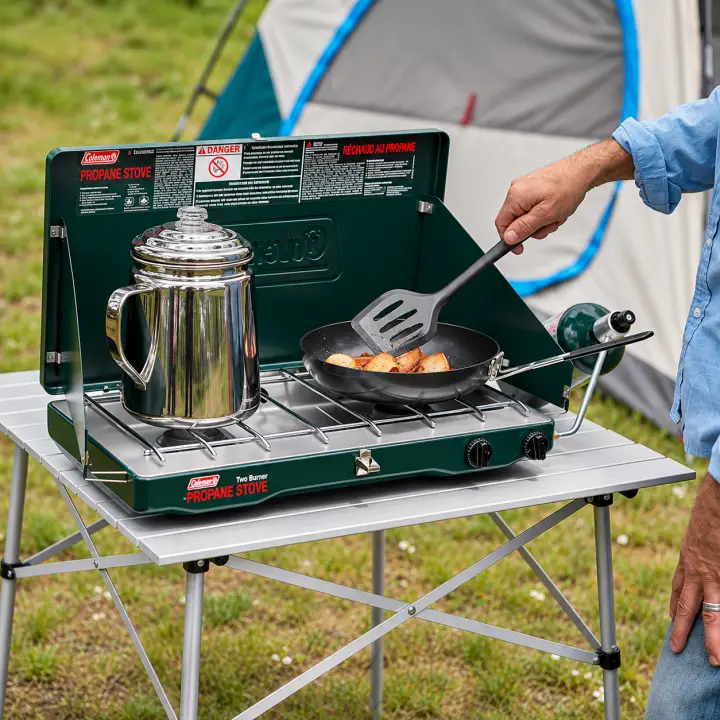
The Coleman Classic Propane Gas Camping Stove is a straightforward option for campers who want a dependable two-burner layout without paying for unnecessary features.
Its two adjustable burners provide a combined 20,000 BTU/hr of cooking output. Adjustable WindBlock panels help shield the flame, and the cooking surface accommodates a 12-inch and a 10-inch pan simultaneously.
It’s a practical setup for weekend camping, simple family meals, and campers who prefer familiar equipment.
The main compromise is convenience. The standard Classic model requires manual lighting rather than offering integrated push-button ignition.
Best for: Budget-conscious car campers who want a traditional two-burner cooking setup.
Check the Coleman Classic Propane Camping Stove
GSI Outdoors Selkirk 540+ Camp Stove
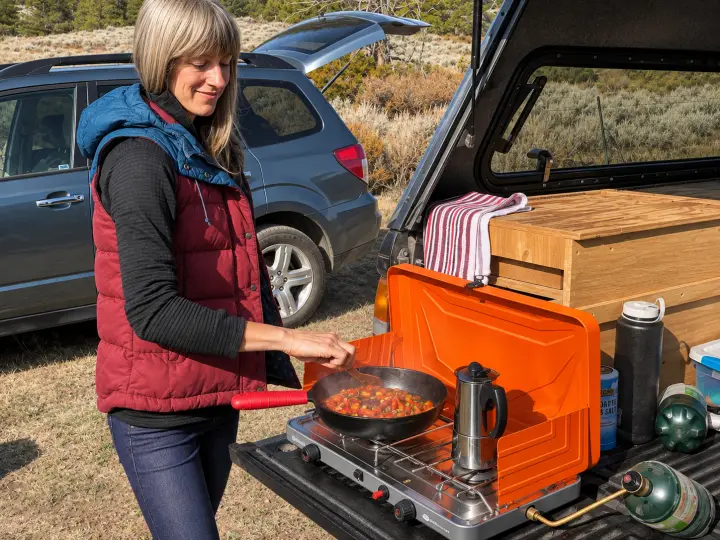
The GSI Outdoors Selkirk 540+ Camp Stove offers a more feature-rich alternative for campers who cook frequently.
It features two independently adjustable propane burners, each rated at 14,000 BTU/hr, along with push-button piezo ignition and integrated wind protection.
Its relatively spacious cooking area is useful when working with larger pots and skillets.
The removable pot support and stainless steel burner surround also make cleanup more convenient after preparing messy meals.
The tradeoff is its larger size and higher cooking output, which may be unnecessary if you’re mostly heating water or preparing simple one-pan meals.
Best for: Car campers who want two powerful burners, convenient ignition, and enough cooking space for regular campsite meals.
Check the GSI Outdoors Selkirk 540+ Camp Stove
Neither stove is necessarily the right choice for someone with very limited packing space. But for a dedicated car camping kitchen, the versatility of a two-burner setup is difficult to beat.
Butane Camping Stoves: Best for Compact, Warm-Weather Cooking
Butane stoves are appealing because they simplify the cooking setup.
Most traditional cassette-style butane stoves have a single burner and a built-in compartment for a slim fuel cartridge.
There’s no separate propane cylinder standing beside the stove, and many models include push-button ignition and a carrying case.
That makes them convenient for picnics, day trips, summer camping, and campsites where storage space is limited.
Why choose butane?
Compact, convenient setup
A cassette-style butane stove generally requires less packing space than a traditional two-burner propane stove.
The cartridge fits inside the stove during operation, reducing the number of separate components you need to handle.
For someone camping out of a small sedan, that simplicity can be appealing.
Easy everyday cooking
Many butane stoves have adjustable burners that work well for heating soup, cooking eggs, preparing coffee, or simmering a small meal.
You don’t need a large cooking station for those tasks.
Affordable entry point
Basic butane stoves are often reasonably priced, making them attractive for occasional campers who don’t need a complete two-burner kitchen.
Where butane falls short
The main limitation is cold-weather performance.
If your camping plans include chilly mornings, straight butane can become frustratingly unreliable.
Most cassette-style stoves also provide only one burner.
That’s fine when you’re preparing a simple lunch, but less convenient when cooking several dishes.
You’ll also need to respect cookware limits. Large pans can extend over the fuel compartment and create dangerous overheating conditions on some models.
Finally, fuel availability varies by location.
Butane cartridges are commonly sold at big-box stores, camping retailers, and Asian grocery stores, but may be harder to find in remote areas.
A butane stove worth considering
Coleman Classic 1-Burner Butane Camping Stove
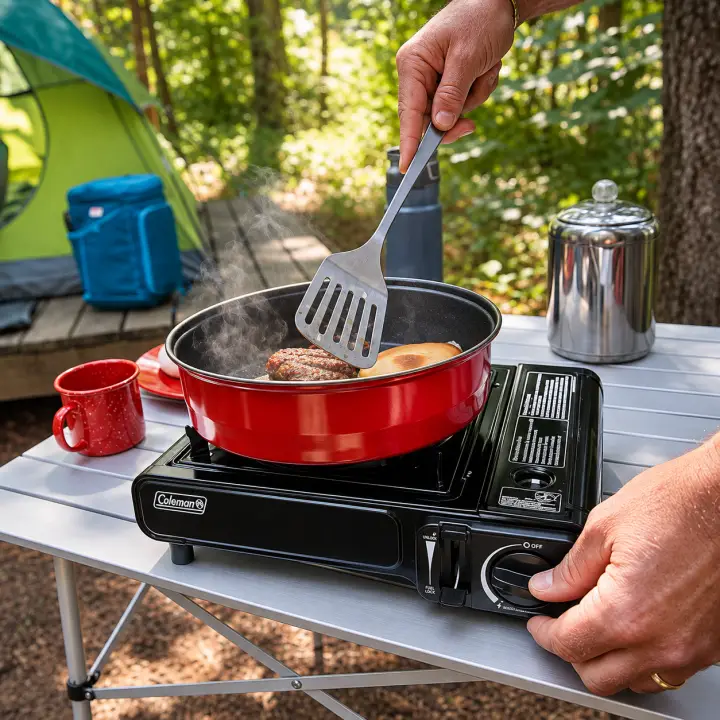
The Coleman Classic 1-Burner Butane Camping Stove is a practical example of a traditional cassette-style butane stove.
It uses a compatible butane cartridge and features an adjustable single burner, Instastart ignition, and a removable porcelain-coated cooking grate.
With 7,650 BTU/hr of cooking output and space for a pan up to 10 inches, it’s suited to smaller meals and straightforward campsite cooking.
A carrying case makes it convenient to transport, while the broad tabletop design provides a stable cooking platform when used with appropriately sized cookware.
Its limitations are typical of this stove category: one burner, modest cooking capacity, and poor suitability for freezing conditions.
Best for: Solo campers, couples, picnic cooking, and warm-weather trips where compact storage matters more than having two burners.
Check the Coleman Classic 1-Burner Butane Camping Stove
For campers who rarely cook more than one dish at a time, a small butane stove can provide everything they need without taking up unnecessary room.
Can One Camping Stove Use Both Propane and Butane?
Yes. Some camping stoves are specifically designed to operate on either propane or butane.
These dual-fuel systems offer a practical compromise for campers who want one compact stove but don’t want to commit to a single fuel type.
A typical dual-fuel stove accepts a cassette-style butane cartridge for everyday use and connects to a propane cylinder through an approved adapter and regulator assembly.
That flexibility can be particularly useful when traveling to places where one fuel is easier to find than the other.
However, dual-fuel compatibility doesn’t automatically mean a stove is suitable for winter camping. Each model has its own operating temperature limits.
Gas One GS-3400P Dual Fuel Portable Camping Stove
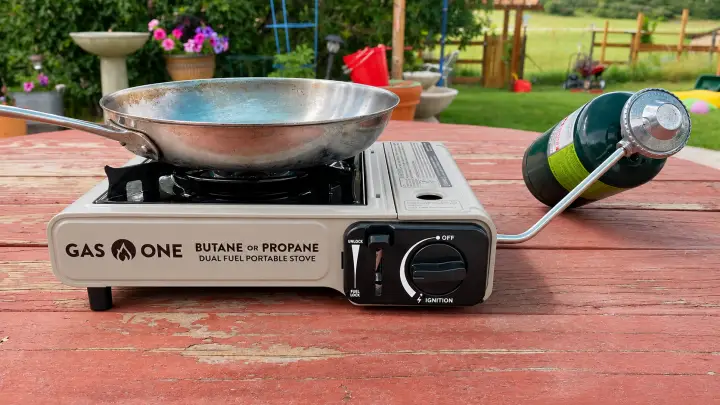
The Gas One GS-3400P is a compact single-burner stove designed to use either an 8 oz butane cartridge or a compatible 16.4 oz propane cylinder with its designated propane connection assembly.
Its integrated ignition, adjustable flame, and portable carrying case make it convenient for simple campsite meals.
The main advantage is being able to choose between two common fuel formats without buying a completely separate stove.
That can simplify packing when you’re unsure which fuel will be available during a trip.
There are tradeoffs, though.
The GS-3400P has a smaller cooking surface and lower heat output than many traditional two-burner propane stoves. It also lacks the integrated wind protection found on some larger camping models.
More importantly, its operating instructions prohibit use below freezing, even though it can run on propane.
So while propane itself performs well in cold conditions, the GS-3400P shouldn’t be treated as a winter-ready stove simply because it accepts propane.
Best for: Campers who want a compact single-burner stove with the flexibility to use two fuel types in conditions permitted by the manufacturer.
Check the Gas One GS-3400P Dual Fuel Camping Stove
Is dual-fuel worth it?
Dual-fuel makes sense if fuel flexibility is more valuable to you than having a large cooking surface.
It can also be useful for occasional campers who want a compact stove for mild-weather outings.
But if you regularly cook for a family, use two pans, or camp in freezing temperatures, a suitable two-burner propane stove remains the more practical choice.
Never try to turn a single-fuel stove into a dual-fuel model using an unapproved adapter. Use only the fuel connections specifically authorized for that stove.
Propane vs. Butane: Which Is Cheaper?
Butane stoves often cost less upfront, while propane can offer better long-term value when used with larger refillable tanks.
The important distinction is between the cost of buying a stove and the cost of operating it over time.
Comparing common fuel containers
| Fuel container | Typical fuel quantity | Main consideration |
|---|---|---|
| Cassette-style butane cartridge | Approximately 8 oz | Convenient for occasional single-burner cooking |
| Disposable propane cylinder | Approximately 1 lb | Widely available but creates more single-use waste |
| Refillable propane tank | Commonly 5 or 20 lb | Higher initial commitment but potentially lower fuel cost per pound |
A disposable 1 lb propane cylinder contains roughly twice as much fuel by weight as an 8 oz butane cartridge.
That doesn’t mean a propane stove automatically runs twice as long.
Actual fuel consumption depends on burner output, flame setting, stove efficiency, wind exposure, and cooking habits.
How to compare fuel prices properly
Rather than comparing the price printed on each container, compare the cost per pound of fuel.
For example, suppose a store charges:
- $4 for an 8 oz butane cartridge.
- $7 for a 1 lb disposable propane cylinder.
That would translate to approximately $8 per pound for butane and $7 per pound for propane.
These are illustrative prices, not current retail quotes, and they don’t tell you which stove will use less fuel to prepare the same meal.
A powerful propane burner operating at full output may consume fuel much faster than a smaller butane stove set to a low flame.
For a more meaningful comparison, consider how much fuel each stove uses for your normal cooking.
When refillable propane makes sense
If you camp regularly, a compatible refillable propane tank may reduce your long-term fuel costs.
It also reduces the number of disposable cylinders you need to purchase.
However, a refillable tank requires storage space, proper transportation, and suitable connection hardware.
A 20 lb propane tank may be economical for frequent camping, but it’s excessive for someone who only needs to boil water during occasional day trips.
The practical takeaway: Butane can be inexpensive and convenient for occasional use. Propane becomes more attractive when you cook frequently, need a larger stove, or can take advantage of a refillable fuel system.
How to Choose the Right Camping Stove Fuel
The easiest way to decide is to think about your actual camping routine.
| Camping situation | Recommended fuel | Why it makes sense |
|---|---|---|
| Family car camping | Propane | Two burners make cooking multiple dishes easier |
| Fall and early spring camping | Propane | More dependable fuel pressure in cold weather |
| Winter car camping | Propane | Better cold-weather performance with a suitably rated stove |
| Summer weekend camping | Propane or butane | Cooking style and available space matter more |
| Picnics and day trips | Butane | Compact single-burner convenience |
| Small-car camping | Butane or dual-fuel | Easier storage than many traditional two-burner stoves |
| Frequent outdoor cooking | Propane | Compatible refillable tanks may offer better value |
| Lightweight backpacking | Isobutane-propane blend | Compact canisters and lightweight stove systems |
Three practical considerations can narrow your decision even further.
1. Consider the coldest temperatures you’ll encounter
A campsite that reaches 75°F during the afternoon may fall into the 30s overnight.
If you’re planning to cook breakfast before the sun warms things up, those morning temperatures matter.
For trips with freezing or near-freezing conditions, propane is generally the more reliable fuel choice, provided your specific stove is rated for those conditions.
2. Think about what you’ll actually cook
If your camp menu consists of coffee, oatmeal, soup, and simple skillet meals, a single-burner butane stove may be enough.
But if you’re preparing pancakes, bacon, pasta, and full dinners for several people, a two-burner stove can save considerable time.
Cooking space matters just as much as burner output.
A stove with impressive BTU numbers isn’t especially useful if your cookware doesn’t fit comfortably or safely on the cooking surface.
3. Account for storage and fuel transportation
A propane stove with several cylinders can occupy more vehicle space than a small butane stove and a few cartridges.
For campers traveling in smaller vehicles, that difference can be significant.
However, remember to consider the complete cooking setup.
You still need cookware, utensils, food storage, and a safe place to operate the stove.
Saving a little room on the stove itself won’t necessarily make the entire kitchen more compact if you bring oversized pots and pans.
Important Safety Considerations for Propane and Butane Stoves
Both propane and butane are flammable fuels that require careful handling.
Never operate an outdoor gas camping stove inside a tent, vehicle, camper, or other enclosed space.
Gas stoves produce carbon monoxide, an odorless and potentially deadly gas. Opening a window or tent door doesn’t make indoor operation safe.
When setting up your stove, follow these precautions:
- Place it on a level, stable, nonflammable surface.
- Maintain the manufacturer’s required clearance from tents, awnings, and other combustible materials.
- Use only approved fuel canisters, regulators, hoses, and adapters.
- Check connections and seals for damage or leaks before lighting.
- Keep fuel containers away from open flames and excessive heat.
- Never use oversized cookware that extends over a butane canister compartment.
- Allow the stove to cool before disconnecting fuel or packing it away.
- Store and transport fuel cylinders according to their labels and applicable safety requirements.
- Never refill a disposable canister unless it is specifically designed and certified for refilling.
Why oversized cookware is particularly risky with butane stoves
Many cassette-style butane stoves position the fuel canister inside a compartment beside the burner.
If a skillet or griddle extends over that compartment, it can reflect heat toward the canister.
That can cause excessive pressure buildup and create a serious fire or explosion hazard.
Always respect the manufacturer’s cookware diameter limits.
Don’t use improvised windshields or griddles that trap heat around the fuel compartment.
For propane stoves, make sure any larger tank connection uses the proper manufacturer-approved hose and regulator.
Fuel compatibility isn’t something to guess about.
Frequently Asked Questions
Is propane or butane better for camping?
Propane is usually better for year-round car camping because it handles colder temperatures more reliably and works with many versatile two-burner stoves.
Butane is a good choice for warm-weather camping, picnics, and compact single-burner cooking.
Can you use a butane camping stove in winter?
Regular butane becomes increasingly unreliable as temperatures approach freezing.
Some isobutane-propane blends perform better in cold weather, but they require compatible stoves and still have temperature limitations.
For winter car camping, a propane stove specifically rated for the expected conditions is generally the more dependable option.
Does propane burn hotter than butane?
Both fuels can produce enough heat for normal camping meals.
The actual cooking performance depends more on the stove’s burner design, heat output, cookware, and wind protection than on the fuel alone.
A well-designed butane burner can cook effectively, while a poorly designed propane stove may waste significant heat.
Which lasts longer, propane or butane?
It depends on how much fuel you’re carrying and how efficiently your stove uses it.
A 1 lb propane cylinder contains approximately twice the fuel weight of an 8 oz butane cartridge, but burner output and cooking habits strongly influence operating time.
A larger fuel container doesn’t necessarily mean the stove itself is more efficient.
Can you use propane in a butane stove?
Only if the stove is explicitly designed and approved to operate with propane.
Propane has a higher vapor pressure than butane at the same temperature, and using an incompatible fuel connection can be dangerous.
Dual-fuel models such as the Gas One GS-3400P are specifically built to accommodate both fuel types with their designated connection systems.
Is a dual-fuel camping stove worth buying?
A dual-fuel stove is worth considering if you want a compact burner and the flexibility to choose between propane and butane.
It may be particularly useful for occasional camping, picnics, and trips where fuel availability varies.
However, dual-fuel doesn’t automatically mean better heating performance, two-burner convenience, or suitability for freezing temperatures.
Is butane or propane better for backpacking?
For most backpackers, neither a traditional propane car camping stove nor a cassette-style butane stove is the ideal choice.
A lightweight backpacking stove using compatible isobutane-propane canisters generally offers a better balance of portability, fuel efficiency, and cooking performance.
Final Verdict: Should You Choose Propane or Butane?
For most car campers, a two-burner propane stove is the better long-term choice. It provides reliable cold-weather fuel performance, plenty of cooking flexibility, and access to widely available fuel.
The Coleman Classic Propane Stove is a sensible starting point for campers who want a straightforward setup. The GSI Outdoors Selkirk 540+ offers additional cooking power and convenience for more frequent campsite cooking.
Butane makes more sense when compact storage and simple meals are your priorities. The Coleman Classic 1-Burner Butane Stove is a practical option for warm-weather outings when you don’t need two burners.
If you want the flexibility to use either fuel, the Gas One GS-3400P offers a useful alternative for mild-weather camping within its operating limits.
Choose the stove around the temperatures you expect, the meals you plan to cook, and the space you have available. Those three factors matter far more than choosing one fuel simply because it’s more popular.
Affiliate Disclosure: GearForTheOutdoors.com participates in affiliate programs, including REI, Amazon, REI Outlet, Garage Grown Gear, evo, and other trusted partners. When you purchase through our links, we may earn a small commission at no extra cost to you. That helps support our content and keeps our recommendations useful, practical, and free.
Disclaimer: This post is for informational purposes only. Always verify current product details, fit, compatibility, availability, safety information, and manufacturer instructions before purchase or use. Outdoor conditions and gear performance can vary depending on setup, weather, terrain, vehicle, and experience level.