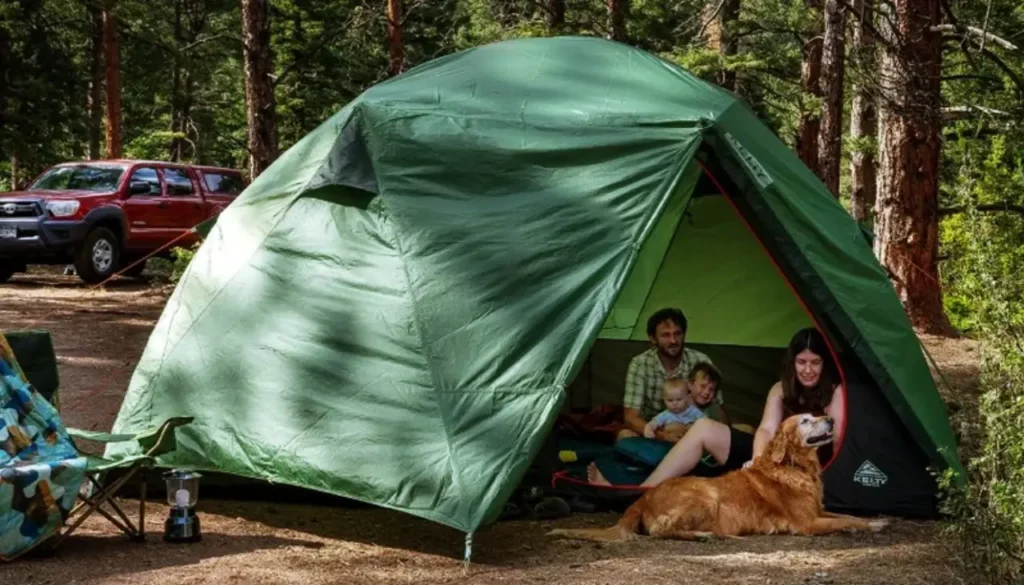
A good family tent should make camping feel easier.
It should give everyone enough room to sleep without stepping over duffel bags, create a dry place for muddy shoes when the weather changes, and feel simple enough to set up after a long drive to the campground.
That matters because family camping rarely stays perfectly organized. Sleeping bags spread out. Jackets end up near the entrance. Air mattresses take up more space than expected. Kids need room to change clothes, find their flashlights, and settle in after a full day outside. 🏕️
The best family camping tents are not necessarily the biggest tents available. They are the tents that create a comfortable base camp without making setup, packing, or campsite organization harder than it needs to be.
This guide focuses on six practical options for campground camping, state park weekends, road trips, and relaxed family adventures. Some are built for families who want a roomy home base for several nights. Others are better for beginners who want a simpler setup and a more approachable price.
Quick Verdict: Which Family Camping Tent Is Best for You?
The North Face Wawona 6 Tent is the best overall choice for many families. It combines a comfortable sleeping area with a large covered vestibule, giving shoes, chairs, coolers, and damp gear somewhere to go without crowding the tent interior.
The REI Co-op Base Camp 6 Tent is the better option for families who camp in places where rain, wind, and cooler nights are more likely. Its structured design, aluminum poles, two vestibules, and adjustable ventilation make it a dependable choice for changing weather.
The REI Co-op Westward 6 Tent is the comfort-first pick for families who want a more relaxed campground setup with standing room, two doors, and a covered porch-like space that can fit two camp chairs.
The Kelty Wireless 8 Tent is the strongest option for larger families or anyone using multiple air mattresses or cots.
For easier weekend trips on a tighter budget, the Coleman Skydome Dark Room 6-Person Tent keeps setup quick and simple.
Our Top Family Camping Tent Picks
| Tent | Capacity | Peak Height | Floor Area | Best For |
|---|---|---|---|---|
| The North Face Wawona 6 Tent | 6-person | Tall enough to stand comfortably | 86.11 sq. ft. | Best Overall Family Tent |
| REI Co-op Base Camp 6 Tent | 6-person | 74 in. | 84 sq. ft. | Rainy Weather and Shoulder-Season Trips |
| REI Co-op Westward 6 Tent | 6-person | 77 in. | 80.83 sq. ft. | Comfortable Multiday Campground Stays |
| Kelty Wireless 8 Tent | 8-person | 83.5 in. | 117.3 sq. ft. | Larger Families and Groups |
| Coleman Skydome Dark Room 6-Person Tent | 6-person | 72 in. | 85 sq. ft. | Fast Setup and Beginner-Friendly Value |
| Kelty Discovery Basecamp 6 Tent | 6-person | 68 in. | 87.6 sq. ft. | Simple, Affordable Weekend Camping |
In-Depth Reviews of the Best Family Camping Tents
1. The North Face Wawona 6 Tent
Best For: Overall Family Camping Comfort
The North Face Wawona 6 Tent works especially well for families because it solves one of the most common campsite problems: where to put all the gear that does not belong inside the sleeping area.
Its large front vestibule creates a covered space for camp chairs, shoes, jackets, coolers, and everyday campsite clutter. When rain moves through the campground, muddy footwear and damp layers can stay outside the sleeping area without being left exposed.
That extra sheltered space becomes useful even in good weather. It can function as a shaded sitting area in the afternoon, a place to organize gear before a hike, or a practical buffer between the campsite and the tent interior. 🌲
Inside, the Wawona 6 has enough room for a family sleeping setup without feeling overly bulky or difficult to manage. The tall interior makes it easier to stand while changing clothes or sorting bags. Large mesh areas help with airflow, while internal pockets keep headlamps, small electronics, and bedtime essentials easy to reach.
The two-door layout is another important detail. Families do not need to rely on a single entrance, which makes late-night exits and early-morning coffee runs less disruptive.
The Wawona 6 is not the smallest family tent to pack or pitch. Its generous vestibule also requires a campsite with enough room. But when space is available, the covered storage area makes family camping feel noticeably more organized.
| Feature | Detail |
| Capacity | 6-person |
| Floor Area | 86.11 square feet |
| Front Vestibule Area | 44.7 square feet |
| Rear Vestibule Area | 21 square feet |
| Doors | 2 |
| Pole Material | DAC MX |
| Best Use | Family car camping, multiday campground stays, and gear-heavy trips |
Pros:
- Large covered vestibule keeps shoes, chairs, and gear out of the sleeping area
- Tall interior makes changing clothes and organizing bags easier
- Two doors improve airflow and reduce awkward late-night exits
- Internal storage pockets keep smaller items easy to find
- Good balance of comfort, protection, and campsite organization
Cons:
- Needs more campsite space than a basic dome tent
- Larger vestibule adds a few extra steps during setup
- More expensive than beginner-focused family tents
Who It’s Best For: Families of three to five people who want one dependable tent for comfortable campground trips and appreciate extra covered space for gear.
Who Should Skip It: Campers who frequently stay on small tent pads or want the fastest possible setup for short overnight trips.
Check Price on Amazon | Check Price at REI
2. REI Co-op Base Camp 6 Tent
Best For: Rainy Weather and Shoulder-Season Camping
The REI Co-op Base Camp 6 Tent is a strong choice when the forecast feels less predictable.
Some family tents are designed mainly for warm-weather comfort. The Base Camp 6 feels more prepared for the kind of weekend when the wind picks up after dinner, temperatures drop overnight, or a steady rain settles over the campground.
Its aluminum-pole structure creates a more supportive frame than many entry-level family tents. The rainfly offers substantial coverage, and the tent includes two vestibules for keeping shoes, backpacks, and wet gear out of the sleeping area.
The front vestibule is large enough to handle everyday campsite clutter, while the smaller rear vestibule adds another protected space near the second door. That makes it easier to divide gear between entrances and keep the inside of the tent cleaner. 🌧️
The Base Camp 6 also includes multiple vents that can be adjusted from inside the tent. That matters on cool or humid nights, when condensation can build up if a tent is closed too tightly.
With 84 square feet of floor area and a 74-inch peak height, the interior feels comfortable for a family of four. There is enough room to arrange sleeping pads or air mattresses without filling every inch of the floor.
This is not the lightest tent in the guide, and it takes a little longer to assemble than a simpler weekend model. The tradeoff is a more protective shelter that feels reassuring when conditions change.
| Feature | Detail |
| Capacity | 6-person |
| Peak Height | 74 inches |
| Floor Area | 84 square feet |
| Vestibule Area | 27 + 17 square feet |
| Doors | 2 |
| Pole Material | Aluminum |
| Best Use | Rainy weekends, mountain campgrounds, and shoulder-season trips |
Pros:
- More weather-focused design than most beginner family tents
- Two vestibules provide protected storage near both doors
- Aluminum poles add strength and durability
- Adjustable ventilation helps manage condensation
- Enough standing height for most adults
- Good option for longer trips in variable conditions
Cons:
- Heavier than a basic fair-weather tent
- Setup takes longer than a pre-attached-pole design
- Less airy and open-feeling than a cabin-style tent during hot summer trips
Who It’s Best For: Families who camp in areas where rain, cooler nights, and changing weather are part of the experience.
Who Should Skip It: Families who only camp occasionally in warm, predictable conditions and want the simplest possible setup.
3. REI Co-op Westward 6 Tent
Best For: Comfortable Multiday Campground Stays
The REI Co-op Westward 6 Tent is designed for families who want their campsite to feel more like a comfortable outdoor home base.
The 77-inch peak height gives most adults room to stand up, change clothes, and move around without constantly crouching. That extra headroom becomes especially valuable during longer trips, when the tent is used for more than sleeping.
The large vestibule is the feature that shapes the experience. It creates a covered area outside the tent with enough room for two camp chairs. On a quiet morning, it becomes a sheltered place to sit with coffee. When the weather shifts, it gives jackets, shoes, and smaller gear bins somewhere to stay without cluttering the interior. ☕
The Westward 6 also includes front and rear doors, which helps with everyday movement around camp. Families can create a clearer entrance for shoes and gear while keeping the second door available for ventilation or easier access.
Multiple interior and exterior pockets help keep smaller essentials organized. Headlamps, sunglasses, charging cables, and kids’ flashlights are less likely to disappear under sleeping bags.
This tent makes the most sense for families staying in developed campgrounds where comfort matters more than packed size. It is a car camping shelter, not a tent designed for long walks from the parking area.
| Feature | Detail |
| Capacity | 6-person |
| Peak Height | 77 inches |
| Floor Area | 80.83 square feet |
| Vestibule Area | 35.08 square feet |
| Doors | 2 |
| Pole Material | Aluminum |
| Best Use | Comfortable family campground stays and relaxed multiday trips |
Pros:
- Tall interior feels comfortable during longer stays
- Covered vestibule can fit two camp chairs
- Two doors improve access and airflow
- Interior and exterior pockets help keep gear organized
- Aluminum poles provide a sturdy structure
- Wide-mouth storage bag makes packing less frustrating
Cons:
- More expensive than simpler family tents
- Heavier than basic weekend options
- Vestibule requires additional campsite space
Who It’s Best For: Families who spend several nights at developed campgrounds and want a comfortable, well-organized campsite.
Who Should Skip It: Campers who mainly take short overnight trips or prefer a smaller, more affordable shelter.
4. Kelty Wireless 8 Tent
Best For: Larger Families and Roomier Sleeping Setups
A family of five or six can quickly feel cramped inside a standard 6-person tent.
The Kelty Wireless 8 Tent gives larger families more room to spread out. Its 117.3-square-foot floor area provides space for multiple sleeping pads, larger air mattresses, or cots without turning the interior into a wall-to-wall sleeping platform.
The 83.5-inch peak height makes the tent feel noticeably more open. Adults can stand comfortably, and there is enough vertical space to change clothes or organize bags without feeling squeezed into the center of the tent.
Two doors and two vestibules also help divide the space more naturally. Shoes can stay near one entrance. Gear bins can sit near the other. People can step outside without crossing the entire sleeping area. ⛺
Kelty’s Quick Corners system helps stabilize the poles during setup, which makes the process easier to follow. The wide-mouth carry bag is another practical detail. Packing a large family tent is rarely the most enjoyable part of a camping trip, so a storage bag that opens generously helps reduce the usual struggle.
The Wireless 8 is still a large tent. It takes up more trunk space and works better when two adults handle the setup together. It also needs a campsite with a large enough tent pad.
For families who regularly travel with more people or more sleeping gear, those tradeoffs are reasonable.
| Feature | Detail |
| Capacity | 8-person |
| Peak Height | 83.5 inches |
| Floor Area | 117.3 square feet |
| Vestibule Area | 26.2 + 26.2 square feet |
| Doors | 2 |
| Pole Material | Fiberglass |
| Best Use | Larger families, group camping, and roomy car camping setups |
Pros:
- Largest interior in this guide
- Tall enough for adults to stand comfortably
- Two doors make movement around camp easier
- Two vestibules provide covered storage
- Quick Corners simplify the setup process
- Wide-mouth carry bag makes packing easier
Cons:
- Easier to pitch with two adults
- Takes up more space in the vehicle
- Requires a larger campsite
- Fiberglass poles are less premium than aluminum poles
Who It’s Best For: Families of five or more people, groups camping together, or smaller families who want room for cots and large air mattresses.
Who Should Skip It: Couples, smaller families, and campers who prefer a compact setup.
Check Price on Amazon | Check Price at REI
5. Coleman Skydome Dark Room 6-Person Tent
Best For: Fast Setup and Beginner-Friendly Value
The Coleman Skydome Dark Room 6-Person Tent is a practical option for families who want camping to feel straightforward.
Its pre-attached poles help reduce setup time to under five minutes once the process becomes familiar. That can make a real difference when arriving at the campground close to sunset or trying to pitch the tent while kids are ready for dinner.
The wide door makes it easier to move air mattresses, duffel bags, and sleeping gear inside. Nearly vertical walls also create more usable headroom than a traditional dome tent.
The Dark Room fabric is one of the most family-friendly features. It blocks much of the early morning sunlight and helps reduce heat inside the tent compared with a similar Coleman model. That can make naps easier and reduce the chance of everyone waking up as soon as the sun reaches the campsite. 😴
The Skydome does not have the same premium materials, vestibule space, or long-term durability as the more expensive tents in this guide. It is better suited to typical campground trips than exposed sites or demanding weather.
For occasional weekends, beginner camping trips, and families who want to keep costs reasonable, it offers a comfortable starting point.
| Feature | Detail |
| Capacity | 6-person |
| Peak Height | 72 inches |
| Floor Dimensions | 10 ft. x 8 ft. 6 in. |
| Approximate Floor Area | 85 square feet |
| Setup Style | Pre-attached poles |
| Best Use | Beginner camping and quick weekend trips |
Pros:
- Fast setup with pre-attached poles
- More approachable price than premium family tents
- Dark Room fabric helps block early morning sunlight
- Wide door makes loading gear easier
- Nearly vertical walls improve headroom
- Suitable for casual campground trips
Cons:
- No vestibule for wet shoes or gear storage
- Less durable than premium tents with aluminum poles
- Better for typical campground weather than exposed conditions
- Simpler interior organization
Who It’s Best For: New campers, budget-conscious families, and anyone who wants to keep setup quick and easy.
Who Should Skip It: Families who camp often in wet, windy, or rugged environments and need more protection.
Check Price on Amazon | Check Price at REI
6. Kelty Discovery Basecamp 6 Tent
Best For: Affordable Weekend Camping
The Kelty Discovery Basecamp 6 Tent is a good fit for families who want a simple tent with a useful amount of floor space and no unnecessary complication.
Its 87.6-square-foot interior gives a family of four room for sleeping pads, bags, and a small walking path. It feels more comfortable than a tightly packed starter tent while remaining easier to carry and pitch than many larger family shelters.
The 68-inch peak height is lower than the taller tents in this guide. Some adults will need to duck slightly near the center. That is the main comfort tradeoff.
The benefit is a lighter, more straightforward tent that works well for occasional weekends in developed campgrounds.
Kelty’s Quick Corners help hold the poles in place during setup, which makes assembly more manageable when only one adult is handling the tent. The wide-mouth storage bag is also useful when it is time to break down camp and pack everything back into the vehicle. 🌿
This is not the best option for families who want a large porch-like vestibule, two doors, or full standing height. It is a sensible choice for those who want enough space for a comfortable weekend without paying for premium features.
| Feature | Detail |
| Capacity | 6-person |
| Peak Height | 68 inches |
| Floor Area | 87.6 square feet |
| Packaged Weight | 13 lbs. 14 oz. |
| Pole Material | Fiberglass |
| Best Use | Affordable family camping and occasional weekend trips |
Pros:
- Good floor area for the price
- Straightforward setup
- Quick Corners help stabilize the poles during assembly
- Lighter than many family tents
- Wide-mouth carry bag makes packing easier
- Practical choice for occasional campground trips
Cons:
- Lower ceiling than other family tents in this guide
- Less covered space for shoes and gear
- Fiberglass poles are less durable than aluminum
- Simpler design than premium tents
Who It’s Best For: Families looking for a comfortable first tent for relaxed campground weekends.
Who Should Skip It: Campers who want full standing height, more covered storage, or a stronger shelter for variable weather.
Check Price on Amazon | Check Price at REI
Family Camping Tent Comparison Table
| Tent | Biggest Strength | Main Tradeoff | Best Family Size | Best Type of Trip |
| The North Face Wawona 6 | Large covered vestibule and balanced comfort | Requires more campsite space | 3–5 people | Comfortable weekend and multiday trips |
| REI Co-op Base Camp 6 | Weather protection and ventilation | Heavier than a basic family tent | 3–5 people | Rainy, windy, or shoulder-season trips |
| REI Co-op Westward 6 | Comfortable porch-like vestibule and standing room | Premium price | 3–5 people | Relaxed campground vacations |
| Kelty Wireless 8 | Spacious interior for larger families | Bigger packed size and footprint | 5–7 people | Group trips and roomy sleeping setups |
| Coleman Skydome Dark Room 6 | Quick setup and approachable price | Minimal gear storage | 3–4 people | Beginner-friendly weekend trips |
| Kelty Discovery Basecamp 6 | Simple setup and good value | Lower ceiling | 3–4 people | Occasional fair-weather camping |
How to Choose the Best Family Camping Tent
Choosing a family tent becomes much easier when the focus moves away from the number on the product label and toward the way the tent will actually be used.
A “6-person tent” may technically fit six sleeping pads placed close together. That does not always mean six people will feel comfortable sharing it for an entire weekend.
Use the “Plus Two” Rule
For family car camping, it usually helps to choose a tent rated for at least two more people than the number sleeping inside.
- Two people: Consider a 4-person tent.
- Four people: Start with a 6-person tent.
- Six people: Look closely at 8-person tents.
That extra room gives bags, shoes, pillows, sleeping pads, and kids’ gear somewhere to go without filling every corner.
A family of four can sleep inside a 4-person tent. A 6-person model usually feels much more comfortable.
Think About Air Mattresses, Pads, and Cots
Sleeping gear takes up more room than expected.
A queen-size air mattress can dominate the inside of a smaller tent. Two large mattresses may fit inside some 6-person tents, but they can leave very little floor space for bags or movement.
Cots need even more planning because they require width, length, and enough wall clearance to avoid pressing against the tent fabric.
Before buying a tent, sketch out the approximate sleeping arrangement or test the mattress dimensions at home. A few extra square feet can make the difference between a comfortable sleeping space and a tent that feels crowded from the moment camp is set up. 🛏️
Prioritize Standing Height for Longer Trips
Standing height may not matter much during a single overnight stay.
During a three-night campground trip, it becomes much more useful.
A taller tent makes it easier to change clothes, organize bags, help kids get ready for bed, and move around without constantly crouching.
Look for a peak height of at least 72 inches when adult standing room is important.
Decide How Much Covered Storage Is Needed
Vestibules are one of the most valuable features in a family tent.
A vestibule is the covered space outside the tent body but underneath the rainfly. It gives shoes, wet jackets, camp chairs, and gear bins somewhere to stay without taking over the sleeping area.
Families camping in rainy regions or staying several nights at the same campsite will usually appreciate a larger vestibule.
The North Face Wawona 6 Tent is especially useful for gear-heavy trips. The REI Co-op Westward 6 Tent works well for families who want a more comfortable porch-like space.
Look for Two Doors When Possible
Two doors make family camping easier.
One person can leave the tent during the night without stepping over everyone else. Gear can stay near one entrance while the second door remains available for airflow. Kids can move in and out without turning a single doorway into a bottleneck.
One-door tents can still work well, especially when the priority is affordability. But the convenience of two doors becomes more noticeable on longer trips.
Match the Tent to the Weather
Most family camping tents are designed for spring, summer, and fall.
A basic family tent can handle typical campground weather when pitched correctly. Families camping in wetter, windier, or cooler locations should look for a more structured shelter with stronger poles, a well-designed rainfly, guylines, and adjustable ventilation.
The REI Co-op Base Camp 6 Tent is the strongest option in this guide for changing weather.
For casual summer trips in predictable conditions, the Coleman Skydome Dark Room 6-Person Tent keeps the setup simpler.
Consider the Campsites You Usually Visit
A larger tent needs a larger campsite.
Before choosing an 8-person model or a tent with an oversized vestibule, think about the places where it will be used most often.
Developed campgrounds usually provide more space, but tent pads can still vary. A large family tent may be comfortable inside while becoming awkward to pitch on a small gravel platform surrounded by trees.
The right tent should fit both the family and the campsite.
Tips for a More Comfortable Family Camping Setup
A few small habits can make a family tent feel cleaner, calmer, and easier to use.
Practice the Setup at Home
Pitch the tent before the first trip.
This confirms that all poles, stakes, clips, and guylines are included. It also makes the first real setup easier, especially when arriving near sunset.
A backyard practice run is a good time to test sleeping pads, air mattresses, and gear bins inside the tent.
Use a Footprint or Properly Sized Groundsheet
A footprint helps protect the tent floor from sharp sticks, rough gravel, and abrasive soil.
A tarp can also work, but it should not extend beyond the edges of the tent floor. Exposed tarp edges can collect rainwater and guide it underneath the tent.
Create a Shoe Zone Near the Entrance
A small outdoor mat or utility rug helps keep dirt outside.
Place shoes, damp jackets, and muddy items in the vestibule or close to the entrance. This keeps the sleeping area cleaner and reduces the amount of sand, leaves, and campground dust that ends up inside the tent.
Keep Small Items in the Same Place
Headlamps, flashlights, glasses, and car keys are easy to lose under sleeping bags.
Use the tent pockets consistently. Keep nighttime essentials close to the door or near each person’s sleeping area.
Ventilate the Tent at Night
Condensation can appear inside almost any tent.
Leave vents open when conditions allow, even on cooler nights. A small amount of airflow helps reduce the damp feeling that can build inside a tightly closed shelter by morning.
Bring Extra Stakes and Guylines
A few extra stakes and reflective guylines add flexibility.
They are useful on windy nights, uneven campsites, and soft ground. Reflective lines are easier to spot after dark and reduce the chance of someone tripping while walking around camp. 🔦
Final Verdict
The best family camping tent is the one that makes the campsite easier to live in.
For most families, the North Face Wawona 6 Tent offers the best overall balance. It provides a comfortable sleeping area, standing room, two doors, and a large covered vestibule that helps keep gear organized.
For wetter or more unpredictable conditions, the REI Co-op Base Camp 6 Tent is the more protective choice.
Families planning longer campground stays may prefer the extra comfort of the REI Co-op Westward 6 Tent, especially when a sheltered sitting area and better organization matter.
The Kelty Wireless 8 Tent gives larger families the room needed for cots, air mattresses, and extra gear.
For simpler weekend trips, the Coleman Skydome Dark Room 6-Person Tent keeps setup fast and the price approachable. The Kelty Discovery Basecamp 6 Tent is another practical option for families who want a straightforward first tent.
A family tent does not need to feel complicated. It simply needs to create a comfortable place to return to after a day outside, when the campfire burns low, shoes pile up near the entrance, and everyone is ready to settle in for the night. 🌙
Frequently Asked Questions
What size tent is best for a family of four?
A 6-person tent is usually the best size for a family of four.
A 4-person tent may fit four sleeping pads, but it often leaves limited room for bags, air mattresses, and movement. A 6-person tent creates a more comfortable setup without becoming excessively large for most campsites.
Is an 8-person tent too large for a family of four?
Not necessarily.
An 8-person tent can work well for a family of four using cots, larger air mattresses, or extra gear bins. It can also make longer campground stays feel more relaxed.
The tradeoff is a larger packed size, a bigger footprint, and a setup process that may be easier with two adults.
What is the easiest family tent to set up?
The Coleman Skydome Dark Room 6-Person Tent is the easiest option in this guide for a quick setup.
Its pre-attached poles are designed to reduce assembly time, making it a practical choice for beginners and short weekend trips.
What is the best family tent for rainy weather?
The REI Co-op Base Camp 6 Tent is the strongest weather-focused option in this guide.
Its aluminum-pole structure, covered vestibules, rainfly, and adjustable ventilation make it well suited to trips where wind and rain are more likely.
What is the best tent for a family with lots of gear?
The North Face Wawona 6 Tent is the best fit for gear-heavy camping trips.
Its large vestibule creates a protected area for shoes, chairs, jackets, coolers, and campsite equipment that would otherwise take up space inside the tent.
Do family tents need a footprint?
A footprint is not always required, but it is useful.
It protects the tent floor from abrasion and adds a layer between the tent and the ground. A properly sized tarp can also work as a more affordable alternative.
Are family camping tents waterproof?
Family camping tents are designed to resist rain when pitched correctly, but no tent should be treated as completely waterproof in every condition.
Use the rainfly, stake the tent properly, tension the guylines, and choose a campsite that does not collect water.
What is the difference between a 3-season and a 4-season tent?
A 3-season tent is designed for typical spring, summer, and fall camping. It balances ventilation with protection from rain and moderate wind.
A 4-season tent is built for winter conditions, stronger winds, and heavier snow loads. It usually has a more specialized pole structure, heavier materials, and less mesh.
The tents in this guide are designed for family campground trips rather than winter mountaineering conditions.
Affiliate Disclosure: GearForTheOutdoors.com participates in affiliate programs, including REI, Amazon, REI Outlet, Garage Grown Gear, evo, and other trusted partners. When a purchase is made through an affiliate link, the site may earn a small commission at no extra cost to the reader. That support helps keep the content practical, useful, and free.
Disclaimer: This post is for informational purposes only. Always verify current product details, fit, availability, safety information, and manufacturer warranties before purchase or use. Outdoor conditions and gear performance can vary depending on setup, weather, terrain, and experience level.