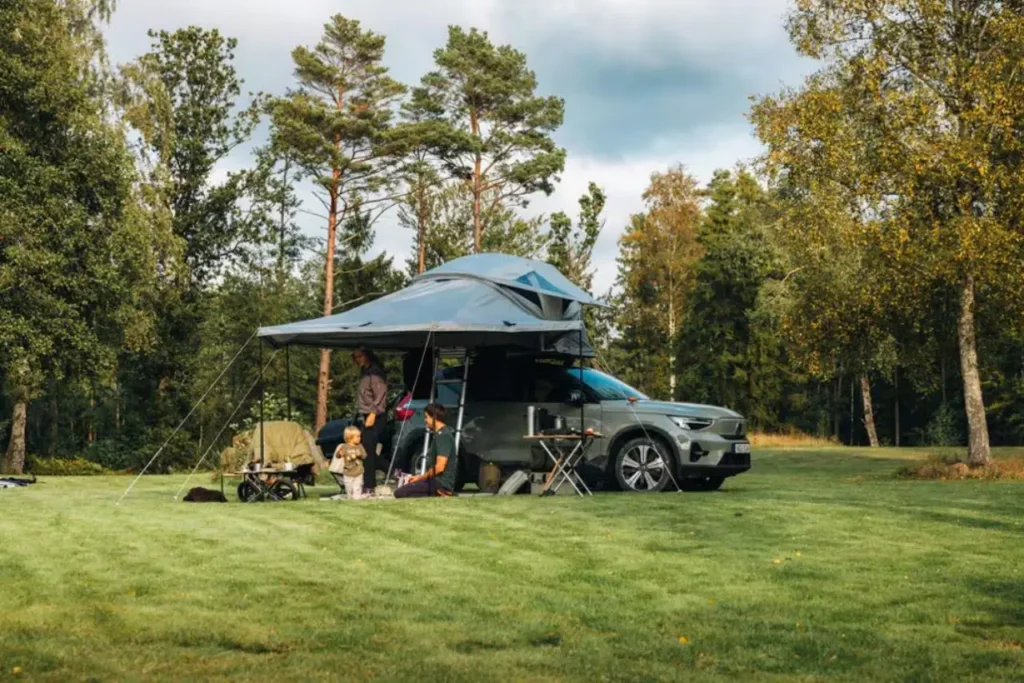
A rooftop tent can turn a familiar vehicle into a comfortable basecamp for weekend road trips, dispersed camping, and longer overland routes. Pull into camp, unfold or pop open the shelter, climb the ladder, and the sleeping area is ready above wet ground, mud, rocks, and uneven terrain.
That convenience is appealing, but rooftop tents are expensive, heavy, and more complicated than ordinary camping tents. The right model must fit the vehicle, work with the roof-rack system, provide enough sleeping space, and match how often it will actually be used.
Some campers need a roomy fold-out tent for relaxed weekends. Others want a low-profile hardshell that opens quickly after a long day on the road. Families may prioritize mattress width, while owners of smaller vehicles need to watch every pound.
This guide compares five of the best rooftop tents for different vehicles, budgets, and camping styles. It also explains the weight limits, rack requirements, and everyday tradeoffs that matter before mounting a tent above the roof. 🚙
Top Rooftop Tent Picks
| Tent Model | Type | Sleeps | Best For | Price |
|---|---|---|---|---|
| Thule Approach M | Softshell | 3 | Best Overall Balance | $$$ |
| iKamper Skycamp 3.0 | Hardshell Hybrid | 3–4 | Families and Fast Setup | $$$$ |
| Roofnest Condor 2 Air | Hardshell Hybrid | 2–3 | Compact Premium Comfort | $$$$ |
| Yakima SkyRise HD | Softshell | 2–3 | Smaller Vehicles and Easy Mounting | $$$ |
| Smittybilt GEN2 Overlander | Softshell | 2–3 | Budget-Conscious Campers | $$ |
In-Depth Rooftop Tent Reviews
Each tent below solves a slightly different rooftop-camping problem. Before focusing on windows, organizers, lighting, or mattress thickness, confirm that the tent is compatible with the vehicle and roof-rack system.
Thule Approach M
Best Overall Rooftop Tent
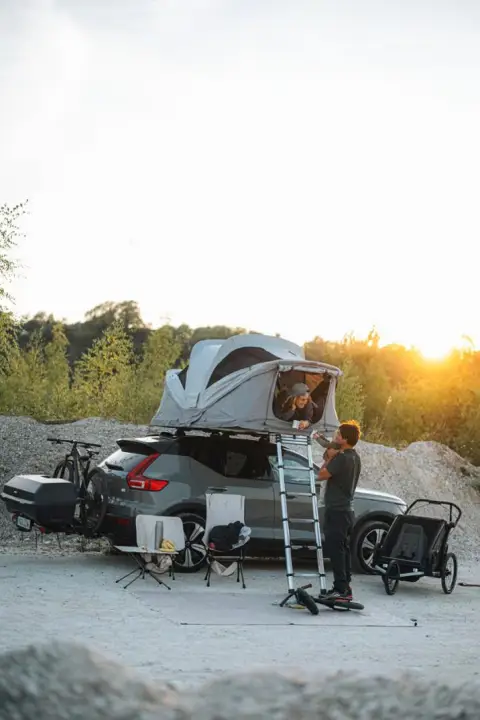
The Thule Approach M is a practical choice for campers who want a roomy sleeping area without moving into the price and weight range of a large hardshell.
Its fold-out design creates more interior space than the tent occupies while closed. That matters on crossovers and midsize SUVs, where roof space may already be shared with an awning, cargo box, recovery gear, or other accessories.
Once opened, the tent provides enough floor space for two adults to sleep comfortably, with room for a child or a close third camper. Large windows create good airflow on warm nights and make the interior feel less enclosed when rain keeps everyone inside.
The 600-denier ripstop polyester canopy is designed to balance weather resistance, durability, and breathability. The welded aluminum floor adds a more solid sleeping platform than the fabric floor found in a traditional ground tent.
At roughly 128 pounds, the Approach M is still a substantial piece of equipment. Installation will usually require two or more adults, and the vehicle must have a compatible rack with enough dynamic capacity.
Key Specs:
- Type: Softshell fold-out
- Sleeps: 3
- Weight: Approximately 128 lbs
- Interior Peak Height: Approximately 40 in
- Dimensions When Closed: Approximately 56 x 49 x 11 in
- Floor Dimensions: Approximately 95 x 51 in
- Canopy Fabric: 600-denier ripstop polyester
Pros:
- Roomy sleeping platform for its packed footprint
- Durable canopy and insulated aluminum floor
- Large windows provide airflow and outdoor views
- More affordable than most premium hardshell tents
- Practical size for many SUVs and crossovers
Cons:
- Setup takes longer than opening a hardshell
- Packing the fabric and travel cover requires some care
- Less aerodynamic than a slim hardshell
- Interior height is lower than some larger fold-out tents
Who it’s best for: Couples, small families, and frequent car campers who want a dependable balance of sleeping space, weather protection, and price.
Who should skip it: Campers who change campsites every night and want the fastest possible setup may be happier with a hardshell.
The Thule Approach M and other current Thule rooftop tents can be found through outdoor retailers such as REI.
iKamper Skycamp 3.0
Best Rooftop Tent for Families
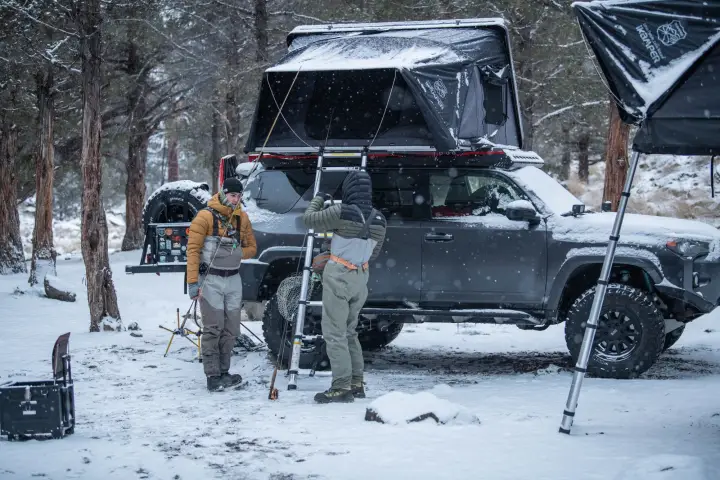
The iKamper Skycamp 3.0 is built for campers who want a large sleeping area without wrestling with a traditional softshell every time camp moves.
Its hybrid design combines a protective hardshell with a fold-out floor. Release the latches, raise the shell, unfold the platform, extend the ladder, and most of the shelter takes shape with relatively little fabric management.
Inside, the king-size sleeping area provides enough width for two adults who like extra room, parents camping with children, or a couple traveling with a dog. The nine-zone mattress is shaped to provide support across different parts of the body rather than relying on one uniform slab of foam.
The hard outer shell improves protection while driving and creates a cleaner profile than a bulky softshell travel cover. At camp, expansive windows and a sky-view panel help the interior feel open, especially when the weather is clear enough to roll back the coverings. 🌄
The tradeoff is size. The Skycamp 3.0 weighs roughly 165 pounds and takes up considerable roof space. It makes the most sense on trucks, larger SUVs, trailers, and vehicles with a properly engineered rack system.
Key Specs:
- Type: Hardshell hybrid fold-out
- Sleeps: 3–4
- Weight: Approximately 165 lbs
- Interior Peak Height: Approximately 48 in
- Dimensions When Closed: Approximately 85.8 x 55.1 x 13 in
- Sleeping Area: Approximately king-size
- Canopy Fabric: Poly-cotton canvas
Pros:
- Large sleeping platform works well for families
- Faster deployment than most softshell tents
- Protective, streamlined hardshell
- Comfortable segmented mattress
- Large windows provide ventilation and visibility
- Bedding may fit inside when packed, depending on its thickness
Cons:
- One of the most expensive tents in the category
- Too heavy for many factory crossbars
- Large packed footprint occupies most of the roof
- Installation and removal require several people or a lifting system
Who it’s best for: Families, couples who want a wide mattress, and frequent travelers who value a fast setup after long driving days.
Who should skip it: Solo campers, occasional weekend campers, and owners of smaller vehicles may not benefit enough from its size and price.
The iKamper Skycamp 3.0 is sold by retailers including REI, although inventory and color availability can vary.
Roofnest Condor 2 Air
Best Compact Hardshell Rooftop Tent
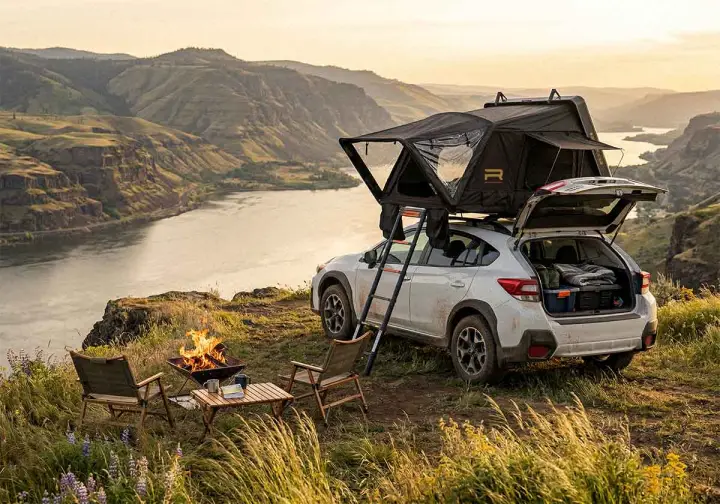
The Roofnest Condor 2 Air provides much of the interior room associated with a fold-out rooftop tent while keeping a relatively compact footprint when closed.
That combination works well for campers who want hardshell convenience but do not need the family-size sleeping platform of the iKamper Skycamp 3.0. Its sleeping area is best suited to two adults, although the manufacturer rates it for up to three occupants.
The PC/ABS shell protects the folded tent during highway travel, while the poly-cotton body creates a quieter, more breathable interior than thin synthetic fabric. A blackout treatment helps reduce early-morning light when the tent is parked in an exposed desert campsite or an open campground.
Small interior details make the Condor easier to live with during multi-night trips. Integrated storage helps keep phones, keys, headlamps, and clothing away from the mattress, while HVAC ports allow compatible heating or cooling hoses to be routed into the tent.
The tent still weighs around 150 pounds, so “compact” does not mean lightweight. It requires the same careful vehicle and rack evaluation as other substantial hardshell models.
Key Specs:
- Type: Hardshell hybrid fold-out
- Sleeps: 2–3
- Weight: Approximately 150 lbs
- Interior Peak Height: Approximately 50 in
- Shell Material: PC/ABS
- Canopy Fabric: 280 GSM poly-cotton canvas
- Sleeping Layout: Best suited to two adults
Pros:
- Compact packed footprint for a fold-out hardshell
- Quick setup with limited fabric handling
- Blackout interior helps control morning light
- Good ventilation and generous headroom
- Interior storage and HVAC ports add livability
Cons:
- Premium price
- Heavy for smaller vehicles and factory racks
- Less sleeping width than a family-size hybrid
- Accessories can increase the total setup cost quickly
Who it’s best for: Couples who travel frequently and want a compact hardshell with a comfortable, organized interior.
Who should skip it: Families needing a broad sleeping platform should consider a larger model. Budget-focused campers can get similar floor space from a softshell for much less.
Yakima SkyRise HD
Best Rooftop Tent for Smaller Vehicles
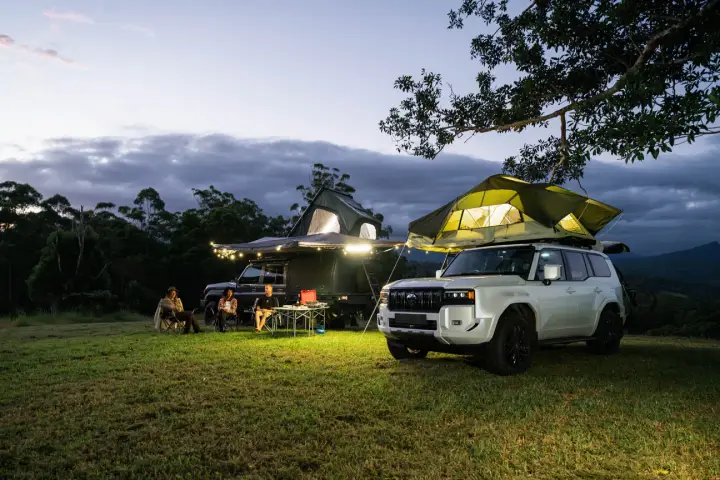
The Yakima SkyRise HD is a traditional softshell rooftop tent with a mounting system designed to simplify installation and removal.
That matters for campers who do not want the tent permanently attached to the vehicle. A rooftop tent can create wind noise, reduce fuel economy, limit garage clearance, and make car washes more complicated. Being able to remove it between trips can be a meaningful advantage.
The SkyRise HD uses 600-denier ripstop polyester with a 3,000 mm waterproof polyurethane coating. A removable rainfly extends over the entrance, giving the ladder some protection when rain starts while campers are climbing into the tent.
Mesh windows and a skylight help release warm air during summer trips. With the coverings rolled back, the interior becomes brighter and breezier than many enclosed hardshells. When the weather shifts, the heavier fabric and rainfly provide more protection than a lightweight fair-weather tent.
The smaller configuration is particularly appealing for wagons, crossovers, and compact SUVs. Even so, compatibility must be confirmed carefully. A smaller vehicle does not automatically have enough roof or rack capacity for a rooftop tent.
Key Specs:
- Type: Softshell fold-out
- Sleeps: 2–3, depending on size
- Weight: Varies by configuration
- Canopy Fabric: 600-denier ripstop polyester
- Waterproof Coating: 3,000 mm polyurethane
- Frame: Aluminum
- Mounting System: Tool-free locking clamps on compatible racks
Pros:
- Mounting system makes removal more manageable
- Durable fabric and substantial waterproof coating
- Good ventilation through mesh windows and skylight
- Smaller options work with a wider range of vehicles
- Locking hardware adds security at the rack
Cons:
- Softshell packing takes longer than closing a hardshell
- Lower interior height in smaller configurations
- Mattress may feel firm without an added topper
- The travel cover adds bulk above the roof
Who it’s best for: Solo campers and couples with wagons, crossovers, or smaller SUVs who want a durable softshell that can be removed between trips.
Who should skip it: Campers who need a large family sleeping area or regularly break camp before sunrise may prefer a faster hardshell.
Current Yakima rooftop-tent models and compatible rack components can be checked through REI.
Smittybilt GEN2 Overlander
Best Budget Rooftop Tent
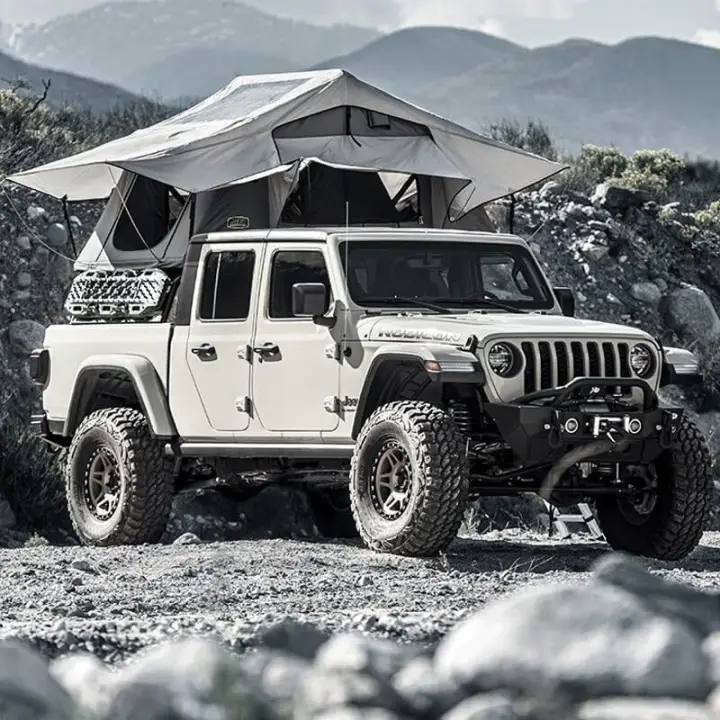
The Smittybilt GEN2 Overlander offers a more accessible entry into rooftop camping without stripping away the basic features needed for weekend use.
Its fold-out platform creates a sleeping area for two adults, with enough room for a child or a compact third sleeper when necessary. The 600-denier ripstop body provides more substantial fabric than many inexpensive rooftop tents, while the rainfly adds another layer of protection during wet conditions.
A telescoping aluminum ladder, interior LED light, shoe-storage bag, and foam mattress are included. These are not luxury additions, but they reduce the number of accessories needed before the first trip.
The mattress is likely to be the first comfort upgrade. At around two inches thick, it may feel adequate for one or two nights but firm for side sleepers or longer trips. A thin self-inflating pad can improve pressure relief, although the extra bedding may need to be removed before the tent is folded.
Hardware, stitching, latches, and travel-cover fit may not feel as refined as the components on premium tents. Careful installation and occasional inspection are important, particularly after rough roads or repeated highway travel. 🔧
Key Specs:
- Type: Softshell fold-out
- Sleeps: 2–3
- Weight: Approximately 130 lbs
- Interior Peak Height: Approximately 51 in
- Open Dimensions: Approximately 95 x 56 x 51 in
- Sleeping Area: Approximately 92 x 55 in
- Canopy Fabric: 600-denier ripstop fabric
- Maximum Load Rating: Approximately 660 lbs
Pros:
- Significantly less expensive than premium rooftop tents
- Spacious sleeping area for two adults
- Includes lighting, ladder, rainfly, and shoe storage
- Heavy-duty fabric for the price
- Practical introduction to rooftop camping
Cons:
- Thin mattress may need additional cushioning
- Travel cover can take time to secure
- Hardware is less refined than premium systems
- Setup remains slower than a hardshell
- Long-term durability depends heavily on installation and care
Who it’s best for: Beginners, occasional rooftop campers, and budget-conscious travelers who want a functional setup without spending several thousand dollars.
Who should skip it: Frequent overlanders covering long distances may prefer the cleaner aerodynamics, faster setup, and more refined hardware of a premium hardshell.
The Smittybilt GEN2 Overlander can often be found through Amazon.
How to Choose the Best Rooftop Tent
A rooftop tent should be chosen as part of a complete vehicle system. The tent, crossbars, towers, mounting feet, roof rails, and vehicle roof all have separate limits.
Start with compatibility. Comfort features only matter after the vehicle and rack can carry the tent safely.
Hardshell vs. Softshell Rooftop Tents
The choice between a hardshell and softshell affects setup time, price, sleeping space, highway performance, and how much work is required each morning.
Hardshell Rooftop Tents
A hardshell opens vertically, in a wedge, or with a fold-out extension. The rigid shell becomes part of the roof or side of the opened tent.
Advantages:
- Fast opening and closing
- Protective exterior shell
- Cleaner highway profile
- Less fabric to fold and tuck away
- Some models hold bedding when closed
- Better suited to frequent campsite changes
Disadvantages:
- Higher purchase price
- Usually heavier
- Large models occupy most of the roof
- Fewer affordable options
- Replacement shell components can be expensive
Best for: Road trips with frequent camp changes, overland travel, couples who camp regularly, and anyone who values a quick departure.
Softshell Rooftop Tents
A softshell folds open over the side of the vehicle, with part of the sleeping platform supported by the ladder.
Advantages:
- Lower average price
- More sleeping area for the money
- Traditional tent-like interior
- Large windows and covered entrances
- More options for families and budget shoppers
Disadvantages:
- Slower setup and takedown
- Fabric must be folded carefully
- Travel covers can be awkward
- Bulkier highway profile
- Bedding often needs to be removed before closing
Best for: Campers who stay in one place for several nights, buyers who want more floor area, and anyone prioritizing value over speed.
Will a Rooftop Tent Fit Your Vehicle?
Do not assume a rooftop tent fits because the vehicle has factory roof rails. Many factory crossbars are designed for luggage, bikes, skis, or cargo boxes—not a 130- to 165-pound tent.
Three limits need to be confirmed.
Dynamic Weight Capacity
Dynamic weight capacity is the amount the roof and rack can carry while the vehicle is moving.
The rack’s dynamic rating must exceed the total installed weight of the tent and mounting hardware. The lowest-rated component determines the safe capacity of the system.
For example, installing 165-pound crossbars does not help if the vehicle roof is rated for only 150 pounds while driving.
Static Weight Capacity
Static weight capacity applies while the vehicle is parked.
It must support:
- The rooftop tent
- The mounting hardware
- The occupants
- Bedding and personal items inside the tent
Static capacity is usually higher than dynamic capacity because the vehicle is not accelerating, braking, cornering, or traveling over uneven roads. The exact rating still needs to come from the vehicle or rack manufacturer.
Rack Compatibility
Most rooftop tents require crossbars with approved spacing, width, shape, and mounting strength.
Check:
- Minimum and maximum crossbar spacing
- Usable bar width
- Distance between the roof and crossbars
- Maximum dynamic capacity
- Whether the bars are supported by raised rails, fixed points, a track, or a platform
- Whether the rack manufacturer specifically approves rooftop tents
Clamping a heavy tent to an unapproved rack can damage the roof, loosen during travel, or create unsafe handling.
Consult the vehicle owner’s manual, rack documentation, and tent installation guide. When specifications are unclear, contact the manufacturers before purchasing.
Rooftop Tent Weight
Tent weight affects more than installation.
A heavier rooftop tent may:
- Reduce available cargo capacity
- Increase body roll
- Affect braking and handling
- Create additional wind resistance
- Require stronger crossbars or a platform rack
- Be difficult to remove between trips
- Put the vehicle above the height limit of a garage or parking structure
Lighter softshells may weigh around 100 to 130 pounds. Large hardshell hybrids often weigh 150 to 180 pounds or more.
Remember that the rack itself also adds weight to the roof.
Sleeping Capacity
Manufacturer capacity ratings describe how many bodies can fit—not necessarily how many adults will sleep comfortably.
A two-person tent generally works well for:
- One camper with plenty of gear
- Two adults using streamlined bedding
- One adult and a dog
A three-person tent is often most comfortable for two adults who want more room. A four-person rooftop tent may work for parents with young children but can feel crowded with four full-size adults.
Compare the actual mattress dimensions with a familiar bed at home instead of relying only on the advertised capacity.
Mattress Comfort
Most rooftop tents include a foam mattress between two and three inches thick. That sounds generous compared with a backpacking pad, but comfort depends on foam density, body weight, sleeping position, and the hard platform below it.
Side sleepers often need more pressure relief around the hips and shoulders.
Possible upgrades include:
- A thin self-inflating pad
- A low-profile foam topper
- A fitted anti-condensation mat
- A replacement mattress designed for the tent
Before adding bedding, check how much interior clearance remains when the tent closes. Forcing a hardshell shut over thick bedding can damage hinges, latches, seals, or the mattress.
Weather Protection and Ventilation
Thicker fabric is useful in wind and cool weather, but a rooftop tent also needs ventilation.
Warm breath and damp clothing can create condensation beneath the mattress and along the walls. Look for:
- Opposing windows
- Covered vents
- Mesh panels
- A removable rainfly
- Space beneath the mattress for airflow
- An anti-condensation mat
Dry the tent fully before storing it. Closing damp canvas for several days can lead to odors, stains, mildew, and coating damage.
Ladder Length and Vehicle Height
The ladder supports access and, on many softshell tents, part of the sleeping platform.
Check that it is long enough for the vehicle after accounting for:
- Lift kits
- Larger tires
- Roof-rack height
- Uneven campsites
- Trailer mounting
The ladder should sit at the angle specified by the manufacturer. A ladder that is too vertical, too shallow, or barely touching the ground may not support the tent correctly.
Setup and Takedown
Think about how the tent will be used after the novelty wears off.
A five-minute setup may feel easy at home. It can feel very different in cold rain, gusty wind, darkness, or a campground where everything must be packed before an early drive.
Hardshells make the most sense when camp moves frequently. A softshell may be perfectly practical when the vehicle stays parked at one campsite for an entire weekend.
Living With a Rooftop Tent
Rooftop tents improve the sleeping setup, but they also change how the vehicle is used.
Before buying one, consider these everyday limitations:
- The vehicle cannot be driven without packing the tent
- Bathroom trips require climbing the ladder
- Pets may need help getting in and out
- The tent may block garage access
- Fuel economy will decrease
- Wind noise may increase
- The roof may become unavailable for other cargo
- Removing the tent requires storage space and lifting help
A rooftop tent works best when these tradeoffs are less important than the elevated sleeping platform and quick access to camp.
FAQ About Rooftop Tents
Are rooftop tents worth the money?
A rooftop tent can be worth the cost for people who car camp frequently, travel through areas with rocky or uneven ground, or want a sleeping system that remains attached to the vehicle.
It may not be the best value for someone who camps only once or twice a year. A high-quality ground tent, comfortable sleeping pad, and organized vehicle setup usually cost much less and provide more flexibility.
Do rooftop tents damage vehicles?
A correctly installed rooftop tent should not damage a compatible vehicle and rack system. Problems usually occur when the roof is overloaded, incompatible factory crossbars are used, mounting hardware is installed incorrectly, or fasteners are not inspected regularly.
Follow the vehicle, rack, and tent manufacturers’ requirements rather than relying on a universal fit claim.
How do rooftop tents affect gas mileage?
A rooftop tent adds weight and increases aerodynamic drag, so fuel economy will decrease.
The exact change depends on the vehicle, driving speed, tent height, shape, wind, and total load. Slim hardshells generally create less drag than tall softshell tents with bulky travel covers.
Removing the tent when it is not being used can reduce the long-term impact.
Can bedding stay inside a rooftop tent?
Some hardshell tents have enough room for sleeping bags, a thin blanket, or low-profile pillows. Softshell tents usually provide less storage clearance and may require most bedding to be removed.
Follow the tent manufacturer’s guidance. Overfilling the closed tent can strain latches, hinges, seams, and weather seals.
Is a rooftop tent difficult to install?
Most rooftop tents are too heavy and awkward for one person to lift safely.
Initial installation typically requires two to four adults or a garage hoist. The mounting process itself may be straightforward, but lifting a large tent above a vehicle creates the greatest risk of injury or damage.
Use the specified hardware, tighten fasteners to the recommended torque, and inspect the mounts after the first drive.
Can a rooftop tent be used in strong wind?
Rooftop tents can handle moderate wind when installed and positioned correctly, but their elevated profile exposes them more than many ground tents.
Park with the narrowest or strongest side facing the prevailing wind, close exposed awnings, tension the rainfly properly, and avoid camping beneath damaged trees.
Pack the tent and move to a safer location when conditions exceed the manufacturer’s recommendations.
Are rooftop tents warmer than ground tents?
Being above the ground can reduce contact with wet soil, mud, and cold surfaces, but elevation does not automatically make a tent warmer.
Wind can circulate beneath the sleeping platform, and the aluminum floor used in many tents may feel cold without adequate insulation. A suitable sleeping bag, insulated mattress system, and ventilation strategy remain important.
Can dogs sleep in rooftop tents?
Dogs can sleep in rooftop tents, but access is the main challenge. Most dogs should not be expected to climb a narrow metal ladder.
Owners may need to lift the dog, use a purpose-built ramp, or create a secure sleeping space inside the vehicle. Consider the dog’s size, age, mobility, and comfort before choosing an elevated setup.
Can a rooftop tent be mounted on a pickup bed rack?
Yes, many rooftop tents can be installed on compatible pickup-bed racks or trailers.
A lower bed-rack installation can reduce wind resistance and make the ladder easier to use. Confirm the rack’s capacity, mounting-bar spacing, tent clearance, and whether the opened tent interferes with the tailgate or bed storage.
Final Verdict
The best rooftop tent should fit the vehicle first and the camping style second. A fast setup, panoramic windows, and a thick mattress cannot compensate for an overloaded roof or an incompatible rack.
For most couples and small families, the Thule Approach M offers the strongest overall balance. It provides a generous sleeping platform, durable materials, and manageable weight without reaching the price of a premium hardshell.
The iKamper Skycamp 3.0 is the better choice for families and frequent travelers who want a large mattress and quick setup. It is expensive and heavy, but the combination of sleeping space and convenience is hard to match.
Couples who want a more compact premium hardshell should consider the Roofnest Condor 2 Air, while the Yakima SkyRise HD remains a practical softshell option for campers who value durable fabric and a removable mounting system.
For buyers entering rooftop camping on a tighter budget, the Smittybilt GEN2 Overlander covers the essentials at a much lower price. Its materials and hardware are less refined, but it can provide a comfortable basecamp when installed and maintained carefully.
Choose based on the trips that will actually happen: the vehicle being driven, the number of sleepers, how often camp moves, and how much setup feels reasonable after a full day outside. The right rooftop tent should make arriving at camp simpler—not make the rest of the vehicle harder to live with. 🏕️
Affiliate Disclosure: GearForTheOutdoors.com participates in affiliate programs, including REI, Amazon, REI Outlet, Garage Grown Gear, evo, and other trusted partners. When purchases are made through links on this site, GearForTheOutdoors.com may earn a small commission at no extra cost to the reader. This helps support practical, useful outdoor gear content.
Disclaimer: This post is for informational purposes only. Always verify current product details, vehicle and roof-rack compatibility, weight limits, availability, safety information, installation requirements, and manufacturer warranties before purchase or use. Outdoor conditions and gear performance can vary depending on setup, weather, terrain, vehicle configuration, and experience level.