Bear canisters have an awkward job.
They need to hold several days of food, keep bears out, satisfy local storage regulations, and somehow fit inside a backpack already crowded with a sleeping bag, shelter, extra layers, and everything else needed for a multi-day trip.
The BearVault BV500 Journey tackles that problem by prioritizing one thing above all else: space.
With 11.5 liters (700 cubic inches) of capacity, it has enough room for roughly a week of carefully packed food for one person. That makes it especially appealing for longer backpacking trips, routes with limited resupply, or shorter adventures where two people want to share a single canister.
But that generous capacity comes with an equally obvious compromise.
The BV500 is a large, rigid cylinder. It doesn’t compress when food disappears, and it doesn’t tuck neatly into whatever empty corner happens to be left in a backpack.
🥾 That makes this less of a question about whether the BV500 is a good bear canister—and more about whether it is the right size bear canister for the trips you actually take.
For a six-night route through bear country, the extra room can make food packing noticeably easier. For a solo weekend, it can feel like carrying a lot of unnecessary plastic and empty space.
This BearVault BV500 review focuses on that real-world decision: how the canister fits into a backpacking setup, how much food it realistically holds, what it’s like to use after a long day on trail, and when a smaller BearVault may make more sense.
Quick Verdict: Excellent Capacity—If You Actually Need It
The BV500 is easiest to recommend to backpackers who regularly carry five to seven days of food or who need enough room to share a canister with a partner.
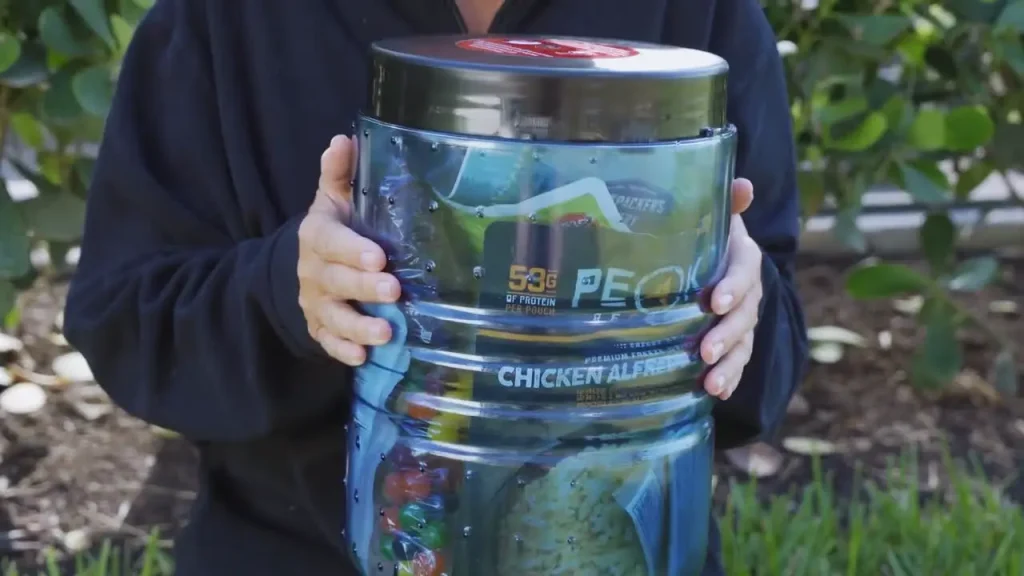
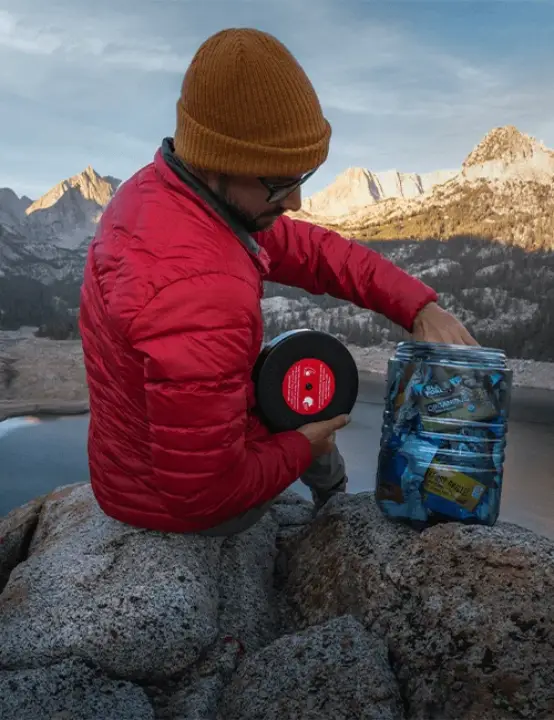
Its transparent walls and wide opening make day-to-day use easy, while the 11.5-liter capacity removes much of the food-storage puzzle that comes with smaller canisters.
The downside is packability.
At 8.7 inches wide and 12.7 inches tall, the BV500 takes up a substantial amount of interior pack space. Current REI specifications list it at 2 lb. 8 oz., while the manufacturer’s published weight is approximately 2.5 lb.
| Feature | What It Means for You |
|---|---|
| Product | BearVault BV500 Journey |
| Best For | Longer solo trips, shared food storage, and routes with limited resupply |
| Capacity | 11.5 L / 700 cu. in. |
| Food Capacity | Roughly 6–7 days for one person with efficient packing |
| Dimensions | 8.7 x 12.7 in. |
| Weight | About 2.5 lb. |
| Biggest Strength | Excellent usable food capacity |
| Biggest Drawback | Large rigid shape inside a backpack |
| Standout Features | Transparent body, wide opening, tool-free screw lid |
| Best Reason to Buy It | You regularly need more space than a BV450 or BV475 provides |
Bottom line: if longer trips are common, the BV500 is a practical workhorse. If most trips end after two or three nights, carrying this much canister probably isn’t worth it.
See the BearVault BV500 at REI | Check current pricing on Amazon
A Deep Dive Into the BearVault BV500’s Key Features
The most useful way to judge a bear canister isn’t by counting features.
It’s by asking how often those features make life easier during an actual trip.
For the BV500, four things matter most: capacity, visibility, access, and pack fit.
Massive 700-Cubic-Inch Capacity
The BV500 holds 700 cubic inches, or 11.5 liters.
That is enough space for approximately seven days of food for one person when meals are relatively compact.
But “seven days” needs some context.
A week’s worth of dehydrated dinners, tortillas, nut butter, energy bars, jerky, nuts, instant oatmeal, drink mixes, and other calorie-dense foods packs much more efficiently than bags of chips, bulky commercial packaging, large snack boxes, or foods containing lots of air.
🏕️ Menu choice can matter almost as much as trip length.
For a five-day trip, the BV500 usually leaves useful breathing room.
For six or seven days, packing becomes more deliberate—but still realistic with a compact menu.
That extra room matters because the canister may also need to hold more than meals.
Depending on local regulations, toothpaste, lip balm, toiletries, sunscreen, scented items, wrappers, and trash may all need protected storage too.
A canister that barely accommodates the food at home may suddenly feel undersized when the first day’s wrappers and toiletries need to join everything else.
This is where the BV500’s extra volume starts to feel less excessive and more useful.
The See-Through Polycarbonate Body
Transparency is one of the BV500’s simplest—and most useful—features.
Picture arriving at camp after a long afternoon climb. The canister is tightly packed, the temperature is dropping, and dinner is somewhere underneath several snack bags and tomorrow’s breakfast.
With an opaque container, finding one specific item can mean unloading half the contents.
With the BV500, rotate the canister until the item becomes visible, open the lid, and reach toward it.
That sounds like a small convenience.
After several days on trail, it isn’t.
🥾 The clear sides also make it easier to keep track of what’s left. Snacks disappearing faster than expected? Dinner sitting underneath tomorrow’s breakfast? Trash starting to occupy more room?
A quick look gives the answer.
There is still value in packing intelligently—early-trip meals higher, later meals lower, frequent snacks accessible—but the transparent body makes small mistakes much less frustrating.
Wide-Mouth Opening
A large canister isn’t very useful if getting food in and out feels like reaching through a bottleneck.
Fortunately, the BV500 opening is almost as wide as the body.
That means tortillas can lie flatter, meal bags don’t need to be squeezed through a narrow opening, and a hand can reach deep inside without scraping against a tiny rim.
The advantage becomes even more noticeable when reorganizing food halfway through a trip.
Instead of dumping everything onto the ground, smaller items can be shifted around inside the canister while larger food bags remain in place.
The wide opening also makes post-trip cleaning straightforward.
Warm water, mild soap, a sponge, and enough room to reach the bottom are all it takes.
Tool-Free Locking Lid
The BV500 uses a screw-on lid with locking tabs rather than requiring a coin or screwdriver.
For most backpackers, that’s a better system than relying on a tiny opening tool that can disappear into the bottom of a pack.
The trade-off is finger pressure.
On a warm afternoon with dry hands, opening the BV500 usually feels straightforward once the motion becomes familiar.
At 6 a.m., when fingers are cold and stiff and breakfast is waiting inside, those same tabs can feel considerably less friendly.
🌲 Practice opening the canister before the trip.
That advice sounds almost too basic, but knowing exactly where the lid catches and how the tabs release makes a noticeable difference when conditions aren’t ideal.
For backpackers who have limited hand strength or strongly dislike stiff locking tabs, this is one area where the newer BearVault BV ONE is more appealing. Its soft-touch opening buttons are specifically designed to make access easier with cold or tired hands.
Bear-Resistant Approval and Where You Can Use It
A bear canister is only useful if it meets the food-storage requirements for the place you’re visiting.
The BV500 has a long track record in major U.S. backpacking destinations. Yosemite’s current approved-container list includes the BearVault 500, and Olympic National Park also lists the BV500 among its approved portable food-storage canisters.
That said, never turn “approved on the last trip” into “approved everywhere.”
Regulations can vary between parks, wilderness areas, forests, and specific management zones.
Before leaving home, check the rules for the exact route and campsites being used.
The BearVault BV500 in the Real World
The specifications explain what the BV500 is.
Packing it for several days tells you whether you’ll actually enjoy carrying it.
Packing the BV500 in Your Backpack
This is the part worth thinking about before buying.
The BV500 is 8.7 inches in diameter and 12.7 inches tall.
It cannot be squeezed smaller.
It cannot be flattened.
And unlike a sleeping bag or puffy jacket, it won’t politely fill whatever oddly shaped space remains.
🎒 The BV500 works best when the backpack is packed around it—not when the canister is added after everything else.
For many backpacking packs, vertical placement somewhere near the center works well.
A common strategy looks something like this:
- sleeping bag or other soft gear low in the pack
- BV500 positioned above or close to it
- clothing and insulation filling gaps around the cylinder
- heavier food positioned reasonably close to the back
- lighter gear filling remaining space above
REI also suggests carrying the canister inside the pack just above the sleeping bag.
The key is keeping the load balanced.
A fully loaded BV500 can contain several pounds of food. If that weight sits too far away from the back, the entire pack can begin pulling backward.
Do a Full Practice Pack—Not an Empty One
An empty BV500 is a poor test.
Fill it with approximately the same food weight and volume planned for the trip.
Then pack everything else.
Put on the backpack.
Walk around.
Climb some stairs.
Pay attention to whether the canister creates an uncomfortable bulge, pushes other important gear into awkward positions, or makes the pack feel noticeably top-heavy.
🥾 Ten minutes of testing at home can answer more useful questions than another hour comparing product specifications.
This becomes especially important with packs around 40–50 liters, where a BV500 may consume a large percentage of usable interior volume.
For bigger packs, the fit tends to be easier—but still worth testing.
The Day-One vs. Day-Six Problem
Traditional bear canisters have one unavoidable quirk.
The food shrinks.
The canister doesn’t.
On the first morning of a long trip, the BV500 may be packed so tightly that every cubic inch feels valuable.
Five days later, much of that food is gone—but the same 12.7-inch cylinder is still sitting inside the backpack.
That is one of the strongest arguments against buying the BV500 for short trips.
If a typical adventure lasts two nights, most of that volume is wasted from the beginning.
If trips regularly last six nights, the large starting capacity may matter far more than the empty space near the end.
The newer adjustable BV ONE tackles this differently by collapsing from 8.3 liters to about 4.65 liters as food volume decreases, but it cannot match the BV500’s 11.5-liter maximum capacity.
Life in Camp
Once the backpack comes off, the BV500 becomes easier to appreciate.
There is no food bag to hang from a tree.
No complicated rope system.
No balancing act over a questionable branch.
Follow the local storage rules, close the canister properly, and place it where required.
The sturdy shape also doubles nicely as a simple camp seat.
After spending all day walking, having somewhere flat to sit while pulling off shoes, organizing dinner, or watching the light disappear from the mountains can feel surprisingly luxurious.
🏕️ Just make sure the lid is completely closed before sitting on it so the screw threads aren’t damaged. REI specifically notes the BV500’s usefulness as a camp stool.
One thing it should not become is a stove platform.
Keep high heat, fuel spills, and harsh chemicals away from the polycarbonate. DEET and other strong chemicals can damage the material.
BearVault BV500: Pros and Cons
The BV500 isn’t complicated gear.
Its advantages are clear.
So are its compromises.
What Works Well
- Excellent Capacity: Enough room for genuinely long backpacking trips.
- Transparent Body: Finding food is much easier than digging blindly through an opaque canister.
- Wide Opening: Packing, reorganizing, and cleaning are straightforward.
- No Separate Opening Tool: Nothing extra needs to be carried or lost.
- Good Shared Capacity: Useful for couples on shorter trips.
- Simple Camp Storage: No hanging system or special tree is required where hard-sided canisters are appropriate.
- Doubles as a Seat: A small perk that becomes surprisingly useful in camp.
- Good Capacity for the Money: Considerably more accessible than premium carbon-fiber canisters.
What Could Be Better
- Bulky Inside Smaller Packs: Its size can dictate the entire packing layout.
- About 2.5 Pounds Empty: Ultralight backpackers will notice the weight.
- Overkill for Many Weekend Trips: A smaller canister wastes less space.
- Locking Tabs Aren’t Ideal With Cold Hands: Practice helps, but the design isn’t effortless.
- Fixed Volume: The canister occupies exactly the same space after most of the food is gone.
How the BV500 Compares to Other Bear Canisters
This is where choosing the right BearVault becomes much easier.
Don’t start with the question:
Which one is best?
Start with:
How many days of food usually need to fit inside?
| Model | Capacity | Approx. Weight | Typical Sweet Spot |
|---|---|---|---|
| BearVault BV500 Journey | 11.5 L | About 2.5 lb. | 6–7 day trips / shared storage |
| BearVault BV475 Trek | 9.3 L | 2 lb. 4 oz. | 5–6 days |
| BearVault BV450 Jaunt | 7.2 L | 2 lb. 1 oz. | 3–4 days |
| BearVault BV425 Sprint | 5 L | 1 lb. 12 oz. | 1–2 days |
| BearVault BV ONE | 4.65–8.3 L adjustable | 1 lb. 15 oz. | 1–4+ days / flexible packing |
Those trip-length ranges are approximate, but they illustrate the real decision clearly. The BV425, BV450, BV475, and BV ONE all remain part of BearVault’s current lineup, with each targeting a different food volume and trip length.
BearVault BV500 vs. BearVault BV475 Trek
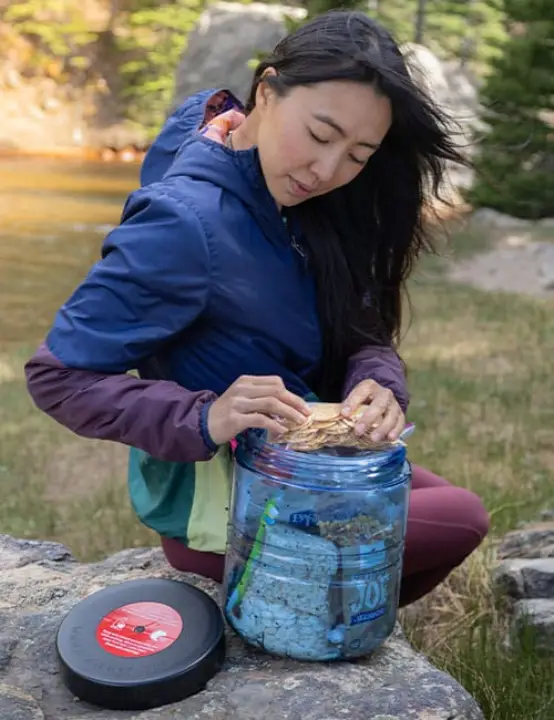
The BV475 Trek is probably the alternative most BV500 buyers should consider first.
It holds 9.3 liters / 565 cubic inches, weighs about 2 lb. 4 oz., and is just 10.5 inches tall.
That makes it noticeably easier to integrate into many backpacks.
The question is whether giving up 2.2 liters of capacity creates a problem.
Choose the BV475 if:
- most trips are around four to six days
- pack space is tight
- horizontal or more flexible packing matters
- maximum capacity isn’t usually necessary
Choose the BV500 if:
- trips regularly push toward a week
- food volume tends to be generous
- toiletries and scented items use meaningful space
- the canister may be shared
For many solo backpackers, the BV475 is the better middle ground.
For longer itineraries, the BV500 starts earning its extra bulk.
BearVault BV500 vs. BearVault BV450
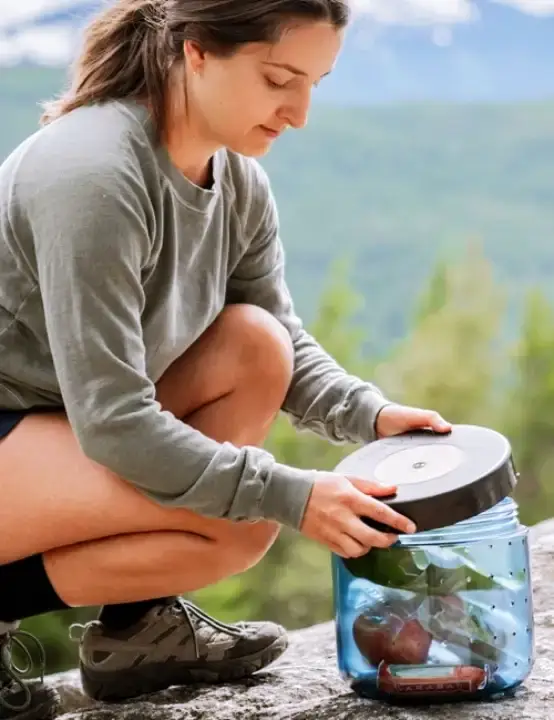
The BV450 drops capacity further to 7.2 liters.
For weekend and long-weekend trips, that can be exactly what is needed.
Instead of carrying a nearly empty 11.5-liter cylinder, the smaller canister leaves more room for clothing, insulation, or a less carefully compressed sleeping setup.
🥾 If most backpacking trips last three or four days, choosing the BV500 “just in case” may create more inconvenience than flexibility.
The larger canister makes more sense when those longer trips are actually part of the normal schedule.
BearVault BV500 vs. BearVault BV425 Sprint
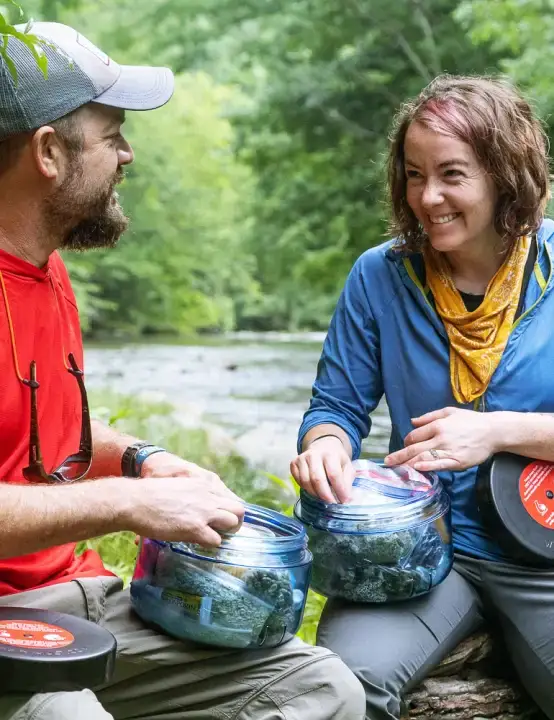
The BV425 sits at the opposite end of the lineup.
With 5 liters of capacity and a 6-inch height, it is designed for short trips rather than week-long food carries.
For an overnight or two-night solo trip, that compact size can feel dramatically better inside a backpack.
For six nights?
Not even close.
This is a good example of why bear-canister shopping should begin with food volume rather than weight alone.
BearVault BV500 vs. BearVault BV ONE
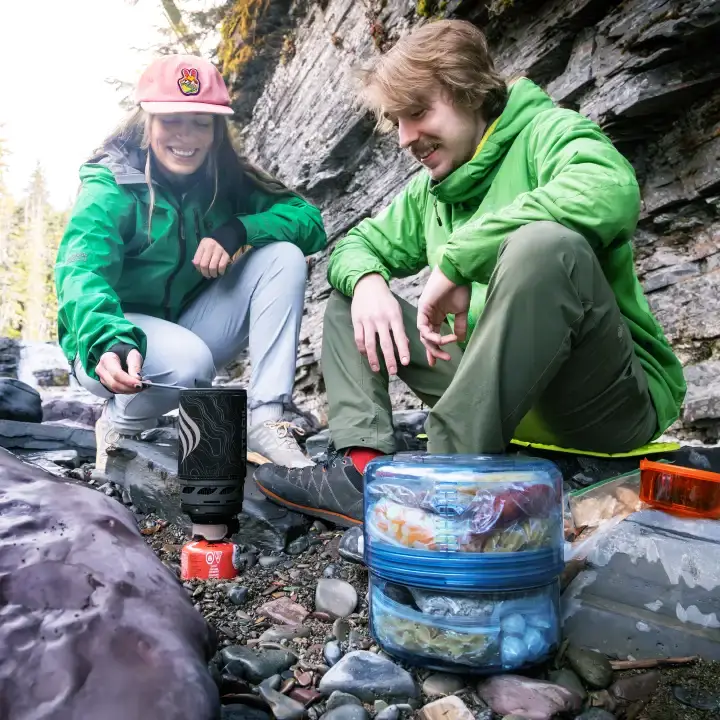
The BV ONE is the most interesting alternative for backpackers who dislike the fixed-volume nature of traditional bear canisters.
It expands to 8.3 liters and collapses to about 4.65 liters, weighs approximately 1 lb. 15 oz., and uses soft-touch opening buttons.
That makes it much more adaptable as the food supply shrinks.
But adaptability isn’t the same thing as maximum capacity.
The BV500 still provides roughly 3.2 additional liters when completely packed.
Choose the BV ONE if:
- trips generally stay around one to four days
- pack efficiency matters a lot
- reducing empty canister volume later in the trip sounds appealing
- easier opening is important
Choose the BV500 if:
- trips regularly require six or seven days of food
- shared storage is common
- maximum capacity matters more than adjustable size
Who is the BearVault BV500 Best For?
The BV500 becomes much easier to evaluate when it’s matched to a specific type of trip.
Backpackers Heading Out for Five to Seven Days
This is the sweet spot.
When enough food for nearly a week needs to fit inside one approved hard-sided container, 11.5 liters starts making sense.
The extra space reduces the need to build every meal around maximum packability.
There is still value in choosing compact food, but dinner doesn’t have to become an engineering project.
Hikers With Long Gaps Between Resupply Points
On routes where buying or collecting more food isn’t practical, capacity becomes more important than carrying the smallest possible canister.
An extra dinner, emergency meal, or slightly larger snack supply is much easier to accommodate.
Couples Sharing Food Storage
The BV500 can also make sense for two people on shorter trips.
Instead of each carrying a separate canister, food and scented items may fit inside one larger container.
That doesn’t automatically make the BV500 lighter overall—the math depends on the alternative—but it can simplify camp organization and food management.
🌲 Before relying on one canister for two people, test the full food load at home.
“That should fit” is not a great discovery method at the trailhead.
Backpackers Who Value Packing Margin
Some hikers enjoy squeezing every meal into the smallest possible container.
Others would rather have a little breathing room.
If a food bag occasionally contains a bulky tortilla pack, an extra snack, or a few items that refuse to compress neatly, the BV500 is forgiving.
That can make packing less stressful.
Who Should Skip the BV500?
The BV500 is probably too much canister if:
- most trips last only one or two nights
- a smaller 40-liter pack is standard
- minimizing base weight is a major priority
- a BV450 already holds the normal food load comfortably
- the locking tabs are difficult to operate
- empty pack volume late in the trip is particularly annoying
🏕️ The best BV500 buyer isn’t the person who wants the biggest BearVault. It’s the person who regularly fills it.
If that sounds like your trips, the extra capacity is easy to justify.
Check the BearVault BV500 at REI
Practical Tips for Your BearVault
A few small habits make the BV500 noticeably easier to live with.
Pack the Canister Before Packing the Backpack
Start with the food.
Then build the rest of the backpack around the loaded canister.
Trying to squeeze the BV500 into whatever space remains usually leads to a worse load.
Repackage Bulky Food
Cardboard boxes and oversized commercial bags waste space.
Repackage appropriate foods into smaller resealable bags and remove unnecessary air.
For long trips, this can free an impressive amount of room.
Think About Tomorrow Morning Before Tonight’s Dinner
A perfectly packed canister isn’t useful if breakfast is buried underneath five dinners.
Keep frequently used food reasonably accessible.
The transparent walls help, but smart layering still saves time.
🥾 A simple strategy is to move tomorrow’s meals toward the top each evening while reorganizing the canister.
Leave Room for More Than Food
Trash grows as food disappears.
Toiletries don’t disappear at all.
Plan accordingly.
A little unused room on day one is usually better than discovering that toothpaste, wrappers, and scented trash have nowhere compliant to go.
Practice Opening It With Cold Hands in Mind
No need to actually freeze your fingers.
Just make the mechanism familiar enough that it doesn’t require thought.
At camp, simple gear feels better than gear that demands troubleshooting.
Store It Where It Can’t Disappear
Follow local requirements for exact distances and storage methods.
Regardless of the numbers, avoid placing the canister somewhere a bear could knock it:
- into a river
- over a cliff
- down a steep hillside
- into thick brush
- into a lake
Keeping food protected doesn’t help much if the entire canister disappears.
Our Final Verdict on the BearVault BV500
The BearVault BV500 Journey makes the most sense when its biggest weakness—its size—is also the reason you’re buying it.
For a two-night solo trip, that 11.5-liter cylinder can feel excessive.
For six days of food, scented toiletries, snacks, and accumulating trash, the same cylinder can feel exactly right.
That’s the real appeal of the BV500.
It gives longer-trip backpackers room to pack realistically instead of treating every calorie like a Tetris piece.
The transparent body makes finding food easier. The wide opening makes packing and cleaning simple. The tool-free lid eliminates a separate opening device. And once camp is set up, the canister can even provide a welcome place to sit.
There are trade-offs.
At roughly 2.5 pounds, this isn’t ultralight gear.
At 12.7 inches tall, it needs to be considered when choosing and packing a backpack.
And unlike the newer BV ONE, it occupies the same amount of space whether it’s completely full or holding the final breakfast.
But none of those compromises make the BV500 outdated.
They simply make it specialized.
🥾 For weekend trips: look smaller.
For three- to four-day trips: the BV450 or BV ONE may be easier to carry.
For five- to six-day trips: the BV475 deserves serious consideration.
For longer food carries, limited resupply, or shared storage: this is where the BV500 earns its place.
If those are the kinds of trips on the calendar, the BV500 remains a practical, proven way to carry a lot of food securely without moving into far more expensive premium canisters.
See the BearVault BV500 at REI | Compare availability on Amazon
Frequently Asked Questions (FAQ)
How many days of food can a BearVault BV500 hold?
About six to seven days for one person is a practical target with compact backpacking food.
Menu choice matters.
Dehydrated meals, tortillas, calorie-dense snacks, instant breakfasts, and repackaged foods use space efficiently. Bulky packaging and foods containing lots of air reduce the number of days considerably.
Remember that scented toiletries and trash may also need to fit inside.
Is the BearVault BV500 too big for a weekend trip?
For most solo backpackers, probably.
A smaller BV425 or BV450 usually makes more sense for one- to three-night outings because less unused canister volume has to be carried.
The BV500 becomes more appealing as food carries approach five, six, or seven days.
Will a BearVault BV500 fit inside a backpack?
It fits many medium and large backpacking packs, but the 8.7 x 12.7-inch rigid shape needs to be planned around.
Vertical placement inside the main compartment works well for many hikers.
With a smaller pack, test the fit before committing to the canister.
How much does the BearVault BV500 weigh?
Expect approximately 2.5 pounds empty.
The small variation between published specifications isn’t meaningful for trip planning; treating it as a roughly 2.5-pound item is the useful number.
Is the BV500 better than the BV475?
Neither is universally better.
The BV475 is shorter, lighter, and easier to fit in many backpacks while still holding roughly five to six days of food.
The BV500 adds about 2.2 liters of capacity, making it the better fit when that additional room will actually be used.
Is the BV500 better than the BV450?
For longer trips, yes in terms of capacity.
For shorter trips, the BV450 can be the more practical choice because carrying unused rigid volume provides little benefit.
Think in terms of normal trip length rather than buying the largest model automatically.
Can two people share one BearVault BV500?
Yes, especially on shorter trips.
A BV500 can work well for a couple when combined food, toiletries, scented items, and trash all fit inside.
Always test the complete food load before the trip.
Can the BearVault BV500 be used as a camp stool?
Yes.
Make sure the lid is fully closed before sitting on it to avoid damaging the screw threads.
Can a stove be used on top of the BV500?
It is better not to.
Keep the canister away from excessive heat, fuel spills, DEET, and other strong chemicals that can damage the plastic.
Is the BearVault BV500 approved in Yosemite?
Yes. Yosemite’s approved food-storage list includes the BearVault 500.
Regulations should still be checked before every trip because requirements differ between destinations.
Is the BearVault BV500 worth buying in 2026?
For long food carries, yes.
Newer designs offer advantages for shorter trips—especially the adjustable BV ONE—but none of the smaller BearVault models matches the BV500’s 11.5-liter capacity.
If the normal trip requires close to a week’s worth of food, the BV500 still fills a very useful niche.
Affiliate Disclosure: GearForTheOutdoors.com participates in affiliate programs, including REI, Amazon, REI Outlet, Garage Grown Gear, evo, and other trusted partners. When you purchase through our links, we may earn a small commission at no extra cost to you. That helps support our content and keeps our recommendations useful, practical, and free.
Disclaimer: This post is for informational purposes only. Always verify current product details, fit, availability, safety information, local food-storage regulations, and manufacturer warranties before purchase or use. Outdoor conditions, wildlife regulations, and gear performance can vary depending on location, setup, weather, terrain, and experience level.