A good camping water container should make drinking, cooking, and cleaning easier—not leave you wrestling with a heavy jug or dealing with leaks in your vehicle.
For most car campers, a rigid water container is the better primary choice. It stands securely on a table, works well with a spigot, and makes everyday water access simple. But if vehicle space is limited or you need extra capacity that packs away when empty, a collapsible container has a clear advantage.
Here’s the quick breakdown:
- Best for everyday car camping: A rigid 4- to 7-gallon jug with a reliable spigot.
- Best for compact vehicles: A smaller rigid jug or a structured collapsible container.
- Best for rugged, packable storage: A reinforced collapsible water bag.
- Best for longer trips: A rigid container for daily use plus a collapsible backup.
The important part isn’t simply how much water a container holds. It’s whether you can carry it comfortably, store it securely, dispense water without a mess, and clean it properly after the trip.
This guide breaks down how much water to bring, when rigid or collapsible designs make sense, and which camping water containers are worth considering for different setups.
How Much Water Should You Bring Camping?
Plan for at least one gallon (3.8 liters) of water per person per day as a starting point, then adjust for your destination, weather, activities, and access to potable water.
That baseline can cover drinking, basic cooking, and limited hygiene, but it may not be enough for hot-weather camping, strenuous activities, or substantial dishwashing.
Your actual water needs depend on:
- Drinking: Heat, altitude, and physical activity can increase hydration needs.
- Cooking: Coffee, pasta, dehydrated meals, and food preparation all use water.
- Cleaning: Washing cookware, dishes, and hands can consume more water than expected.
- Hygiene: Brushing teeth and washing up require additional water.
- Pets: Dogs need their own drinking-water allowance.
- Water access: A campground with potable-water faucets requires a different approach from a remote campsite without reliable water.
If you’re camping somewhere hot and dry, bring a generous reserve. And if you plan to use a portable shower, calculate that water separately rather than assuming your normal drinking and cooking supply will be enough.
Camping Water Capacity by Trip Length
The table below uses one gallon per person per full day as a baseline, before adding extra water for demanding conditions, showers, pets, or emergencies.
| Campers | Trip length | Starting water supply | Practical container setup |
|---|---|---|---|
| 1 person | 2 days | 2 gallons | One 11L jug |
| 2 people | 2 days | 4 gallons | One 4- or 5-gallon jug |
| 4 people | 2 days | 8 gallons | Two 4-gallon jugs |
| 2 people | 3 days | 6 gallons | One 7-gallon jug or multiple smaller containers |
| 4 people | 3 days | 12 gallons | Two 7-gallon jugs or several smaller containers |
| 4 people | 4 days | 16 gallons | Multiple rigid containers with extra capacity as needed |
These are planning examples, not universal requirements. Count your actual days of water use, including travel time when necessary, and increase the amount if conditions warrant.
For dispersed camping without dependable refill opportunities, carrying additional water is particularly important.
Why Bigger Isn’t Always Better
Water becomes surprisingly heavy once you’re carrying several gallons.
| Water capacity | Water weight alone |
|---|---|
| 3 gallons | About 25 lb |
| 4 gallons | About 33 lb |
| 5 gallons | About 42 lb |
| 7 gallons | About 58 lb |
These weights don’t include the container itself.
A full 7-gallon camping water jug can be inconvenient to lift out of an SUV or carry from a parking area to your campsite.
Two smaller containers often make more sense. They’re easier to move, can be positioned in different parts of camp, and provide some redundancy if one develops a leak.
A large jug is useful when it can stay in one place. If you’ll need to carry water frequently, prioritize manageable capacity over maximum volume.
Rigid vs. Collapsible Camping Water Containers
The biggest difference between rigid and collapsible containers isn’t how much water they hold. It’s how they behave when full, how easily they dispense water, and how much space they occupy when empty.
| Feature | Rigid water container | Collapsible water container |
|---|---|---|
| Stability | Usually stands securely | Depends on shape and construction |
| Durability | Generally more resistant to punctures | More vulnerable to sharp objects and abrasion |
| Empty storage | Retains its full size | Folds or rolls into a smaller space |
| Dispensing | Often convenient with a built-in spigot | May require hanging or careful positioning |
| Cleaning | Usually easier with accessible openings | Flexible interiors can be harder to clean and dry |
| Portability | Structured handles, but bulky | Lightweight and compact when empty |
| Best use | Primary campsite water station | Backup, transport, or space-saving storage |
Rigid Water Containers: Best for a Dedicated Camp Kitchen
A rigid camping water container is the easiest option to live with at an established campsite.
Most are made from food-grade polyethylene and have a stable base, molded carrying handle, and either a spigot or a dispensing cap.
Set one on a sturdy picnic table, position the spigot over a basin, and you’ve created a simple water station for filling bottles, washing hands, and preparing meals.
The advantages are practical:
- Stable construction makes dispensing easier.
- Hard-sided walls resist everyday bumps and pressure better than flexible bags.
- Handles provide predictable carrying points.
- Many models have removable spigots and replaceable components.
- Rectangular designs can fit neatly alongside camping storage bins.
The biggest disadvantage is bulk.
A 7-gallon rigid jug occupies essentially the same space whether it’s full or empty. That may be fine in a pickup truck, but it can become frustrating in a small car.
Weight is another consideration. Larger rigid containers are convenient once positioned, but moving them when full can be difficult.
Choose rigid if: You primarily camp near your vehicle, have enough storage space, and want convenient water access without extra equipment.
Collapsible Water Containers: Best for Flexible Storage
Collapsible containers use flexible food-contact materials such as TPU or polyurethane-laminated fabrics.
Their biggest advantage becomes obvious when they’re empty: they take up far less room than a rigid jug.
That’s useful for campers with tightly packed vehicles, paddlers, and anyone who needs to carry additional water without permanently dedicating storage space to a large container.
They also work well when you need to collect water from a campground faucet and transport it back to camp.
But collapsible containers introduce different tradeoffs.
A simple water bladder may not stand securely on a table. Some models need to be hung or supported for convenient dispensing, and certain designs become awkward to carry when filled.
Flexible materials can also be more susceptible to punctures and abrasion, especially when packed against sharp equipment.
Cleaning may require additional attention because moisture can remain trapped around seams and folds.
Choose collapsible if: Storage space matters, you need supplemental water capacity, or you frequently move between campsites and water sources.
The Smartest Setup: Use Both
For longer car camping trips, a combination can be more practical than relying on one large container.
Use a rigid jug as your main water station for drinking, cooking, and cleaning. Keep a collapsible container available for extra water, refills, or activities away from the main campsite.
The rigid container provides stability and convenience. The collapsible one adds capacity without occupying much room after it’s emptied.
You don’t need this combination for every weekend trip, but it’s particularly useful when potable water isn’t available close to your campsite.
Which Camping Water Container Fits Your Setup?
Different trips call for different water storage solutions.
| Camping setup | Recommended configuration | Why it works |
|---|---|---|
| Solo car camping | One 3-gallon rigid jug | Manageable and easy to transport |
| Couple, weekend trip | One 4- or 5-gallon rigid jug | Simple primary water station |
| Family camping | Two or more smaller rigid jugs | Easier carrying and separate water stations |
| Small SUV or compact car | Compact rigid jug + collapsible backup | Balances convenience and storage space |
| Remote dispersed camping | Multiple containers with additional reserves | Provides capacity and redundancy |
| Overlanding | Secured rigid containers + collapsible storage | Supports organized water access and flexible refills |
| Paddling or backcountry base camp | Reinforced collapsible water bag | Packs efficiently and attaches to equipment |
These configurations are starting points. Match total capacity to your calculated water needs rather than treating any single container as sufficient for every trip.
Best Camping Water Containers: Our Top Picks
Four products stand out for different reasons. The best choice depends on whether you prioritize campsite convenience, compact storage, reinforced construction, or versatility.
Quick Comparison: Best Camping Water Containers
| Product | Type | Capacity | Best for |
|---|---|---|---|
| Reliance Aqua-Tainer | Rigid | 4 or 7 gallons | Affordable everyday car camping |
| Dometic GO Hydration Water Jug 11L | Rigid | 11L / 2.9 gallons | Compact, organized camp kitchens |
| MSR Dromedary Bag | Collapsible | 4L, 6L, 10L | Rugged, packable storage |
| Sea to Summit Watercell X | Collapsible | 4L, 6L, 10L, 20L | Versatile storage and dispensing |
All four serve useful purposes, but they’re not interchangeable. A large rigid jug is easier to use at a picnic table, while a reinforced collapsible bag makes more sense when space and portability matter most.
1. Reliance Aqua-Tainer — Best All-Around Rigid Camping Water Container
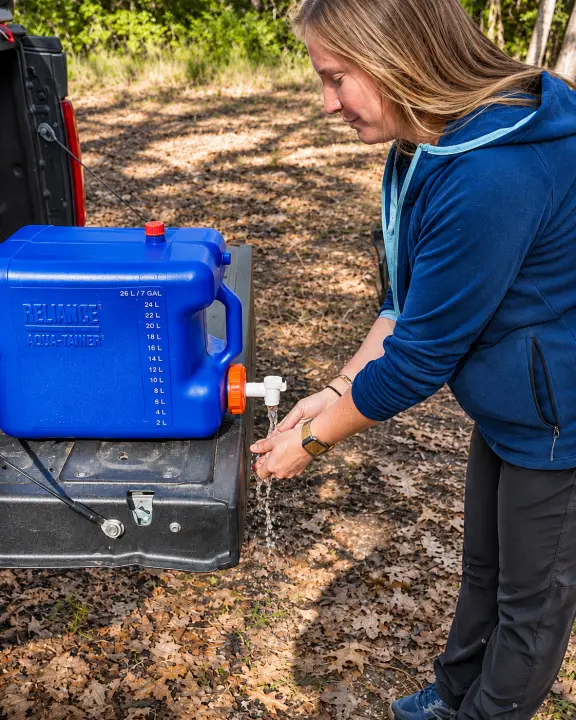
The Reliance Aqua-Tainer is an excellent starting point for campers who want straightforward water storage without paying for unnecessary features.
Available in 4-gallon and 7-gallon sizes, it combines a rectangular food-safe plastic body, molded carrying handle, screw-on vent cap, and reversible spigot.
The spigot stores inside the cap assembly during transportation, helping protect it from accidental damage. At camp, it can be repositioned for dispensing.
A separate vent cap helps maintain a smoother water flow.
Why it works well
The Aqua-Tainer focuses on what matters at a campsite: useful capacity, a stable shape, and convenient water access.
The rectangular body is easy to position alongside other equipment, and the spigot makes everyday tasks simpler than repeatedly lifting a heavy water container.
It also offers a relatively economical way to establish a dedicated water station.
What to consider
The 7-gallon model is heavy when filled, making it better suited to a stationary setup than frequent carrying.
The spigot assembly also needs to be installed and tightened correctly. Before traveling, inspect the seals and check for leaks.
Although the Aqua-Tainer can be stacked when empty, it should not be stacked when filled.
Best for: Most weekend car campers, families, and anyone who wants a simple, practical campsite water station.
Which size makes sense? Choose the 4-gallon version if portability matters most. Choose the 7-gallon version if you need more capacity and won’t be moving it frequently.
Explore the Reliance Aqua-Tainer at REI
2. Dometic GO Hydration Water Jug 11L — Best Premium Rigid Container
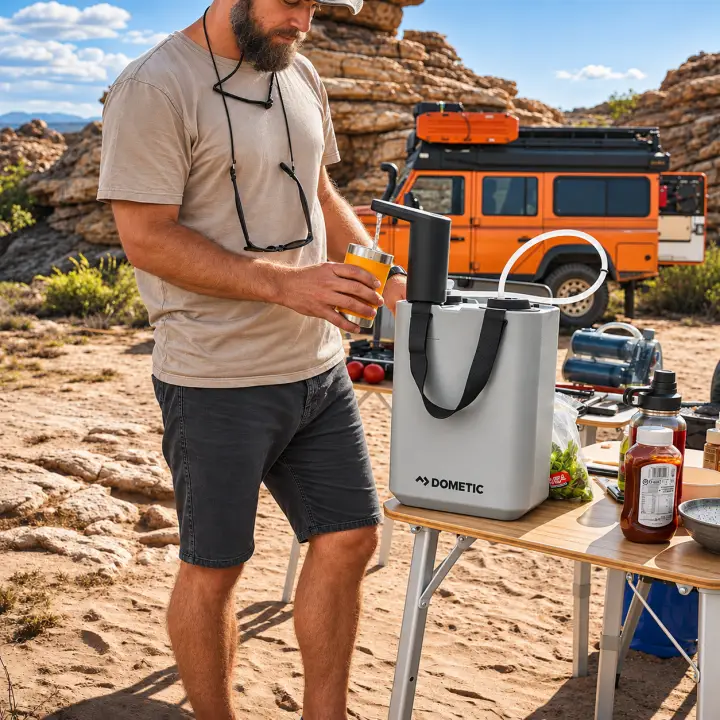
The Dometic GO Hydration Water Jug 11L is a more compact alternative to traditional large camping jugs.
With an 11-liter capacity—approximately 2.9 gallons—it prioritizes easy handling, organized storage, and flexible dispensing rather than maximum water volume.
Its food-grade LDPE construction includes two openings, removable carrying handles, built-in tie-down guides, and an included spigot with a quick-connect fitting.
A 63mm opening accommodates compatible accessories, and the jug works with the separately available Dometic GO Hydration Water Faucet.
Why it works well
The Dometic GO is particularly useful for campers who keep their equipment organized in vehicle storage systems or compact camp kitchens.
Its shape can fit into spaces that might otherwise be difficult to use, including some areas behind vehicle wheel wells.
The multiple dispensing options also make it convenient for filling bottles, rinsing hands, and preparing meals.
Add the optional rechargeable faucet, and you can create a more controlled water station without repeatedly manipulating the container.
What to consider
The biggest limitation is capacity.
At 2.9 gallons, one Dometic GO jug may not hold enough water for two people over an entire weekend without refilling.
The optional faucet also increases the total cost and introduces another accessory to maintain.
If you’re simply looking for maximum water storage at a low price, a larger conventional jug makes more sense.
Best for: Compact car camping setups, organized camp kitchens, and campers who value convenient dispensing over maximum capacity.
Explore the Dometic GO Hydration Water Jug at REI
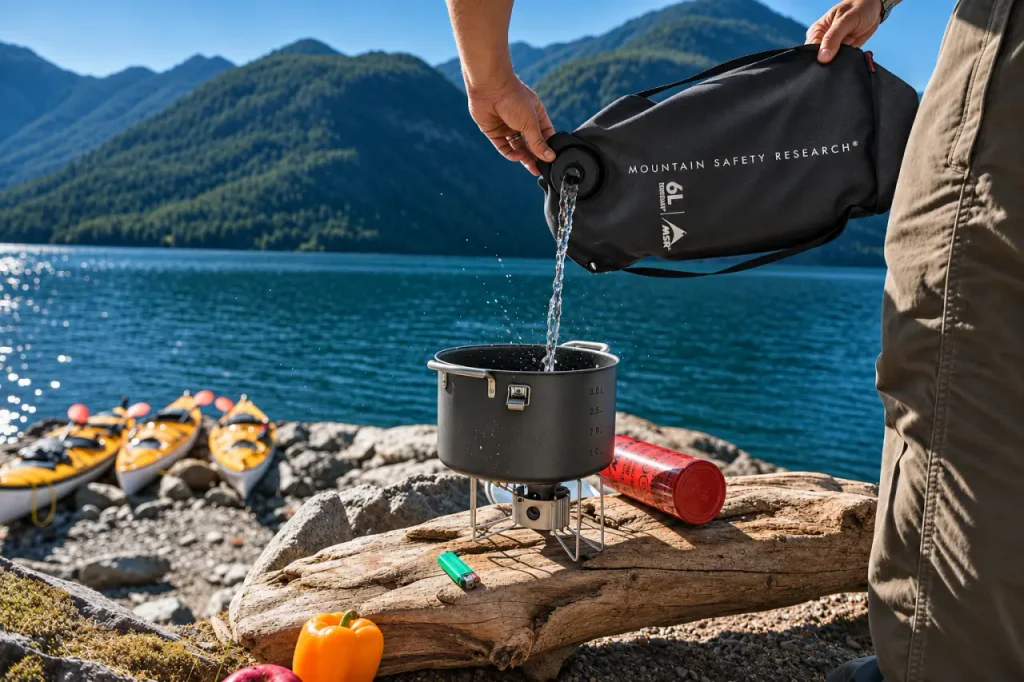
3. MSR Dromedary Bag — Best Heavy-Duty Collapsible Water Container
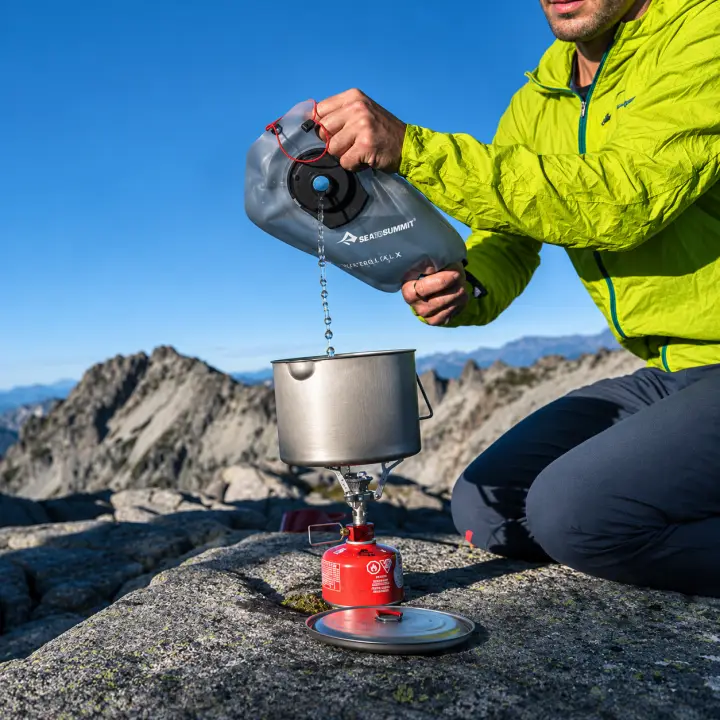
The MSR Dromedary Bag is a practical choice when you need collapsible water storage that can handle more demanding outdoor conditions.
Its abrasion-resistant 1,000-denier exterior is laminated with a BPA-free, food-grade polyurethane lining.
Available in 4-, 6-, and 10-liter capacities, the Dromedary combines reinforced construction with the compact storage advantages of a flexible reservoir.
Perimeter webbing provides attachment and carrying options, while the low-profile 3-in-1 cap supports filling, drinking, and pouring.
Why it works well
The Dromedary’s main advantage is its reinforced design.
A standard lightweight water bladder can be convenient, but a tougher exterior is useful when equipment is transported over rough terrain or packed alongside other gear.
The webbing also makes it easy to secure or suspend the bag from an appropriate attachment point.
Once empty, it packs down much smaller than a rigid container.
What to consider
The Dromedary isn’t as convenient as a spigot-equipped rigid jug for everyday campsite use.
Its flexible shape requires more attention when dispensing water, and it needs to be supported or hung securely.
The multiple cap components should also be checked carefully before transport. Reinforced fabric doesn’t eliminate the possibility of leaks around the closure.
Like other collapsible reservoirs, it requires thorough drying before storage.
Best for: Paddling, rugged travel, backcountry base camps, and campers who need durable, packable water storage.
4. Sea to Summit Watercell X — Best Versatile Collapsible Water Container
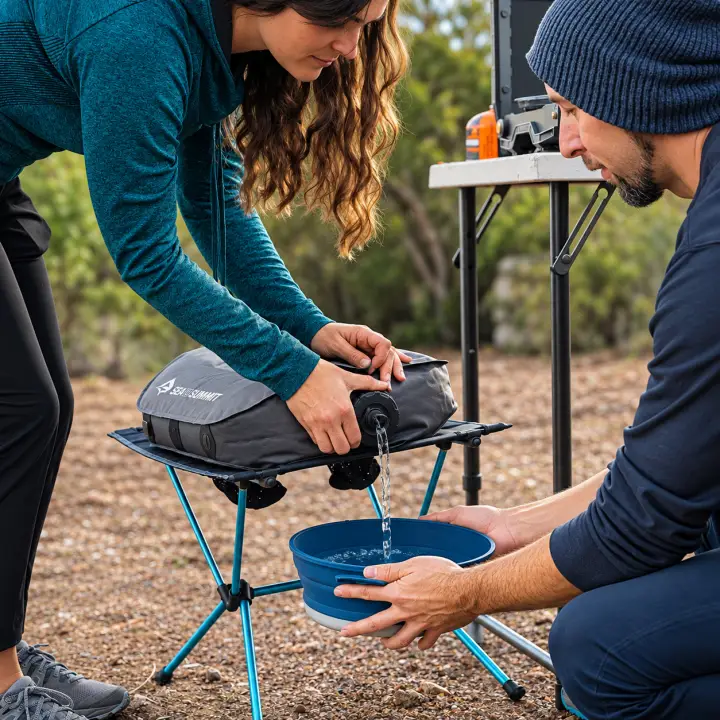
The Sea to Summit Watercell X offers a useful middle ground between a basic flexible water bag and a more structured storage container.
Available in 4-, 6-, 10-, and 20-liter capacities, it uses reinforced 400-denier nylon laminated with TPU, a baffled three-dimensional shape, and RF-welded construction.
The internal baffle helps the container maintain a manageable shape when filled, rather than behaving like a completely unstructured bladder.
It also includes a wide-mouth multifunction cap with adjustable flow, carrying and attachment points, and a compact shower fitting.
Why it works well
The Watercell X addresses several common frustrations with collapsible containers.
Its shape makes it easier to position and organize, while the adjustable cap provides more controlled dispensing.
The attachment points make it useful for transporting water or hanging it at an appropriate height.
The included shower fitting adds another function, particularly for quick rinsing or simple backcountry washing.
Once empty, the container packs away without occupying the same permanent space as a rigid jug.
What to consider
Despite its structured design, the Watercell X isn’t quite as straightforward as a traditional rigid water station.
You’ll still need to think about positioning, water pressure, and how to access the dispensing point.
The larger versions also become heavy when filled. A full 20-liter Watercell holds approximately 44 pounds of water before adding the container’s weight.
For frequent carrying, a smaller version may be easier to manage.
Best for: Space-conscious car campers, paddlers, overlanders, and anyone wanting collapsible water storage with flexible dispensing options.
Check the Sea to Summit Watercell X
What to Look for When Buying a Camping Water Container
A container’s shape and capacity are important, but everyday usability often comes down to details that are easy to overlook.
1. Spigot Design and Water Flow
A reliable spigot can make a camping water container considerably easier to use.
Look for one that offers controlled flow, convenient operation, and a secure seal during transport.
Some spigots rotate, while others use push-button or lever-style controls.
The most important questions are practical:
- Can you operate it with one hand?
- Is the flow controlled enough to fill a bottle without splashing?
- Can the spigot be removed for cleaning?
- Are replacement parts available?
- Does it need a separate vent to dispense smoothly?
A poorly positioned spigot can be frustrating even when the container itself is well designed.
For gravity-fed dispensing, the outlet needs to sit higher than the bottle or basin you’re filling.
Consider where the jug will actually sit at camp before choosing a model.
2. Capacity and Carrying Weight
For many weekend campers, a 3- to 5-gallon container offers a useful balance between capacity and portability.
Larger containers reduce refill frequency, but they also become harder to move.
If you’ll carry water a substantial distance from a campground faucet, two smaller containers may be more manageable than one oversized jug.
If your campsite has easy access to potable water, a smaller container that you can refill may be all you need.
3. Opening Size and Cleaning Access
A container with a wide opening is generally easier to fill and maintain.
Look for enough access to rinse the interior thoroughly and use an appropriate cleaning brush when necessary.
Narrow openings, internal folds, and complicated dispensing components can make cleaning more difficult.
For collapsible containers, consider how easily the reservoir can be opened and suspended for drying.
4. Food-Safe Materials
Choose containers specifically intended for potable-water storage.
Rigid containers commonly use food-grade polyethylene, while collapsible reservoirs often use food-contact-rated TPU or polyurethane laminates.
BPA-free construction is worth considering, but it isn’t a substitute for proper material suitability and cleaning.
Never use a container that previously held gasoline, pesticides, cleaning chemicals, or other hazardous substances for drinking water.
5. Handles, Shape, and Vehicle Storage
Before buying, consider exactly where the container will travel.
Will it fit behind a wheel well, under a storage shelf, or alongside your cooler?
Will the handle remain accessible when the vehicle is fully packed?
Can you secure the container so it won’t shift during braking?
A rectangular jug may fit neatly beside storage bins, while a collapsible bag can occupy irregular spaces when empty.
However, flexible containers still need protection from sharp equipment when filled.
Choose a shape that works in your vehicle, not just one that looks convenient on a product page.
How to Prevent Camping Water Containers From Leaking
A leaking container can soak sleeping bags, damage equipment, and leave you without enough drinking water.
Fortunately, many leaks can be avoided with a few checks before leaving home.
Check Caps, Spigots, and Seals
Start by inspecting every opening.
Look for damaged threads, cracked caps, missing or twisted gaskets, and worn sealing surfaces.
Make sure removable spigots are installed in the correct orientation and tightened according to the manufacturer’s instructions.
Overtightening isn’t always better. Excessive force can deform seals or damage plastic threads.
If the container has a separate vent cap, ensure it’s closed securely for transport.
Test the Container Before Your Trip
Fill the container with clean water and close all caps and dispensing points.
Place it somewhere safe and inspect the exterior for drips or moisture.
Carefully tilt it into the orientations it may encounter during normal handling, provided the manufacturer permits those positions.
Pay particular attention to:
- Spigot connections
- Cap threads
- Vent openings
- Welded seams on collapsible reservoirs
- Areas around carrying handles and attachment points
A container that leaks at home is much easier to deal with than one that starts leaking inside a packed vehicle.
Protect the Container During Transport
For rigid jugs, use a stable position and secure them against movement.
When the design allows it, store a reversible spigot in its protected transport position.
For collapsible containers, keep sharp tools, tent stakes, and exposed metal hardware away from the reservoir.
Don’t place heavy equipment on top of a filled flexible bag unless its design specifically permits that arrangement.
Avoid relying on a container being completely leakproof under every orientation or load condition.
Know When to Replace a Component
A leaking spigot doesn’t necessarily mean the entire container needs replacing.
Some manufacturers offer replacement seals, caps, or spigot assemblies.
Inspect compatibility carefully, including the container’s model and manufacturing generation.
However, if the body develops cracks, persistent seam leaks, or other structural damage, replacing the container is usually the safer choice.
Don’t rely on duct tape or improvised repairs to restore a damaged drinking-water container.
Setting Up a Practical Camping Water Station
A good water container becomes even more useful when it’s positioned properly.
Place your primary jug on a sturdy table or stable platform, with the dispensing point accessible over the edge.
Keep a basin underneath for washing hands or dishes, and use a separate container for wastewater when appropriate.
For an organized setup:
- Position drinking water away from dirty dishes and wastewater.
- Keep the spigot accessible without needing to move the jug.
- Use a dedicated washing basin to reduce splashing.
- Keep clean-water openings protected from contamination.
- Store additional water separately until needed.
For longer trips, consider keeping one container dedicated to drinking and cooking, with another used for washing.
If you collect water from a river, lake, or other untreated source, use an appropriate filtration or purification method before drinking.
A camping water container stores water; it doesn’t make contaminated water safe.
Also remember that wastewater should be handled according to campground rules and Leave No Trace practices. Don’t assume it’s acceptable to pour soapy water directly onto the ground.
Cleaning and Storing Camping Water Containers
Proper cleaning helps prevent unpleasant odors, residue buildup, and microbial contamination.
The exact method depends on the materials and construction, so always follow the manufacturer’s care instructions.
After Each Camping Trip
1. Empty the container completely. Drain any remaining water and inspect the interior for residue.
2. Wash the container. Use mild dish soap and warm water when permitted. Clean accessible interior surfaces and removable dispensing components.
3. Rinse thoroughly. Make sure no soap remains in the container, spigot, or cap assembly.
4. Sanitize when appropriate. Follow the manufacturer’s approved sanitizing procedure, especially before extended drinking-water storage.
5. Dry completely. Leave openings exposed to airflow until the inside is fully dry. Flexible reservoirs may need to be suspended to allow moisture to escape.
6. Store in a cool, dry location. Keep containers protected from prolonged direct sunlight and excessive heat.
Don’t assume every water container can tolerate boiling water, bleach, or dishwasher cleaning.
Some flexible materials and coatings require specific cleaning products. For example, Sea to Summit advises against bleach in its Watercell reservoirs and recommends appropriate peroxide-based cleaning tablets when deeper cleaning is needed.
For additional guidance on safely storing drinking water, see the CDC’s recommendations for creating and storing an emergency water supply.
Common Camping Water Storage Mistakes
Even a good container can be frustrating when it’s used incorrectly.
Buying more capacity than you can comfortably carry. A large jug may minimize refill trips but become difficult to lift or position.
Choosing a collapsible bag only because it packs small. Think about how you’ll dispense water when it’s full. A flexible reservoir isn’t always convenient on a picnic table.
Ignoring spigot quality. A poorly designed or damaged spigot can make everyday water access frustrating and increase the risk of leaks.
Skipping a leak test. A quick inspection before departure can prevent a wet vehicle interior and lost drinking water.
Packing exactly the minimum amount of water. Unexpected heat, delays, and additional cleaning needs can increase consumption.
Failing to dry the container. Moisture trapped around seams, gaskets, and flexible folds can create storage problems.
Storing filled containers unsecured. Water is heavy. Secure containers inside your vehicle to prevent movement during travel.
Assuming stored water is automatically safe. Always begin with potable water or treat water appropriately before storing it for drinking.
Frequently Asked Questions
What is the best camping water container for car camping?
For most car campers, a rigid container with a reliable spigot is the most convenient option.
The Reliance Aqua-Tainer is a practical starting point thanks to its straightforward design, useful capacity options, and accessible dispensing system.
Campers with compact vehicles may prefer the smaller Dometic GO Hydration Water Jug 11L.
Are rigid or collapsible water containers better?
Rigid containers are generally better for a dedicated campsite water station because they stand securely and are easier to dispense from.
Collapsible containers are better when storage space is limited or you need additional water capacity that packs away when empty.
For longer trips, using both can offer the best balance of convenience and flexibility.
What size camping water container should two people bring?
For a typical two-day weekend, a 4- or 5-gallon container is a reasonable starting point.
However, increase capacity if you’ll be camping in hot weather, cooking substantial meals, washing dishes frequently, or traveling without dependable water access.
Two smaller containers can be easier to carry than one large jug.
How do you keep a camping water jug from leaking?
Inspect caps, gaskets, and spigot connections before every trip.
Install components correctly, avoid overtightening, and test the filled container for leaks before loading it into your vehicle.
Secure the jug during transport and replace damaged seals or components when needed.
Can collapsible water containers be used for drinking water?
Yes, provided they’re specifically designed for potable-water storage and are kept clean.
Choose food-contact-rated materials and follow the manufacturer’s cleaning and storage instructions.
Don’t use a reservoir for drinking water if it has previously held hazardous substances.
Can you leave water in a camping container between trips?
For regular camping use, emptying, cleaning, and drying the container after each trip is usually the simplest approach.
For longer-term drinking-water storage, use a suitable container and follow established sanitation and water replacement guidance.
Can you use a camping water container as a shower?
Some containers support shower attachments or compatible dispensing accessories.
The Sea to Summit Watercell X includes a compact shower fitting.
However, showering can consume a considerable amount of water, so plan separately for that use rather than relying entirely on your drinking-water supply.
Final Verdict: Which Camping Water Container Should You Buy?
For most weekend car campers, the Reliance Aqua-Tainer is the best starting point. It offers straightforward water storage, convenient dispensing, and useful capacity without unnecessary complexity.
If you want a smaller, more organized camp kitchen setup, the Dometic GO Hydration Water Jug 11L is a more compact alternative, although its capacity is limited.
For collapsible storage, choose the MSR Dromedary Bag when reinforced construction matters most, or the Sea to Summit Watercell X when you want more versatile handling and dispensing options.
The simplest approach is often the most practical: start with a rigid container you can comfortably carry, then add collapsible storage if your trips require more water.
That gives you a dependable water station without carrying more bulky gear than your campsite needs.
Affiliate Disclosure: GearForTheOutdoors.com participates in affiliate programs, including REI, Amazon, REI Outlet, Garage Grown Gear, evo, and other trusted partners. When you purchase through our links, we may earn a small commission at no extra cost to you. That helps support our content and keeps our recommendations useful, practical, and free.
Disclaimer: This post is for informational purposes only. Always verify current product details, fit, compatibility, availability, safety information, and manufacturer instructions before purchase or use. Outdoor conditions and gear performance can vary depending on setup, weather, terrain, vehicle, and experience level.