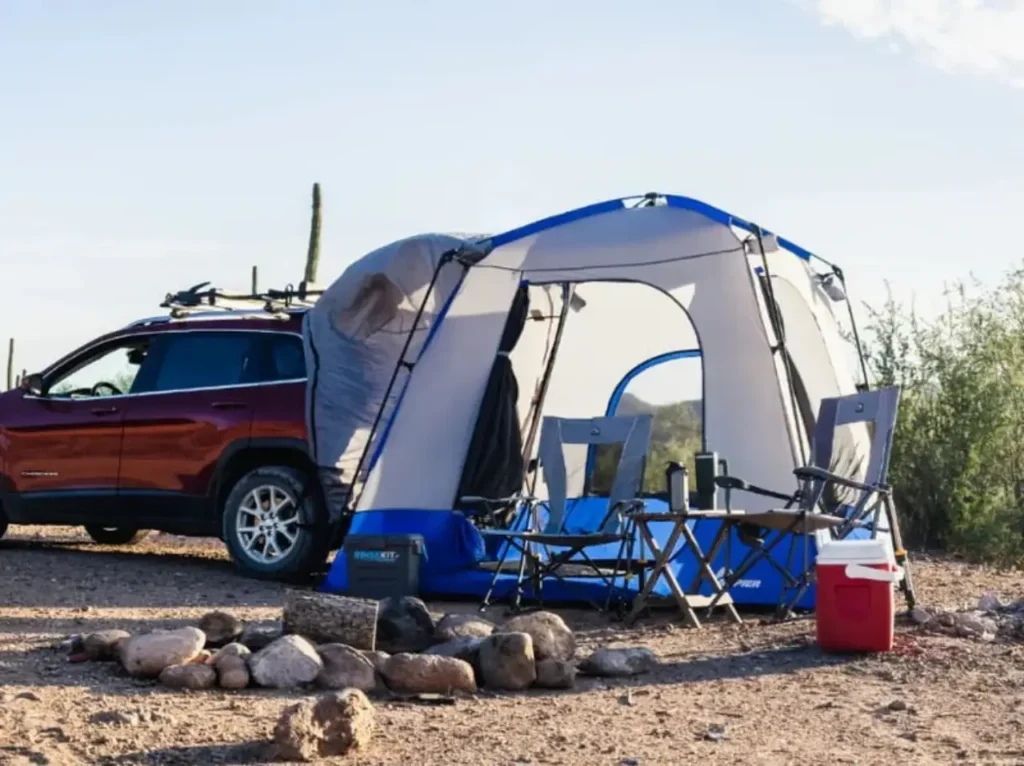
Car camping feels a lot smoother when the vehicle becomes part of camp instead of just a place to stash gear. An SUV tent can turn the back of a car into a protected extension of the campsite, giving campers more room to sleep, cook, change clothes, organize gear, or wait out a passing storm without everything feeling scattered.
The best SUV tents are especially useful for road trips, national park campgrounds, family weekends, beach camping, tailgating, and anyone who likes the convenience of keeping gear close. Open the hatch, grab a jacket, reach for the cooler, plug into a portable power station, or move between the tent and cargo area without stepping into rain, mud, or bugs. 🚙
But not every vehicle tent works the same way. Some are full sleeping tents that attach to the back of an SUV. Others are floorless shelters for shade, camp kitchens, or sleeping inside the vehicle. A few are better thought of as tailgate awnings than true tents.
This guide breaks down the best SUV tents and vehicle shelters for different camping styles, with a focus on what matters most at camp: easy setup, livable space, weather protection, vehicle fit, pack size, and whether the shelter actually makes the trip easier.
Our Top SUV Tent Picks at a Glance
| Product | Best For | Capacity / Use | Price Tier |
|---|---|---|---|
| Napier Sportz SUV Tent | Best Overall SUV Tent | Up to 5 people | $$$ |
| Rightline Gear SUV Tent | Easiest Setup | 4–6 people | $$ |
| KingCamp Melfi Plus SUV Tent | Best Large Budget Option | Family / group camping | $$ |
| Hasika SUV Tailgate Awning Tent | Best Simple Tailgate Shelter | Shelter / car-sleeping setup | $ |
| Kelty Backroads Shelter | Best Compact Vehicle Shelter | Shelter | $$ |
| REI Co-op Trailgate Shelter | Best Tailgate Hangout Shelter | Shelter for chairs / camp kitchen | $$$ |
In-Depth Reviews of the Best SUV Tents
The best SUV tent depends on how the campsite is actually being used. A family staying three nights at a developed campground needs more enclosed space than a solo road-tripper sleeping in the back of a Subaru. A couple cooking out of the hatch may need shade and rain protection more than another sleeping area.
That’s why this list includes both full SUV tents and vehicle shelters. A full tent is better when sleeping space is the priority. A tailgate shelter is better when the vehicle is already part of the sleep system and the missing piece is shade, privacy, or a dry place to cook. 🌲
Napier Sportz SUV Tent: Best Overall
The Napier Sportz SUV Tent is the best all-around pick for campers who want a real tent that connects directly to the back of a vehicle. It gives you a large sleeping area, standing room, and a protected pass-through into the cargo space, which is exactly what most people picture when they search for the best SUV tents.
The biggest advantage is how much more organized camp feels. Instead of cramming bags, shoes, jackets, and bedding into one tent corner, the SUV can become part gear closet, part charging station, part changing room, and part weather-protected storage area.
That matters most on longer weekends. If rain rolls through, the cargo area stays easy to access. If the kids need dry clothes, they’re within reach. If the dog tracks dirt into camp, muddy gear can stay closer to the hatch instead of spreading through the sleeping area. 🌧️
The Napier also works as a freestanding tent when detached from the vehicle. That is a major benefit at campgrounds where the car may be needed for a day hike, scenic drive, grocery run, or shuttle. Detach the sleeve, zip the tent closed, and leave the shelter standing while the vehicle is gone.
This is not the smallest or fastest SUV tent to pitch. It makes the most sense for campers who want a roomy basecamp and have enough cargo space to carry a larger tent. For quick overnight stops, a simpler shelter may be easier. For families, couples with dogs, and comfort-focused car campers, the extra room is usually worth it.
At a Glance:
- Capacity: Up to 5 people
- Best Use: Family car camping, weekend basecamps, SUV and minivan camping
- Design: Full SUV tent with vehicle sleeve
- Attachment: Universal-style sleeve for hatchback vehicles
- Setup Style: Freestanding after vehicle is detached
Pros:
- Spacious enough for real car camping comfort
- Direct cargo-area access keeps gear easier to organize
- Freestanding design lets the vehicle leave camp
- Better sleeping comfort than most awning-style shelters
- Good choice for families, dogs, and multi-night trips
Cons:
- Bulkier than simple tailgate shelters
- Takes longer to set up than a basic awning
- More tent than solo campers may need
- Requires a roomy campsite and thoughtful vehicle positioning
Who It’s Best For:
The Napier Sportz SUV Tent is best for campers who want one shelter to handle sleeping, gear storage, and vehicle connection. It’s a strong pick for family car camping, road trips, and anyone who wants the SUV to feel like part of the tent instead of a separate storage bin.
Rightline Gear SUV Tent: Easiest Setup
The Rightline Gear SUV Tent is the easiest full SUV tent to recommend for campers who care about simple setup and fast cleanup. Its floorless design is the feature that makes it different, and it can be a big advantage for the right kind of trip.
A floorless tent may sound odd at first, but it solves a real car camping problem. There is no muddy tent floor to scrub, no big wet groundsheet to fold, and no need to empty the entire shelter before sweeping it out. For campground weekends, festival camping, and road trips with frequent moves, that simplicity matters.
The tent connects to the rear of the vehicle, giving campers access to the cargo area from inside the shelter. That turns the back of the SUV into extra sleeping space, gear storage, or a protected place to keep bedding and electronics. For campers using an SUV mattress or sleeping platform, that connection can make the whole setup feel more livable. 🚗
The floorless design does come with tradeoffs. In buggy, sandy, muddy, or very wet campsites, a sewn-in floor feels cleaner and more protected. A tarp, outdoor mat, or groundsheet helps a lot, but this still won’t feel as sealed as a traditional tent.
Where the Rightline shines is ease. It is a good choice for campers who want the benefits of an SUV tent without turning setup into the hardest part of the trip.
At a Glance:
- Capacity: 4 people in the tent, with extra sleeping potential in the vehicle
- Best Use: Weekend camping, road trips, simple SUV camping setups
- Design: Floorless SUV tent
- Attachment: Vehicle sleeve and strap system
- Setup Style: Freestanding after vehicle is detached
Pros:
- Easier setup than many larger SUV tents
- Floorless design makes cleanup simpler
- Good access to the vehicle cargo area
- Works well for road trips and quick campgrounds
- Freestanding design lets the vehicle detach
Cons:
- No sewn-in floor
- Less ideal for muddy, sandy, or buggy campsites
- Best paired with a tarp, rug, or groundsheet
- Not as cozy in rough weather as a full-floor tent
Who It’s Best For:
The Rightline Gear SUV Tent is best for campers who want an easy SUV camping setup and don’t mind using a floorless shelter. It’s especially useful for weekend trips, fair-weather camping, and road travelers who move often.
KingCamp Melfi Plus SUV Tent: Best Large Budget Option
The KingCamp Melfi Plus SUV Tent is a good fit for campers who want a large, flexible shelter without jumping into premium pricing. It works best as a roomy car camping shelter for families, casual group trips, festivals, lake weekends, and warm-weather campgrounds where shade and airflow matter as much as sleeping space.
The main appeal is versatility. Depending on the setup, it can function as a vehicle-connected tent, a screen-room-style hangout, or a canopy-like shelter. That makes it useful for more than just sleeping. It can cover chairs, a small table, kids’ gear, coolers, or the camp kitchen area when the sun is high or bugs come out around dinner. 🏕️
This is the kind of shelter that can make a basic campsite feel more comfortable during the day. Instead of everyone crowding into a sleeping tent or sitting in direct sun, the Melfi Plus creates a larger shared space for meals, card games, gear sorting, or waiting out light rain.
The sleeping capacity can feel optimistic, as it often does with large family-style tents. Campers who want real comfort should think less about the advertised number and more about how many sleeping pads, bags, duffels, and people need to fit comfortably.
Weather protection is also more casual than expedition-level. For mild to moderate conditions, it offers plenty of utility. For exposed campsites, heavy wind, or long rainy stretches, a sturdier tent or more compact shelter may be a better match.
At a Glance:
- Capacity: Family / group camping, depending on setup
- Best Use: Budget car camping, festivals, group hangouts, warm-weather trips
- Design: SUV tent, screen room, and canopy-style shelter
- Attachment: Vehicle-compatible hatch setup
- Setup Style: Multi-use shelter
Pros:
- Large amount of covered space for the price
- Useful as a tent, shade shelter, or screen-room-style hangout
- Good airflow from mesh and large openings
- Helpful for families and casual group camping
- More livable during the day than many basic tents
Cons:
- Advertised capacity may feel tight in real use
- Not the best choice for serious storms or exposed wind
- Larger footprint needs a roomy campsite
- Setup can take more patience than smaller shelters
Who It’s Best For:
The KingCamp Melfi Plus SUV Tent is best for campers who want maximum usable space on a budget. It’s a smart choice for relaxed campground trips where shade, airflow, and shared living space are the priority.
Hasika SUV Tailgate Awning Tent: Best Simple Tailgate Shelter
The Hasika SUV Tailgate Awning Tent is best for campers who sleep inside the vehicle and want a simple shelter around the open hatch. It is not a full SUV tent with a large sleeping room. It is more of a lightweight tailgate shelter for shade, airflow, privacy, and light weather protection.
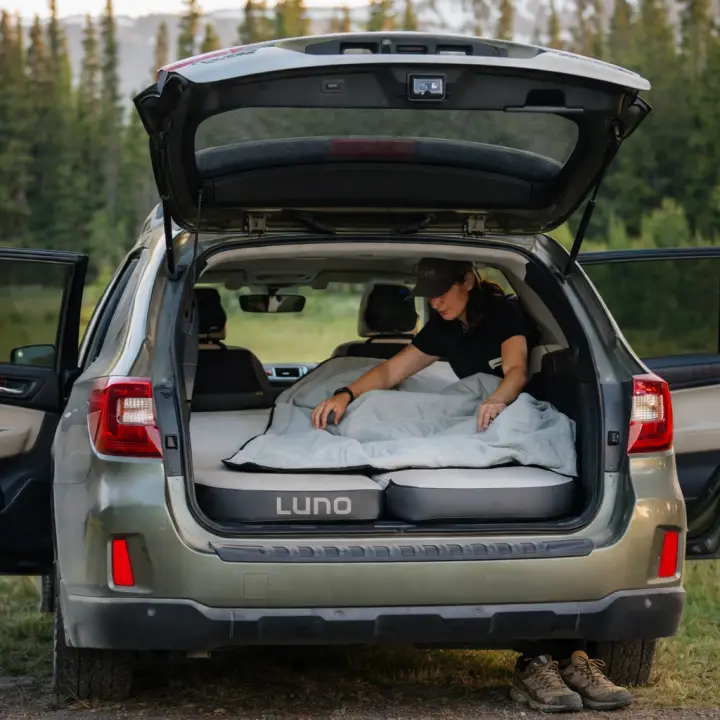
That makes it especially useful for road trips where the SUV is already the bedroom. Add a sleeping platform or SUV mattress inside the cargo area, then use the tailgate shelter to create a more comfortable transition zone outside the hatch.
This kind of setup is great for changing clothes, cooking out of the back of the vehicle, keeping the hatch open for ventilation, or sitting in the shade without unpacking a full camp shelter. It can also make beach days, trailhead hangs, and quick overnight stops much more comfortable. ☀️
The biggest benefit is simplicity. A tailgate awning is easier to carry, faster to pitch, and less bulky than a full SUV tent. For solo campers or couples who don’t need a separate sleeping room, that can be the right tradeoff.
The limitation is protection. It will not feel as enclosed, warm, or weatherproof as a full tent. Wind can also be a challenge, especially in open sites. Careful staking, smart campsite selection, and realistic expectations are important.
At a Glance:
- Capacity: Shelter-style use
- Best Use: Sleeping inside the vehicle, beach camping, quick shade, tailgate setups
- Design: Tailgate awning / screen-style shelter
- Attachment: Rear hatch setup
- Setup Style: Lightweight vehicle shelter
Pros:
- Much more compact than a full SUV tent
- Great for campers who sleep inside the vehicle
- Creates shade and privacy around the open hatch
- Useful for cooking, changing, or organizing gear
- Budget-friendly and easy to pack
Cons:
- Not a full sleeping tent
- Less protected in wind and heavy rain
- Fit and coverage vary by vehicle
- Not ideal for campers who need a sealed sleeping space
Who It’s Best For:
The Hasika SUV Tailgate Awning Tent is best for solo campers, couples, and road-trippers who sleep in the SUV and want a simple way to make the hatch area more comfortable.
Kelty Backroads Shelter: Best Compact Vehicle Shelter
The Kelty Backroads Shelter is a compact, practical choice for campers who want a protected space behind or beside the vehicle without carrying a full SUV tent. It is especially useful for people who already have a sleeping system figured out, whether that means sleeping in the vehicle, using a rooftop tent, or pitching a separate ground tent.
The Backroads Shelter creates a covered zone for the parts of camp that usually get messy: cooking, changing shoes, sorting bins, drying rain jackets, or keeping chairs out of direct sun. It’s not trying to be a bedroom. It’s trying to make the work zone of camp more comfortable.
That is a helpful distinction. A lot of campers don’t actually need more sleeping space. They need a dry place to make coffee, a shaded spot for the cooler, and enough shelter to stand under while rain moves through. For that job, a compact vehicle shelter often makes more sense than a giant tent. 🍳
The floorless design also works well around camp kitchens. There is no tent floor to worry about when moving coolers, chairs, stoves, or muddy boots underneath. Dirt stays dirt. Gravel stays gravel. Cleanup is much easier than with an enclosed tent.
The tradeoff is that this is not a bug-proof or fully enclosed shelter. It is better for shade and weather coverage than for sleeping or protection from mosquitoes.
At a Glance:
- Capacity: Shelter use
- Best Use: Camp kitchen shade, vehicle sleeping setups, tailgate organization
- Design: Floorless vehicle shelter
- Attachment: Rear or side vehicle connection, depending on setup
- Setup Style: Compact camp shelter
Pros:
- Smaller and easier to pack than full SUV tents
- Great for cooking, gear organization, and shade
- Floorless design is easy to clean
- Good match for vehicle sleepers and rooftop tent campers
- Practical for weekend trips and road travel
Cons:
- Not designed for sleeping
- Less enclosed than screen-room shelters
- Requires a vehicle for the intended setup
- Limited bug protection
Who It’s Best For:
The Kelty Backroads Shelter is best for campers who want to improve the tailgate area without carrying a full-size SUV tent. It’s a strong option for camp kitchens, vehicle-based sleeping setups, and simple weekend basecamps.
REI Co-op Trailgate Shelter: Best Tailgate Hangout Shelter
The REI Co-op Trailgate Shelter is for campers who want the back of the vehicle to become the main hangout zone. Instead of adding a separate sleeping tent, it creates a sheltered space for chairs, coolers, kitchen gear, and everyday camp life.
This is the kind of shelter that makes sense when the campsite revolves around the hatch. The cooler is in the back. The stove is on a table nearby. Camp chairs are set up close. Shoes, layers, and snacks keep moving in and out of the cargo area. A shelter over that space keeps everything more comfortable and more organized.
For weekend car camping, that can matter more than extra sleeping capacity. A dry place to sit while coffee brews, a shaded spot for lunch, and a protected area to sort gear can make a campsite feel much more polished without needing a giant tent. ☕️
The Trailgate Shelter is especially useful for campers who already sleep in a separate tent or inside the vehicle. It adds comfort around the vehicle rather than trying to replace the main sleeping setup.
It is not the right pick for campers who want a sealed sleeping room, bug-proof enclosure, or freestanding tent. It is best viewed as a high-quality tailgate shelter for comfort, shade, and light weather protection.
At a Glance:
- Capacity: Shelter space for chairs, coolers, and camp kitchen gear
- Best Use: Tailgate camping, shaded hangouts, camp kitchen coverage
- Design: Vehicle-connected shelter
- Attachment: Strap-based vehicle setup
- Setup Style: Tailgate shelter
Pros:
- Turns the hatch area into a more comfortable camp zone
- Great for chairs, coolers, and cooking gear
- More useful than a full tent for campers who already have a sleep setup
- Good shade and light rain coverage
- Clean, modern car camping design
Cons:
- Not a sleeping tent
- Not fully enclosed against bugs
- Requires the vehicle to remain part of the setup
- Less versatile than a freestanding tent
Who It’s Best For:
The REI Co-op Trailgate Shelter is best for campers who want a comfortable tailgate living area rather than another sleeping tent. It’s a great fit for car camping weekends, day-use setups, and campsites where the SUV is the center of camp.
How to Choose the Best SUV Tent for You
An SUV tent should make camping easier. If it adds too much setup time, takes up too much space, or doesn’t match the way the vehicle is used, it can quickly become frustrating.
The right choice starts with one question: do you need a place to sleep, or do you need a better place to live around the vehicle?
Full SUV Tent vs. Vehicle Shelter
A full SUV tent is the better choice when sleeping space is the priority. These tents usually attach to the back of the vehicle and create an enclosed sleeping area on the ground. They work well for families, couples with dogs, and campers who want the SUV connected directly to the tent.
A vehicle shelter is better when the sleeping setup already exists. If campers are sleeping inside the SUV, in a rooftop tent, or in a separate ground tent, a tailgate shelter may be more useful than another enclosed room.
Full SUV tents are best for sleeping. Vehicle shelters are best for shade, cooking, changing clothes, and organizing gear.
Vehicle Fit and Attachment Style
Most SUV tents are designed to fit a range of hatchback-style vehicles, but fit is not always perfect. Rear hatch shape, vehicle height, roof racks, spoilers, bike racks, cargo boxes, and unusual tailgate designs can all affect how well a tent attaches.
Before buying, check:
- Vehicle height
- Rear hatch opening
- Attachment strap locations
- Roof rack placement
- Hatch clearance
- Whether the shelter attaches to the rear, side, or both
- How the sleeve or straps seal around the vehicle
Universal fit means flexible, not guaranteed. A quick measurement at home is much better than discovering a poor fit after sunset at camp.
Freestanding vs. Vehicle-Dependent Designs
A freestanding SUV tent can stay up after the vehicle is detached. That is helpful for multi-night campground stays, national park trips, and campsites where the vehicle may be used during the day.
A vehicle-dependent shelter needs the car to stay in place. These shelters are often lighter and simpler, but moving the vehicle usually means taking down or disconnecting the setup.
For campers who like to set up once and explore from camp, freestanding is more convenient. For overnights, tailgating, and simple road-trip stops, vehicle-dependent shelters can be faster and easier.
Capacity and Real Sleeping Space
Tent capacity numbers are often tight. A tent listed for five people may technically fit five sleeping pads, but that does not mean five people will be comfortable with bags, shoes, pillows, dog beds, and extra gear.
For car camping, comfort usually comes from sizing up. A 5-person SUV tent may feel ideal for two adults and a dog, or a small family with gear. A large shelter may be better for four chairs and a cooler than for the maximum number of people listed on the product page.
Look at usable space, not just capacity:
- Can adults stand up?
- Are the walls steep or sloped?
- Is there room for bags?
- Can the vehicle cargo area be used as storage?
- Is there a separate screen room or awning?
- Will a sleeping platform or SUV mattress change the layout?
The best SUV tent gives campers room to move, not just room to lie down.
Weather Protection
SUV tents and vehicle shelters vary widely in weather protection. A full tent with a rainfly, sealed seams, and a floor will generally handle bad weather better than a lightweight tailgate awning.
For rainy areas, look for:
- Full or extended rainfly coverage
- Sealed or taped seams
- Strong poles
- Secure stakes and guy lines
- Bathtub-style floor if sleeping on the ground
- Tight vehicle sleeve or strap adjustment
- Good ventilation to reduce condensation
For hot, dry, or beach camping, airflow and shade may matter more than full rain protection. Mesh walls, large openings, and adjustable awnings can make camp much more comfortable in warm weather.
Floor or Floorless Design
A sewn-in floor is better for sleeping comfort, bug protection, and wet ground. It feels more like a traditional camping tent and helps keep bedding cleaner.
A floorless design is easier for cooking, chairs, coolers, muddy boots, and quick cleanup. It also packs down faster because there is no wet floor to dry before leaving camp.
For sleeping on the ground, choose a tent with a floor. For tailgate living, cooking, and lounging, floorless is often more practical.
Setup Time and Pack Size
A large SUV tent is comfortable once it is pitched, but it takes more space in the vehicle and more time to set up. That is fine for a two- or three-night stay. It may feel annoying for a one-night stop.
A smaller shelter is faster and easier to carry, but it gives less enclosed space. That is better for quick trips, solo travel, or campers with limited cargo room.
Before buying, think about the full car camping loadout. Coolers, bins, sleeping bags, chairs, kitchen gear, and power stations already take up space. The best SUV tent should fit into that system without making packing harder than camping.
Final Thoughts
The best SUV tents make car camping feel easier, cleaner, and more connected. They help turn the vehicle into part of the campsite instead of leaving it as a separate storage area a few steps away.
For the most complete setup, the Napier Sportz SUV Tent is the strongest overall choice. It gives campers real sleeping space, standing room, vehicle access, and the flexibility to detach the SUV when needed.
For faster setup and easier cleanup, the Rightline Gear SUV Tent is a practical option, especially for campers who like the idea of a floorless design. For larger budget-friendly hangout space, the KingCamp Melfi Plus SUV Tent offers a lot of usable room for relaxed campground trips.
For campers who sleep inside the vehicle or already have another tent, the Hasika SUV Tailgate Awning Tent, Kelty Backroads Shelter, and REI Co-op Trailgate Shelter can be better choices than a full SUV tent. They add the shade, rain coverage, and tailgate comfort that make everyday camp life smoother.
An SUV tent does not need to be complicated to be useful. The right one should match the vehicle, the campsite, and the way the trip actually works — whether that means a full family sleeping tent or a simple covered space for coffee, camp chairs, and muddy boots.
Frequently Asked Questions (FAQ)
Can you drive away with an SUV tent attached?
No. Always detach the vehicle sleeve, straps, or awning connection before driving away. Some SUV tents are freestanding, which means they can stay pitched at camp after the vehicle is detached. Vehicle-dependent shelters usually need to come down or be disconnected before the car moves.
Do SUV tents fit every SUV?
No SUV tent fits every vehicle perfectly. Most are designed to work with a range of SUVs, crossovers, minivans, wagons, and some trucks with caps, but hatch shape and vehicle height matter. Always check measurements and fit guidance before buying.
Are SUV tents waterproof?
Many SUV tents are designed for rain protection, but weather performance depends on the model. A full SUV tent with a rainfly, sealed seams, and a floor will usually handle rain better than a lightweight tailgate awning. For wet climates, prioritize strong staking points, good seam sealing, and full rain coverage.
Is an SUV tent better than a regular tent for car camping?
An SUV tent is better if easy access to the vehicle matters. It helps with gear storage, power stations, extra bedding, changing clothes, and staying organized. A regular freestanding tent may be better if the campsite is away from the vehicle or if maximum storm performance is the priority.
Is a floorless SUV tent a good idea?
A floorless SUV tent can be a great idea for campers who want easy setup and fast cleanup. It works well for camp chairs, coolers, cooking gear, and road trips. For sleeping directly on the ground in muddy, sandy, or buggy areas, a tent with a sewn-in floor is usually more comfortable.
Can you sleep in the vehicle while using an SUV tent?
Yes. Many campers use an SUV tent or tailgate shelter to make sleeping inside the vehicle more comfortable. The tent or shelter can add privacy, airflow, shade, and a protected area around the open hatch.
What is the best SUV tent for families?
The Napier Sportz SUV Tent is the best overall family pick because it offers a large sleeping area, standing room, and direct vehicle access. Families that mostly need a shaded hangout or cooking area may prefer a vehicle shelter like the REI Co-op Trailgate Shelter.
What is the best SUV tent for sleeping inside the car?
For sleeping inside the vehicle, a tailgate shelter may be more useful than a full SUV tent. The Hasika SUV Tailgate Awning Tent, Kelty Backroads Shelter, and REI Co-op Trailgate Shelter all help create a more comfortable hatch area for shade, privacy, airflow, and light weather protection.
Affiliate Disclosure: GearForTheOutdoors.com participates in affiliate programs, including REI, Amazon, REI Outlet, Garage Grown Gear, evo, and other trusted partners. When you purchase through links on this site, GearForTheOutdoors.com may earn a small commission at no extra cost to you. That helps support the content and keeps recommendations useful, practical, and free.
Disclaimer: This post is for informational purposes only. Always verify current product details, fit, availability, safety information, and manufacturer warranties before purchase or use. Outdoor conditions and gear performance can vary depending on setup, weather, terrain, vehicle compatibility, and experience level.