There’s a moment on almost every first hike when the trail starts to quiet everything down.
The parking lot fades behind you. The air feels a little cleaner. Gravel crunches under your shoes. Trees start doing that soft, steady thing trees do when the wind moves through them. And suddenly, the whole idea of hiking makes sense. 🥾
But before that moment? There’s often gear confusion.
What should a beginner actually bring on a hike? Do you need hiking boots right away? Is a regular backpack fine? How much water is enough? What belongs in a daypack, and what is just extra weight?
The outdoor gear world can make a simple trail walk feel like a complicated expedition. But beginner hiking gear does not need to be expensive, extreme, or overwhelming. The best setup is the one that helps you stay safe, comfortable, dry, hydrated, and confident without carrying half a garage on your back.
This guide breaks down the best hiking essentials for beginners in a practical, trail-tested way. It covers the safety items worth carrying, the comfort gear that makes a real difference, and the clothing basics that help you handle changing weather without overthinking every layer.
The goal is simple: help you build a dependable first hiking kit that works for real day hikes — local trails, state parks, national parks, forest loops, lake hikes, beginner mountain routes, and weekend outdoor adventures.
No hype. No fear-based packing. No “you need the most expensive version” advice.
Just the essentials that actually earn their place in a beginner’s daypack. 🌲
Quick Take: The Beginner’s Hiking Essentials Checklist
For a first hiking setup, this is the clean starting point. These 15 items cover safety, comfort, hydration, weather protection, and the most common problems beginner hikers run into on the trail.
| Category | Item | Why It’s Essential |
|---|---|---|
| The Ten Essentials | Navigation (Map, Compass, GPS) | Helps you stay on route and get back safely. |
| Headlamp + Extra Batteries | Keeps you prepared if a hike takes longer than expected. | |
| Sun Protection | Protects your skin and eyes from UV exposure. | |
| First-Aid Kit | Helps treat blisters, scrapes, cuts, and common trail issues. | |
| Knife or Multi-tool | Useful for small repairs, food, first aid, and simple trail tasks. | |
| Fire Starter | Emergency backup for warmth and signaling. | |
| Emergency Shelter | Helps protect against wind, rain, and cold if you get stuck. | |
| Extra Food | Provides backup energy if your hike runs longer than planned. | |
| Extra Water (and/or filter) | Keeps dehydration from becoming a serious problem. | |
| Extra Clothes | Helps you stay warm and dry when weather changes. | |
| Core Hiking Gear | Hiking Backpack (Daypack) | Carries essentials comfortably without overloading your shoulders. |
| Hiking Footwear | Adds traction, support, and protection on uneven trails. | |
| Hiking Socks | Helps prevent blisters and keeps feet more comfortable. | |
| Hiking Clothing | Rain Jacket | Blocks rain and wind so you stay warmer and drier. |
| Insulating Layer (Fleece) | Adds warmth during breaks, cool mornings, and weather shifts. |
The Bedrock of Safety: The Ten Essentials System
Before getting into shoes, backpacks, or rain jackets, it helps to understand the backbone of a smart hiking kit: the Ten Essentials.
The Ten Essentials are not about preparing for some dramatic backcountry disaster. They are about giving yourself a margin of safety when normal things go sideways.
A short trail can take longer than expected. A wrong turn can add an extra mile. A sunny forecast can turn windy. A small blister can slow your pace. A phone battery can drop fast in cold weather. A trail that looked simple online can feel different when junctions are poorly marked. 🧭
That is why experienced hikers carry a few basic safety items even on “easy” hikes. Most of them are small. Many are inexpensive. And once they live in your daypack, you do not have to think about them every time.
For beginners, this system is the difference between guessing and feeling prepared.
1. Navigation
A phone is a great hiking tool, but it should not be your only navigation plan.
GPS apps are helpful. Trail maps are helpful. A phone camera is helpful. But phones also run out of battery, lose signal, overheat, freeze, crack, or get dropped. Even popular trails can have confusing junctions, social paths, missing signs, or reroutes that do not match what you expected.
What you need:
Start with a downloaded offline map before leaving home. Apps like Gaia GPS, AllTrails, FarOut, or similar navigation tools can be very useful when maps are saved for offline use. For longer, more remote, or less familiar hikes, carry a physical map and a simple compass.
Why it matters:
Good navigation is not just about reaching a viewpoint. It is about knowing when to turn around, recognizing trail intersections, estimating how far you still have to go, and avoiding the stress of “this doesn’t look right.”
Beginner-friendly habit:
At the trailhead, take a photo of the posted map if one is available. Also take a quick screenshot of your route before the hike begins. If the app reloads slowly or service disappears, you still have a quick visual reference.
What to skip:
Do not rely on memory alone. “It looked obvious online” is not a navigation system.
2. Headlamp
A headlamp is one of the most overlooked beginner hiking essentials because most new hikers plan to be back long before dark.
That plan usually works — until it doesn’t.
Maybe the trail is steeper than expected. Maybe the group stops longer at a lake. Maybe a wrong turn adds time. Maybe the sunset looks too good to leave right away. Suddenly, the last mile is dim, rocky, and harder to read. 🔦
A headlamp keeps both hands free, which matters when stepping over roots, checking a map, tightening a shoe, or using trekking poles.
What to look for:
Choose a reliable LED headlamp with simple controls, enough brightness for trail walking, and either fresh batteries or a full charge. A red light mode is useful but not mandatory. For beginners, ease of use matters more than fancy settings.
Beginner-friendly pick:
The Black Diamond Spot 400 is a strong first headlamp because it is bright, compact, dependable, and simple enough for regular hiking and camping use. It works well for early starts, late finishes, camp chores, power outages, and emergency kits. You can find it at REI.
Trail tip:
Keep the headlamp in the same pocket every time — ideally near the top of your pack. A headlamp buried under snacks, layers, and first-aid supplies is much harder to find when the light is fading.
3. Sun Protection
Sun protection sounds basic, but it is one of the easiest things to underestimate on a hike.
Cool weather does not mean low UV exposure. Cloud cover does not fully protect you. Higher elevation, snow, water, exposed rock, desert trails, and open ridgelines can all increase sun exposure quickly. ☀️
Sunburn can make a hike miserable, but heat-related fatigue is the bigger issue. Too much sun can contribute to dehydration, headaches, poor focus, and faster energy loss.
What you need:
- Sunscreen: Broad-spectrum SPF 30 or higher.
- Sunglasses: UV protection is especially important around snow, water, pale rock, or open terrain.
- Hat: A wide-brimmed hat gives better face, ear, and neck protection than a standard cap.
- UPF clothing: A lightweight sun hoodie can be more comfortable than repeated sunscreen on long, exposed hikes.
Beginner-friendly habit:
Apply sunscreen before leaving the trailhead, not after you already feel the sun. Keep a small sunscreen stick or travel-size tube in an easy-access pocket.
What to skip:
Do not assume tree cover will protect you all day. Many trails move in and out of shade, especially near overlooks, lakes, balds, desert routes, and alpine areas.
4. First-Aid Kit
Most trail first-aid situations are not dramatic. They are ordinary little problems that become bigger when ignored.
A heel starts rubbing. A knee gets scraped. A headache builds. A branch scratches your hand. A small cut needs cleaning. A hot spot turns into a blister halfway through the hike. 🩹
A compact first-aid kit helps you deal with those problems early, when they are still manageable.
What to look for:
A good beginner hiking first-aid kit should include adhesive bandages, gauze, antiseptic wipes, medical tape, blister treatment, pain relievers, tweezers, and any personal medications. Blister care is especially important for new hikers because footwear and sock systems take time to dial in.
Beginner-friendly pick:
The Adventure Medical Kits Mountain Series Hiker is a practical pre-made option for day hikers. It is organized, compact, and designed around the kinds of minor injuries that commonly happen outdoors. Check it out at REI.
Smart add-ons:
Add a few blister pads, extra moleskin, personal medication, and one or two electrolyte packets. A pre-made kit is a strong start, but personalizing it makes it much more useful.
What to skip:
Do not pack a huge medical kit for a short beginner day hike unless you are trained to use what is inside. Carry what is practical, understandable, and relevant.
5. Knife or Multi-tool
A hiking knife does not need to be big, tactical, or intimidating. For beginner hiking, a small folding knife or compact multi-tool is plenty.
The value is in simple utility: cutting moleskin, opening food packaging, trimming cord, removing a splinter, slicing an apple, tightening a small screw, or helping with a quick gear fix.
What to look for:
A compact folding knife works for most beginner hikers. A small multi-tool can be even more useful if it includes scissors, tweezers, a blade, and a basic screwdriver.
Beginner-friendly habit:
Keep your tool clean, dry, and stored safely. It should be accessible enough to use, but not loose in a pocket where it can poke gear or hands.
What to skip:
Oversized “survival” knives are unnecessary for normal day hiking. They add weight, draw attention, and usually solve fewer beginner problems than a small multi-tool.
6. Fire Starter
A fire starter is an emergency item. Most day hikers will rarely, if ever, need to use it — and that is perfectly fine.
Its purpose is backup warmth and signaling if you are unexpectedly stuck, injured, wet, or delayed in cold conditions. 🔥
What you need:
A simple disposable butane lighter is the easiest beginner option. Store it in a small waterproof bag. Add waterproof matches or a ferro rod as backup if you hike in wetter or more remote places.
Important trail note:
Fire rules matter. Many parks, forests, and public lands have seasonal restrictions or full burn bans. In some conditions, starting a fire is unsafe and illegal. This item belongs in your emergency kit, not your casual lunch-break routine.
What to skip:
Do not treat fire as a normal part of day hiking. For most beginner hikes, the fire starter stays packed unless there is a true emergency.
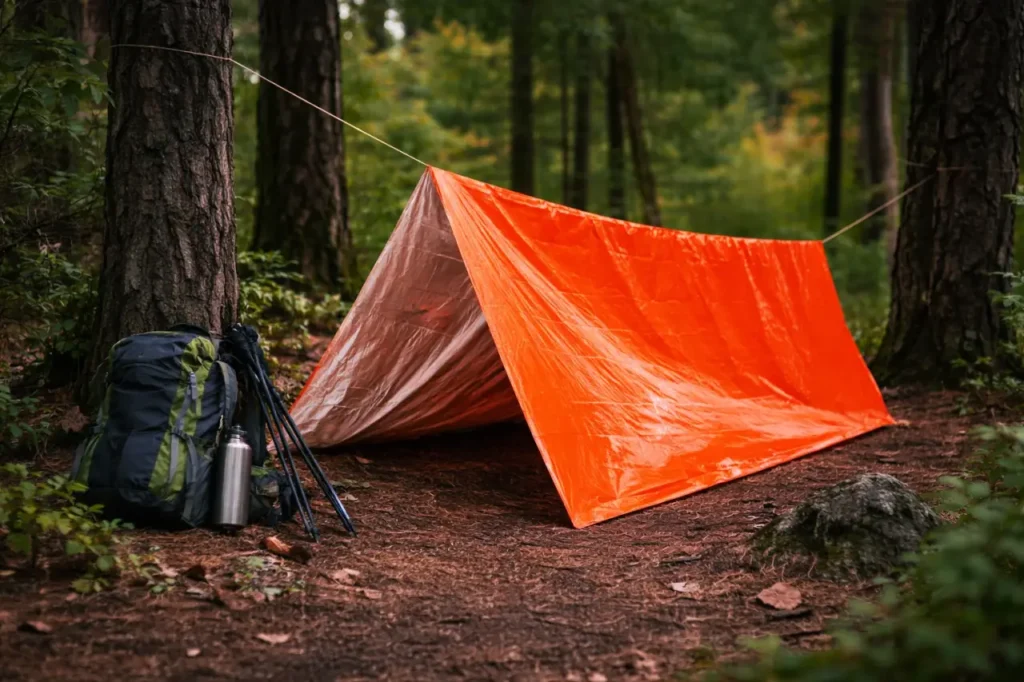
7. Emergency Shelter
Emergency shelter does not mean carrying a tent on every day hike. It means carrying a small backup that can help protect you from wind, rain, and cold if something goes wrong.
This matters because exposure can become serious faster than beginners expect. Wet clothing, wind, fatigue, and dropping temperatures can turn a simple delay into a real problem. 🌧️
What to look for:
A compact emergency bivvy or space blanket is light, inexpensive, and easy to leave in your pack. A bivvy-style shelter is usually more protective than a flat blanket because it wraps around your body like a simple sleeping bag.
Beginner-friendly pick:
The SOL Emergency Bivvy is a classic day-hike safety item. It packs small, helps reflect body heat, and provides basic protection from wind and light precipitation in an emergency. You can find options like this at outdoor retailers such as REI.
Beginner-friendly habit:
Leave it in your daypack permanently. Emergency items work best when they are boring, packed, and always there.
8. Extra Food
Food is not just about having a nice snack at the overlook. It is energy management.
Hiking burns more energy than walking around town, especially when the trail climbs, footing is uneven, temperatures are cold, or the route takes longer than expected. 🍎
Extra food gives you a buffer if your pace slows, your group takes a longer break, or the trail turns out harder than planned.
What to pack:
Choose calorie-dense, no-cook foods that can survive being bounced around in a pack. Good options include trail mix, protein bars, nut butter packets, dried fruit, crackers, jerky, and energy chews.
How much to bring:
Pack the snacks you expect to eat, then add one extra high-calorie item. For longer hikes, colder weather, or remote trails, bring more.
Beginner-friendly habit:
Eat before you feel completely drained. Small, steady snacks help keep energy more consistent than waiting until you feel empty.
What to skip:
Avoid messy, fragile, or hard-to-eat foods for beginner hikes. A smashed banana at the bottom of a pack teaches that lesson quickly.
9. Extra Water
Water is one of the most important hiking essentials because dehydration affects everything: energy, mood, balance, focus, and decision-making.
A good starting point is about half a liter of water per hour of moderate hiking in moderate temperatures. You may need more in hot weather, dry climates, high elevation, exposed sun, or steep terrain. 💧
What to bring:
Water bottles are simple and easy to track. Hydration reservoirs make it easier to sip while moving. Many hikers use both: a reservoir for steady drinking and a bottle for backup, electrolytes, or easier refilling.
Water treatment:
For longer hikes or routes with reliable streams or lakes, a lightweight water filter or purification tablets provide extra safety. The Sawyer Squeeze is popular because it is compact, lightweight, and easy to use.
Beginner-friendly habit:
Check your water level at every major break. Beginners often drink less than they think while hiking.
What to skip:
Do not depend on streams unless you know they are flowing and accessible. Seasonal water sources can disappear, and all natural water should be treated before drinking.
10. Extra Clothes
Weather changes quickly outdoors, especially in mountains, deserts, forests, coastal areas, and shoulder seasons. A trailhead can feel warm and calm while the viewpoint is windy and cold. A shaded canyon can feel completely different from an open ridge. 🧥
Extra clothing gives you options without requiring a complicated wardrobe.
What you need:
The key is avoiding cotton for important hiking layers. Cotton holds moisture and dries slowly, which can make you cold if you sweat or get rained on.
A smart beginner clothing backup may include:
- Lightweight rain jacket
- Fleece or light insulated jacket
- Spare socks on longer hikes
- Warm hat or gloves in cool weather
- Dry base layer for colder or wetter conditions
Beginner-friendly habit:
Pack spare layers in a dry bag, waterproof stuff sack, or pack liner. A warm layer only helps if it stays dry.
What to skip:
Avoid packing too many “maybe” layers. One useful insulating layer and one reliable rain shell usually beat three bulky pieces you never wear.
Your Core Hiking Gear: The Big Three for Comfort
Once the safety basics are covered, three pieces of gear shape how enjoyable your hike feels: your backpack, your footwear, and your socks.
These are the comfort foundations. Get them wrong, and even a beautiful trail can feel frustrating. Get them right, and hiking feels lighter, smoother, and much more fun. 🌲
The goal is not to buy the most expensive version of everything. The goal is to choose gear that fits your body, your trail style, and your beginner needs.
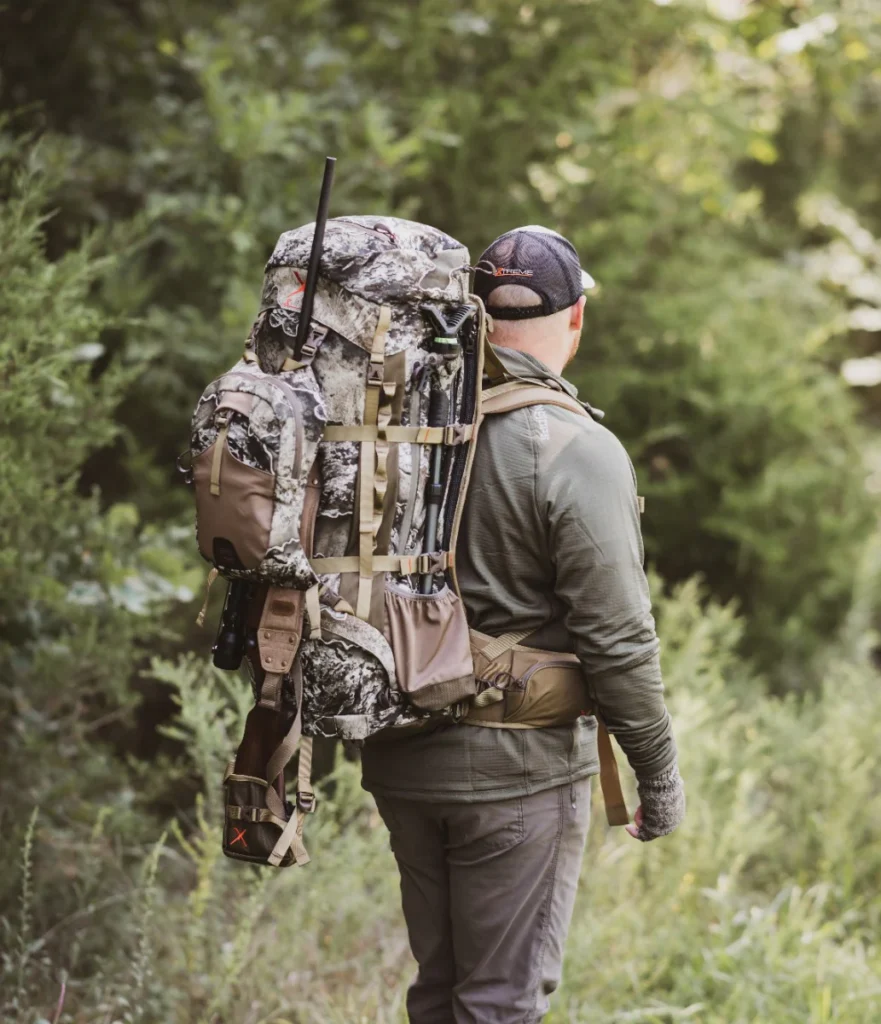
11. A Good Hiking Backpack (Daypack)
A hiking daypack does more than hold stuff. It carries weight in a way that feels stable, organized, and comfortable.
A school backpack or casual laptop bag may work for a short neighborhood nature walk, but it usually becomes annoying on longer trails. Thin straps dig into shoulders. The back panel traps sweat. There may be no hip belt, no sternum strap, no water bottle pockets, and no easy way to organize trail essentials.
A real daypack does not need to be huge. It just needs to carry the right gear well.
What to look for in a daypack:
- Capacity: 20 to 30 liters is the sweet spot for most beginner day hikes.
- Fit: Shoulder straps, sternum strap, and a hip belt help stabilize the load.
- Hip belt: Even a light hip belt can reduce shoulder fatigue.
- Ventilation: A breathable back panel helps on warm trails.
- Hydration compatibility: Useful if you like drinking from a reservoir.
- Bottle pockets: Side pockets should hold bottles securely.
- Easy-access pockets: Helpful for snacks, sunscreen, keys, and small safety items.
Beginner-friendly pick:
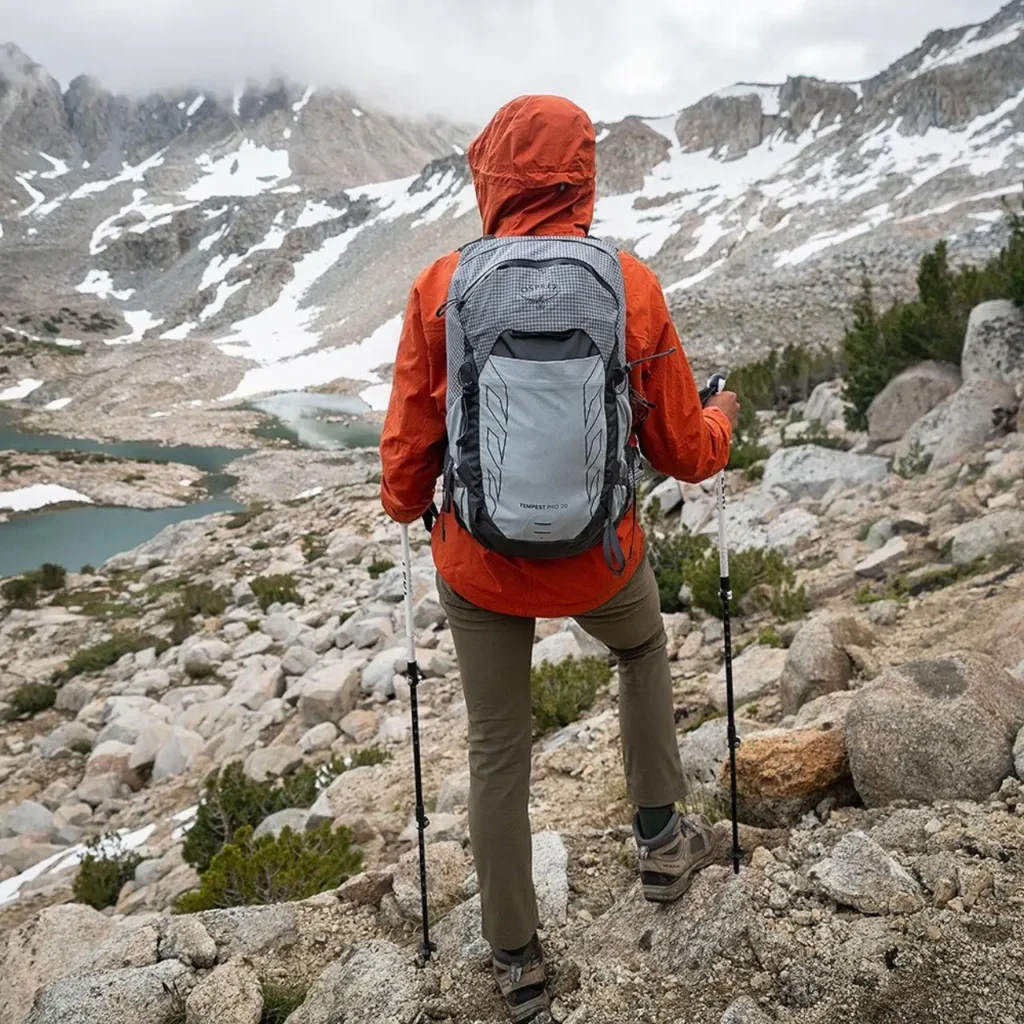
The Osprey Talon 22 is a strong daypack for beginners who want something comfortable, stable, and useful beyond a single season. The Osprey Tempest 20 has long been the comparable women’s-fit option. Both are well-suited for day hikes, local trails, travel days, and national park adventures. You can find Osprey packs and similar hiking daypacks at REI.
Who it’s best for:
Beginners who plan to hike regularly and want one dependable pack for most day hikes.
Who should skip it:
If your “hikes” are mostly short paved paths or one-mile nature walks, a simpler small pack may be enough for now.
Trail fit tip:
A loaded pack should not swing around when you move. Tighten the hip belt first, then the shoulder straps, then the sternum strap. The pack should feel close to your body without squeezing your chest.
12. Proper Hiking Footwear
Footwear is one of the fastest ways to make hiking better — or worse.
The right hiking shoes help with traction, stability, and protection. The wrong shoes can create blisters, bruised toes, sore arches, and nervous footing on loose or rocky ground. 🥾
Beginners often assume they need heavy hiking boots. Sometimes boots are the right call. But for many day hikes, a comfortable hiking shoe is easier to wear, lighter on the feet, and more than supportive enough.
Hiking Shoes vs. Hiking Boots:
| Footwear Type | Best For | Trade-Off |
|---|---|---|
| Hiking Boots | Rocky trails, ankle coverage, colder weather, heavier loads | Heavier and may need more break-in time |
| Hiking Shoes | Day hikes, maintained trails, beginner use, warmer weather | Less ankle coverage than boots |
| Trail Running Shoes | Lightweight hiking, fast movement, breathable comfort | Less protection and support on rugged terrain |
What to look for:
- Good traction: Lugged outsoles grip dirt, gravel, rock, mud, and roots better than casual sneakers.
- Toe protection: A reinforced toe helps on rocky trails.
- Comfortable fit: No pinching, rubbing, or cramped toes.
- Heel security: Your heel should not lift dramatically with each step.
- Enough toe room: Leave about a thumb’s width in front of your toes.
- Right waterproofing choice: Waterproof shoes help in wet conditions but can feel warmer and less breathable.
Beginner-friendly pick:
The Merrell Moab 3 is one of the most beginner-friendly hiking shoes because it is comfortable right away, widely available, supportive, and offered in multiple versions. The shoe version works well for many day hikers, while the boot version adds more coverage and support. Check current models at Amazon or your local gear shop.
Who it’s best for:
Beginners who want a reliable, comfortable hiking shoe for local trails, national parks, light mountain hikes, and weekend outdoor use.
Who should skip it:
Hikers who prefer very light, fast movement may eventually prefer trail runners. Hikers carrying heavier loads on rough terrain may want a sturdier boot.
Trail fit tip:
Try hiking footwear later in the day when feet are slightly swollen. Wear the socks you plan to hike in. Walk downhill if possible. Your toes should not slam into the front of the shoe.
13. Quality Hiking Socks
Socks do not look exciting on a gear checklist, but they matter a lot.
A good hiking sock manages moisture, adds cushioning, reduces friction, and helps prevent blisters. A bad sock bunches, rubs, holds sweat, and turns a simple hike into a foot-care problem. 🧦
Cotton gym socks are the common beginner mistake. Cotton absorbs moisture and dries slowly. Once your feet sweat, that moisture sits against your skin and increases friction.
What to look for:
- Material: Merino wool or synthetic blends are best for hiking.
- Moisture management: Socks should move sweat away from the skin.
- Cushioning: Light cushion works for warmer weather; medium cushion adds comfort for longer hikes or boots.
- Height: Micro-crew or crew socks help protect against boot collars, dust, and low brush.
- Fit: Snug but not tight. Loose socks bunch and rub.
Beginner-friendly pick:
Darn Tough Hiker Micro Crew Cushion Socks are a smart first upgrade because they are durable, comfortable, moisture-managing, and trail-proven. They work well with hiking shoes and boots and are especially useful for beginners trying to avoid blisters. You can find a wide selection at REI.
Who it’s best for:
Almost every beginner hiker, especially anyone prone to blisters, sweaty feet, or discomfort in regular socks.
Who should skip it:
Very few hikers. Quality socks are one of the most affordable upgrades with one of the biggest comfort payoffs.
Trail tip:
For longer hikes, pack a spare pair. Changing into dry socks halfway through can make tired feet feel surprisingly refreshed.
What to Wear: The Simple Art of Layering
Hiking clothing should help you manage three things: sweat, wind, and changing temperatures.
That is why layering works so well. Instead of wearing one heavy piece, you wear a few lighter layers that can be added or removed as conditions change. 🌤️
A simple beginner layering system looks like this:
- Base layer: Wicks sweat away from your skin.
- Mid-layer: Adds warmth.
- Outer shell: Blocks wind and rain.
You do not need a closet full of technical apparel to start hiking. But you do need clothing that handles movement, moisture, and weather better than everyday cotton layers.
The simplest rule: dress so you can adjust.
If the trail climbs, remove a layer before you get soaked in sweat. If the wind picks up, add your shell. If you stop for a snack, put on your fleece before you get chilled.
14. A Reliable Rain Jacket (Your Outer Shell)
A rain jacket is not just for rain. It is also your wind-blocking layer, and wind can cool you down fast — especially at overlooks, exposed ridgelines, lake edges, and mountain passes. 🌧️
For beginner hikers, a packable rain jacket is one of the smartest pieces of clothing to keep in a daypack. Even if the forecast looks decent, a shell gives you protection when conditions shift.
What to look for:
- Waterproof protection: Keeps rain from soaking your layers.
- Breathability: Helps reduce clammy buildup while hiking.
- Pit zips: Underarm vents are excellent for releasing heat.
- Adjustable hood: Helps protect your face and head in wind or rain.
- Packability: A jacket that packs small is easier to carry every time.
- Room for layers: It should fit comfortably over a fleece or light insulation layer.
Beginner-friendly pick:
The REI Co-op Rainier Rain Jacket is a strong first rain shell because it offers useful weather protection, practical features, and good value. It works well for day hiking, camping, travel, and general outdoor use. You can find it at REI.
Who it’s best for:
Beginners who want one reliable rain jacket that can live in a daypack and handle typical day-hike weather.
Who should skip it:
Hikers planning frequent alpine, winter, or very wet backcountry trips may eventually want a more technical shell.
Trail tip:
Put your rain jacket on before your insulating layer gets wet. Staying dry is much easier than trying to warm up after getting soaked.
15. An Insulating Layer (Your Mid-Layer)
An insulating layer keeps you warm when the trail gets cool, the wind picks up, or your body stops generating heat during breaks.
For beginners, fleece is usually the easiest mid-layer to start with. It is warm, breathable, comfortable, durable, and useful beyond hiking. It works at camp, in the car, around town, and on chilly mornings. 🏕️
Fleece vs. Puffy Jacket:
| Layer Type | Best For | Trade-Off |
|---|---|---|
| Fleece Jacket | Active hiking, cool weather, budget-friendly warmth | Bulkier and less warm for its weight than a puffy |
| Synthetic Puffy | Damp conditions, colder breaks, more warmth | Less breathable during movement |
| Down Puffy | Cold, dry conditions and lightweight warmth | More expensive and less effective when wet |
Beginner-friendly pick:
The REI Co-op Trailmade Fleece Jacket is a dependable starter mid-layer. It provides practical warmth, works under a rain shell, and is versatile enough for hiking, camping, travel, and everyday cool-weather use. You can find it at REI.
Who it’s best for:
Beginner hikers who want a simple, affordable warmth layer that can be worn often.
Who should skip it:
Hikers focused on ultralight packing or colder conditions may eventually prefer a lightweight puffy jacket.
Trail tip:
Start the hike slightly cool. If you feel perfectly warm before moving, you may overheat once the trail climbs.
Final Thoughts: Gear Up and Get Out There
A good beginner hiking kit does not need to be complicated. It needs to be useful.
The best hiking essentials for beginners are the items that solve real trail problems: finding the route, staying hydrated, protecting your feet, handling changing weather, treating small injuries, keeping warm if you stop, and getting safely back to the trailhead.
That is the heart of a smart hiking checklist. Not packing for every possible disaster. Not buying every trending piece of gear. Not trying to look like an expedition guide on a two-mile loop. 🌲
Start with the essentials. Choose comfortable footwear. Carry enough water. Bring layers that work. Keep a small safety kit in your pack. Learn from every hike.
Over time, your gear will become more personal. You will learn whether you prefer bottles or a hydration reservoir, boots or hiking shoes, fleece or a puffy, short local trails or longer mountain days.
But the foundation stays the same: safe, comfortable, simple, and ready for the trail ahead.
Pack smart, check the weather, tell someone where you are going, and give yourself enough daylight to enjoy the walk.
Frequently Asked Questions for Beginner Hikers
What size backpack do I need for a day hike?
For most beginner day hikes, a backpack between 20 and 30 liters is the best range. That size gives you enough room for water, snacks, a rain jacket, a warm layer, sun protection, a first-aid kit, navigation tools, and small emergency items without feeling oversized.
A smaller pack can work for very short trails, but it may become cramped once you add extra water or layers. A larger pack can work too, but it often encourages overpacking. For beginners, the 20–30 liter range is the most practical balance.
Do I really need hiking boots, or can I wear sneakers?
For short, flat, dry, well-maintained trails, sturdy sneakers can be okay. But hiking-specific footwear is usually a better choice once trails become rocky, muddy, steep, rooty, or uneven.
Hiking shoes and boots provide better traction, more foot protection, and more support than casual sneakers. Beginners do not always need heavy boots, though. A comfortable hiking shoe is often the best first step because it feels familiar while still offering better trail performance.
How much water should I bring on a hike?
A good starting point is about half a liter of water per hour of moderate hiking in moderate weather. Bring more for hot weather, high elevation, dry climates, exposed sun, steep trails, or routes where water sources are unreliable.
It is always better to finish with a little extra water than to run out before reaching the trailhead. For longer hikes, a lightweight water filter or purification tablets can add a useful backup if reliable water sources are available.
Is expensive hiking gear worth it for a beginner?
Not always. Beginners should focus on reliable, comfortable essentials before spending money on premium upgrades.
Good hiking shoes, quality socks, a comfortable daypack, a basic rain jacket, and a simple first-aid kit matter more than ultralight materials or advanced technical features. Expensive gear can be worth it later if you hike often, carry heavier loads, or move into rougher terrain — but it is not required for getting started.
What should a beginner avoid bringing on a day hike?
Avoid packing too many “just in case” items that add weight without solving likely problems. Bulky cookware, oversized knives, extra shoes, heavy camp gear, full-size toiletries, and too many clothing layers can make a beginner hike feel harder than it needs to be.
Also avoid wearing brand-new footwear on a long hike. Test shoes and socks on short walks first. A beginner hiking kit should feel prepared, not overloaded.
What is the most important hiking essential for beginners?
Water, navigation, and weather protection are the most important safety essentials because they affect your hike quickly. But comfort essentials matter too. Footwear and socks can make the difference between enjoying the trail and turning around early with painful feet.
The best beginner setup balances safety and comfort: enough gear to handle common problems, but not so much that your pack becomes a burden.
Should beginners use trekking poles?
Trekking poles are optional, but they can be helpful. They add stability on uneven trails, reduce impact on knees during descents, and help with balance on loose dirt, creek crossings, or rocky paths.
For short, easy trails, beginners can skip them. For hilly terrain, knee discomfort, or longer hikes, trekking poles can be a smart upgrade after the core essentials are covered.
What should I wear on my first hike?
Wear moisture-wicking clothing, comfortable hiking shoes or trail shoes, quality hiking socks, and layers that can adjust to the weather. A simple beginner outfit might include a synthetic or merino shirt, hiking pants or shorts, a fleece, and a rain jacket packed in your daypack.
Avoid cotton socks and heavy cotton layers when weather could turn cool or wet. Hiking clothing should manage sweat and weather, not trap moisture against your skin.
How do I know if I packed too much?
If your pack feels uncomfortable before leaving the trailhead, it may be too heavy or poorly adjusted. Beginner day hikes do not require a backpacking load.
After each hike, pay attention to what you used, what stayed packed, and what you wished you had. That simple habit helps you refine your hiking kit over time.
Affiliate Disclosure: GearForTheOutdoors.com participates in affiliate programs, including REI, Amazon, REI Outlet, Garage Grown Gear, evo, and other trusted partners. Purchases made through affiliate links may generate a small commission at no extra cost to the reader. That support helps keep GearForTheOutdoors.com content useful, practical, and free.
Disclaimer: This post is for informational purposes only. Always verify current product details, fit, availability, safety information, and manufacturer warranties before purchase or use. Outdoor conditions and gear performance can vary depending on setup, weather, terrain, and experience level.