A good bathroom setup can quietly shape the whole feel of life on the road. In a van, at a dispersed campsite, or during a long weekend of car camping, the question usually shows up sooner than expected: what happens when there’s no clean restroom nearby? 🚐
That’s where a well-designed portable toilet can make a real difference. It adds comfort, privacy, and flexibility without forcing a full RV-style plumbing system into the build. For many travelers, that balance is exactly the point.
The Dometic 976 Portable Toilet is one of the best-known cassette-style options for van life and camp comfort. It promises a more home-like seat, a cleaner flush experience, solid odor control, and easier tank emptying than many cheaper models. On paper, that sounds great. In practice, the real question is whether it actually makes daily life simpler when the trip gets dusty, cold, busy, or just plain inconvenient. 😊
This in-depth Dometic 976 Portable Toilet review looks at how it performs where it matters most: comfort, storage, capacity, cleanup, and long-term usefulness for van life, car camping, overlanding, and off-grid setups.
Quick Verdict: The Dometic 976 at a Glance
For anyone who wants the short version, here it is: the Dometic 976 is one of the strongest portable flushing toilet options for people who care about comfort, reliability, and cleaner day-to-day use. It is not the smallest model, and it is not the cheapest. But it does a lot of the little things better than bargain alternatives, especially when it comes to seat comfort, flush quality, and cleaner tank emptying. 👍
This is the kind of portable toilet that makes the most sense for van lifers, road trippers, and serious car campers who plan to use it regularly and want something that feels more like a real solution than a backup emergency bucket.
| Feature | Dometic 976 Specification |
|---|---|
| Holding Tank Capacity | 5.0 gallons (18.9 L) |
| Freshwater Tank Capacity | 2.6 gallons (9.8 L) |
| Flush Type | Push-Button, Manual (No Power Needed) |
| Construction | High-Strength ABS Plastic |
| Dimensions (H x W x D) | 15.25″ x 13.13″ x 15.25″ |
| Empty Weight | 11.75 lbs |
| Key Features | Full-Size Seat, Tank Level Indicator, Pivoting Spout |
| Best For | Van Life, Car Camping, Overlanding, Cabins |
Deep Dive: Key Features and Why They Matter
Specs matter, but portable toilets are one of those gear categories where the real value shows up in the daily routine. A toilet can look similar in a product listing and still feel completely different after three mornings at camp or two rainy nights inside a van. Here’s what stands out about the Dometic 976 and why those details matter in real use.
High-Strength ABS Construction
The Dometic 976 uses high-strength ABS plastic, and that matters more than it might sound at first glance. A portable toilet does not live a gentle life. It gets shoved into storage compartments, moved in and out of vehicles, handled with full tanks, and exposed to temperature swings, dust, moisture, and road vibration. 🛻
That sturdier shell helps the toilet feel more confidence-inspiring than many entry-level models. It does not have that thin, flexy feel that can make cheaper units seem temporary or a little questionable once they’re actually loaded up and in use. The smoother plastic surface also helps with wipe-down cleanup, which becomes important fast in small-space living.
For van life especially, durability is not just about longevity. It is also about trust. A self-contained toilet needs to feel secure enough that it can sit in the same space as bedding, clothing, food bins, or daily-use gear without becoming a constant source of concern.
5.0-Gallon Holding Tank Capacity
The lower waste tank on the Dometic 976 holds 5.0 gallons, which is one of the biggest reasons this model stays so popular. Capacity affects convenience more than almost any other single feature. 🚽
A bigger holding tank usually means fewer dump station trips, less stress about timing, and more flexibility when camping away from developed sites. For a solo traveler, that can translate into several days of comfortable use before emptying becomes necessary. For two people, the emptying interval shortens, but it still gives a useful buffer that smaller portable toilets often do not.
That larger tank also helps this toilet fit more than one style of use. It works as a regular part of a van setup, but it also makes sense for family car camping, boat use, hunting cabins, or backup home emergency use. A tiny toilet can feel manageable in theory, but once it fills too quickly, the inconvenience tends to outweigh the compact footprint.
Efficient Push-Button Flushing System
The Dometic 976 uses a manual push-button flush rather than a bellows-style or hand-pump design. In day-to-day use, that makes the toilet feel a little cleaner, a little easier, and just generally less awkward. 😊
The flush helps rinse the bowl more effectively than the weak splash that some cheaper models produce. That can improve hygiene, reduce residue, and make the overall experience feel far more livable inside a van or a campsite privacy tent. In a small living space, those little improvements add up quickly.
It also helps that the system does not require batteries or external power. For off-grid travel, fewer electrical dependencies usually means fewer headaches. This toilet does its job without asking anything from the house battery setup, solar input, or charging routine.
Full-Sized Seat and Comfortable Height
One of the first things many people notice about a portable toilet is whether it feels like a real toilet or a compromise. The Dometic 976 leans much closer to the first category. Its seat is fuller and more residential in feel than many compact competitors, and the 15.25-inch height is much more comfortable than the squat, low-profile units that can feel awkward right away. 🙌
That comfort matters for more than convenience. It affects whether the toilet actually gets used willingly, especially during nighttime use, cold weather, rain, or longer trips where campground bathrooms are far away or less appealing. A toilet that feels too cramped, too low, or too unstable often ends up becoming a last-resort option instead of a useful part of the setup.
This is also one of the reasons the Dometic 976 works well for mixed groups and households. Kids, older adults, and anyone who struggles with very low seating positions will usually appreciate the more familiar feel.
Sealed Design and Tank Level Indicator
Odor control is the deal-breaker feature for a portable toilet in a van or tight campsite setup. The Dometic 976 uses a sealed sliding gate valve that helps isolate the waste tank from the upper bowl when closed. With the valve shut, the unit is designed to remain airtight and watertight. 🌲
That sealed design is a major part of why cassette toilets like this can work surprisingly well in small spaces. When paired with proper tank treatment and sensible emptying habits, odor stays much more controlled than many first-time buyers expect.
The tank level indicator is another small feature that makes a big difference. Guessing whether the tank is nearly full is not a great system. The indicator removes some of that uncertainty and helps prevent the kind of bad timing that turns a useful gear item into a very memorable mistake.
Long, Pivoting Discharge Spout
The least glamorous feature is probably one of the most important: the emptying design. The Dometic 976 includes a long, pivoting discharge spout and an air vent button that helps the waste tank empty more smoothly. That setup gives much better control at the dump station than the short, awkward spouts found on many lower-end models. 👍
This matters because emptying is the part of the experience that usually decides whether someone ends up liking or regretting a portable toilet purchase. A well-designed spout does not make the task enjoyable, but it absolutely can make it cleaner, faster, and less stressful.
For frequent travelers, that difference is worth real money. Better emptying design means less splashing, less mess, less fumbling, and less hesitation about using the toilet in the first place.
The Dometic 976 in the Real World: Use Cases
The Dometic 976 is versatile, but it makes the most sense in a few very specific scenarios. It is not an everything-for-everyone piece of gear. Its value depends heavily on space, trip style, and how often a private toilet actually improves the setup.
Van Life
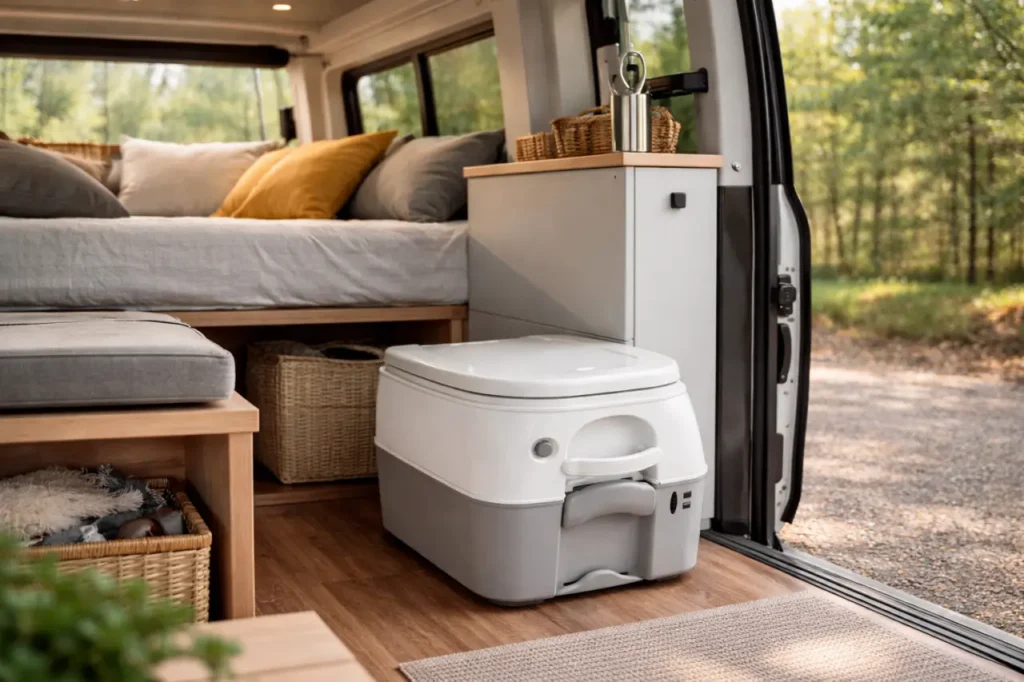
This is where the Dometic 976 feels most at home. For many van builds, a full black tank system is too expensive, too complicated, or simply not worth the permanent space commitment. The Dometic offers a middle path: private bathroom functionality without plumbing a full RV system. 🚐
It can slide under a bench, fit into a cabinet-sized area, or be tucked into a dedicated toilet drawer or storage bay, depending on the build. The self-contained design is especially appealing in DIY vans, weekend rigs, and simple road-trip conversions where flexibility matters more than fixed infrastructure.
For people spending real time in the van, that private toilet can improve comfort in several everyday situations: late-night use, bad weather, dispersed camping, crowded trailhead parking, or early-morning departures before businesses and campground facilities open.
Car Camping and Overlanding
For SUV camping, truck camping, and more comfort-oriented overlanding, the Dometic 976 can feel like a major quality-of-life upgrade. It is especially useful at basecamp-style setups where there is room for a privacy shelter or a little extra gear bulk. 🏕️
This is not the kind of toilet that disappears into a compact trunk with no tradeoffs, but for larger vehicles and more organized camp setups, that bigger footprint often feels worth it. It can make family camping easier, reduce late-night bathroom walks, and add privacy when the campground restroom is far away, dirty, or closed.
Overlanders also tend to appreciate gear that balances simplicity with durability. The Dometic 976 fits that lane well. It is mechanical, straightforward, and sturdy enough for regular movement and rougher vehicle environments.
Small Cabins and Boats
A portable toilet like this also makes sense in places where plumbing is absent, seasonal, or inconvenient. In a hunting cabin, fishing cabin, tiny outbuilding, or small boat, the Dometic 976 offers a more polished sanitation option than a basic emergency bucket setup. 😊
That does not mean it replaces a permanent marine or off-grid bathroom system for every use case. But for part-time use, occasional overnight stays, and spaces that do not justify major installation costs, it fills the gap nicely.
Emergency Home Preparedness
Portable toilets are not just for outdoor travel. During plumbing outages, storm disruptions, or emergency preparedness planning, a self-contained toilet can become very practical very quickly. The Dometic 976’s larger tank and easy-clean design make it a sensible choice for people who want one gear item that can serve both travel and emergency-home needs.
Pros and Cons of the Dometic 976
No portable toilet is perfect. The Dometic 976 gets a lot right, but it also has real tradeoffs that are worth thinking through before buying.
What We Like
- Excellent Capacity: The 5-gallon holding tank offers longer use between emptying sessions than many smaller competitors.
- Comfortable Seat Height: The more residential feel is a real advantage for regular use, especially on longer trips.
- Cleaner Emptying Design: The pivoting spout and air vent button make disposal much easier to control.
- Strong Odor Management: The sealed valve system works well when paired with good tank treatment and proper use habits.
- Solid Build Quality: The ABS construction feels durable and more trustworthy than many budget options.
- No Electricity Needed: The manual flush system keeps things simple and off-grid friendly. 👍
What Could Be Improved
- Bulky for Tight Setups: The comfortable size is great in use, but it takes up more room in storage than smaller portable toilets.
- Heavy When Full: At nearly 12 pounds empty and far heavier when loaded, it is not something most people will want to carry far.
- Requires Chemicals: Like other cassette-style toilets, it works best with tank treatments, which adds an ongoing maintenance cost.
- Premium Price: It costs more than very basic portable toilet options, which may be hard to justify for occasional users only.
How It Compares: Dometic 976 vs. Alternatives
Portable toilets vary a lot in feel even when they look similar online. The Dometic 976 sits in a sweet spot for many travelers, but it helps to understand what sits on either side of it.
Dometic 976 vs. Thetford Porta Potti
The Thetford Porta Potti line is the closest direct competitor. Both brands offer cassette-style flushing toilets with similar goals: comfort, portability, and contained waste management. In broad terms, either can work well. 🚙
Where the Dometic often stands out is in the flush feel and emptying design. Many users prefer its push-button system and find the pivoting spout especially convenient when dumping. Thetford, on the other hand, often gives buyers more size options, which can be helpful for tighter builds or smaller vehicles.
For buyers choosing between these two, the decision usually comes down to preferred dimensions, current price, and which design details feel more intuitive.
Dometic 976 vs. Cheaper Flushing Toilets (e.g., Camco)
Budget flushing toilets can absolutely work, especially for occasional camping. But the gap usually shows up in build quality, seal quality, flush consistency, and the cleanliness of the emptying process. 😊
That is where the Dometic 976 justifies its price for regular use. It feels more refined in the areas that tend to frustrate long-term users most. Better seals, a stronger sense of stability, and easier disposal do not always stand out in product listings, but they matter a lot after repeated use.
For someone who camps a few times a year, a cheaper model may be enough. For someone using the toilet as an ongoing part of van or road-travel life, the Dometic’s extra polish is easier to appreciate.
Dometic 976 vs. Composting Toilets (e.g., Nature’s Head)
Composting toilets appeal to a different kind of user. They separate liquids and solids, avoid black-tank-style waste storage, and can reduce dump-station dependence. But they also cost dramatically more, take up more installation thought, and usually require permanent venting and more active management. 🌄
The Dometic 976 is much simpler. It is self-contained, removable, and easier to drop into an existing setup without major modification. That makes it appealing for people who want private toilet functionality without redesigning the vehicle around it.
In that sense, the Dometic 976 is not trying to beat composting toilets at every metric. It is offering a much lower-friction path to basic comfort and sanitation.
Practical Guide: Setup, Use, and Maintenance
A good portable toilet gets even better when it is used and maintained correctly. The Dometic 976 is straightforward, but a few simple habits make a big difference in cleanliness, odor control, and long-term durability.
1. Initial Setup:
- Unbox the toilet and separate the upper freshwater section from the lower holding tank using the side latch.
- Add the recommended holding tank treatment to the waste tank. A small amount of water helps activate the solution and improve breakdown and odor control.
- Fill the freshwater tank through its dedicated cap.
- Reassemble both sections securely before use. 👍
2. Daily Use:
- Open the sliding gate valve before use.
- After use, press the flush button to rinse the bowl.
- Close the valve fully after flushing to help contain odors.
- Quick-dissolving RV or marine toilet paper is the safest choice for smoother emptying and fewer clogs.
3. Emptying the Tank:
- Do not wait until the tank is completely packed full. Emptying earlier is usually cleaner and easier.
- Carry the detached holding tank to an approved dump station. Public campgrounds, RV parks, and some truck stops or travel centers may offer legal disposal points.
- Remove the cap from the discharge spout, point it carefully into the drain, and use the air vent button while pouring to create a smoother, more controlled flow.
- Rinse the tank afterward with a small amount of water and empty again. 😊
4. Cleaning and Storage:
- Use mild soap and water or cleaners intended for portable toilets and plastic surfaces.
- Avoid harsh cleaners like bleach or abrasive scrubbing products that may damage the seals or plastic.
- Before long-term storage, empty and rinse both tanks thoroughly, let them dry, and lubricate the seals if needed to help keep them in good condition.
One practical note matters here: convenience depends as much on disposal planning as on the toilet itself. A portable toilet works best for travelers who are willing to think ahead about dump stations and legal disposal. That is not a flaw of the Dometic 976 specifically, but it is part of the real ownership experience.
Final Verdict: Is the Dometic 976 the Best Portable Toilet for Van Life?
For many travelers, it is one of the best options in its category. That is especially true for people who want a self-contained flushing toilet that feels dependable, reasonably comfortable, and genuinely practical to live with over time. 🚐
The biggest strengths of the Dometic 976 Portable Toilet are not flashy. They are the kind of strengths that start to matter more after repeated use: a comfortable seat height, a cleaner flush, better odor containment, useful capacity, and a noticeably easier emptying process. Those features make the toilet feel less like emergency gear and more like a real part of a livable mobile setup.
It will not be the right choice for everyone. Ultralight travelers, tiny-car campers, and people who only need a just-in-case bathroom option may prefer something smaller or cheaper. Buyers looking for a fully built-in off-grid system may eventually lean toward a composting toilet instead. But for van life, overlanding, and comfort-focused car camping, the Dometic 976 lands in a very practical middle ground. 😊
That middle ground is what makes it so appealing. It avoids the complexity and cost of permanent systems while delivering a much better experience than stripped-down budget toilets. For many people, that balance is exactly what makes road life easier.
Frequently Asked Questions (FAQ)
How many flushes can you get from the Dometic 976?
The 2.6-gallon freshwater tank provides approximately 27 flushes. The 5.0-gallon holding tank can typically handle around 30 to 50 uses, depending on liquid volume, toilet paper use, and how the toilet is being used day to day.
Does the Dometic 976 smell?
When the sliding valve is fully closed and the holding tank is treated properly, odor control is one of this model’s strongest points. In a well-managed setup, it should not leave lingering smells inside the vehicle. Warm weather, delayed emptying, and poor tank treatment can still affect performance, so good habits matter. 🌿
What kind of toilet paper should I use?
Quick-dissolving RV or marine toilet paper is the safest option. It breaks down faster and reduces the chance of clumping or clogging inside the waste tank. Regular household toilet paper may work in small amounts for some users, but it usually adds more risk than benefit in a compact portable system.
Where can I legally empty the Dometic 976?
It should be emptied only at approved dump stations. These are often found at RV parks, campgrounds, certain public lands facilities, and some travel stops. Planning ahead is part of portable toilet ownership, especially for off-grid trips or travel through remote areas. Apps like iOverlander or The Dyrt can help identify legal disposal points.
Does the Dometic 976 require batteries or electricity?
No. The flush system is fully manual and creates pressure without batteries or a wired power source. That makes it a strong fit for off-grid vans, simple camping setups, and anyone trying to keep electrical systems as uncomplicated as possible. 👍
Affiliate Disclosure: GearForTheOutdoors.com participates in affiliate programs, including REI, Amazon, REI Outlet, Garage Grown Gear, evo, and other trusted partners. When purchases are made through links on this site, a small commission may be earned at no extra cost to the buyer. That support helps keep the content useful, practical, and free.
Disclaimer: This post is for informational purposes only. Always verify current product details, fit, availability, safety information, and manufacturer warranties before purchase or use. Outdoor conditions and gear performance can vary depending on setup, weather, terrain, and experience level.