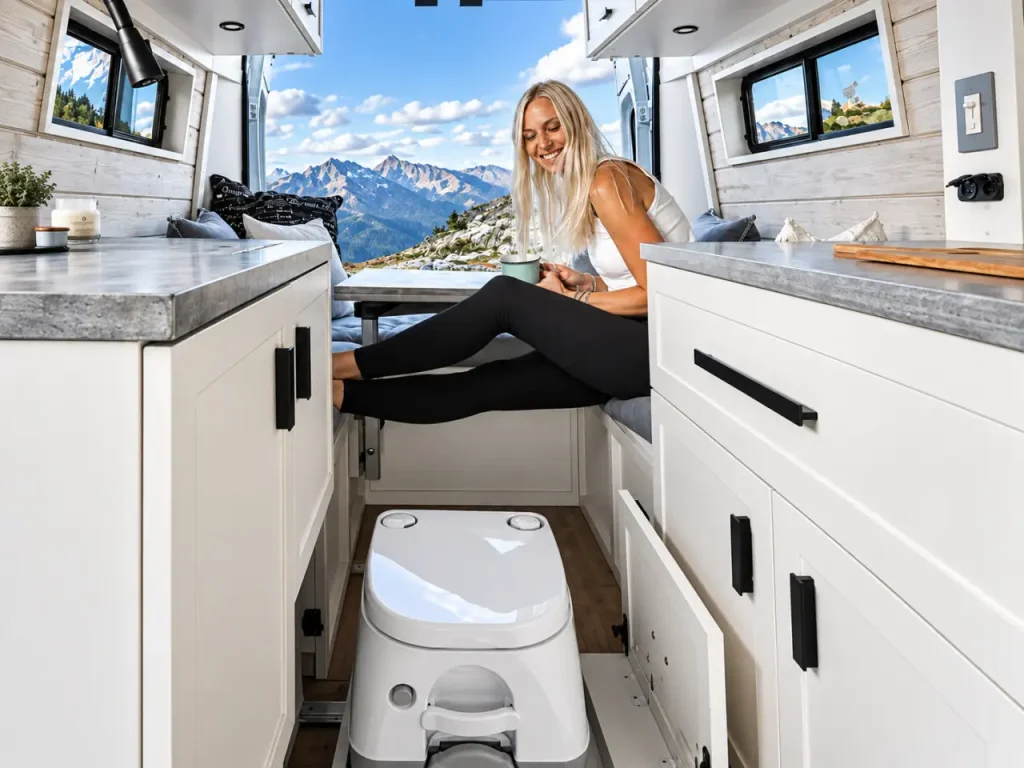
The Dometic 976 is a strong fit for car campers, van travelers, and road-trippers who want a self-contained flushing toilet with enough capacity that disposal stops do not become a constant part of the trip.
Its main advantage is simple: a 5-gallon waste tank in a relatively compact, no-battery design. That extra capacity is especially useful for multiple people, longer stays, and dispersed camps where restroom access is limited. Dometic still sells the 976 in the U.S., and the current model retains its push-button pressurized flush, front-reading tank-level indicator, full-size seat, and pivoting discharge spout.
The tradeoff is equally important. Five gallons of capacity means a larger toilet and considerably more weight as the holding tank fills.
That makes the decision fairly straightforward:
Choose the Dometic 976 when fewer disposal stops matter more than minimizing size and carrying weight.
If vehicle space is tight or you would rather handle a smaller waste tank more frequently, the lower-capacity Dometic 972 may make more sense.
Dometic 976 at a Glance
| Feature | Dometic 976 | Why It Matters |
|---|---|---|
| Waste tank | 5 gal. (18.9 L) | More flexibility between disposal stops |
| Dimensions | Approx. 15.25 x 13.13 x 15.25 in. | Measure your storage and use space before buying |
| Flush system | Pressurized push-button | Water flush without batteries or electrical power |
| Tank indicator | Front-reading indicator | Lets you monitor waste level without opening the tank |
| Discharge system | Long pivoting spout | Gives better control when emptying |
| Seat | Full-size seat | More comfortable than most bucket-style toilets |
| Construction | ABS plastic | Smooth surfaces are easier to wipe and rinse |
The specifications are useful, but the real question is how they affect life at camp. The 976 is not the smallest portable toilet, and it is not the lightest once loaded. What it gives you in return is more usable holding capacity without requiring a permanent toilet installation.
What Is the Dometic 976?
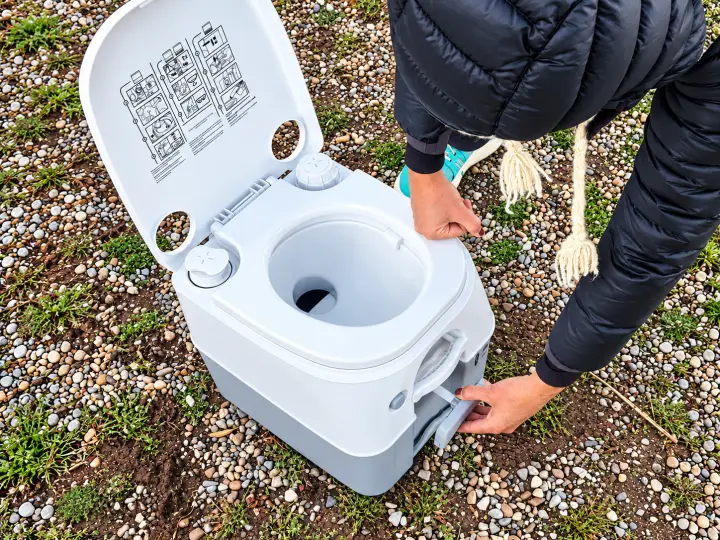
The Dometic 976 is a self-contained portable flushing toilet in Dometic’s 970 Series.
It separates into two main sections:
- an upper section containing the seat, bowl, fresh-water reservoir, and flush system
- a detachable lower section containing the 5-gallon waste tank
A valve isolates the waste tank when the toilet is not being emptied, while the upper tank is pressurized manually and releases water through the bowl at the push of a button.
The system does not require batteries or an electrical connection. Once the fresh-water tank is pressurized, Dometic specifies that the stored pressure is sufficient for several flushes before it needs to be pumped again.
That puts the 976 in a useful middle ground: substantially more contained and comfortable than a bucket toilet, but much simpler than adding permanent RV-style plumbing to a van, SUV, or truck camper.
Why the 5-Gallon Tank Matters
Capacity is the strongest reason to choose the 976 over a smaller portable toilet.
A 5-gallon waste tank can be particularly useful for:
- family car camping
- multi-day road trips
- van camping
- overlanding
- dispersed camping
- campsites with inconvenient restroom access
It gives you more control over when you deal with disposal.
That does not mean a five-gallon tank should always be filled completely before it is emptied. How quickly it fills depends on the number of users, flushing habits, and how the toilet is used, so estimates such as “three days” or “one week” are rarely useful.
A better approach is to treat the extra capacity as flexibility.
If a dump station is nearby, you can empty it early. If facilities are limited, you have more reserve capacity than you would with a smaller toilet.
The downside is weight.
A larger holding tank eventually means more liquid and waste to move. Anyone who would struggle with a heavier container may prefer to empty the 976 before it approaches full capacity.
That is the central tradeoff of this toilet: more disposal flexibility in exchange for more size and potential carrying weight.
Will the Dometic 976 Fit in Your Vehicle?
The 976 measures approximately 15.25 inches high, 13.13 inches wide, and 15.25 inches deep.
Those dimensions are compact considering the 5-gallon holding tank, but floor measurements alone do not tell you whether it will work in your setup.
Before buying, consider where the toilet will:
- ride while driving
- sit when someone needs to use it
- be stored overnight
- be removed when the waste tank needs emptying
In a small camper van or SUV, a toilet that technically fits can still become frustrating if a cooler, drawer, sleeping platform, or storage box must be moved every time it is used.
Also check clearance above the toilet so the lid can open normally.
For vehicle camping, easy access is often more important than squeezing the toilet into the smallest possible unused space.
Comfort and Seat Height
At roughly 15.25 inches tall, the Dometic 976 sits lower than many residential toilets.
Its full-size seat gives it a noticeably more conventional feel than a simple bucket-and-seat setup, but the lower seating position will suit some campers better than others.
That is worth considering if someone using the toilet:
- is particularly tall
- has limited knee or hip mobility
- has difficulty standing from a low seat
For many vehicle campers, the lower profile is an acceptable tradeoff because it makes the toilet easier to integrate into a van or SUV.
If a more residential seat height matters, the Thetford Porta Potti 365 is worth comparing.
How the Dometic 976 Flush Works
The 976’s flush system is one of its more appealing design choices.
Instead of using batteries or an electric pump, the upper fresh-water tank is manually pressurized. Pressing the flush button then releases that stored pressure to send water around the bowl.
Dometic specifies that one pressurization cycle can provide roughly four to five flushes.
The practical advantage is not simply that the toilet flushes. It is that there are no batteries to remember, charge, or replace.
That simplicity is valuable in camping gear, particularly for a product you want to work immediately after sitting unused between trips.
The Tank-Level Indicator Is More Useful Than It Sounds
A front-mounted prismatic indicator lets you monitor the waste level without opening the tank or guessing how much capacity remains.
This becomes more useful when several people are sharing the toilet because usage can vary dramatically from one day to the next.
Instead of relying on a theoretical number of days between disposal stops, you can make the decision based on the actual tank level.
That is especially helpful on road trips or dispersed-camping trips where the next convenient disposal point may require some planning.
Setup and Everyday Use
The Dometic 976 is relatively straightforward to prepare.
The two sections separate so the fresh-water system and waste tank can be prepared independently. Once the toilet is reassembled and the upper reservoir is pressurized, it is ready for use.
As with any portable holding-tank toilet, it is worth reading the operating instructions before the first trip rather than figuring out valves and vents at camp.
Large changes in altitude or temperature can affect pressure inside sealed tanks, so following Dometic’s procedure for pressure management is particularly important on mountain road trips.
The basic design remains simple enough that once the routine is familiar, there is little setup involved from one trip to the next.
Emptying and Cleaning the Dometic 976
Emptying is where the difference between a thoughtfully designed portable toilet and a basic container becomes most obvious.
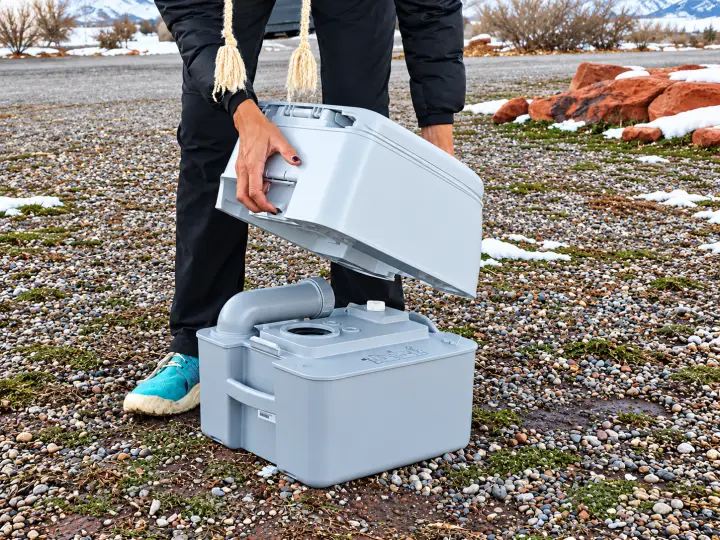
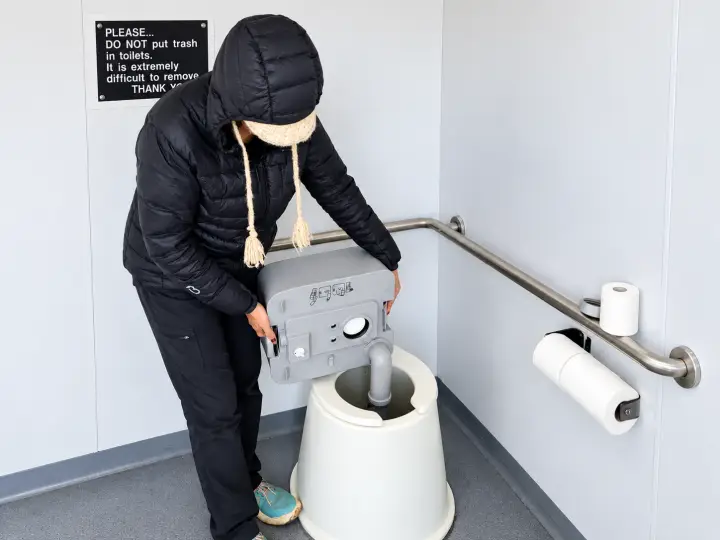
The lower holding tank detaches from the toilet and can be carried separately to an appropriate disposal location.
Dometic equips the 976 with a long pivoting discharge spout, allowing the outlet to be positioned before pouring rather than forcing you to tip the entire tank toward a fixed opening.
The general process is:
- Separate the waste tank from the upper toilet.
- Carry it to an appropriate waste-disposal location or toilet.
- Rotate the discharge spout into position.
- Empty the tank using the vent as instructed.
- Rinse the tank when water is available.
- Prepare it again according to Dometic’s instructions and the directions for any tank treatment being used.
No portable toilet makes waste disposal enjoyable, but the controlled pour spout is a meaningful advantage if the toilet will be used regularly rather than only for emergencies.
Dometic 976 Pros and Cons
Pros
- 5-gallon waste tank provides useful capacity for longer trips and multiple users
- No batteries or electrical connection required
- Push-button water flush
- Waste-level indicator
- Long pivoting discharge spout
- Full-size seat
- Smooth ABS construction is relatively easy to clean
- Compact dimensions considering the holding-tank capacity
Cons
- Larger than lower-capacity portable toilets
- Can become heavy as the waste tank fills
- Lower seating position may not suit everyone
- Takes up meaningful storage space in smaller vehicles
- Costs more than a simple bucket-and-bag toilet
Who Is the Dometic 976 Best For?
The 976 works best when a portable toilet will be a regular part of a vehicle-based camping setup, rather than something carried only for emergencies.
Families and Small Groups
More people generally make holding-tank capacity more valuable.
A 5-gallon tank provides more breathing room between disposal stops, while the enclosed tank and water flush create a more contained setup than an open bucket-style solution.
Van Campers
The 976 can provide a practical toilet setup without permanent plumbing.
For vans, though, measurements matter. A 5-gallon toilet is worthwhile only if it has a logical place to live when it is not being used.
Road-Trippers and Overlanders
A self-contained toilet makes long driving days and remote overnight stops easier when reliable restrooms cannot be assumed.
The manual pressurization system is also appealing for travelers who prefer equipment that does not depend on electrical power.
Dispersed Campers
The larger tank can be particularly useful when staying away from developed campground facilities.
Just plan the disposal side of the trip as carefully as the campsite itself. A portable toilet gives you more freedom at camp, but the waste still needs to be disposed of responsibly at an appropriate location.
Who Should Skip the Dometic 976?
More capacity is not automatically better.
A smaller toilet may make more sense if:
- you usually camp alone
- most trips are short
- storage space is extremely limited
- the waste tank will need to be carried a significant distance
- lifting heavier containers is difficult
- the toilet is mainly for emergencies
- low cost and minimal complexity matter more than a water flush
For those campers, the Dometic 972 or a basic bag-based toilet may solve the same problem with less gear.
Dometic 976 vs. Dometic 972
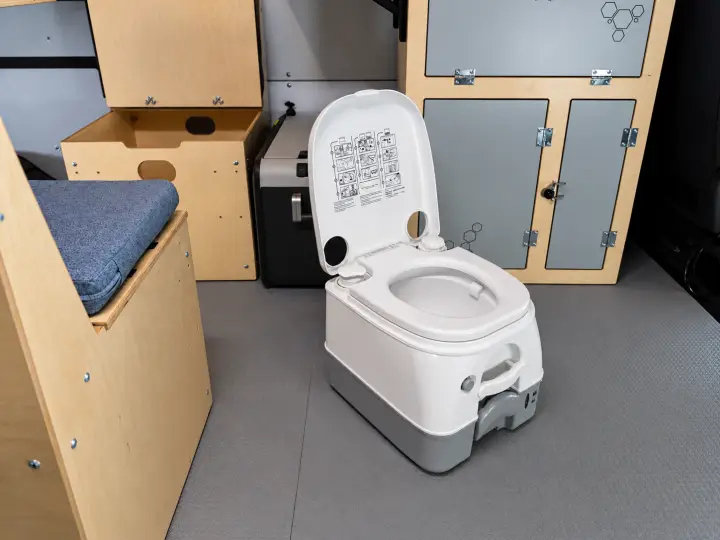
The Dometic 972 is the most logical alternative if you like the 970 Series design but do not need the 976’s larger waste tank.
The key difference is capacity: the 972 uses a 2.6-gallon waste tank, while the 976 provides 5 gallons.
That makes this less of a quality comparison and more of a space-versus-capacity decision.
| Choose the Dometic 976 if… | Choose the Dometic 972 if… |
|---|---|
| Fewer disposal stops are important | Compact storage is more important |
| Several people may use the toilet | One or two people will usually use it |
| You regularly take longer trips | Most trips are short |
| You have a dedicated storage location | Vehicle space is limited |
| A larger tank is manageable | Easier carrying matters more |
If you have room for either model, ask yourself one question:
Would you rather carry a larger tank less often or a smaller tank more often?
For families and longer trips, the 976 usually has the more useful capacity.
For solo travelers and compact vehicles, the 972 can be easier to live with.
Dometic 976 vs. Thetford Porta Potti 365
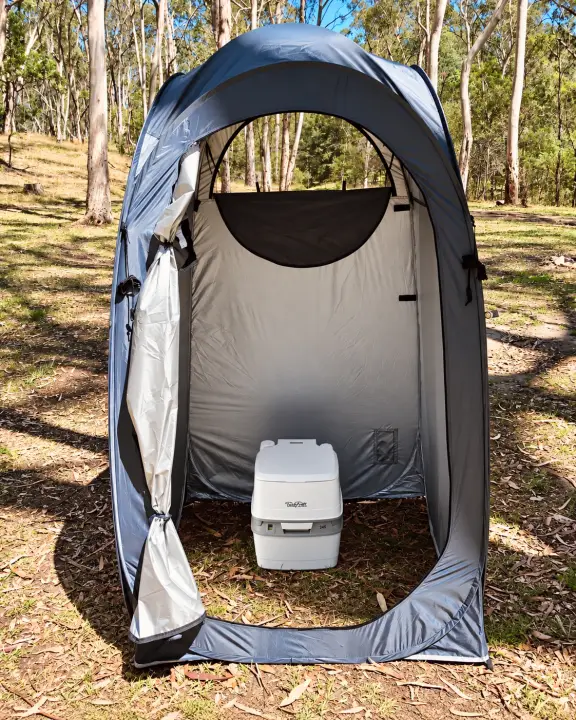
The Thetford Porta Potti 365 is a useful alternative for campers who want a slightly different balance of capacity and seating position.
The current U.S. 365 uses a 5.5-gallon waste tank, 4-gallon fresh-water tank, piston-pump flush, and a seat height of approximately 16.06 inches.
That makes it slightly taller than the Dometic and gives it a larger fresh-water reservoir.
Choose the Dometic 976 if you prefer:
- its pressurized push-button flush
- slightly lower overall height
- Dometic’s long pivoting discharge-spout design
Choose the Thetford Porta Potti 365 if you prefer:
- a slightly taller seating position
- a larger fresh-water reservoir
- a traditional piston-pump flush
Neither design is automatically the better choice. The more useful question is which set of dimensions and controls works better in your vehicle and for the people using it.
Check the Thetford Porta Potti 365
What About a Reliance Luggable Loo?
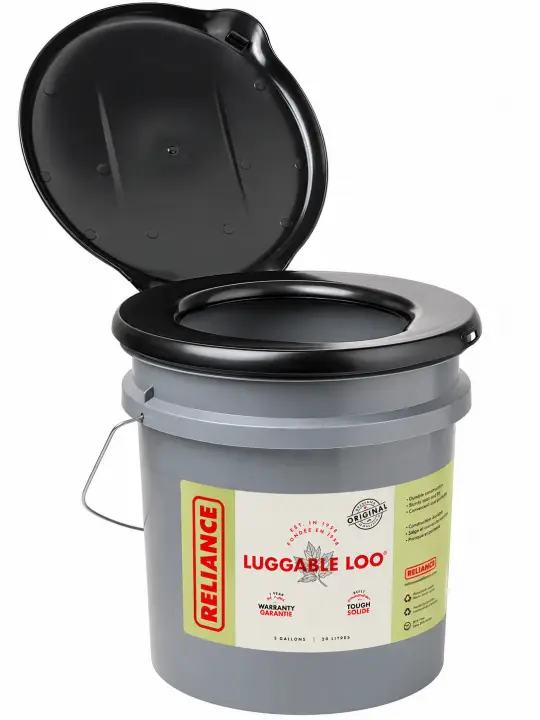
A Reliance Luggable Loo belongs in a different category of portable toilet.
Instead of an integrated fresh-water and waste-tank system, it takes the basic bucket-toilet approach.
That makes it appealing when the priorities are:
- minimum cost
- low weight
- simple storage
- emergency use
- minimal mechanical complexity
What you give up is the more contained experience of a flushing portable toilet.
There is no integrated water flush, no enclosed reusable holding tank in the same sense as the Dometic, and no purpose-built discharge spout for emptying liquid waste.
For occasional use or as a backup, that simplicity can be exactly what you want.
For frequent car camping or van travel, the Dometic 976 provides a more complete toilet system.
Check the Reliance Luggable Loo
Is the Dometic 976 Worth It?
The Dometic 976 remains a strong choice for vehicle-based campers who will actually benefit from its 5-gallon waste tank.
That qualifier matters.
Its best features—the larger capacity, self-contained design, push-button flush, waste indicator, and controlled discharge spout—are most valuable when the toilet sees regular use over multi-day trips.
If you are camping with family, traveling for several days, or spending time away from developed bathrooms, the 976 gives you more flexibility without requiring permanent plumbing.
If storage space is tight or carrying a larger waste tank sounds like more trouble than it is worth, the Dometic 972 is the more sensible compromise.
For the right setup, though, the 976 hits a useful balance: more comfortable and contained than a basic bucket toilet, simpler than a permanently installed RV system, and large enough that disposal does not have to dictate the trip.
Check current pricing for the Dometic 976
Affiliate Disclosure: GearForTheOutdoors.com participates in affiliate programs, including REI, Amazon, REI Outlet, Garage Grown Gear, evo, and other trusted partners. When you purchase through our links, we may earn a small commission at no extra cost to you. That helps support our content and keeps our recommendations useful, practical, and free.
Disclaimer: This post is for informational purposes only. Always verify current product details, fit, compatibility, availability, safety information, and manufacturer instructions before purchase or use. Outdoor conditions and gear performance can vary depending on setup, weather, terrain, vehicle, and experience level.