The best cooler for car camping is not simply the one that holds ice the longest. It needs to fit your vehicle, carry enough food for the trip, remain manageable when loaded, and match how far you actually camp from stores, ice, or electrical power.
For most campers, the RTIC 52 QT Ultra-Light Cooler offers the best balance. It gives you a useful 52-quart capacity without the extreme empty weight that comes with many heavily built premium coolers. The YETI Tundra 45 is a better fit if long-term durability and a more compact footprint matter more than capacity per dollar. If wheels are the priority, the YETI Roadie 48 is easier to justify for most car campers than an oversized rolling cooler because it combines solid capacity with a much more manageable 28.3-pound empty weight.
For occasional family camping, the Coleman Classic Series 70-Quart delivers far more storage for the money. And if managing ice has become the part of camping you would rather eliminate entirely, the Dometic CFX3 45 turns cold storage into a powered refrigeration system instead.
Best Coolers for Car Camping at a Glance
| Cooler | Best For | Capacity | Empty Weight | Main Tradeoff |
|---|---|---|---|---|
| RTIC 52 QT Ultra-Light | Best overall | 52 qt | 21 lb | Still takes up substantial cargo space |
| YETI Tundra 45 | Premium hard cooler | 32.9 L usable capacity | 24.6 lb | High price for its interior volume |
| YETI Roadie 48 | Best wheeled cooler | 45 L | 28.3 lb | Tall shape may not fit every cargo setup |
| Coleman Classic Series 70-Quart | Best budget / family cooler | 70 qt | About 14 lb | Less heavily insulated than premium coolers |
| YETI Hopper Flip 18 | Best soft cooler | 30 cans without ice | 4.5 lb | Too small to be the main cooler for most trips |
| Dometic CFX3 45 | Best powered cooler | 46 L storage volume | 41.2 lb | Needs a reliable power source |
The most important question is not which cooler is technically the most capable. It is which compromise makes the most sense for your camping setup.
How to Choose the Right Cooler for Car Camping
Start With Trip Length
A weekend at a developed campground and five days of dispersed camping create very different demands.
For one- or two-night trips, a basic hard cooler may be all you need. Grocery stores, campground ice, and fuel stations are often close enough that maximum insulation is less important.
As trips become longer, better insulation starts to matter more because every ice run takes time away from camp.
But ice-retention claims should be treated as guidelines rather than guarantees. Outside temperature, sun exposure, how frequently the lid is opened, how much ice you use, and whether the food was cold before packing can all make a substantial difference.
That means a premium cooler cannot compensate for poor packing—and an inexpensive cooler can work surprisingly well when used carefully.
Match Capacity to How You Actually Eat at Camp
For many car campers, these ranges provide a useful starting point:
- 35–45 quarts: couples, shorter trips, compact vehicles
- 45–60 quarts: couples on longer trips or small families
- 60+ quarts: families, groups, longer stays, or food-heavy camp kitchens
The number of campers is only part of the equation.
A couple cooking breakfast, lunch, and dinner at camp can use more cooler space than a family eating some meals in town. Drinks also consume a surprising amount of room.
One of the easiest ways to increase usable food space is to keep drinks in a separate smaller cooler. That also reduces how often the main food cooler gets opened.
Measure Your Cargo Space Before Buying
Quart capacity tells you surprisingly little about how easily a cooler fits inside a vehicle.
Thicker insulation increases exterior dimensions without necessarily increasing usable interior space. Wheels, handles, hinges, and tall lids can create additional packing problems.
Measure the exact area where your cooler will ride.
Pay particular attention to:
- cargo-floor width
- available height beneath shelves or cargo covers
- whether the rear hatch can close
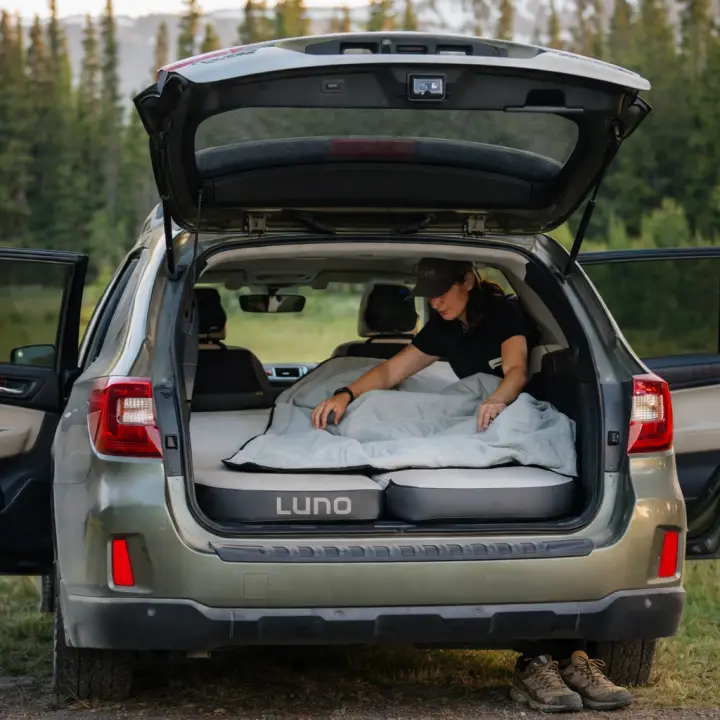
- clearance around sleeping platforms
- space needed for bins, stoves, water and other camping gear
A cooler that performs exceptionally well but forces you to reorganize the vehicle every trip can quickly become frustrating.
Think About Loaded Weight, Not Just Empty Weight
This is one of the easiest factors to underestimate.
A 50- or 60-quart cooler filled with food, beverages and ice can become heavy enough that moving it alone is awkward.
That is why the difference between a 21-pound cooler and a 40-pound cooler matters more than it initially appears.
If the cooler stays beside your vehicle, a conventional hard cooler may be simpler.
If you regularly move it across a campground, parking area or picnic area, wheels can be more valuable than a small improvement in insulation.
Hard Cooler vs. Soft Cooler vs. Powered Fridge
A hard cooler remains the best all-around solution for most car camping. It requires no power, provides good insulation, and is durable enough to live in the back of a vehicle.
A soft cooler works better when portability matters more than capacity. It is useful for drinks, lunches, beach trips, paddling or carrying food away from basecamp.
A powered cooler or portable refrigerator removes ice from the equation entirely. That gives you more usable interior volume and stable temperature control, but it introduces a new requirement: dependable electricity.
The right choice depends less on technology and more on what problem you are trying to solve.
Best Overall: RTIC 52 QT Ultra-Light Cooler
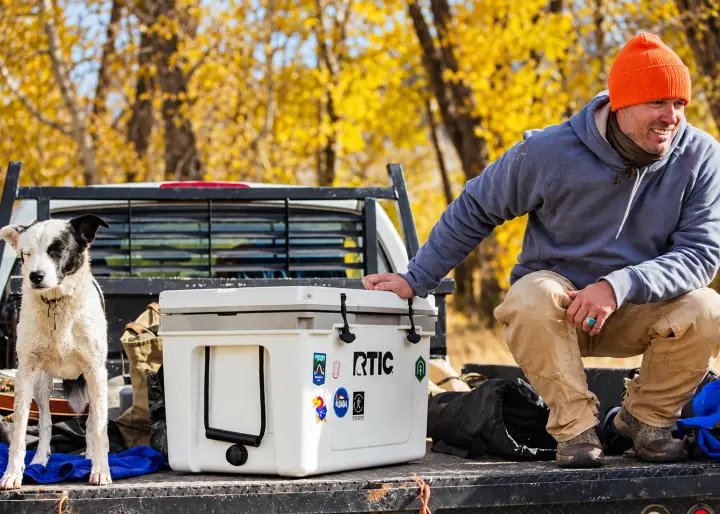
The RTIC 52 QT Ultra-Light gets the fundamentals right for car camping: enough capacity for meaningful multi-day food storage, substantial insulation, and an empty weight that is easier to manage than many premium hard coolers.
It holds 52 quarts and weighs 21 pounds, with exterior dimensions of approximately 27.17 x 17.49 x 17.33 inches. RTIC uses up to 3 inches of closed-cell foam insulation along with a freezer-style gasket.
That combination makes it particularly useful for campers who want more insulation than a basic traditional cooler but do not want to start with an extremely heavy box.
Why It Works So Well for Car Camping
The 52-quart size sits in a useful middle ground.
There is enough room for a couple taking a longer camping trip or a small family heading out for a weekend, yet it remains considerably easier to lift than many coolers in the same general size category.
Its relatively low empty weight also matters at the end of the trip, when nobody wants to wrestle a heavy cooler back into the garage.
What to Consider Before Buying
“Ultra-Light” does not mean small.
At more than 27 inches across its longest exterior dimension, the RTIC still consumes a meaningful amount of cargo space.
If your biggest problem is getting a loaded cooler across a campground rather than lifting it into the vehicle, the wheeled options later in this guide may make more sense.
Best for: couples, small families and campers who want a strong balance of capacity, insulation and manageable weight.
Check the RTIC 52 QT Ultra-Light on Amazon
Best Premium Hard Cooler: YETI Tundra 45
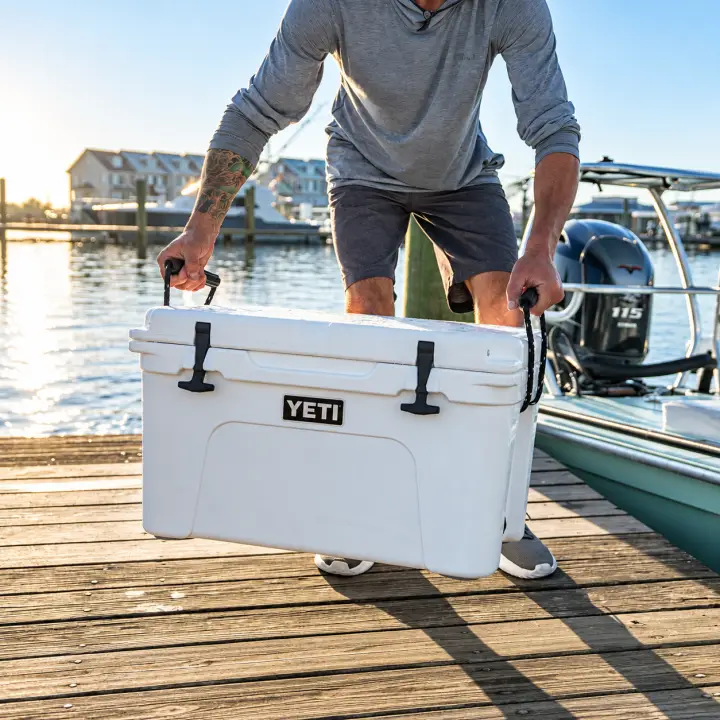
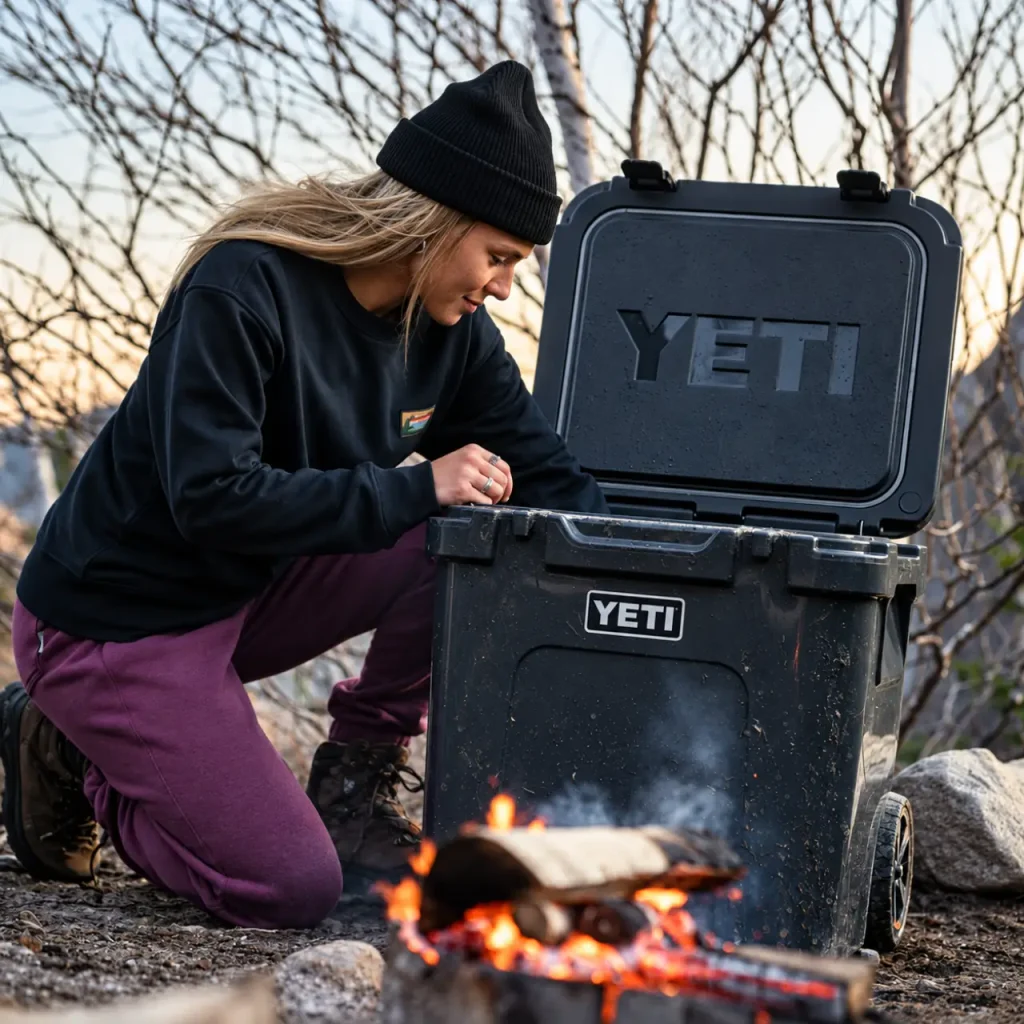
The YETI Tundra 45 makes the strongest case for campers who care more about durable construction and compact packing dimensions than maximizing interior volume per dollar.
Its usable capacity is about 32.9 liters, while the cooler measures roughly 25.6 x 15.9 x 15.5 inches outside and weighs about 24.6 pounds. REI currently lists the Tundra 45 as a current camping cooler, with rotomolded construction, thick insulation, tie-down points and IGBC bear-resistant certification when properly secured with two padlocks.
The relatively narrow profile is useful in vehicles where several gear bins need to sit beside the cooler.
Why Choose It Over the RTIC?
The YETI is not the value choice.
You are paying more for its construction, hardware, compact exterior proportions and established accessory ecosystem rather than simply getting more cold-storage space.
That can still be worthwhile for campers who repeatedly haul the same cooler in trucks, trailers, boats or rough camping environments.
Where It Makes Less Sense
For someone who camps a few weekends each year at developed campgrounds, there may be little practical reason to spend this much.
The RTIC offers more nominal capacity at a lower empty weight, while the Coleman later in this guide offers dramatically more space for much less money.
Best for: frequent campers who prioritize construction quality, tie-down capability and a relatively compact footprint.
Best Wheeled Cooler: YETI Roadie 48
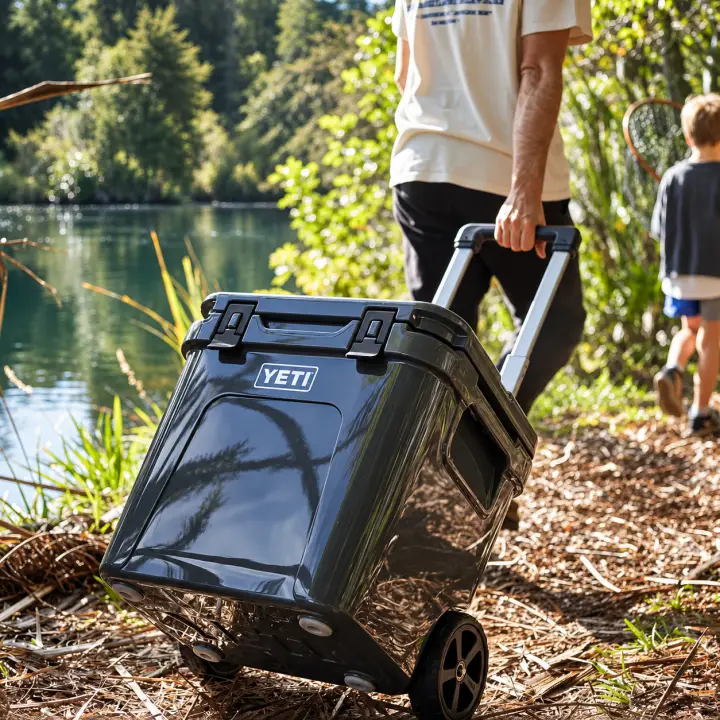
For most car campers who genuinely need wheels, the YETI Roadie 48 strikes a better balance than many large rolling coolers.
It provides about 45 liters of usable storage, weighs 28 pounds 4.8 ounces, and measures approximately 20.6 x 20.1 x 19.8 inches. A telescoping handle and integrated wheels make it substantially easier to move once loaded.
That weight is the key reason it earns this spot.
The RovR RollR 60 remains an impressive option for rougher terrain, with 9-inch all-terrain wheels and 60-quart capacity, but it weighs 41 pounds before food and ice are added. For typical drive-in camping, that extra weight and footprint are difficult to justify unless its larger wheels are something you genuinely need.
Why the Roadie 48 Works Better for Most Campers
A wheeled cooler still needs to be lifted into a vehicle.
That is where some rolling coolers defeat their own purpose: they become easy to pull once on the ground but cumbersome to load and unload.
At roughly 28 pounds empty, the Roadie 48 keeps that penalty more manageable.
Its taller, more upright shape can also reduce how much horizontal cargo-floor space it occupies.
The Tradeoff
That vertical shape is not ideal for every vehicle.
If your cooler needs to slide underneath a sleeping platform, tonneau cover, shelf or cargo system, measure the available height carefully.
And if you only move the cooler a few feet from the back of the vehicle, wheels may not justify the extra cost at all.
Best for: campers who regularly move a loaded cooler around camp but still need something reasonable to lift into a vehicle.
Check the YETI Roadie 48 at REI
Best Budget Cooler: Coleman Classic Series 70-Quart Hard Cooler
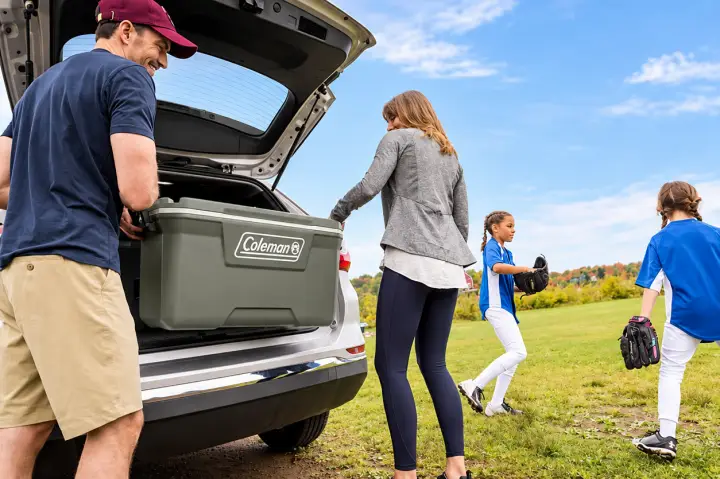
The Coleman Classic Series 70-Quart is a useful reminder that most car campers do not need premium construction to keep food cold for a weekend.
It gives you a large 70-quart capacity while weighing only about 14 pounds in the Rock version currently listed by Coleman. Exterior dimensions are approximately 31 x 15.75 x 17.5 inches, and the lid is designed to support up to 250 pounds.
For families, that combination of capacity and low empty weight can be more valuable than thick rotomolded walls.
Where the Coleman Makes the Most Sense
Imagine a family driving directly to a developed campground for Friday and Saturday night.
Ice is available nearby. The cooler travels from the garage to the vehicle and then only a short distance at camp.
In that situation, paying several times more for a premium cooler may solve problems the family does not actually have.
What You Give Up
The Coleman is built differently from premium hard coolers and is not the option to choose primarily for maximum insulation or heavy-duty construction.
Coleman’s own current product material also contains different ice-retention language in different sections, which is a good reminder not to treat a laboratory-style number as guaranteed camping performance. How the cooler is packed and used matters considerably.
Best for: families, occasional campers, developed campgrounds and anyone prioritizing capacity and price over maximum insulation.
Check the Coleman Classic Series 70-Quart on Amazon
Best Soft Cooler: YETI Hopper Flip 18
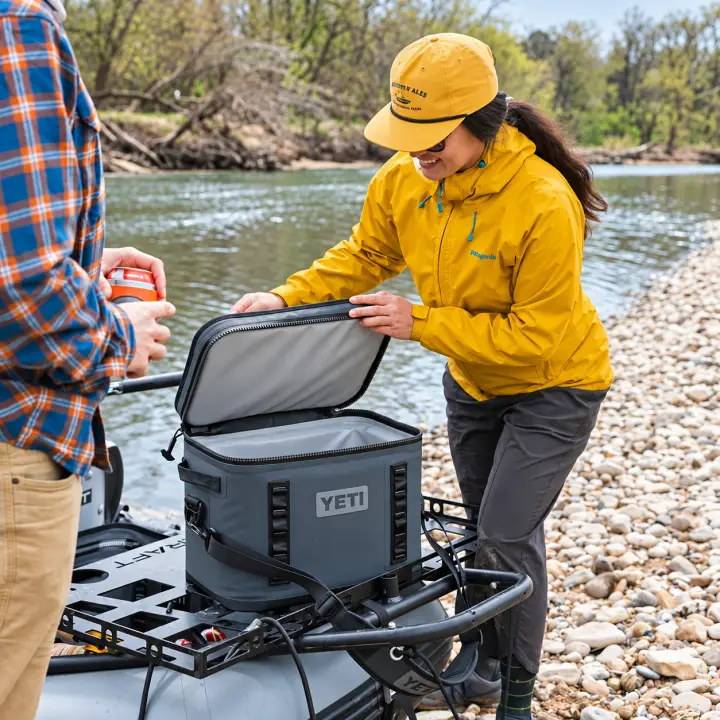
The YETI Hopper Flip 18 is not competing with the larger hard coolers above.
Its strength is that it solves a different problem.
The Hopper Flip 18 weighs about 4.5 pounds, measures approximately 17.7 x 11.5 x 12.8 inches, and can carry up to 30 standard cans when packed without ice.
That makes it useful when you want to take lunch to a trailhead, bring drinks to a lake, carry food to a picnic table, or leave the primary cooler closed at camp.
A Smart Two-Cooler Setup
One of the most practical ways to use the Hopper Flip 18 is as a dedicated drink cooler.
Drinks tend to be accessed far more often than food. Separating them means fewer lid openings on your main hard cooler, which can help the primary cooler stay cold more efficiently.
The smaller cooler can then come along on day trips while the larger food cooler stays at camp.
The Tradeoff
You pay a premium for relatively little capacity.
That makes the Hopper Flip easier to justify for someone who will use it beyond camping—road trips, beach days, paddling, sporting events or everyday outings.
Best for: drinks, lunches, day trips and use as a secondary cooler.
See the YETI Hopper Flip 18 at REI
Best Powered Cooler: Dometic CFX3 45

The Dometic CFX3 45 is what to consider when the problem you want to solve is no longer cooler performance.
It is ice itself.
The CFX3 45 is a compressor-powered refrigerator/freezer with approximately 46 liters of storage volume, a temperature range down to -8°F, support for 12/24V DC and household AC power, and an empty weight of about 41.2 pounds. Its exterior dimensions, including the handles, are approximately 27.3 x 15.7 x 18.7 inches.
Because there is no ice taking up interior space, nearly all of that volume can be devoted to food and drinks.
There is also no meltwater to manage and no need to repeatedly search for bags of ice during a longer road trip.
Why It Can Transform a Longer Camping Trip
With a traditional cooler, cold storage is partly a logistics problem.
You need enough ice, room for the ice, drainage, and occasional resupply.
A powered fridge replaces those issues with temperature control—but only as long as electricity is available.
That can be a far better system for:
- longer road trips
- overlanding
- van travel
- frequent multi-day camping
- campers already carrying a portable power station
The Bigger Decision Is Your Power System
This is where a powered cooler differs fundamentally from everything else in this guide.
You should not buy one without thinking through how it will stay powered after the vehicle is parked.
Depending on the setup, that may mean a portable power station, auxiliary battery, electrical hookup or another properly designed source.
So the CFX3 45 removes ice management but adds energy management.
For frequent travelers, that trade can be absolutely worthwhile. For a couple of campground weekends each year, a hard cooler is usually simpler.
Best for: frequent campers, van travelers, overlanders and road trippers with a dependable power setup.
See the Dometic CFX3 45 at REI
What About the RTIC 52 QT Ultra-Light Wheeled Cooler?
There is another option worth knowing about if you like the RTIC approach but want wheels.
The RTIC 52 QT Ultra-Light Wheeled Cooler weighs about 30 pounds and adds puncture-resistant wheels and a folding aluminum handle while keeping a 52-quart capacity. It measures approximately 28.93 x 18.18 x 18.62 inches.
It is a compelling alternative to the YETI Roadie 48, especially if you value capacity and price more than having the most compact footprint.
So why isn’t it the primary wheeled recommendation?
Because for many car campers, the Roadie 48’s more compact dimensions and straightforward REI availability make it easier to integrate into an existing camping setup. But the difference is close enough that the RTIC deserves serious consideration.
Consider the RTIC 52 QT Ultra-Light Wheeled if you want more capacity for the money and have enough cargo space for its wider body.
Which Cooler Size Is Best for Car Camping?
There is no universal answer, but these are useful starting points.
35–45 Quarts
Best for:
- one or two campers
- weekend trips
- compact SUVs and hatchbacks
- minimal camp cooking
This size is easier to carry and pack but can become restrictive once drinks, fresh ingredients and ice all compete for space.
45–60 Quarts
Best for:
- couples on longer trips
- small families
- campers cooking most meals
- general-purpose car camping
This is the sweet spot for many setups because it provides useful food capacity without automatically becoming enormous.
60–75 Quarts
Best for:
- families
- groups
- extended campground stays
- large quantities of drinks or fresh food
The downside is loaded weight.
At this size, handles and wheels start becoming much more important.
How Much Ice Should You Use?
There is no single ratio that works for every trip.
The amount you need changes with:
- outside temperature
- cooler insulation
- food temperature when packed
- trip duration
- frequency of opening
- sun exposure
- whether drinks are stored separately
Rather than chasing a fixed formula, concentrate on minimizing warm air and starting cold.
Pre-chill food and drinks at home. If practical, cool the empty cooler before loading it. Fill unused space with additional cold items or ice rather than leaving a large pocket of warm air.
The goal is to avoid asking your ice to cool everything down from room temperature after you arrive at camp.
How to Keep a Camping Cooler Cold Longer
Good packing technique can matter nearly as much as the cooler itself.
Pre-Chill Everything
Cold food and cold beverages require far less energy from the ice than room-temperature items.
If possible, refrigerate drinks and food overnight before packing.
Keep the Cooler Out of Direct Sun
Shade can make a meaningful difference, particularly in summer.
A cooler sitting on hot asphalt or exposed inside a sunny vehicle will work harder than one kept in shade.
Open It With a Plan
Know what you need before opening the lid.
This sounds minor, but repeated rummaging introduces warm air and slows you down every time you cook.
Organizing meals together can help.
Use a Separate Drink Cooler
This is especially useful for families and groups.
The beverage cooler will probably be opened constantly. Keeping those drinks away from your food lets the main cooler stay closed much longer.
Do Not Rely on Visible Ice for Food Safety
Ice remaining in the cooler does not automatically mean every part of the interior is at a safe temperature.
For food that needs reliable refrigeration, a simple refrigerator thermometer can provide far more useful information than guessing based on how much ice remains.
Best Cooler by Camping Style
If you still aren’t sure which direction makes sense, start with the problem you most want the cooler to solve.
| Your Camping Style | Best Fit |
|---|---|
| General weekend and multi-day car camping | RTIC 52 QT Ultra-Light |
| Frequent use where durable construction matters most | YETI Tundra 45 |
| You regularly move the cooler away from the vehicle | YETI Roadie 48 |
| Family weekends on a tighter budget | Coleman Classic Series 70-Quart |
| Drinks and short outings away from camp | YETI Hopper Flip 18 |
| Long trips with reliable electrical power | Dometic CFX3 45 |
Final Verdict
For the widest range of car camping trips, the RTIC 52 QT Ultra-Light remains the strongest starting point. Its combination of 52-quart capacity and 21-pound empty weight addresses one of the biggest weaknesses of heavily insulated coolers: they can become difficult to manage before you even add food and ice.
The YETI Tundra 45 makes more sense when durable construction and a compact footprint matter more than value, while the YETI Roadie 48 is the better direction when moving a loaded cooler is your biggest frustration.
For occasional family camping, there is no need to overcomplicate the purchase—the Coleman Classic Series 70-Quart offers a lot of usable capacity for far less money.
And once trips become frequent and long enough that buying, packing and draining ice feels like an ongoing chore, the Dometic CFX3 45 is worth considering not as a more expensive ice chest, but as an entirely different cold-storage system.
Choose around your vehicle, trip length and how you actually camp. Those factors will matter far more than chasing the most impressive ice-retention claim.
Affiliate Disclosure: GearForTheOutdoors.com participates in affiliate programs, including REI, Amazon, REI Outlet, Garage Grown Gear, evo, and other trusted partners. When you purchase through our links, we may earn a small commission at no extra cost to you. That helps support our content and keeps our recommendations useful, practical, and free.
Disclaimer: This post is for informational purposes only. Always verify current product details, fit, compatibility, availability, safety information, and manufacturer instructions before purchase or use. Outdoor conditions and gear performance can vary depending on setup, weather, terrain, vehicle, and experience level.