Wondering what size cooler for camping is right for your trip? For most weekend car camping trips, a 45- to 60-quart cooler is a practical starting point. It offers a good balance of food storage, ice capacity, and portability without taking up too much room in your vehicle.
The right size, however, depends on your camping plans. A couple heading out for two nights won’t need the same capacity as a family of four packing fresh meals for a long weekend.
You’ll also need to account for the space ice takes up, how many drinks you’re bringing, and whether the cooler will fit comfortably alongside the rest of your camping gear.
The easiest way to choose? Start with the number of campers and trip length, then adjust for your food, drinks, ice, and vehicle space. The camping cooler size chart below will help you narrow down the right capacity before comparing individual models.
Camping Cooler Size Chart: How Many Quarts Do You Need?
Use this chart to narrow down your options before comparing individual coolers.
| Number of campers | Trip length | Recommended cooler size | Best for |
|---|---|---|---|
| 1 person | 1–2 nights | 20–35 quarts | Solo camping and simple meals |
| 2 people | 1–2 nights | 25–40 quarts | Couples on weekend trips |
| 2 people | 3–4 nights | 40–55 quarts | Longer weekends with fresh food |
| 3–4 people | 1–2 nights | 50–65 quarts | Family weekend camping |
| 3–4 people | 3–4 nights | 60–80 quarts | Family trips with multiple meals |
| 4+ people | 5–7 nights | 75–100+ quarts or two coolers | Extended camping and group trips |
These are practical starting ranges, not exact capacity requirements. They assume a typical mix of refrigerated food, drinks, and ice. Your meal plan, weather, and access to fresh ice can change what you need.
For a quick decision:
- 20–35 quarts: Best for solo campers, overnight trips, and beverages.
- 35–50 quarts: A practical choice for couples camping over a weekend.
- 50–70 quarts: A versatile range for small families and longer trips.
- 70+ quarts: Better for larger groups, extended stays, and substantial food storage.
If you’re undecided between two sizes, think about your longest typical camping trip rather than the shortest. A little extra room is useful, but an oversized cooler can become difficult to pack, carry, and store.
How to Choose the Right Cooler Size for Your Trip
20–35 Quarts: Solo Camping and Short Trips
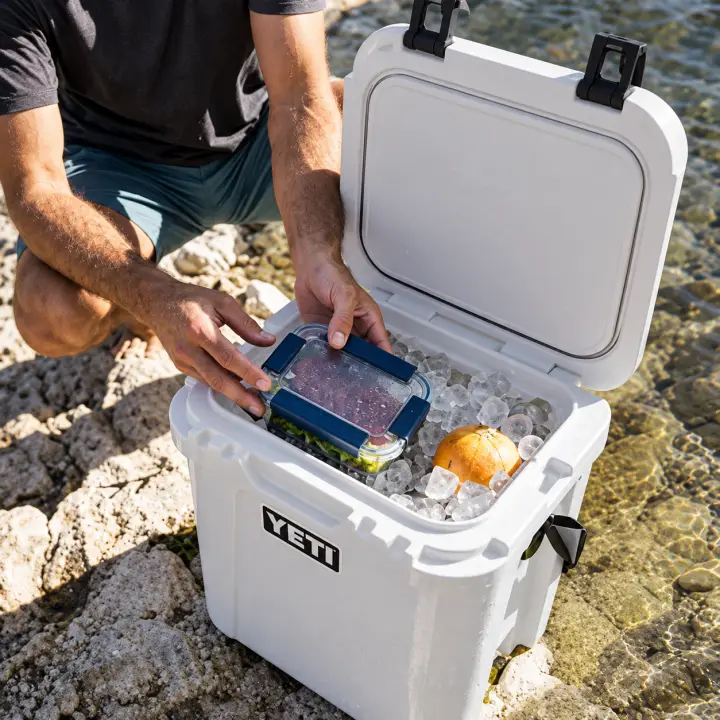
A 20- to 35-quart cooler makes sense when you’re packing for yourself or sharing a few meals with another camper.
It’s small enough to fit comfortably in most vehicles and generally easier to carry than a larger hard-sided cooler.
For a solo weekend, this range can accommodate simple refrigerated meals, breakfast ingredients, and some drinks, provided you pack efficiently.
It’s also a useful size for a dedicated beverage cooler.
Choose this size if: You’re camping alone, traveling light, or only need a cooler for overnight food and drinks.
Size up if: You’re packing several days of fresh ingredients, large food containers, or drinks for multiple people.
35–50 Quarts: Weekend Camping for Two
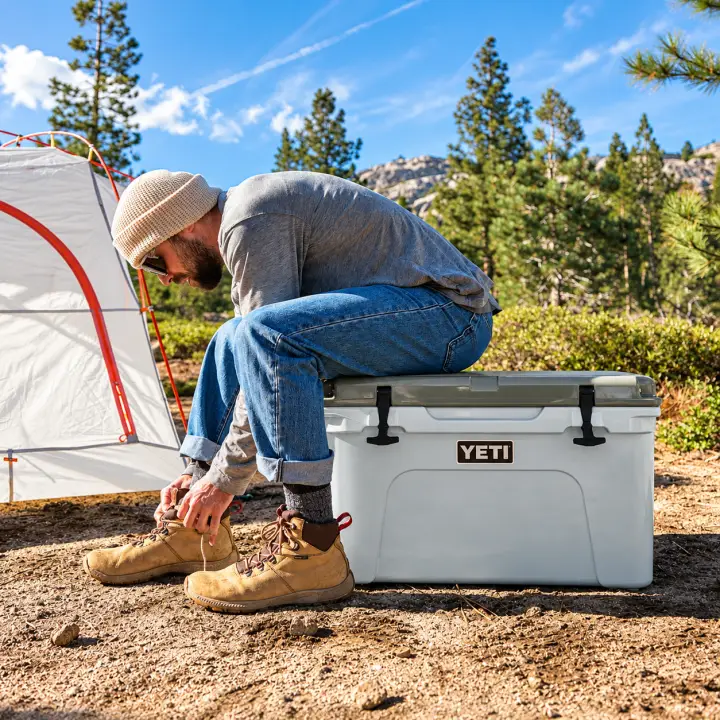
For two people spending Friday through Sunday at a campground, this is often the most practical range.
A cooler around 40–50 quarts offers enough flexibility for breakfast supplies, sandwich ingredients, fresh food for dinner, and a selection of cold drinks.
It also works well for campers who have limited trunk space or don’t want to lift an oversized cooler.
The main limitation is how quickly ice and beverage containers consume the available storage.
If you’re preparing elaborate meals or staying three to four nights, choosing a cooler toward the upper end of this range makes sense.
Choose this size if: You usually camp as a couple for two or three days.
Size up if: You regularly take longer trips or prefer to pack all your groceries without restocking.
50–70 Quarts: Family Weekends and Longer Camping Trips
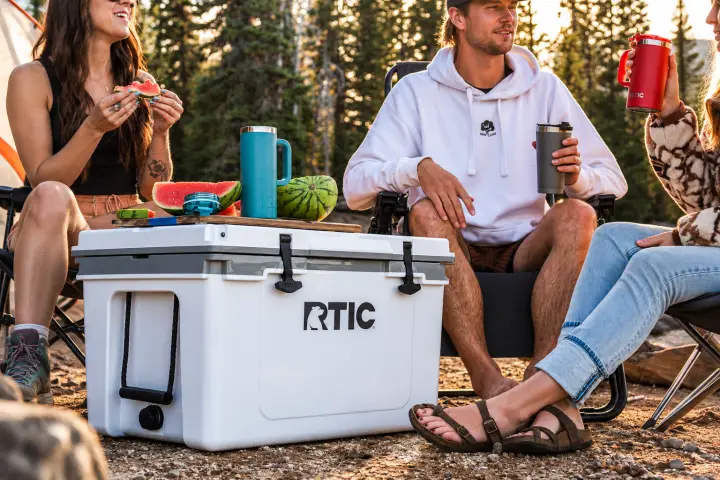
For a family of three or four, a cooler around 50–70 quarts provides more flexibility for packing several meals.
It’s also an excellent range for couples who enjoy cooking at camp and want enough space for fresh meat, vegetables, dairy products, and beverages.
For many car campers, the 50–60-quart range offers the best balance between capacity and everyday practicality.
However, the added space also means more weight.
A large cooler filled with ice, food, and drinks can be difficult to lift into an SUV or carry across a campground.
Before choosing a model, consider how far you’ll need to move it once you arrive.
Choose this size if: You’re camping with a small family or taking longer trips as a couple.
Size up if: You’re feeding four people for several days without access to additional ice or groceries.
70+ Quarts: Group Camping and Extended Trips
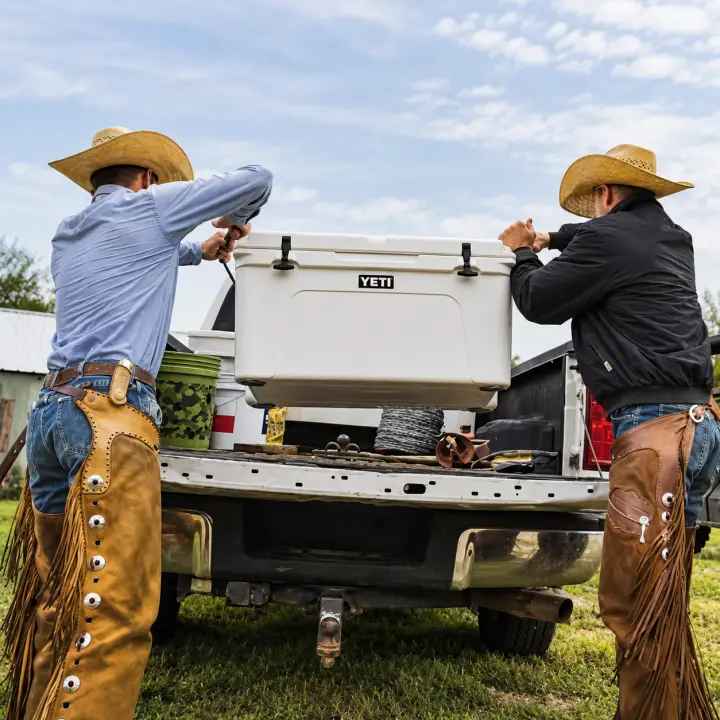
Large coolers are useful when you’re feeding several people, staying at a remote campsite, or bringing enough perishable food for multiple days.
The extra capacity makes it easier to organize larger meals and maintain a generous supply of ice.
But a 75-quart cooler is a substantial piece of equipment.
It can occupy a large portion of your cargo area and become extremely heavy when fully loaded.
For some campers, two smaller coolers are more convenient than one large chest.
Choose this size if: You’re camping with a group, taking extended trips, or carrying substantial amounts of refrigerated food.
Consider two coolers instead if: You want easier lifting, more flexible vehicle storage, or separate compartments for food and drinks.
How Much Ice Do You Need in a Camping Cooler?
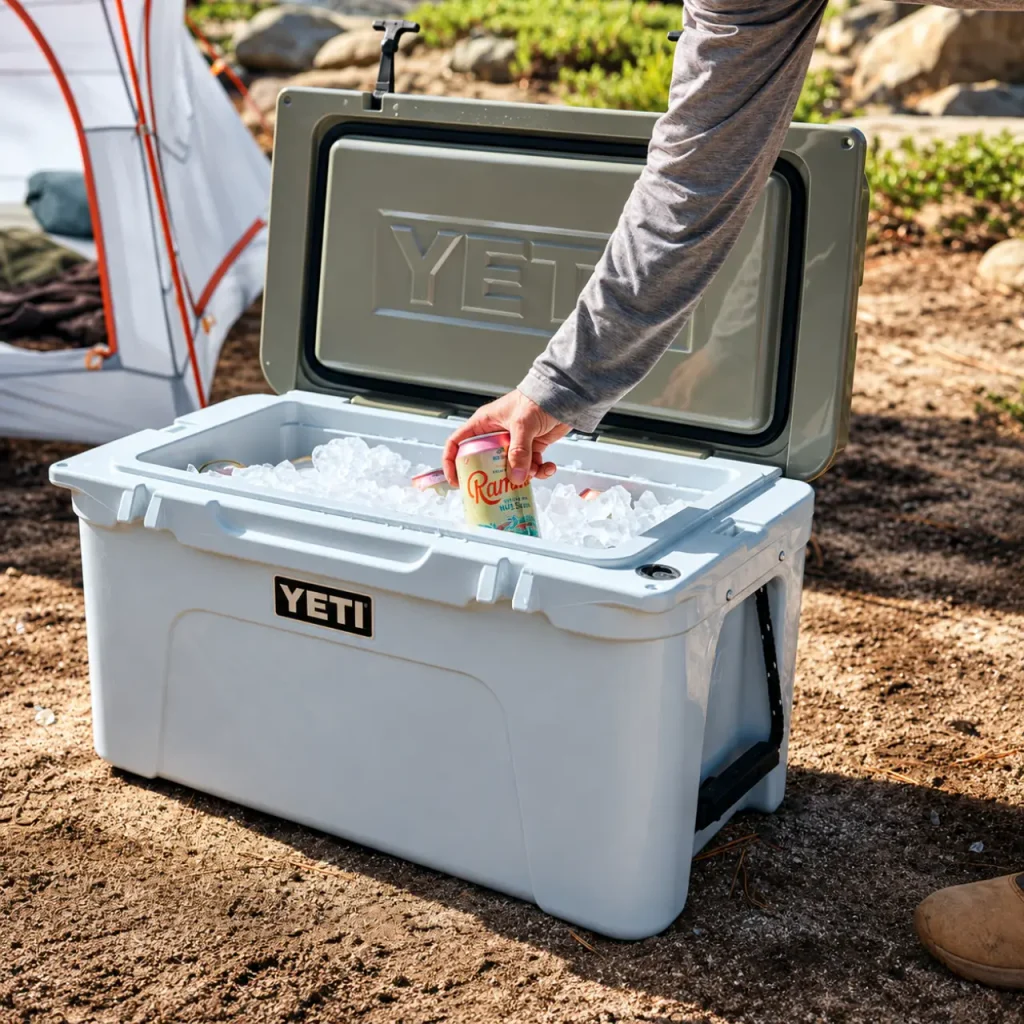
One of the biggest cooler-sizing mistakes is forgetting that ice takes up space.
A 60-quart cooler doesn’t necessarily give you 60 quarts of room for groceries. Once you add enough ice to keep everything cold, the available space becomes considerably smaller.
For longer ice retention, a commonly used guideline is a 2:1 ice-to-contents ratio by volume.
That means roughly two-thirds of the usable cooler space is filled with ice, leaving one-third for food and beverages.
How the 2:1 Ice Ratio Affects Usable Space
| Cooler capacity | Ice volume at 2:1 ratio | Space remaining for food and drinks |
|---|---|---|
| 30 quarts | 20 quarts | 10 quarts |
| 45 quarts | 30 quarts | 15 quarts |
| 60 quarts | 40 quarts | 20 quarts |
| 75 quarts | 50 quarts | 25 quarts |
| 90 quarts | 60 quarts | 30 quarts |
This table is a simplified illustration using actual internal volume. It isn’t a guarantee of usable storage in a particular cooler. Model names, compartment shapes, packaging, and gaps between items can all affect capacity.
The 2:1 ratio isn’t mandatory for every camping trip.
For a short overnight stay with pre-chilled food, you may be comfortable using less ice. For several days in hot weather without a chance to restock, more ice becomes especially valuable.
The practical lesson: Don’t choose a cooler based only on how much food fits inside when it’s empty. Plan for the ice you’ll need, too.
Block ice can be useful for longer trips because it generally melts more slowly than smaller cubes. Cubed ice helps fill spaces around food containers and drinks.
Using both can make better use of the available space.
Food vs. Drinks: What Are You Actually Packing?
Two campers on the same three-day trip may need different cooler sizes simply because they eat differently.
Someone packing mostly sandwiches, shelf-stable snacks, and a few refrigerated ingredients can get by with less space than someone planning fresh breakfasts, burgers, grilled vegetables, and prepared dinners.
Beverages also take up more room than many campers expect.
A large selection of cans, bottles, and sparkling water can quickly crowd out the food that actually needs refrigeration.
Before buying a cooler, make a simple meal plan.
Identify which items must stay refrigerated and which can safely travel outside the cooler.
For example, sealed shelf-stable drinks don’t need to occupy cold storage during the entire trip. You can chill a few at a time instead.
When Two Coolers Make More Sense Than One
For longer trips or families with frequent access to drinks, a two-cooler system can work particularly well.
Food cooler: Store meat, dairy, prepared meals, and other perishables. Keep it organized and open it only when needed.
Drink cooler: Keep beverages and frequently accessed snacks separate.
This prevents repeated drink stops from warming the main food compartment.
Two smaller coolers may also be easier to arrange in a packed vehicle.
The tradeoff is additional equipment, insulation, and ice. You’ll also need room for two separate cooler footprints.
For a couple on a normal weekend trip, one cooler is usually simpler. For families or groups camping several days, separating food and drinks can be worth the extra space.
Don’t Forget About Vehicle Space and Cooler Weight
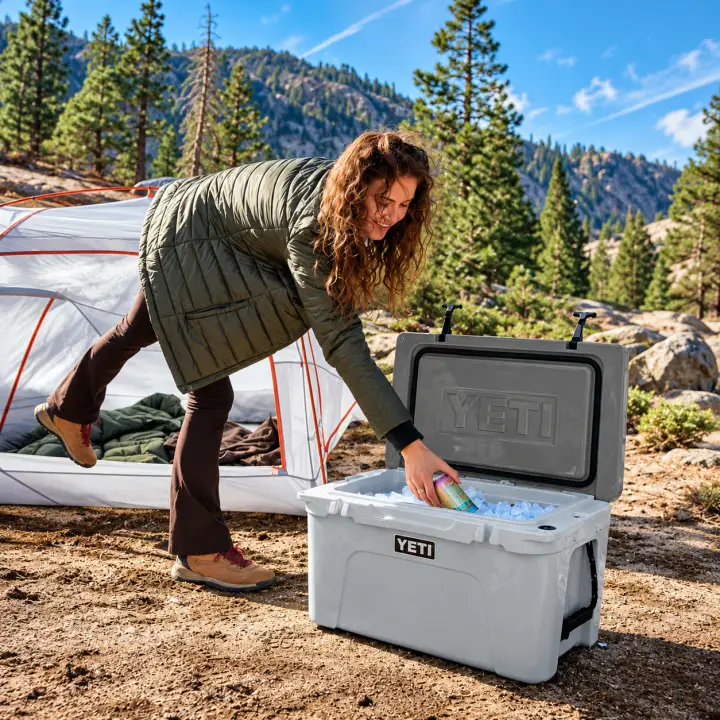
A cooler might have the capacity you need but still be a poor fit for your vehicle.
That’s because the number of quarts refers to storage volume, not the exterior dimensions.
Two coolers with similar advertised capacities can have different footprints, wall thicknesses, and empty weights.
For example, the YETI Tundra 45 measures approximately 25.6 inches long, 15.9 inches wide, and 15.5 inches high. Its model name shouldn’t be interpreted as 45 quarts of usable storage.
The RTIC 52 QT Ultra-Light Cooler measures approximately 27.2 by 17.5 by 17.3 inches and weighs about 21 pounds empty.
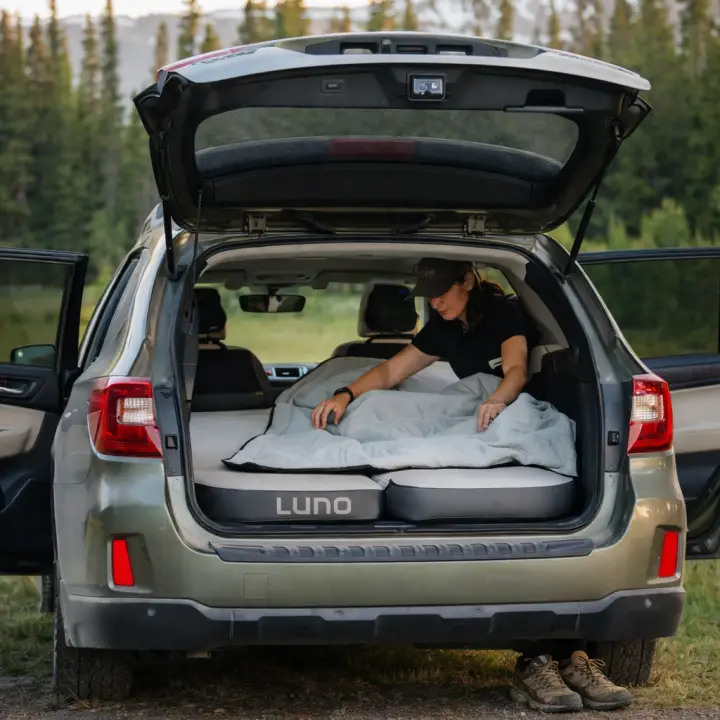
Those differences matter when you’re trying to fit a cooler alongside tents, chairs, sleeping bags, and storage boxes.
Before buying, check three things:
- Exterior dimensions: Measure the actual space in your vehicle, including clearance for handles and opening the lid.
- Empty weight: Remember that ice, drinks, and food will make the cooler substantially heavier.
- Accessibility: Make sure you can reach the lid at camp without unloading half your vehicle.
If you frequently move your cooler over paved or firm campground surfaces, a wheeled model may be worth considering. Just remember that wheels and handles can increase its overall size.
Cooler Capacity vs. Can Capacity: What’s the Difference?
Cooler manufacturers often advertise how many cans a model can hold.
That number can be helpful, but only if you understand whether the measurement includes ice.
Some can-capacity figures assume the cooler is filled entirely with beverages. Others use a specified ice-to-can ratio.
Those are very different situations.
For example, the YETI Tundra 45 is rated to hold 54 standard cans without ice, but approximately 26 cans when packed according to a 2:1 ice-to-can ratio.
That difference illustrates why can capacity alone isn’t enough to choose the correct camping cooler.
For a real camping trip, look beyond the headline capacity and compare:
- Interior dimensions and the shape of the storage compartment.
- Capacity measurements with and without ice.
- Exterior dimensions and empty weight.
- Whether your usual food containers will fit.
A tall, narrow compartment may be less useful for wide meal containers than a slightly smaller cooler with a more practical interior shape.
If you’re comparing actual models, the Best Coolers for Car Camping guide covers options for different camping styles, budgets, and portability needs.
Does Cooler Type Affect Which Size You Should Buy?
Yes, although the trip itself should determine your capacity needs first.
Hard-sided coolers are generally the more practical option for multi-day car camping. Their insulation, protective construction, and range of available sizes make them well suited to storing food and ice.
Soft-sided coolers work particularly well for day trips, overnight outings, and secondary beverage storage. They’re often easier to carry, although many have smaller capacities and less insulation than larger hard coolers.
Wheeled coolers can make sense when you’re choosing a larger size and expect to move it over firm ground. Check their exterior dimensions carefully because the wheels and handles add bulk.
For campers taking frequent extended road trips, a 12V portable refrigerator is another option. It eliminates the need to fill a large portion of the storage compartment with ice, but requires a dependable power source.
If that setup interests you, the Best Portable Power Stations for Car Camping guide can help you understand your power options.
Five Ways to Get More Space and Better Ice Retention
Before upgrading to a bigger cooler, make sure you’re using your existing capacity efficiently.
1. Pre-chill the cooler and its contents. Warm groceries and room-temperature beverages use up ice faster. Refrigerate food and drinks before packing, and cool down a hot cooler before loading it.
2. Pack ingredients in appropriately sized containers. Oversized grocery packaging can waste considerable space. Use sealed, food-safe containers when appropriate, especially for ingredients that need protection from meltwater.
3. Freeze suitable foods for later meals. Frozen ingredients can help maintain cold temperatures while gradually thawing. Keep raw meat securely packaged and separated from ready-to-eat food.
4. Keep your cooler shaded and closed. Direct sunlight and frequent openings increase ice melt. Position your cooler away from unnecessary heat and close the lid promptly.
5. Monitor food temperature. Use a cooler thermometer to make sure perishable foods stay at or below 40°F (4°C).
According to the USDA’s food safety guidance, perishable food should not remain above safe refrigeration temperatures for more than two hours, or one hour when temperatures exceed 90°F.
Having some ice left in the cooler doesn’t automatically mean the food has remained safe. If you can’t establish how long perishable food has been above 40°F, don’t rely on its appearance or smell to judge safety.
Good packing habits won’t make a small cooler hold unlimited food, but they can help you get more useful capacity from the space you already have.
Frequently Asked Questions
Is a 45-quart cooler big enough for camping?
A cooler in the 45-quart class is often enough for two people spending a weekend camping, particularly with a simple meal plan and limited beverages.
For a family of four or a longer trip, you’ll probably appreciate additional capacity.
Remember to compare actual interior dimensions rather than assuming every model with 45 in its name has the same usable volume.
Is a 50-quart cooler big enough for four people?
A 50-quart cooler can work for a family of four on a short weekend, especially if you pack efficiently and store drinks separately.
For three or four nights with multiple refrigerated meals, a 60- to 80-quart cooler—or two smaller coolers—will generally provide more flexibility.
What size cooler do I need for a three-day camping trip?
For two campers, approximately 40–55 quarts is a reasonable starting point.
For three or four campers, consider roughly 55–70 quarts.
If your trip includes extensive meal preparation, hot weather, or no opportunity to buy fresh ice, consider the larger end of those ranges.
Is a 65-quart cooler too big for two people?
Not if you’re taking longer trips, preparing several fresh meals, or camping somewhere without easy access to replacement ice.
But for ordinary two-night trips, a 65-quart cooler may be larger and heavier than necessary.
A model around 40–50 quarts could be easier to manage while still meeting your needs.
How much ice should I put in a camping cooler?
For extended ice retention, a 2:1 ratio of ice to contents by volume is a useful starting point.
However, the amount you need depends on outside temperature, trip length, cooler insulation, and how frequently you open the lid.
For shorter outings, less ice may be sufficient. For long trips in hot conditions, prioritize adequate ice and monitor food temperatures.
So, What Size Cooler Should You Choose?
If you’re still deciding, start with a 45- to 60-quart-class cooler for typical weekend car camping.
Choose something smaller for solo trips, minimalist meals, and beverage storage. Move up to 60–80 quarts for family camping or longer stays with substantial refrigerated groceries.
For large groups or extended trips, consider whether two smaller coolers would be easier to manage than one oversized chest.
Above all, plan around the food you’re bringing, the space ice will occupy, and the room available in your vehicle.
Once you know the approximate capacity you need, the next step is choosing a cooler with the right insulation, weight, dimensions, and features for your camping style.
Compare the Best Coolers for Car Camping
Affiliate Disclosure: GearForTheOutdoors.com participates in affiliate programs, including REI, Amazon, REI Outlet, Garage Grown Gear, evo, and other trusted partners. When you purchase through our links, we may earn a small commission at no extra cost to you. That helps support our content and keeps our recommendations useful, practical, and free.
Disclaimer: This post is for informational purposes only. Always verify current product details, fit, compatibility, availability, safety information, and manufacturer instructions before purchase or use. Outdoor conditions and gear performance can vary depending on setup, weather, terrain, vehicle, and experience level.