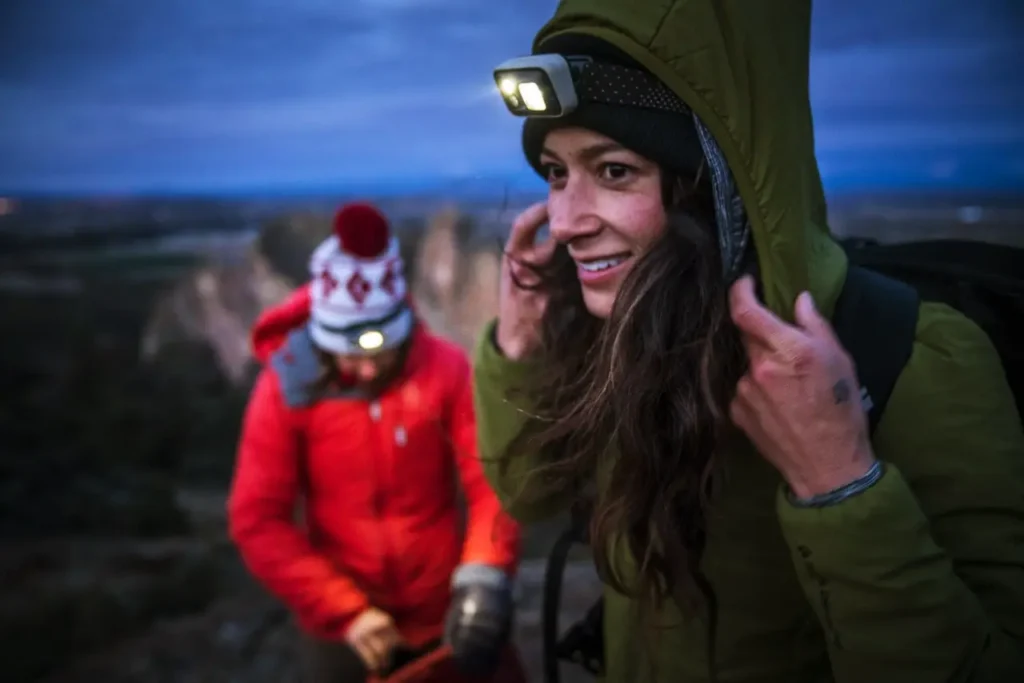
A headlamp may not be the most exciting item on a camping checklist, but it quickly becomes one of the most useful once the sun drops behind the trees.
It keeps both hands free while pitching a tent, cooking dinner, sorting gear, checking a campsite map, or making a late-night trip to the restroom. On the trail, it can also be the piece of gear that turns an unexpected delay into a manageable walk back to the trailhead.
The challenge is that headlamp specifications can make a simple purchase feel unnecessarily complicated. Lumens, beam distance, rechargeable batteries, AAA compatibility, red-light modes, and waterproof ratings all matter—but not equally for every camper.
Most people do not need the brightest headlamp available. They need one that feels comfortable, is easy to operate, provides useful light at both close and moderate distances, and still has power when it is time to break camp before sunrise. 🔦
This guide compares six of the best camping headlamps currently available through retailers commonly used by GearForTheOutdoors.com. The selections cover everyday camping, hiking, backpacking, ultralight travel, and budget-friendly campsite use.
Our Top Camping Headlamps for 2026
These are the strongest options for the most common camping and hiking situations.
| Headlamp | Price Range | Max Lumens | Power Source | Best For |
|---|---|---|---|---|
| Black Diamond Spot 400-R | $$ | 400 | Integrated rechargeable battery | Best overall camping headlamp |
| Petzl Actik Core | $$$ | 625 | Rechargeable CORE battery or 3 AAA batteries | Night hiking and longer trips |
| Nitecore NU25 MCT UL | $$ | 400 | Integrated rechargeable battery | Ultralight backpacking |
| Black Diamond Cosmo 350 | $ | 350 | 3 AAA batteries or optional rechargeable battery | Best budget headlamp |
| Petzl Tikka Core | $$ | 450 | Rechargeable CORE battery or 3 AAA batteries | Campsite comfort and simple controls |
| Petzl Tikkina | $ | 300 | 3 AAA batteries or optional rechargeable battery | Car camping and occasional use |
Quick Verdict
The Black Diamond Spot 400-R is the best camping headlamp for most people. It combines a useful 400-lumen maximum output with red lighting, dimming, a lock mode, strong weather protection, and a compact rechargeable design.
Campers who regularly hike after dark or spend several nights away from electrical power should consider the Petzl Actik Core. Its brighter beam and ability to use either the included rechargeable battery or standard AAA batteries make it especially practical for longer trips.
For backpackers counting every ounce, the Nitecore NU25 MCT UL delivers an impressive amount of light from a remarkably small package. The Black Diamond Cosmo 350 remains the practical budget choice for campers who prefer replaceable batteries.
How to Choose the Best Headlamp for Camping and Hiking
A headlamp that works beautifully for preparing dinner at a picnic table may not be ideal for navigating a rocky trail after sunset. Before comparing individual models, think about where and how the light will actually be used.
Lumens and Useful Brightness
Lumens measure the total amount of light produced by a headlamp. A larger number generally means a brighter maximum setting, but it does not automatically mean the headlamp will be more useful.
Beam shape, battery regulation, controls, and runtime can matter just as much as maximum output.
For most campers, these ranges provide a helpful starting point:
- Up to 100 lumens: Reading, organizing gear, finding items inside a tent, and other close-range tasks.
- 100–300 lumens: Cooking, walking around an established campground, and handling most routine campsite chores.
- 300–500 lumens: Hiking on maintained trails, navigating uneven terrain, and finding trail markers after dark.
- More than 500 lumens: Faster movement, technical trails, route-finding, mountaineering, or situations requiring a longer-reaching beam.
A 600-lumen headlamp does not usually remain at full brightness for its entire advertised runtime. Most compact lights gradually step down to conserve battery and manage heat.
That is normal. The more useful question is whether the headlamp provides steady, comfortable light at its medium settings—the levels most campers will use for the majority of an evening. 🏕️
Flood Beams Versus Focused Beams
Beam pattern influences how the light feels in real-world use.
A wide or flood beam spreads light evenly across the area in front of you. It is ideal for cooking, reading, packing, repairing gear, and walking through a campground without creating a harsh hotspot.
A focused or spot beam sends light farther down a trail. It helps reveal roots, rocks, junction signs, reflective trail markers, and obstacles before you reach them.
Some camping headlamps combine both patterns. These mixed-beam designs can illuminate the ground near your feet while also throwing enough light ahead for hiking.
For car camping, a comfortable flood beam may be more valuable than extreme distance. For hiking or backpacking, a headlamp that balances both proximity and distance is generally more versatile.
Rechargeable Versus Replaceable Batteries
The right battery system depends on how often the headlamp will be used and how easily it can be recharged.
Integrated Rechargeable Batteries
Rechargeable headlamps are convenient for weekend camping, home projects, dog walking, and regular outdoor use.
They can usually be topped up from a wall charger, vehicle, or portable power bank. There is no need to keep buying disposable batteries, and the lamp is easy to recharge between trips.
The main limitation is that an integrated battery cannot be replaced instantly. Once it is depleted, the headlamp needs access to a charging source.
For a one- or two-night trip, that is rarely a problem. For longer backcountry routes, a power bank or backup light becomes more important.
Replaceable AAA Batteries
AAA-powered headlamps make it easy to carry an additional set of batteries and restore full power in seconds.
They are a practical choice for emergency kits, infrequent camping, extended trips, and cold-weather outings where carrying lithium AAA batteries can provide dependable backup power.
The tradeoffs include recurring battery costs, additional waste, and the possibility of batteries leaking when stored for long periods.
Remove disposable batteries before storing a headlamp for several months.
Hybrid Battery Systems
Hybrid headlamps can operate with either a rechargeable battery pack or standard AAA batteries.
Petzl’s CORE-compatible models are particularly useful for this reason. The rechargeable battery handles routine use, while three spare AAAs provide an easy backup for longer trips.
Some Black Diamond models also support the company’s optional rechargeable battery in addition to disposable batteries.
For campers who travel frequently or move between campgrounds and backcountry trips, a hybrid system offers the most flexibility. 🔋
Weight and Comfort
Even a small amount of weight can become noticeable when it is concentrated on the forehead for several hours.
For relaxed campsite use, a headlamp weighing around 3 ounces is unlikely to cause much trouble. For running, fast hiking, or backpacking, a lighter design with a secure strap can reduce bouncing and pressure.
Comfort also depends on more than weight. Look for:
- A low-profile lamp housing
- A soft, adjustable headband
- Controls that do not require pressing the lamp hard against the forehead
- A balanced design that stays in place while walking
- A tilting light that can be aimed without adjusting the entire strap
Campers who wear a headlamp over a beanie or hood should confirm that the strap offers enough adjustment.
Weather Resistance and IP Ratings
Camping gear gets exposed to rain, condensation, dust, damp tent floors, and the occasional drop into wet grass.
An IP rating describes how well a device resists water and, when specified, dust.
- IPX4: Resistant to splashing water. Generally suitable for rain and ordinary campsite conditions.
- IPX6: Resistant to powerful water jets and heavy weather exposure.
- IPX7: Can usually survive temporary immersion in water.
- IPX8: Designed for more substantial water immersion under conditions specified by the manufacturer.
- IP67: Protected from dust and temporary immersion.
An IPX4 headlamp is adequate for most fair-weather campers. Backpackers, paddlers, and anyone regularly traveling through persistent rain may appreciate the added reassurance of an IP67 or IPX8 design.
Red-Light Mode
Red light is one of the most useful headlamp features around camp.
It provides enough illumination to find a zipper, check equipment, look inside a tent, or walk around a nearby campsite without producing the same glare as a bright white beam.
Red light is also less disruptive to campmates. A white beam pointed across a picnic table can feel surprisingly harsh after everyone’s eyes have adjusted to the darkness.
Not every casual camper needs red lighting, but it is worth having when sharing a tent or campsite. 🌙
Lock Mode
A lock mode prevents the headlamp from turning on inside a backpack, storage bin, or pocket.
Without it, pressure from other gear can activate the power button and drain the battery before the light is needed.
This small feature matters most for backpacking and travel, but it is useful for any headlamp stored among tightly packed equipment.
Controls
A headlamp should be easy to operate without consulting the instructions every time it comes out of storage.
Single-button designs are simple, but cycling through several brightness and color modes can become tedious. Two-button systems can provide faster access to different functions, though they may require a little practice.
The best interface depends on the user:
- Occasional campers may prefer one large button and a few basic settings.
- Frequent hikers may appreciate separate controls for brightness and beam mode.
- Winter users should look for buttons that can be pressed while wearing gloves.
In-Depth Camping Headlamp Reviews
1. Black Diamond Spot 400-R: Best Overall Camping Headlamp
The Black Diamond Spot 400-R offers the most useful balance of brightness, durability, features, and everyday convenience for a wide range of campers.
| Spec | Value |
| Max Lumens | 400 |
| Weight | 3 oz (86 g) |
| Power | Integrated 1500 mAh rechargeable battery |
| IP Rating | IP67 |
| Best For | Camping, hiking, backpacking, general outdoor use |
Four hundred lumens is enough for most campsite and trail situations without turning the headlamp into an unnecessarily bulky piece of equipment. The beam reaches far enough for hiking, while lower settings provide softer light for cooking and organizing gear.
The Spot 400-R includes white proximity and distance lighting, dimming, strobe, red night vision, a battery indicator, brightness memory, and a digital lock mode.
Black Diamond’s PowerTap feature allows the light to move quickly between a dimmed setting and maximum output. That can be useful when walking with a comfortable medium beam and suddenly needing a clearer look at a trail junction or a noise beyond the campsite.
The IP67 rating is another advantage. The lamp is sealed against dust and designed to tolerate temporary immersion, making it better prepared for heavy rain, wet packs, and unpredictable campground weather than many basic headlamps. Black Diamond currently lists the model with a 400-lumen output, 1500 mAh battery, and IP67 protection.
The Spot 400-R is not the newest-looking headlamp, and its controls take a few minutes to learn. Once the button layout becomes familiar, however, it offers much more flexibility than a basic one-button design.
One detail worth knowing is that this rechargeable version uses an integrated battery. Campers heading away from power for several nights should bring a power bank or a small backup light.
Pros:
- Strong combination of campsite and trail lighting
- Red-light mode and smooth dimming
- PowerTap provides quick access to maximum brightness
- IP67 dust and water protection
- Compact enough for backpacking
- Lock mode helps prevent accidental battery drain
Cons:
- Controls require a little practice
- Integrated battery cannot be swapped for AAA batteries
- Charging connection is less modern than some USB-C competitors
Who It’s Best For: Campers and hikers who want one dependable rechargeable headlamp for weekend campgrounds, backpacking trips, early trail starts, and emergency use.
Who Should Skip It: Travelers who regularly spend several days away from charging access and prefer to replace batteries instantly.
2. Petzl Actik Core: Best for Night Hiking and Longer Trips
The Petzl Actik Core is the strongest choice for campers who need more trail-ready brightness and a flexible battery system.
| Spec | Value |
| Max Lumens | 625 |
| Weight | 3.1 oz (88 g) |
| Power | Rechargeable CORE battery or 3 AAA batteries |
| IP Rating | IPX4 |
| Best For | Night hiking, backpacking, trekking, early starts |
The current Actik Core produces up to 625 lumens while weighing 88 grams. It uses Petzl’s rechargeable CORE battery but can also operate with three AAA batteries.
That hybrid power system is the feature that separates the Actik Core from many rechargeable competitors.
For routine camping, the included CORE battery can be charged at home and used repeatedly. On a longer trip, a set of AAA batteries can be packed as an immediate backup without carrying another headlamp.
The Actik Core provides both wide and mixed beams. The wide beam works well for nearby tasks, while the mixed beam adds a focused component for moving along trails and seeing farther ahead.
Its 625-lumen maximum is useful for night hiking, finding a route through a poorly marked campground, or starting a summit hike before dawn. Most campers will still spend more time using the lower modes, which preserve battery power and create a more comfortable pool of light.
The headlamp also includes red lighting, a reflective headband, a battery-level indicator, and a lock function. The phosphorescent reflector can make the lamp easier to locate in a dark tent.
The Actik Core is weather-resistant rather than fully waterproof. Its IPX4 rating is appropriate for rain and snow, but it does not provide the same immersion protection as the Black Diamond Spot 400-R.
Pros:
- Bright 625-lumen maximum output
- Rechargeable battery included
- Also works with three standard AAA batteries
- Useful wide and mixed beam patterns
- Red-light mode
- Straightforward operation
- Strong choice for hiking after dark
Cons:
- More expensive than basic camping headlamps
- IPX4 protection is not designed for immersion
- Full brightness is unnecessary for routine campsite chores
Who It’s Best For: Hikers, backpackers, and active campers who need a brighter beam and want the security of both rechargeable and disposable power options.
Who Should Skip It: Casual car campers who only need a simple light for cooking, walking to the restroom, and organizing a tent.
Check Price at REI | Check Price at Amazon
3. Nitecore NU25 MCT UL: Best Ultralight Headlamp
The Nitecore NU25 has been popular among lightweight backpackers for years. The current NU25 MCT UL keeps the compact rechargeable format while adding adjustable color temperatures that make the light more comfortable in changing conditions.
| Spec | Value |
| Max Lumens | 400 |
| Weight | Approximately 1.6 oz with ultralight headband |
| Power | Integrated 650 mAh rechargeable battery |
| IP Rating | IP66 |
| Best For | Ultralight backpacking, thru-hiking, emergency kits |
The NU25 MCT UL can switch among warm, neutral, and cool white light.
Warm light tends to feel easier on the eyes and can provide better visual comfort in rain, fog, or dusty conditions. Neutral light produces more natural-looking colors around camp. Cool white light delivers crisp visibility when maximum contrast is useful.
The headlamp also includes red-light settings, USB-C charging, a lockout mode, and a battery indicator. Its 400-lumen maximum output is impressive for such a small light.
Garage Grown Gear currently carries the NU25 family and lists the 400-lumen model with a 650 mAh battery, USB-C charging, IP66 water resistance, and up to 45 hours of runtime on its lowest setting.
The ultralight cord-style headband keeps weight low and packs down smaller than a traditional elastic band. Backpackers focused on reducing pack weight will appreciate the design, but some users may find a wider fabric strap more comfortable during extended wear.
The small housing also means a smaller battery. Campers who regularly use high brightness for several hours should expect to recharge more frequently than they would with a heavier headlamp.
Pros:
- Exceptionally light and compact
- 400-lumen maximum output
- Multiple white-light color temperatures
- Red-light settings
- USB-C charging
- IP66 weather resistance
- Packs easily into a small emergency kit
Cons:
- Smaller battery than heavier headlamps
- Cord headband may not suit everyone
- Compact controls can take time to learn
- Less comfortable for long periods at maximum tightness
Who It’s Best For: Ultralight backpackers, thru-hikers, minimalist travelers, and anyone looking for a capable emergency light that takes up very little space.
Who Should Skip It: Campers who value a plush traditional headband and long high-output runtime more than minimal weight.
4. Black Diamond Cosmo 350: Best Budget Camping Headlamp
The Black Diamond Cosmo 350 offers enough light and weather protection for most recreational campers without the price of a premium rechargeable model.
| Spec | Value |
| Max Lumens | 350 |
| Weight | 2.8 oz (79 g) with AAA batteries |
| Power | 3 AAA batteries or optional Black Diamond rechargeable battery |
| IP Rating | IPX8 |
| Best For | Budget camping, emergency kits, occasional hiking |
The Cosmo 350 produces up to 350 lumens, which is plenty for campground use and adequate for moderate hiking after dark.
It includes proximity and distance modes, dimming, red night vision, brightness memory, and a lock function. Those features give it more versatility than many inexpensive headlamps.
The standard configuration uses three AAA batteries. Black Diamond also lists it as compatible with the company’s optional BD 1500 rechargeable battery, allowing users to move toward a hybrid setup later.
Its IPX8 rating is especially reassuring at this price. Rain, damp storage, and an accidental drop into shallow water are less concerning than they would be with a basic splash-resistant light.
The main drawback is that the rechargeable battery is not included. Campers who already know they want a rechargeable headlamp may find better value in purchasing a rechargeable model from the start.
For occasional camping, however, AAA power can be an advantage. The lamp can remain in a camping bin or glove box with a fresh set of batteries packed separately, ready for the next trip.
Pros:
- Affordable
- 350 lumens is sufficient for most camping
- Red-light mode
- Dimming and lock functions
- IPX8 waterproof construction
- Compatible with AAA or an optional rechargeable battery
Cons:
- Rechargeable battery is sold separately
- Less powerful than premium trail models
- Controls are more complex than the Petzl Tikkina
Who It’s Best For: Beginners, occasional campers, families buying multiple headlamps, and anyone who wants dependable performance without paying for premium brightness.
Who Should Skip It: Frequent users who want USB charging included and do not want to purchase a separate battery system.
5. Petzl Tikka Core: Best for Campsite Comfort and Simplicity
The Petzl Tikka Core sits between a basic campsite light and a more powerful trail headlamp.
| Spec | Value |
| Max Lumens | 450 |
| Weight | 3 oz (84 g) |
| Power | Rechargeable CORE battery or 3 AAA batteries |
| IP Rating | IPX4 |
| Best For | Car camping, travel, camp chores, casual hiking |
Its wide, even beam is particularly comfortable for close-range use. Instead of concentrating most of the light into a sharp center spot, it spreads illumination across the cooking area, tent interior, or ground in front of the wearer.
That makes the Tikka Core a friendly option for everyday campground tasks.
The current model provides up to 450 lumens, weighs 84 grams, charges through USB-C, and can use either the included CORE battery or three AAA batteries.
It also includes red lighting, three white brightness levels, a battery indicator, a lock function, and a phosphorescent reflector.
The Tikka Core does not throw light as far as the Actik Core because its beam is designed primarily for proximity use. That is not a major disadvantage around camp, but regular night hikers may prefer a model with a mixed or focused beam.
Its hybrid battery compatibility adds meaningful flexibility. The rechargeable CORE battery handles weekend trips, while AAA batteries can serve as backup power during road trips or longer camping vacations.
Pros:
- Comfortable wide beam
- Simple, campsite-friendly operation
- USB-C rechargeable battery included
- Also accepts three AAA batteries
- Red-light mode
- Compact and lightweight
- Easy to locate in a dark tent
Cons:
- Less distance-focused than the Actik Core
- IPX4 protection is weather-resistant, not submersible
- Costs more than a basic campsite headlamp
Who It’s Best For: Car campers, travelers, families, and recreational hikers who want a comfortable rechargeable light without an overly technical interface.
Who Should Skip It: Hikers who need a long-reaching beam for frequent night travel on difficult trails.
6. Petzl Tikkina: Best Simple Headlamp for Car Camping
The Petzl Tikkina is designed for campers who want a dependable light without extra settings or complicated controls.
| Spec | Value |
| Max Lumens | 300 |
| Weight | Approximately 3.2 oz with batteries |
| Power | 3 AAA batteries or optional CORE rechargeable battery |
| IP Rating | IPX4 |
| Best For | Car camping, cabins, home use, backup lighting |
A single button cycles through three white brightness levels. There is no red-light mode, separate spot beam, strobe sequence, or complicated menu.
That simplicity can be a real advantage for children, new campers, and anyone who uses a headlamp only a few times each year.
The 300-lumen maximum is enough for walking through a campground, preparing food, unloading a vehicle, and handling most tent chores. Its wide beam is better suited to close-range visibility than fast movement on technical terrain.
The Tikkina uses three AAA batteries but is also compatible with Petzl’s optional CORE rechargeable battery. Petzl continues to list the Tikkina as a current 300-lumen model.
Its basic feature set is also its primary limitation. Campers who regularly share tents may miss red lighting, and hikers may want a more focused beam and a lock function.
For straightforward campsite lighting, however, the Tikkina remains easy to recommend.
Pros:
- Very simple controls
- Affordable
- Comfortable wide beam
- Runs on common AAA batteries
- Compatible with an optional rechargeable battery
- Good choice for families and occasional campers
Cons:
- No red-light mode
- No focused distance beam
- Limited advanced features
- Rechargeable battery is not included
Who It’s Best For: Car campers, families, cabin users, and anyone who wants a basic headlamp that can be handed to almost anyone without explanation.
Who Should Skip It: Backpackers and night hikers who need a lock mode, red lighting, or stronger distance visibility.
Camping Headlamp Comparison
Best Headlamp for Most Campers
Choose the Black Diamond Spot 400-R when one headlamp needs to cover nearly everything: campground chores, hiking, backpacking, wet weather, emergency use, and early-morning starts.
It offers a stronger feature set and better water protection than most basic camping lights without becoming excessively heavy.
Best Headlamp for Hiking After Dark
Choose the Petzl Actik Core for regular night hiking, pre-dawn trail starts, or longer trips where a brighter mixed beam is useful.
Its ability to switch from the rechargeable CORE battery to standard AAA batteries also makes it easier to manage power away from electrical outlets.
Best Ultralight Option
Choose the Nitecore NU25 MCT UL when pack weight and size matter more than maximum battery capacity.
It is especially well suited to backpackers who primarily use lower settings around camp but still want access to a brighter beam when needed.
Best Budget Option
Choose the Black Diamond Cosmo 350 when affordability, waterproofing, and replaceable batteries are the priorities.
It provides enough brightness and features for most recreational camping without requiring a large investment.
Best Simple Rechargeable Headlamp
Choose the Petzl Tikka Core for an easy-to-use rechargeable light with a soft, wide beam.
It is a strong choice for campsite tasks, road trips, travel, and occasional hiking.
Best Basic Car-Camping Headlamp
Choose the Petzl Tikkina when simplicity matters more than red lighting, advanced beam controls, or maximum brightness.
It is inexpensive, dependable, and easy for nearly anyone to operate.
Practical Headlamp Tips for Camping
A good headlamp works better when a few simple habits become part of the packing routine.
Charge It Before Leaving Home
Rechargeable headlamps can slowly lose power in storage. Charge the lamp during the final gear check instead of assuming it still holds the same charge as the previous trip.
Pack Backup Power
Bring spare AAA batteries for compatible models. For integrated rechargeable lamps, pack a small power bank and the correct charging cable.
A second inexpensive headlamp can also provide backup lighting for the group.
Use Lower Settings Around Camp
Maximum brightness is rarely necessary at a picnic table or inside a tent.
Lower settings extend runtime, reduce glare, and make the campsite more comfortable for everyone nearby.
Lock the Headlamp Before Packing It
Activate the lock function before placing the headlamp in a tightly packed backpack.
Models without a lock can be protected by storing them where other gear cannot press against the power button.
Keep It in the Same Place
Store the headlamp in an accessible pocket rather than at the bottom of a gear bin.
When daylight starts fading during camp setup, knowing exactly where the light is can save a frustrating search through half-unpacked equipment. 🔦
Avoid Aiming It at Other People
A headlamp naturally points wherever the wearer looks. Turn the brightness down, use red mode, or tilt the lamp toward the ground while speaking with someone around camp.
Remove Disposable Batteries During Long-Term Storage
AAA batteries can leak and damage the contacts inside a headlamp.
Remove them when the light will remain unused for several months, especially if it is stored in a hot vehicle or garage.
Final Verdict
The best camping headlamp is not necessarily the brightest model. It is the one that feels comfortable, has controls that make sense, provides the right beam for the activity, and offers a battery system suited to the trip.
For most campers, the Black Diamond Spot 400-R provides the best overall combination of brightness, useful features, weather protection, and rechargeable convenience.
The Petzl Actik Core is the better choice for hikers who want more power and the ability to switch between rechargeable and AAA batteries. Backpackers focused on reducing pack weight should look closely at the Nitecore NU25 MCT UL.
The Black Diamond Cosmo 350 offers dependable performance at a lower price, while the Petzl Tikka Core and Petzl Tikkina are approachable choices for campsite use.
Whichever model fits the trip, pack it somewhere easy to reach. A headlamp buried beneath the sleeping bags is not much help when the last daylight disappears behind the trees.
Frequently Asked Questions
How many lumens are needed for camping?
Most general camping tasks require only 100–300 lumens.
Cooking, reading, organizing gear, and walking through an established campground can often be handled on a low or medium setting. A headlamp with a maximum output of 300–500 lumens provides extra flexibility for hiking and navigating uneven ground.
Are 1,000 lumens necessary for camping?
No. Most campers do not need a 1,000-lumen headlamp.
Very high output can be useful for specialized activities, but it also consumes battery power quickly and can create uncomfortable glare around camp. A well-designed 300- to 600-lumen headlamp is more practical for most camping and hiking.
Are rechargeable headlamps better?
Rechargeable headlamps are convenient for regular use and weekend trips. They reduce the need to purchase disposable batteries and can often be charged from a vehicle or power bank.
AAA-powered models may be more practical for long trips without charging access. Hybrid models that support both power sources offer the greatest flexibility.
What is red light used for on a headlamp?
Red light provides close-range visibility while creating less glare than a bright white beam.
It is useful for checking gear, reading inside a tent, walking around a shared campsite, and avoiding unnecessary disruption to campmates.
Is IPX4 waterproof enough for camping?
IPX4 means the headlamp can withstand splashing water and ordinary rain. That is generally adequate for recreational camping.
Backpackers, paddlers, and campers expecting sustained heavy weather may prefer IPX7, IPX8, or IP67 protection.
Should every camper carry a headlamp?
Every adult should ideally have access to a personal light. Sharing one headlamp among an entire group becomes inconvenient when people need to complete different tasks or leave the campsite separately.
Children should also have a properly fitted light when appropriate, though adults should supervise its use.
Can a headlamp be stored in a vehicle?
A headlamp can be useful in a vehicle emergency kit, but extreme heat can shorten battery life and damage rechargeable cells over time.
Inspect the light periodically, remove disposable batteries during long-term storage, and avoid leaving lithium-ion devices in excessively hot vehicles whenever possible.
What is the best headlamp for car camping?
The Black Diamond Spot 400-R is the most versatile overall choice.
Campers seeking a simpler or less expensive option should consider the Black Diamond Cosmo 350 or Petzl Tikkina.
What is the best headlamp for backpacking?
The Nitecore NU25 MCT UL is the best option for ultralight backpackers.
The Black Diamond Spot 400-R offers better weather protection and a traditional headband, while the Petzl Actik Core provides more brightness and flexible battery options.
Affiliate Disclosure: GearForTheOutdoors.com participates in affiliate programs, including REI, Amazon, REI Outlet, Garage Grown Gear, evo, and other trusted partners. When you purchase through our links, we may earn a small commission at no extra cost to you. That helps support our content and keeps our recommendations useful, practical, and free.
Disclaimer: This post is for informational purposes only. Always verify current product details, fit, availability, safety information, and manufacturer warranties before purchase or use. Outdoor conditions and gear performance can vary depending on setup, weather, terrain, and experience level.