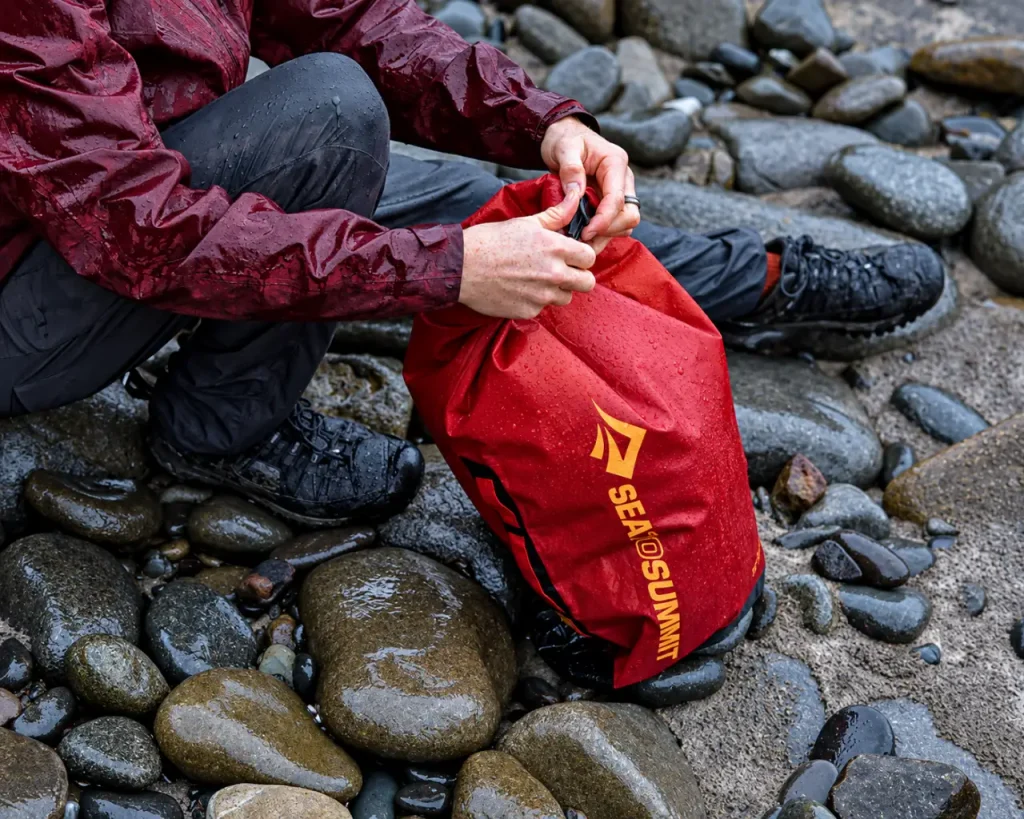
A good dry bag does two things exceptionally well: it protects your gear from moisture and makes packing easier. Whether you’re keeping spare clothes dry inside an SUV, organizing sleeping bags in a crowded trunk, or separating muddy equipment after a rainy weekend, the right dry bag can solve several common camping frustrations.
For most campers, the Sea to Summit Big River Dry Bag is the best overall choice. Its durable 420D nylon construction, reinforced lash points, and practical size range make it versatile enough for demanding campsite use and vehicle storage.
But tougher isn’t always better. If your gear stays inside an enclosed vehicle, a lighter, less expensive dry bag may be all you need. And if you’re trying to fit bulky sleeping bags into a small cargo area, a compression dry bag is often the smarter solution.
The best dry bags for camping depend on three things: what you’re protecting, where you’re storing it, and how much water exposure it might encounter.
Best Dry Bags for Camping: Our Top Picks
| Dry Bag | Best For | Available Sizes |
|---|---|---|
| Sea to Summit Big River Dry Bag | Best Overall | 5–65L |
| Sea to Summit Lightweight Dry Bag | Best Value | 1.5–35L |
| Osprey Ultralight Dry Sack | Best for Internal Organization | 3–35L |
| Sea to Summit Evac Lightweight Compression Dry Bag | Best for Sleeping Bags | 5–35L |
| YETI Panga Duffel | Best Heavy-Duty Waterproof Duffel | 50–100L |
| Seattle Sports Glacier Clear Dry Bag | Best for Easy Gear Identification | 5–55L |
Quick recommendation: If you’re building a car camping storage system from scratch, start with a 20L or 35L dry bag for bulky clothing or sleeping gear and a couple of smaller 3L–12L sacks for essentials. Add a heavy-duty waterproof bag only if your equipment regularly faces exposed, wet conditions.
1. Sea to Summit Big River Dry Bag — Best Overall

The Sea to Summit Big River Dry Bag hits the sweet spot between durability, weather protection, and everyday practicality.
It’s tougher than the lightweight sacks commonly used inside backpacks, without the weight or expense of a premium waterproof duffel. That makes it especially appealing for campers who frequently move equipment between an SUV, truck bed, tent, and campsite.
The Big River uses 420D nylon with a waterproof coating and sealed seams. Its reinforced base helps withstand regular handling, while the oval shape packs efficiently alongside other equipment.
One of its most useful features is the series of reinforced lash points along the sides.
Unlike dry bags that rely primarily on a roll-top buckle for attachment, the Big River provides dedicated points for securing the bag to compatible carrying systems. This is useful when organizing gear on a motorcycle, raft, or appropriate vehicle storage setup.
It still needs protection against sharp edges, excessive abrasion, and insecure mounting, but its construction offers greater flexibility than an ordinary lightweight dry sack.
What Makes It a Good Camping Dry Bag?
The Big River works particularly well for equipment that needs to stay dry but doesn’t require constant access.
A 13L or 20L bag can hold spare clothing, rain gear, or insulating layers, depending on how bulky those items are. The 35L version offers more room for sleeping gear or larger clothing bundles.
Its light-colored interior also makes it easier to spot smaller items, while the oval base helps prevent the bag from rolling around in a trunk.
The biggest drawback is convenience.
Like most roll-top bags, the Big River has a relatively narrow opening. If you regularly need to retrieve cooking equipment, camera accessories, or other small items, a wide-opening duffel or storage bin will be easier to use.
And although the fabric is waterproof, the roll-top closure isn’t intended for submersion.
What We Like
- Durable 420D nylon construction
- Reinforced lash points for versatile attachment
- Oval shape packs efficiently in vehicle storage areas
- Available in useful sizes for both personal and shared gear
- Good balance of durability and portability
What Could Be Better
- Heavier and more expensive than lightweight dry sacks
- Roll-top opening isn’t ideal for frequently accessed equipment
- Not designed for underwater submersion
Best for: Campers who want one dependable dry bag for general camping, vehicle organization, and more demanding gear-handling situations.
Our take: Choose the Big River if your equipment gets moved around frequently or needs a tougher protective bag. If everything stays inside a covered SUV or storage bin, the Sea to Summit Lightweight Dry Bag will usually be a better value.
Compare Sea to Summit Big River Dry Bag Sizes at REI
2. Sea to Summit Lightweight Dry Bag — Best Value

For campers who want reliable moisture protection without unnecessary bulk, the Sea to Summit Lightweight Dry Bag is one of the most practical options.
Its 70D recycled nylon construction strikes a useful balance between weight and durability. It’s lighter and more packable than the Big River, making it particularly well suited to organizing clothing, sleeping accessories, and personal gear inside a vehicle.
The bag features waterproof-coated fabric, taped seams, and a roll-top closure with a replaceable Field Repair Buckle.
An oval-shaped base makes it easier to arrange alongside other bags or camping supplies, while the white interior helps illuminate the contents when you’re unpacking in dim light.
These aren’t dramatic features, but they make a noticeable difference when you’re managing several bags inside a crowded trunk.
Why It’s a Smart Choice for Car Camping
Most car campers don’t need every dry bag to withstand rough exterior conditions.
If your equipment stays inside an enclosed vehicle, tent, or larger storage container, you’re primarily protecting against accidental spills, damp equipment, and rain during loading and unloading.
That’s exactly where the Lightweight Dry Bag makes sense.
Instead of investing in one expensive heavy-duty bag, you can create a more organized system using several smaller sizes.
For example, a 5L bag for small accessories, a 13L bag for spare clothing, and a 20L bag for bulkier layers can be easier to manage than one large sack containing everything.
The main limitation is abrasion resistance. The 70D fabric isn’t intended for continuous rubbing against exposed metal, rough truck-bed surfaces, or roof-rack hardware.
What We Like
- Good value for a well-designed dry bag
- Lightweight and easy to pack when empty
- Wide selection of practical sizes
- White interior makes smaller items easier to find
- Replaceable buckle and efficient oval shape
What Could Be Better
- Less abrasion-resistant than heavy-duty models
- Not suitable for submersion
- Narrow opening is less convenient for bulky equipment
Best for: Car campers who want affordable, dependable weather protection and a simple way to organize several categories of gear.
Our take: For equipment stored inside a vehicle, this is the dry bag most people should consider before spending more on the Big River.
Check the Sea to Summit Lightweight Dry Bag at REI
3. Osprey Ultralight Dry Sack — Best for Internal Organization
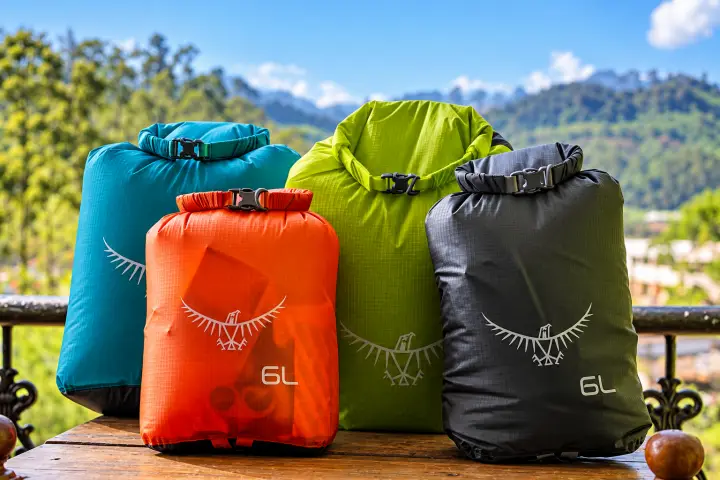
The Osprey Ultralight Dry Sack is a great option when keeping your camping gear organized matters just as much as keeping it dry.
Its biggest advantage isn’t ruggedness. It’s how efficiently it fits inside other bags and containers.
Unlike traditional cylindrical dry bags, the Osprey uses a rectangular shape that makes it easier to pack alongside clothing cubes, storage bins, and other equipment.
The lightweight 40D recycled nylon fabric also adds very little weight or bulk.
That makes these sacks particularly useful for campers who already have a larger duffel or storage system but need a better way to separate the contents.
Build a More Organized Packing System
Imagine opening your camping duffel and finding everything divided into a few clearly defined groups:
- 3L: Headlamps, gloves, and small accessories
- 6L: Socks, underwear, and base layers
- 12L: Spare outfits or insulating clothing
- 20L: Larger clothing bundles or personal camping gear
- 35L: Bulky clothing and soft equipment
These are suggested uses rather than fixed capacities for particular items, but they provide a helpful starting point.
Using different colors for different categories can make the system even easier to manage.
Instead of digging through an entire bag for a clean shirt, you can pull out the appropriate dry sack and leave everything else packed.
The waterproof-coated fabric, taped seams, and roll-top closure also offer useful protection against rain and splashes. The Ultralight Dry Sack carries an IPX5 rating, which means it isn’t intended for submersion.
Osprey vs. Sea to Summit Lightweight: Which Should You Choose?
These two bags serve similar purposes, but there’s an important difference.
The Osprey’s 40D fabric and rectangular design favor low weight and space-efficient organization. It’s particularly appealing for packing inside backpacks, duffels, and storage bins.
The Sea to Summit Lightweight uses heavier 70D fabric and offers a more versatile balance of durability and everyday use.
Neither is the right choice for exposed, high-abrasion vehicle storage.
What We Like
- Rectangular shape fits efficiently inside larger bags
- Lightweight 40D recycled nylon
- Useful size options for organizing clothing
- IPX5 protection against water exposure
- Packs down compactly when empty
What Could Be Better
- Thin fabric is vulnerable to abrasion and punctures
- Not designed for exterior vehicle storage
- Less convenient for frequently accessed gear than packing cubes
Best for: Campers who want to organize clothing, accessories, and personal equipment inside larger luggage or storage containers.
Our take: Choose the Osprey when organization and low weight are your priorities. For a general-purpose camping dry bag that may see more handling, choose the Sea to Summit Lightweight instead.
Find the Osprey Ultralight Dry Sack
4. Sea to Summit Evac Lightweight Compression Dry Bag — Best for Sleeping Bags
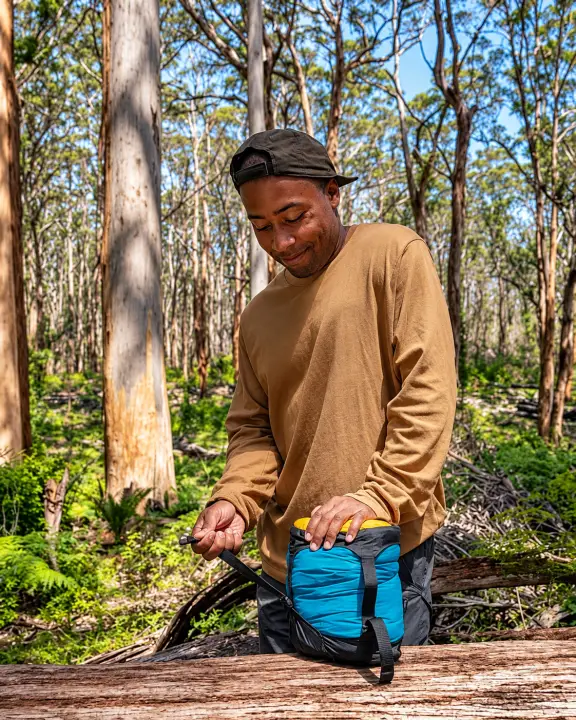
Sleeping bags, insulated jackets, and camp blankets can occupy a surprising amount of space inside a vehicle.
The Sea to Summit Evac Lightweight Compression Dry Bag addresses that problem by combining moisture protection with mechanical compression.
Unlike a standard dry bag, which primarily seals the contents against water, this design includes four compression straps that help reduce the volume of soft, compressible equipment.
It’s especially useful when packing a sleeping bag into a smaller SUV, organizing camping equipment in a rooftop cargo box, or fitting several people’s gear into a shared vehicle.
Why Compression Makes a Difference
A conventional dry bag allows you to squeeze some excess air out before sealing it, but it doesn’t provide the same controlled compression as a purpose-built compression sack.
The Evac system uses a waterproof roll-top body with an air-permeable waterproof base fabric, allowing trapped air to escape as the contents are compressed.
That means you can reduce the packed volume without wrestling with an inflated, tightly sealed bag.
The compression straps help distribute pressure around the contents, creating a more manageable bundle.
For bulky sleeping bags, this can make the difference between an awkward load that dominates the trunk and a compact package that fits neatly alongside other equipment.
However, compression isn’t appropriate for everything.
Rigid cookware, electronics, and equipment with sharp edges can damage the bag or create pressure points. This design is intended for soft, compressible items.
What Size Works Best for a Sleeping Bag?
The Evac Lightweight Compression Dry Bag is available in 5L, 8L, 13L, 20L, and 35L capacities.
The right size depends on your sleeping bag’s insulation type, temperature rating, construction, and packed volume.
Compact backpacking sleeping bags may fit a smaller model, while bulky car camping bags may require a 20L or 35L version—or may be too large for the range entirely.
Check the sleeping bag’s packed dimensions before choosing.
It’s also important to remember that compression is best reserved for transportation.
Once your trip is over, remove the sleeping bag and store it loosely according to the manufacturer’s instructions. Leaving insulation tightly compressed for extended periods can reduce its loft and performance.
What We Like
- Compresses bulky sleeping bags and clothing
- Waterproof-coated construction with sealed seams
- Air-permeable base simplifies compression
- Four straps help create an evenly compressed bundle
- Lightweight enough for backpacking and car camping
What Could Be Better
- More expensive than a standard dry bag
- Less convenient for equipment accessed frequently
- Not suitable for rigid or sharp objects
- Compression isn’t appropriate for long-term sleeping bag storage
Best for: Campers who need to reduce the space occupied by sleeping bags, insulated clothing, and other compressible gear while protecting them from moisture.
Our take: If sleeping gear is taking up too much room in your vehicle, this is a more targeted solution than buying a larger conventional dry bag.
Check the Sea to Summit Evac Lightweight Compression Dry Bag
5. YETI Panga Duffel — Best Heavy-Duty Waterproof Duffel
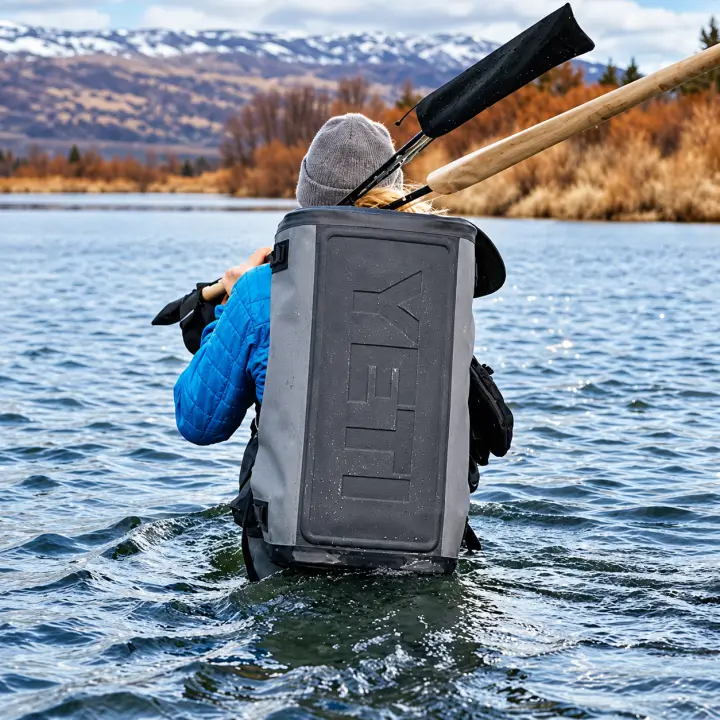
The YETI Panga Duffel is designed for situations where ordinary roll-top dry bags may not provide enough protection.
Its waterproof ThickSkin shell, welded construction, and HydroLok zipper create a sealed storage compartment capable of handling heavy rain and submersion when closed correctly.
That makes it particularly useful for transporting gear in exposed conditions, including open truck beds and water-based adventures.
However, the Panga’s most noticeable everyday advantage is its wide-opening design.
Easier Access to Large Loads
Traditional dry bags work well for clothing and other equipment you can pack vertically through a narrow opening.
But that becomes frustrating when you’re storing several days of clothing or equipment you need to retrieve throughout the trip.
The Panga opens like a duffel, making it easier to arrange and access larger items.
Internal mesh pockets help separate smaller essentials, while reinforced handles and backpack-style carrying straps provide flexible transport options.
The 50L version is a sensible starting point for personal gear. Larger 75L and 100L models accommodate bulkier loads but also require substantially more storage space.
A fully packed large duffel can become awkward to lift, particularly when loading it into a raised truck bed or roof-mounted storage system.
Is the YETI Panga Worth the Extra Money?
That depends entirely on how you camp.
If you regularly transport expensive gear through severe weather or need a submersible waterproof container, the Panga offers capabilities that standard dry bags don’t.
But for organizing clothes inside an enclosed SUV, its waterproof construction is probably unnecessary.
You could create a complete internal packing system with several lightweight dry sacks for considerably less.
The waterproof zipper also requires care. Dirt, grit, and inadequate lubrication can make it difficult to operate or interfere with proper sealing.
What We Like
- Submersible waterproof construction when properly closed
- Wide opening makes packing and access easier
- Durable, puncture-resistant shell
- Handles and carrying straps improve portability
- Well suited to demanding wet-weather storage
What Could Be Better
- Expensive compared with conventional dry bags
- Heavy and bulky
- Waterproof zipper requires periodic maintenance
- More protection than most enclosed-vehicle campers need
Best for: Truck campers, overlanders, and outdoor travelers who need substantial waterproof protection for large amounts of gear.
Our take: The Panga makes sense when significant water exposure is a realistic part of your trips. Otherwise, a conventional dry bag or duffel combined with smaller dry sacks is usually more economical.
See the YETI Panga 50L Waterproof Duffel at REI
6. Seattle Sports Glacier Clear Dry Bag — Best for Easy Gear Identification
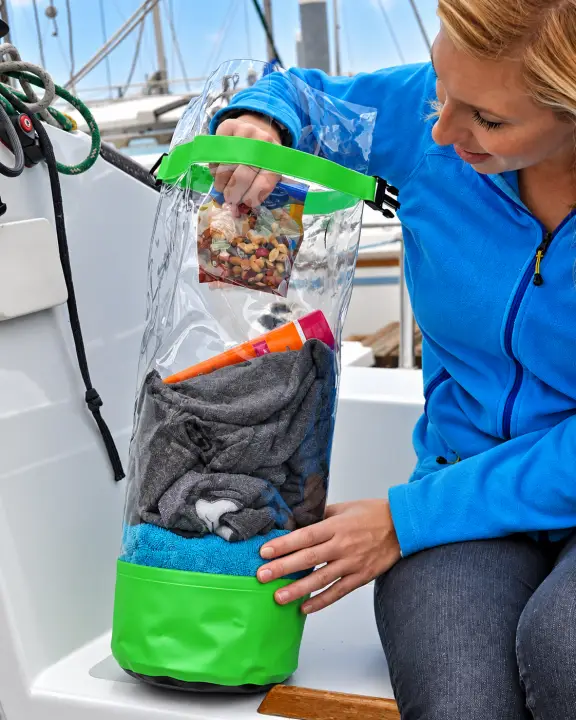
The Seattle Sports Glacier Clear Dry Bag solves an everyday camping problem: figuring out what’s inside your dry bag without opening it.
Its transparent vinyl body makes it possible to identify clothing, accessories, and shared equipment at a glance.
This may sound like a small convenience, but it becomes valuable when several people are sharing a camping setup.
Instead of opening multiple bags to find the first-aid supplies or an extra pair of gloves, you can immediately see where those items are stored.
A Practical Choice for Shared Camping Gear
The Glacier uses 20-ounce clear vinyl, welded seams, and an abrasion-resistant base.
Its three-roll closure provides protection from rain and splashing water, while a D-ring offers a convenient attachment point for suitable applications.
Available capacities range from 5L to 55L.
For car camping, the 10L and 20L models are particularly practical for shared equipment and smaller supplies.
A transparent bag could work well for a group of headlamps, rain accessories, or a collection of frequently used camp items.
The larger sizes can accommodate bulkier equipment, though a heavily packed clear bag becomes harder to see through.
The tradeoff is the material.
Vinyl is heavier and less flexible than lightweight nylon, making the Glacier less convenient for compact packing.
Its transparent construction also allows sunlight to reach the contents, so avoid leaving heat-sensitive supplies, medications, or electronics exposed to direct sun.
What We Like
- Transparent design makes identifying equipment easy
- Durable vinyl construction
- Welded seams and reinforced base
- Particularly useful for shared camping supplies
- Available in several practical sizes
What Could Be Better
- Heavier than lightweight nylon sacks
- Less compact when empty
- Vinyl can become stiff in colder weather
- Transparency exposes contents to sunlight
Best for: Campers who want a durable, easy-to-identify storage bag for shared supplies and frequently used equipment.
Our take: The Glacier isn’t the lightest or most versatile option, but its transparent design makes it useful for equipment that several campers need to locate quickly.
Check the Seattle Sports Glacier Clear Dry Bag
How to Choose the Right Dry Bag for Camping
The right dry bag depends less on which model has the toughest fabric and more on how you’re actually going to use it.
A bag stored inside a protected SUV doesn’t need the same construction as one exposed to rain in an open pickup truck. And a bag for sleeping gear has different requirements from one intended to separate muddy clothes after a hike.
These are the decisions that matter most.
Choose Based on Where You’ll Store Your Gear
| Storage Location | What to Prioritize | Best Choice |
|---|---|---|
| Inside an SUV or car trunk | Low weight, organization, spill protection | Sea to Summit Lightweight |
| Inside a duffel or storage bin | Compact shape and easy sorting | Osprey Ultralight |
| Bulky sleeping gear | Moisture protection and compression | Sea to Summit Evac Compression |
| Frequently handled camping gear | Durability and abrasion resistance | Sea to Summit Big River |
| Open truck bed | High waterproof protection and durable construction | YETI Panga |
| Shared camping supplies | Visibility and easy identification | Seattle Sports Glacier Clear |
If your gear remains inside the vehicle, investing in multiple smaller bags will often make a bigger difference than upgrading to one expensive waterproof duffel.
On the other hand, if equipment regularly travels in exposed conditions, prioritize appropriate waterproof protection, secure storage, and durable construction.
What Size Dry Bag Do You Need?
Dry bag capacity is measured in liters, but the number alone doesn’t tell you exactly what will fit.
Clothing compresses differently depending on the fabric. Sleeping bags vary enormously in packed size. And a roll-top closure requires empty space at the opening to create a proper seal.
Use these guidelines as a starting point.
| Dry Bag Size | Best Uses |
|---|---|
| 1–5L | Headlamps, gloves, charging accessories, small essentials |
| 6–8L | Socks, underwear, base layers, and compact clothing |
| 10–13L | Spare clothes, rain layers, and small insulating jackets |
| 20L | Clothing bundles, rain gear, and personal camping equipment |
| 30–35L | Bulkier clothing, some sleeping bags, and larger soft goods |
| 40–65L | Camp blankets, larger sleep systems, and shared equipment |
| 75–100L | Large waterproof duffels for substantial gear loads |
A useful packing rule: Choose the smallest bag that comfortably accommodates your equipment while leaving enough material to close it correctly.
Overstuffing a dry bag can compromise its seal and make packing unnecessarily difficult.
For most car camping setups, a combination of smaller and medium-sized bags is more practical than one enormous sack.
Roll-Top vs. Waterproof Zipper: Which Is Better?
Most camping dry bags use a roll-top closure, while premium waterproof duffels may use specialized zippers.
Neither design is automatically better.
Roll-top dry bags are generally lighter, simpler, and more affordable. They work well for sleeping bags, spare clothing, and equipment you don’t need to access constantly.
To close one correctly, flatten the opening, roll it tightly according to the manufacturer’s instructions—commonly at least three complete rolls—and secure the buckle.
The disadvantage is access. Finding an item near the bottom can require unpacking most of the bag.
Waterproof zippered duffels provide a larger opening and easier access to bulky gear.
They’re particularly useful when you need to organize and retrieve equipment frequently.
However, specialized waterproof zippers add cost and require periodic cleaning and maintenance.
For most campers, roll-top bags offer the best balance of simplicity and protection. Choose a waterproof duffel when easy access and higher levels of water protection justify the additional expense.
Waterproof vs. Water-Resistant vs. Submersible
This distinction matters when comparing dry bags.
Many products use waterproof fabric but rely on a roll-top closure that isn’t designed to remain underwater.
A properly closed roll-top dry bag can provide excellent protection against rain and splashes, making it suitable for most camping and vehicle storage needs.
However, prolonged submersion can allow water to enter through the opening.
Some bags carry a specific IP rating. For example, the Osprey Ultralight Dry Sack has an IPX5 rating, indicating protection against water jets rather than submersion.
Purpose-built submersible bags, such as the YETI Panga, use more specialized sealing systems to protect against water entering under defined conditions.
For clothing and sleeping gear inside a vehicle, a conventional roll-top bag is usually sufficient.
For expensive electronics or equipment that could end up underwater, use a protective case or bag with an appropriate verified waterproof rating. Remember that a soft waterproof bag doesn’t necessarily protect against impact or crushing.
Does Fabric Thickness Matter?
Yes, but thicker isn’t always better.
The denier rating indicates the linear mass of the fibers used in a fabric. It can help distinguish lightweight materials from heavier-duty alternatives, although coatings, construction, and fabric quality also affect durability.
For camping dry bags, the practical differences are straightforward:
- 40D nylon: Excellent for lightweight organization inside backpacks, duffels, and storage bins.
- 70D nylon: A versatile balance of low weight and durability for general camping.
- 420D nylon: Better suited to demanding handling and situations where abrasion resistance matters.
- Heavy-duty vinyl or laminated fabrics: Often used in rugged waterproof bags, but generally heavier and less compact.
Don’t pay for heavier materials unless your storage conditions justify them.
A thin dry sack protected inside a camping storage bin may last through many trips without ever needing the abrasion resistance of a heavier model.
How to Use Dry Bags to Organize Your Camping Gear
Dry bags become most useful when they’re part of a deliberate packing system rather than simply another collection of containers.
For car camping, the goal is to separate equipment by purpose while keeping frequently used items easy to reach.
Keep Clean Clothes Dry and Easy to Find
One of the simplest improvements is to store clean clothing in separate dry bags.
Instead of packing everything loosely into a duffel, organize it into categories:
- Base layers and underwear
- Extra insulating clothing
- Rain jackets and wet-weather layers
- Spare socks and gloves
A couple of 6L–13L dry sacks can make a substantial difference for personal gear.
Different colors can help everyone identify their belongings quickly, especially on family camping trips.
For items you need frequently, such as a rain jacket, keep the appropriate bag near the top of your vehicle’s storage system.
Protect Sleeping Bags From Moisture
A sleeping bag is one of the most important pieces of camping equipment to keep dry.
Moisture can reduce insulation performance, and damp sleeping gear is uncomfortable to use.
Packing your sleeping bag in a properly sized dry bag provides additional protection against accidental spills, rain during loading, and contact with other damp equipment.
If vehicle space is limited, a compression dry bag can also help reduce the packed volume.
Choose the size based on the sleeping bag’s actual packed dimensions rather than assuming every three-season bag will fit the same capacity.
Once you’re home, remove the sleeping bag from its compression sack and store it loosely and completely dry.
Create a Separate Wet-Gear System
Wet-gear organization deserves its own place in a camping setup.
After a rainy hike or muddy weekend, the last thing you want is damp equipment soaking into clean clothes, sleeping bags, or the vehicle’s upholstery.
A dedicated bag or waterproof container makes the return trip much easier.
However, different types of wet gear benefit from different storage solutions.
| Wet Gear | Best Temporary Storage | Why |
|---|---|---|
| Wet rain jackets and pants | Medium dry bag | Keeps moisture away from clean clothing |
| Damp towels | Separate washable dry bag | Prevents wet fabric from spreading through luggage |
| Muddy hiking boots | Washable storage bin or boot tray | Easier to clean and better suited to grit and mud |
| Wet gloves and small accessories | Small dry bag | Keeps damp items contained |
| Dirty tent stakes and hardware | Rigid washable container | Prevents punctures and protects other equipment |
| Damp tent or tarp | Large waterproof bag or washable bin | Contains moisture during transportation |
The important distinction is that a dry bag is useful for containing wet gear temporarily, not for storing it wet indefinitely.
Waterproof materials prevent moisture from escaping as effectively as they prevent it from entering.
If wet clothes, tents, or towels remain sealed for too long, they can develop unpleasant odors or mildew.
Once you get home, empty the bags promptly, clean dirty equipment, and allow everything to dry thoroughly before storage.
Use Dry Bags Inside Larger Storage Bins
For a well-organized camping vehicle, dry bags and rigid containers work particularly well together.
The storage bin provides structure, helps protect gear from crushing, and makes stacking easier.
The dry bags inside separate clothing, sleeping equipment, and smaller supplies while adding moisture protection.
This combination is especially useful for SUV camping, where cargo space needs to accommodate sleeping gear, cooking equipment, food, and personal belongings.
For cooking equipment and food storage, dedicated camp kitchen boxes and organizers are generally more convenient than narrow dry bags, particularly when items are rigid or used frequently.
The goal isn’t to put everything into a dry bag. It’s to use dry bags where their flexibility and moisture protection provide a meaningful advantage.
Can You Use Dry Bags on a Roof Rack or in a Truck Bed?
Dry bags can protect equipment in exposed environments, but waterproof construction alone doesn’t make a bag suitable for exterior vehicle transport.
This distinction is particularly important for campers who use pickup trucks, roof racks, or overlanding equipment.
Open Truck Beds
An open pickup bed exposes equipment to rain, dirt, road spray, and constant movement.
A heavy-duty waterproof bag such as the YETI Panga can provide substantial moisture protection, while a durable roll-top design may be appropriate for less demanding conditions where submersion isn’t a concern.
However, the contents still need protection against shifting loads, sharp objects, and abrasion.
Secure the entire load according to the vehicle and cargo-restraint manufacturer’s instructions rather than relying on the bag’s carrying handles or closure to restrain it.
Roof Racks and Exterior Cargo Storage
Roof storage introduces additional challenges, including wind forces, vibration, and repeated friction against mounting hardware.
Even a durable dry bag can be damaged if it continuously rubs against a metal edge.
For regular highway travel, a properly installed roof cargo box or purpose-built vehicle-rated cargo bag is generally a better choice than strapping ordinary dry sacks directly to an exposed rack.
A dry bag can then serve as an additional protective layer inside that cargo system.
Always respect the roof rack’s load rating, the vehicle’s weight limits, and any manufacturer restrictions on attachment methods.
When Heavy-Duty Protection Is Worth It
Consider investing in a tougher waterproof bag when:
- Gear regularly travels in an exposed truck bed.
- Equipment is frequently loaded and unloaded in wet conditions.
- Rough campsite surfaces create significant abrasion.
- You’re transporting gear around boats or other environments where water exposure is substantial.
- The consequences of wet equipment justify additional protection.
If your camping equipment stays inside a weather-protected SUV, lighter dry bags will usually provide the protection you need without the additional weight and cost.
Common Dry Bag Mistakes to Avoid
Even a well-designed dry bag can perform poorly when it’s used incorrectly.
A few habits make a significant difference.
Overpacking: A roll-top closure needs adequate space to fold and seal properly. If the opening is difficult to roll, use a larger bag.
Ignoring sharp objects: Tent stakes, exposed cookware edges, and tools can puncture lightweight dry sacks. Use protective sleeves or rigid containers for these items.
Assuming waterproof means impact-proof: Dry bags provide little protection against crushing or hard impacts. Fragile electronics and camera equipment still need padding.
Leaving wet equipment sealed: Dry bags are excellent for temporarily isolating wet clothing, but damp items should be removed and dried as soon as practical.
Compressing sleeping bags during long-term storage: Compression saves room during transportation, but sleeping bags should generally be stored loosely and dry between trips.
Treating every bag as submersible: Follow the actual waterproof rating and manufacturer instructions rather than relying solely on the product name.
Frequently Asked Questions
Are dry bags worth it for car camping?
Yes, especially if you frequently camp in wet conditions or want a more organized vehicle storage system.
Dry bags help protect clothing, sleeping bags, and other soft equipment from incidental moisture while keeping different categories of gear separated.
For most car campers, a few lightweight dry sacks provide more everyday value than one oversized heavy-duty waterproof bag.
What size dry bag is best for camping?
A 20L dry bag is a versatile starting point for spare clothing, rain gear, and other soft equipment.
Smaller 3L–8L bags are useful for accessories and compact clothing, while 30L–35L models can accommodate bulkier items.
The best size depends on what you’re packing and how much space you need to close the bag correctly.
Can dry bags be used for kayaking and canoeing?
Yes. Many traditional dry bags were designed with paddling and other water-based activities in mind.
For kayaking or canoeing, choose a bag appropriate for the expected water exposure, including the possibility of capsizing.
Remember that most conventional roll-top dry bags aren’t designed for prolonged submersion, even when their fabric is waterproof.
Should you use a dry bag or a compression sack for a sleeping bag?
A conventional dry bag works well when moisture protection is the main priority.
A compression dry bag is more useful when you also need to reduce the space occupied by a bulky sleeping bag.
If you’re packing a large sleeping bag into a small vehicle, a model like the Sea to Summit Evac Lightweight Compression Dry Bag may provide the better solution.
Can you put wet clothes in a dry bag?
Yes, for temporary storage.
A dedicated dry bag can prevent wet clothes or towels from soaking other equipment during the drive home.
However, sealed wet clothing can develop odors or mildew. Remove and dry the contents promptly after your trip.
Are expensive dry bags better than affordable ones?
Not necessarily.
More expensive bags may offer thicker fabrics, specialized waterproof closures, or features intended for demanding conditions.
But these advantages don’t always matter for protected storage inside a vehicle.
For organizing clothing in an SUV, a lightweight dry bag can be just as useful as a more expensive model.
Final Verdict: Which Dry Bag Should You Buy?
For most campers, the Sea to Summit Big River Dry Bag offers the best balance of durability, weather protection, and versatility. It’s a strong choice when you need a dependable bag that can handle frequent use around camp.
If your priority is organizing gear inside an enclosed vehicle, the Sea to Summit Lightweight Dry Bag is the better value, while the Osprey Ultralight Dry Sack excels at keeping clothing and smaller essentials neatly separated.
For bulky sleeping gear, choose the Sea to Summit Evac Lightweight Compression Dry Bag. And if you regularly transport equipment through exposed, wet conditions, the YETI Panga Duffel provides a higher level of waterproof protection.
The best camping storage system doesn’t require a dry bag for everything. A few well-chosen sizes, paired with suitable storage bins and a dedicated place for wet gear, can keep your vehicle organized and your essential equipment protected without adding unnecessary bulk.
Affiliate Disclosure: GearForTheOutdoors.com participates in affiliate programs, including REI, Amazon, REI Outlet, Garage Grown Gear, evo, and other trusted partners. When you purchase through our links, we may earn a small commission at no extra cost to you. That helps support our content and keeps our recommendations useful, practical, and free.
Disclaimer: This post is for informational purposes only. Always verify current product details, fit, compatibility, availability, safety information, and manufacturer instructions before purchase or use. Outdoor conditions and gear performance can vary depending on setup, weather, terrain, vehicle, and experience level.