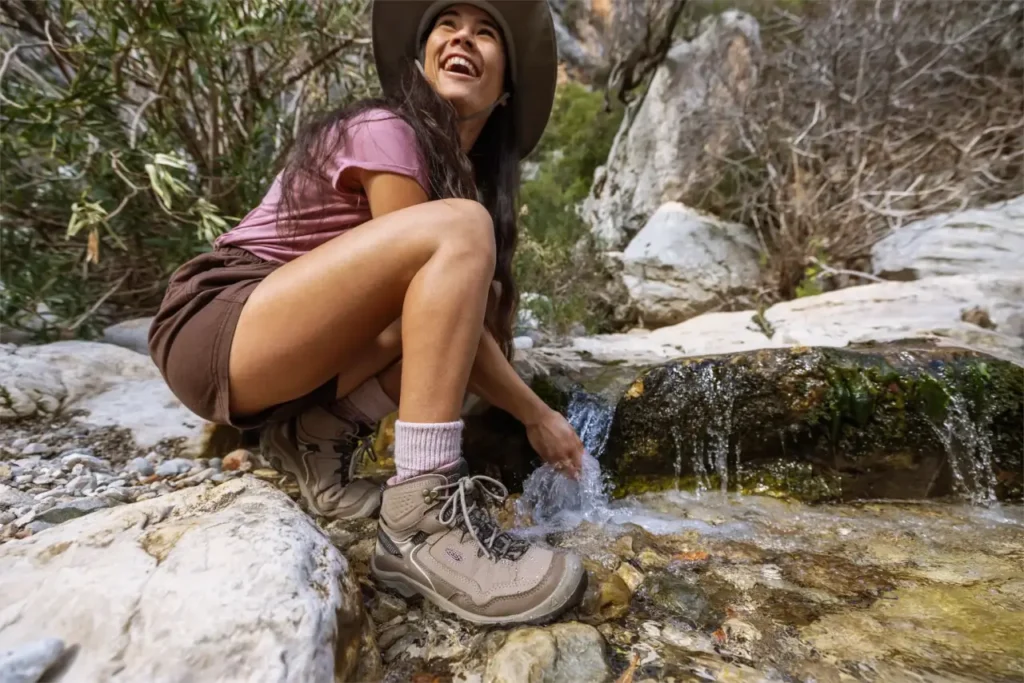
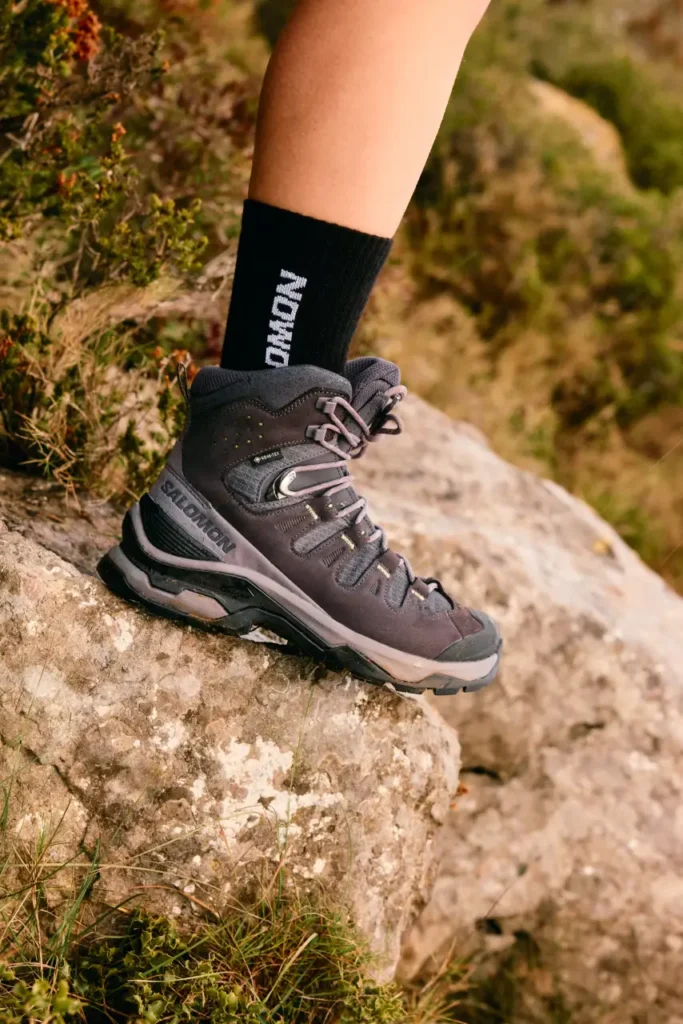
A rocky descent can tell the truth about hiking boots fast. Loose gravel shifts underfoot, roots grab at tired ankles, and a loaded pack makes every uneven step feel a little more demanding. That is where a supportive hiking boot earns its place. 🥾
The best hiking boots for support do more than cover the ankle. They create a steady platform underfoot, hold the heel securely, protect the arch from trail fatigue, and give enough traction to feel confident when the trail turns rough, wet, or steep.
This guide focuses on current, trail-ready hiking boots that make sense for real outdoor use: rugged day hikes, weekend backpacking trips, long national park trails, shoulder-season weather, and routes where comfort and stability matter more than shaving every ounce.
Our Top Hiking Boots for Support & Stability
| Boot Model | Price | Best For |
|---|---|---|
| Salomon Quest 5 GTX | $$$ | Overall Support & Heavy Loads |
| Lowa Renegade Evo GTX Mid | $$$ | All-Around Comfort & Versatility |
| La Sportiva Aequilibrium Hike GTX | $$$ | Lightweight Technical Support |
| HOKA Kaha 3 GTX | $$$ | Maximum Cushioning & Joint Comfort |
| Oboz Bridger Peak GTX | $$$ | Maximum Stability on Rugged Terrain |
| Merrell Moab Speed 2 Mid GTX | $$ | Modern Lightweight Comfort & Value |
How to Choose the Best Hiking Boots for Support
A supportive hiking boot starts with fit. Stiff midsoles, tall cuffs, waterproof membranes, and aggressive outsoles all matter, but none of them will save a boot that lets the heel slip, pinches the toes, or creates hot spots after two miles.
The right boot should feel secure through the heel and midfoot, roomy enough in the toe box, and stable when stepping across uneven ground. A good boot helps the foot work less hard over long miles, especially when carrying a pack. 🌲
Ankle Support & Cuff Height
The most visible support feature is cuff height, but ankle support is not only about how tall the boot is.
- Mid-height boots sit above the ankle bone and work well for most hikers. They offer a useful balance of ankle coverage, flexibility, and comfort for rugged day hikes, moderate backpacking loads, and uneven terrain.
- Higher, burlier boots add more structure around the ankle and usually feel more stable under a heavy pack. These are better for long backpacking trips, loose rock, wet mountain trails, off-trail sections, and hikers who want a more locked-in feel.
A hiking boot cannot fully prevent ankle rolls, but a stable cuff, supportive heel counter, and firm underfoot platform can reduce that wobbly feeling that shows up late in the day.
Midsole & Shank: The Unsung Heroes
The midsole sits between the foot and outsole. It provides cushioning, absorbs impact, and helps determine how stable or flexible the boot feels.
- EVA foam is usually lighter and softer. It feels comfortable quickly and works well for hikers who want cushioning without a stiff boot feel.
- PU midsoles tend to be firmer and more durable. They often hold their shape better under heavier loads.
- Shanks, plates, and chassis systems add structure inside the boot. These features help prevent excessive twisting, protect the foot from sharp rocks, and reduce fatigue on long miles.
For support, this internal structure matters as much as ankle height. A low-cut shoe with a stiff, stable platform can sometimes feel more supportive than a tall boot with a soft, twisty midsole.
Outsole & Traction
Support only works if the boot grips the ground well. Look for a durable rubber outsole with lugs that match the terrain.
Deep lugs help on mud, loose dirt, and soft forest trails. Stickier rubber is helpful on wet rock, roots, and mixed alpine surfaces. Outsoles from brands like Vibram and Salomon’s Contagrip are common on serious hiking boots because they provide dependable traction across varied trail conditions. ⛰️
A defined heel brake also helps on descents. When hiking downhill with tired legs or a pack, that extra bite can make each step feel more controlled.
Fit and Lacing System
Fit is the most important part of buying supportive hiking boots.
A good fit should feel snug around the heel and midfoot, with enough room in the toe box for natural toe spread. On climbs, the heel should not lift with every step. On descents, toes should not slam into the front of the boot.
Look for boots with sturdy top hooks, secure eyelets, and ideally some separation between forefoot and ankle lacing. That lets the lower foot stay comfortable while the ankle and heel stay more locked in.
Try boots on later in the day when feet are slightly swollen, and wear the same socks planned for hiking.
The Best Hiking Boots for Support Reviewed
The hiking boots below were chosen for supportive construction, current product relevance, comfort, traction, and practical trail use. The list prioritizes boots that are available through trusted outdoor retailers and make sense for U.S. hikers planning real trail miles.
Salomon Quest 5 GTX: Best Overall Support & for Heavy Loads
The Salomon Quest 5 GTX is the most supportive all-around hiking boot on this list for backpackers and hikers carrying weight over rough terrain. It keeps the serious, stable feel that made the Quest line popular, but the newest generation feels a little more refined and less clunky than older versions.
This is a boot for hikers who want structure. The 4D Advanced Chassis helps stabilize the foot, the cuff gives strong ankle coverage, and the outsole is built for rocky, wet, muddy, and mixed terrain. It feels ready for long days when the trail gets uneven and the pack is not exactly light.
| Spec | Detail |
| Weight (Pair) | ~2 lbs. 4 oz. to 2 lbs. 9 oz., depending on size/version |
| Waterproofing | GORE-TEX |
| Upper Material | Nubuck leather / textile |
| Midsole | EnergyCell foam |
| Support | 4D Advanced Chassis™ |
| Outsole | All Terrain Contagrip® |
Key Features & Why They Matter
- 4D Advanced Chassis™: Helps control side-to-side movement and adds stability on uneven ground.
- GORE-TEX Waterproofing: Keeps feet protected during rain, wet grass, mud, and shallow crossings.
- All Terrain Contagrip® Outsole: Provides dependable grip across varied surfaces.
- Backpacking-Ready Build: Offers more structure than lightweight day hiking boots.
Real-World Performance
The Quest 5 GTX is the boot to consider for backpacking in the Rockies, hiking rugged sections of the Appalachian Trail, tackling long mountain descents, or carrying a heavier pack on uneven terrain. It feels planted when the trail is rocky, loose, or wet.
It is not the best choice for easy neighborhood trails or casual summer walks. The support is real, but so is the structure. Hikers who want a soft, flexible boot may prefer something lighter. For heavy loads and serious terrain, though, this is the safest top pick. 🏔️
- What We Like: Excellent stability, strong ankle support, confidence on rugged terrain, protective build.
- What We Don’t: More boot than needed for casual day hikes; can feel warm in hot weather.
Best For: Backpackers, hikers carrying heavier loads, and anyone who wants maximum support on rough trails.
Check Price & Availability at REI
Lowa Renegade Evo GTX Mid: Best All-Around Comfort & Versatility
The Lowa Renegade Evo GTX Mid is the updated generation of one of the most trusted hiking boots on the trail. It keeps the classic Renegade formula—comfort, support, leather durability, and dependable traction—while refining the fit and upper construction.
This is the best boot here for hikers who want one pair to handle a little bit of everything. It is supportive enough for rough day hikes and weekend backpacking trips, but not as stiff or bulky as a heavy-duty backpacking boot.
| Spec | Detail |
| Weight (Pair) | ~2 lbs. 9 oz. |
| Waterproofing | GORE-TEX waterproof/breathable membrane |
| Upper Material | Nubuck leather |
| Midsole | DuraPU / DynaPU |
| Support | MONOWRAP frame |
| Outsole | Vibram Rene Trac rubber |
Key Features & Why They Matter
- MONOWRAP Frame: Wraps the foot for lateral support without making the boot feel overly rigid.
- Dual-Density PU Midsole: Balances cushioning and long-lasting underfoot structure.
- GORE-TEX Membrane: Adds reliable waterproof protection for wet trails and unpredictable weather.
- Refined Upper: Fewer seams can mean fewer pressure points and better long-term durability.
Real-World Performance
The Renegade Evo GTX Mid is a great choice for hikers who want comfort and support without going full backpacking boot. It works well for long day hikes, national park trails, moderate backpacking loads, and travel where terrain changes from pavement to dirt to rock.
It is not the lightest option, and the price is premium. But for hikers who want a boot that feels stable, durable, and comfortable across many types of trails, this is one of the most balanced choices available. 🌲
- What We Like: Comfortable, versatile, supportive, durable, excellent all-around trail feel.
- What We Don’t: Expensive; heavier than modern fast-hiking boots.
Best For: Hikers who want one supportive boot for day hikes, weekend trips, travel, and varied terrain.
Check Price & Availability at REI
La Sportiva Aequilibrium Hike GTX: Best Lightweight Technical Support
The La Sportiva Aequilibrium Hike GTX is a more current, technical hiking boot for hikers who want support without the traditional leather-boot feel. It brings a lighter, more agile personality to this list while still offering waterproof protection, a mid-cut profile, and rugged trail capability.
This is the boot for hikers who move through mixed terrain, rocky trail, and long mileage days but do not want a heavy backpacking boot. It feels more athletic than the Salomon Quest 5 or Oboz Bridger Peak, while still offering more support and protection than a hiking shoe.
| Spec | Detail |
| Weight (Pair) | Varies by size |
| Waterproofing | GORE-TEX |
| Upper Material | Synthetic / abrasion-resistant materials |
| Midsole | Cushioned hiking platform |
| Support | Mid-cut technical hiking structure |
| Outsole | Vibram-style technical hiking traction, depending on version |
Key Features & Why They Matter
- Lightweight Technical Build: Feels nimble on mixed terrain without giving up ankle coverage.
- GORE-TEX Waterproofing: Adds weather protection for wet trails and shoulder-season hikes.
- Abrasion-Resistant Construction: Helps protect high-wear areas from rock and trail scuffs.
- Aequilibrium-Inspired Design: Brings La Sportiva’s mountain-footwear DNA into a more hiking-focused boot.
Real-World Performance
The Aequilibrium Hike GTX is a strong option for hikers who like a precise, technical feel. It makes sense for alpine day hikes, rocky trails, fast-moving backpacking trips, and terrain where secure foot placement matters.
It is not the most cushioned boot in this guide, and hikers with wide feet should pay close attention to fit. La Sportiva often has a more performance-oriented shape, which can feel fantastic for some hikers and too snug for others.
- What We Like: Lightweight support, technical traction, agile feel, good protection for rocky terrain.
- What We Don’t: Fit may feel narrow; less plush than comfort-first boots.
Best For: Hikers who want a modern, technical boot for rocky terrain, long days, and lighter backpacking loads.
Check Price & Availability at REI
HOKA Kaha 3 GTX: Best for Maximum Cushioning
The HOKA Kaha 3 GTX is built for hikers who want the trail to feel softer underfoot. It combines HOKA’s plush cushioning with waterproof protection, a grippy Vibram Megagrip outsole, and a supportive hiking-boot profile.
This is the comfort pick for long miles, hard-packed trails, rocky descents, and hikers who often finish the day with sore feet or tired joints. The Kaha 3 feels more cushioned than most traditional hiking boots, but it still has enough structure to handle real trail use.
| Spec | Detail |
| Weight (Pair) | ~2 lbs. 8 oz. to 2 lbs. 10 oz., depending on size/version |
| Waterproofing | GORE-TEX Invisible Fit |
| Upper Material | Waterproof nubuck leather / textile |
| Midsole | Dual-density sugarcane EVA |
| Outsole | Vibram Megagrip with Traction Lug |
| Drop | ~7 mm |
Key Features & Why They Matter
- Dual-Density Midsole: Adds soft impact absorption without feeling completely unstable.
- GORE-TEX Invisible Fit: Helps reduce bulk while keeping waterproof protection.
- Vibram Megagrip Outsole: Offers strong traction on wet and dry terrain.
- Achilles-Friendly Collar: Designed to reduce pressure around the back of the ankle.
Real-World Performance
The Kaha 3 GTX is excellent for hikers who value cushioning over ground feel. It works well for long national park hikes, hut-to-hut routes, moderate backpacking trips, and hikers who want more shock absorption on descents.
The tradeoff is precision. The cushioned platform can feel less connected on very technical rock or narrow footing. Hikers who prefer a firm, low-to-the-ground boot may not love the ride. But for comfort and joint-friendly support, the Kaha 3 GTX is one of the strongest options here. 🏕️
- What We Like: Plush cushioning, strong traction, smooth ride, good waterproof protection.
- What We Don’t: Bulky feel; less precise on technical terrain.
Best For: Hikers who want maximum cushioning, shock absorption, and comfort over long miles.
Check Price & Availability at REI
Oboz Bridger Peak GTX: Best Maximum Stability on Rugged Terrain
The Oboz Bridger Peak GTX is the burliest boot in this guide. It is built for hikers who want maximum support, rugged leather durability, waterproof protection, and a more traditional mountain-boot feel.
This is the step-up choice from lighter Oboz hikers. Compared with the classic Bridger Mid, the Bridger Peak GTX is more technical, more protective, and better suited for rougher terrain. It is not designed to feel featherlight. It is designed to feel secure when the trail gets rocky, steep, wet, or off-camber.
| Spec | Detail |
| Weight (Pair) | Varies by size/version |
| Waterproofing | GORE-TEX waterproof/breathable membrane |
| Upper Material | Rugged leather |
| Midsole | Supportive hiking platform |
| Support | Maximum stability construction |
| Outsole | Vibram Megagrip rubber |
Key Features & Why They Matter
- Maximum Stability Design: Built for hikers who prioritize support and protection over light weight.
- GORE-TEX Waterproofing: Helps keep feet dry in wet, muddy, and shoulder-season conditions.
- Vibram Megagrip Outsole: Adds dependable traction on rugged trail surfaces.
- Protective Leather Upper: Provides abrasion resistance for rocky terrain and long-term durability.
Real-World Performance
The Bridger Peak GTX makes sense for hikers who carry heavy packs, hike rough trails, or want more protection than a lightweight boot can provide. It is especially useful for rocky mountain routes, wet forest trails, off-trail approaches, and hikers who like a secure, substantial boot.
This is not the best choice for casual day hikes, warm-weather walking, or hikers who dislike stiff footwear. It needs to be matched to terrain that justifies the build. When the route is rough enough, that extra structure is exactly the point. 🌧️
- What We Like: Excellent stability, rugged construction, strong protection, grippy Vibram outsole.
- What We Don’t: Heavy and expensive; more boot than many day hikers need.
Best For: Hikers who want maximum support and protection for rugged terrain, heavy packs, and tough conditions.
Check Price & Availability on Amazon
Merrell Moab Speed 2 Mid GTX: Best Modern Lightweight Comfort & Value
The Merrell Moab Speed 2 Mid GTX is the modern evolution of the Moab idea: approachable comfort, dependable traction, waterproof protection, and a lighter, more athletic feel than a traditional hiking boot.
The classic Merrell Moab 3 Mid Waterproof is still a smart budget boot, but the Moab Speed 2 Mid GTX is the more current pick for this guide. It brings a faster, more cushioned, more modern feel while still keeping enough structure for day hikes and light backpacking.
| Spec | Detail |
| Weight (Pair) | ~2 lbs., depending on version/size |
| Waterproofing | GORE-TEX waterproof membrane |
| Upper Material | Nylon ripstop / TPU overlays |
| Midsole | Cushioned foam platform |
| Support | FlexPlate-style stability design |
| Outsole | Vibram TC5+ rubber |
Key Features & Why They Matter
- Modern Moab Speed Platform: Blends Moab comfort with a faster, lighter hiking feel.
- GORE-TEX Waterproofing: Adds dependable weather protection.
- Vibram TC5+ Outsole: Gives solid traction for the price and weight.
- Cushioned Midsole: Helps reduce fatigue on long day hikes and packed trails.
Real-World Performance
The Moab Speed 2 Mid GTX is ideal for hikers who want comfort right away and do not need a heavy backpacking boot. It works well for maintained trails, rolling forest paths, desert hikes, national park routes, and light overnight trips.
It is not the best option for very heavy packs or rough off-trail travel. For that, the Salomon Quest 5 GTX or Oboz Bridger Peak GTX will feel more secure. But for hikers who want a modern, comfortable, supportive boot without going overly stiff, this is one of the best practical picks.
- What We Like: Comfortable, lighter feel, good traction, waterproof, more modern than the classic Moab.
- What We Don’t: Not as supportive as heavy-duty backpacking boots; less protective than leather options.
Best For: Day hikers, fast hikers, beginner backpackers, and anyone who wants a comfortable modern boot for moderate trails.
Check Price & Availability on Amazon
Final Verdict: Finding Your Foundation
The best hiking boots for support should match the way the trail actually gets used. A heavy backpack on loose rock needs a very different boot than a five-mile day hike on packed dirt.
For the strongest all-around support, the Salomon Quest 5 GTX is the top pick. It is stable, protective, and ready for loaded backpacking trips. For the best balance of comfort, durability, and everyday trail versatility, the Lowa Renegade Evo GTX Mid is the easiest boot to recommend to a wide range of hikers. 🥾
For technical terrain with a lighter feel, the La Sportiva Aequilibrium Hike GTX is the best modern option. For maximum cushioning and joint-friendly comfort, the HOKA Kaha 3 GTX stands out. For rugged protection and maximum stability, the Oboz Bridger Peak GTX is the burly choice. And for modern comfort at a more approachable weight and price, the Merrell Moab Speed 2 Mid GTX is a smart, trail-friendly pick.
Start with fit, then match the support level to the terrain, pack weight, and mileage. A boot should feel steady, comfortable, and natural—not just impressive on a spec sheet.
Frequently Asked Questions (FAQ)
1. How should hiking boots fit?
Hiking boots should feel snug through the heel and midfoot, with enough room in the toe box for natural toe spread. There should be roughly a thumb’s width of space between the longest toe and the front of the boot.
Heel lift should be minimal, and toes should not hit the front of the boot on descents. Try boots on later in the day, when feet are slightly swollen, and wear the hiking socks planned for the trail.
2. Do supportive hiking boots need to be waterproof?
Not always. Waterproof boots are useful for rain, mud, wet grass, stream crossings, and shoulder-season hiking. They help keep feet dry, which can reduce discomfort and blister risk in wet conditions.
In hot, dry climates, non-waterproof boots or hiking shoes may be more comfortable because they breathe better and dry faster. For desert trails, summer hikes, and warm-weather day trips, breathability can matter more than waterproofing.
3. How long does it take to break in hiking boots?
It depends on the boot. Lighter, more flexible models like the Merrell Moab Speed 2 Mid GTX often feel comfortable quickly. Stiffer boots like the Salomon Quest 5 GTX or Oboz Bridger Peak GTX may need several short hikes before a long trip.
Wear new boots around the house first, then take them on shorter local trails before committing to a big hike or backpacking route.
4. What’s the difference between hiking boots and hiking shoes?
Hiking boots usually have a mid or high cuff, more structure, and better ankle coverage. Hiking shoes are lower-cut, lighter, and more flexible.
Boots are better for rocky trails, wet conditions, heavier packs, and hikers who want more stability. Hiking shoes are better for maintained trails, lighter loads, faster movement, and warmer weather.
5. Are heavier hiking boots more supportive?
Often, but not always. Heavier boots usually include more leather, thicker midsoles, stronger shanks, and more protective materials. That can make them more supportive under load.
However, some modern lightweight boots use chassis systems, supportive foam, and stable outsole designs to provide impressive structure at a lower weight. The better question is whether the boot has enough support for the terrain and pack weight.
6. What is the best hiking boot for ankle support?
For maximum ankle support and backpacking stability, the Salomon Quest 5 GTX is the best overall pick in this guide. For a more balanced hiking boot that still provides excellent support, the Lowa Renegade Evo GTX Mid is a strong choice.
Hikers who need the most rugged, protective build should also consider the Oboz Bridger Peak GTX.
7. Should hikers with foot pain choose more supportive boots?
Supportive boots can help some hikers feel more stable and comfortable, especially when they include a secure heel fit, structured midsole, and supportive footbed. But foot pain is personal.
Hikers dealing with plantar fasciitis, chronic ankle issues, or recurring trail pain may benefit from professional fitting, supportive insoles, or medical guidance before committing to a specific boot.
Affiliate Disclosure: GearForTheOutdoors.com participates in affiliate programs, including REI, Amazon, REI Outlet, Garage Grown Gear, evo, and other trusted partners. When a purchase is made through GearForTheOutdoors.com links, the site may earn a small commission at no extra cost to the reader. That helps support the content and keeps recommendations useful, practical, and free.
Disclaimer: This post is for informational purposes only. Always verify current product details, fit, availability, safety information, and manufacturer warranties before purchase or use. Outdoor conditions and gear performance can vary depending on setup, weather, terrain, and experience level.