Getting ready for a first camping trip is exciting right up until the gear lists start to pile up.
At first, camping sounds simple: a tent, a campfire, a quiet night outside, maybe coffee in cool morning air. Then the research begins, and suddenly every checklist makes it sound like a beginner needs half an outdoor store just to spend one weekend at a campground.
That’s usually where things start to feel harder than they need to be.
The good news is that a first trip does not require an advanced setup, a giant budget, or a truck full of gear. What matters most is covering the basics well: staying dry, sleeping comfortably, eating simply, and having a campsite that feels manageable instead of chaotic. 😊
This guide breaks down the best camping essentials for beginners with that exact goal in mind. It keeps the same practical checklist structure, but updates the product recommendations so they better match active affiliate programs and current live retail options from approved partners like REI, Amazon, Kelty, GCI Outdoor, and GSI Outdoors. Products like the current REI Co-op Half Dome 2 Plus Tent with Footprint, REI Co-op Siesta Hooded 20 Sleeping Bag, and REI Co-op Campwell Sleeping Pad are live on REI, while options like the older Trailbreak 20 and older Camp Bed page are no longer ideal as written.
Quick Take: The 10 Essential Camping Systems
If time is short, here’s the big-picture version. For a smooth first car camping trip, these are the ten systems worth getting right first.
- Shelter: A reliable, weather-ready tent.
- Sleep System: A sleeping bag, sleeping pad, and pillow that help deliver real rest.
- Camp Kitchen: A simple way to cook, eat, and store food safely.
- Campsite Comfort: Chairs and lighting that make camp easier to enjoy.
- Clothing & Footwear: Flexible layers for changing conditions.
- Navigation: A plan for getting around, even if it’s mostly campground use.
- Safety & First Aid: A few basics for small problems and surprises.
- Personal Items: Toiletries and simple comforts that make camp feel easier.
- Food & Water: A realistic meal plan and enough water for drinking and cleanup.
- Organization: Bins, bags, and systems that keep gear from turning into a mess.
The “Big Three”: Your Shelter & Sleep System
For beginners, this is the foundation. If the tent holds up in weather, the sleeping bag keeps the cold off, and the sleeping pad insulates against the ground, the trip already starts from a much better place.
That’s why experienced campers often spend the most energy getting these pieces right first. The extras can come later. A warm, dry, comfortable night outside is what makes a first trip feel like something worth repeating. 🌲
| Gear Item | What to Look For (Beginner Focus) | Our Go-To Recommendation |
|---|---|---|
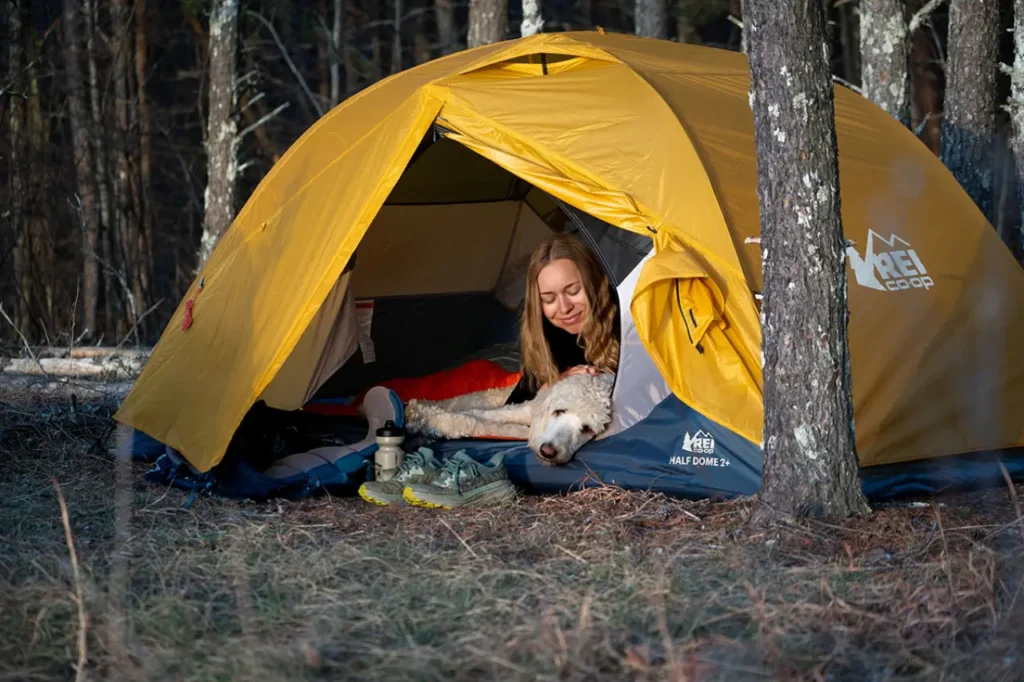
| Tent | Capacity: “2P” means two people, snugly. Size up for more room. Weather Protection: A full-coverage rainfly is non-negotiable. Ease of Use: Look for simple pole structures and color-coding. | REI Co-op Half Dome 2 Plus Tent with Footprint |
| Sleeping Bag | Temperature Rating: A 20°F bag is a versatile 3-season choice for many beginner campground trips. Insulation: Synthetic is affordable, forgiving, and better for damp conditions. | REI Co-op Siesta Hooded 20 Sleeping Bag |
| Sleeping Pad | Type: Self-inflating pads offer a great balance of comfort and simplicity. Insulation: Aim for a pad built for 3-season camping, not a thin emergency layer. | REI Co-op Campwell Sleeping Pad |
1. Tent: Your Home Away From Home
A tent does more than provide a place to sleep. It gives a beginner a sense of having a real basecamp: somewhere dry to stash gear, change clothes, wait out wind or rain, and settle in once the day winds down.
That’s why beginner tent advice should focus less on buzzwords and more on livability. A first tent does not need to be ultralight, highly technical, or built for remote alpine weather. It does need to feel reliable, easy to set up, and roomy enough that using it doesn’t feel cramped and frustrating.
What to Look For:
- Capacity: Tent capacity ratings are still optimistic. A 2-person tent usually means two adults fit, but with limited elbow room and not much extra space for bags. For couples or anyone who wants extra breathing room, sizing up is often the smarter beginner move.
- Rainfly: A full-coverage rainfly matters. It’s one of the clearest signs that a tent is built for real weather protection rather than only fair-weather use.
- Setup: Freestanding designs with straightforward pole structures and color-coded pieces make first-day setup far less stressful.
A Great First Tent: The REI Co-op Half Dome 2 Plus Tent with Footprint is a much better current fit than the older version originally listed. It’s a live REI product, and its bigger “Plus” layout makes sense for beginners who want more comfort inside the tent instead of the tightest possible footprint. REI also describes it as keeping the easy setup and protective rainfly of the standard Half Dome while adding more living space.
2. Sleeping Bag: Your Cozy Cocoon
A beginner sleeping bag should make camp feel welcoming, not restrictive. That usually means avoiding overly specialized picks and leaning toward something warmer, roomier, and simpler to use.
A lot of first-time campers picture cold-weather performance as the only thing that matters. In practice, comfort matters just as much. If a bag feels too narrow, clammy, or fussy, sleep quality drops quickly. And if sleep quality drops, everything else feels harder the next day.
What to Look For:
- Temperature Rating: For many spring-through-fall campground trips in the U.S., a 20°F-rated synthetic bag is a strong all-around starting point.
- Insulation Type: Synthetic insulation is usually the better beginner choice because it’s lower-maintenance, more affordable, and more forgiving when moisture is part of the equation.
- Shape: For front-country camping, a roomier rectangular or relaxed-fit bag often feels better than a tight mummy shape.
A Solid Beginner Bag: The REI Co-op Siesta Hooded 20 Sleeping Bag is a much stronger current replacement for the older Trailbreak 20 recommendation. It’s a live REI product, uses synthetic insulation, is built for cool-weather car-camping nights, and has a rectangular shape that gives beginners more room to stretch and turn.
3. Sleeping Pad: The Unsung Hero
A beginner can get by with a basic chair, a borrowed pot, or a simple cooler. A bad night on the ground is harder to forgive.
Sleeping pads matter for two reasons: comfort and insulation. Most beginners think of them as just cushioning, but the bigger job is blocking ground cold. Even on mild nights, the ground can drain warmth fast, which is why a proper pad often matters almost as much as the sleeping bag itself.
What to Look For:
- Insulation: For general 3-season camping, a real insulated pad is worth it.
- Type:
- Foam Pads: Cheap and durable, but not the most comfortable.
- Self-Inflating Pads: One of the best categories for beginners because they’re easy to use and much more forgiving than thin foam.
- Air Pads: Often more compact, but not always the easiest first choice for car camping.
A Comfortable First Pad: The REI Co-op Campwell Sleeping Pad is the right kind of update here. It replaces the older unavailable Camp Bed page with a live REI option that’s still clearly aimed at car-camping comfort, with plush padding and a self-inflating design.
The Camp Kitchen: Fueling Your Adventure
Camp cooking does not need to be complicated to be satisfying. In fact, first-trip camp meals are usually better when they’re simple: easy breakfasts, one-pan dinners, minimal cleanup, and a kitchen setup that feels organized instead of chaotic.
That’s especially true for beginners. A first camp kitchen should lower friction, not create a new hobby project. ☕
4. Stove & Fuel
Campfire cooking sounds great until the firewood is damp, the fire ring is smoky, or local rules restrict open flames. That’s why a camp stove is still the easiest beginner answer.
A two-burner propane stove feels familiar enough that cooking at camp doesn’t turn into guesswork. It makes mornings easier, gives dinner more consistency, and removes a lot of stress from the whole experience.
What to Look For: Stable cooking space, easy ignition, simple temperature control, and a design that’s easy to transport and clean.
- Our Pick: The Coleman Fold ‘N Go 2-Burner Propane Stove is a stronger current beginner recommendation than the older generic stove mention. Amazon lists it as a portable two-burner stove with adjustable burners, a built-in carry handle, easy cleanup, and push-button ignition, which is exactly the kind of low-fuss functionality beginners tend to appreciate.
- Don’t Forget Fuel! Standard 1-lb propane canisters are still the simplest answer for this type of setup. Bring a spare for peace of mind.
5. Cooler
A first cooler does not need to be huge, premium, or expensive. It just needs to keep food cold for the length of the trip and make it easy to stay organized.
For a beginner weekend, something in the mid-size range is usually enough for two people. Bigger is not always better, especially when a fully loaded cooler becomes awkward to move or difficult to repack.
What to Look For: Enough capacity for a weekend, manageable weight when filled, and a shape that fits easily in the car and at the campsite.
- Tip: Pre-chilling the cooler with a sacrificial bag of ice the night before still makes a real difference. Start cold, pack cold food, and the ice lasts longer. 🧊
6. Cookware & Dishes
There’s no rule saying a first-time camper needs a dedicated cookware kit. A pot, pan, spatula, cutting board, and a few kitchen basics from home are perfectly fine for a first trip.
That said, a dedicated camp cookset becomes useful quickly because it’s easier to store, easier to pack, and easier to keep with the rest of the camp kitchen gear.
If a dedicated set makes sense, the older GSI recommendation should be updated. A better current option is a GSI cookset category pick like the GSI Outdoors Glacier Stainless Base Camper Cookset or another current live GSI camper-oriented set available through REI. REI’s current GSI cookset lineup includes live options like the Glacier Stainless Base Camper Cookset and Bugaboo Base Camper Ceramic Cookset, which fit the beginner-friendly camp kitchen angle better than leaving this section tied to an outdated product mention.
For dishes, durable plastic, stainless, or enamelware still works well. The best beginner dish set is usually the one that’s easy to clean and not annoying to pack.
7. Water Storage
Even when a campground has potable water, having water right at camp is a big quality-of-life upgrade. It makes handwashing, cooking, brushing teeth, and quick cleanup much easier.
What to Look For: A rigid water container in the 5-gallon range with a simple spigot or easy-pour design.
The Igloo 5-Gallon Water Cooler is still a practical beginner option in this category, and Amazon currently shows multiple live 5-gallon Igloo water-cooler listings. The exact variant can change, but the general recommendation still holds: a simple 5-gallon water container is far more useful in camp than relying on bottles alone.
Campsite Life & Comfort
This is the category that turns a campsite from a functional place to sleep into a place that actually feels good to spend time in.
Beginners often plan for the “big stuff” but forget how much a trip depends on the little daily moments: sitting by the fire, making coffee in dim light, finding socks in the tent, walking to the restroom after dark, or just relaxing after dinner. These details matter more than they seem. ✨
8. Lighting: See and Be Seen
Good camp lighting solves problems fast. It makes setup easier, cooking safer, bathroom walks less annoying, and the whole camp feel more settled once the sun drops.
A phone flashlight works as backup, but it’s not a great main light source. It drains battery, ties up a hand, and becomes a weak point if the phone is also needed for maps, emergency calls, or weather checks.
- Headlamp (Essential): The Black Diamond Spot 400 remains a strong recommendation here because it’s still a live REI product and offers the kind of brightness, hands-free convenience, and red-light functionality that works well around camp. REI also names it among strong current headlamp options, and REI’s headlamp testing roundup still includes the Spot 400 among top performers.
- Lantern (Nice to Have): An LED lantern still makes sense for shared camp light, especially around the picnic table or while winding down in the evening.
9. Camp Chairs
A camp chair may seem optional until the first long evening in camp. After that, it usually feels essential.
For beginners, chair advice should stay practical. The best first camp chair is not the one with the most clever features. It’s the one that’s comfortable enough to use every night and sturdy enough to make sitting around camp actually enjoyable.
The older REI chair mention should be updated here. A stronger current pick is the GCI Outdoor Freestyle Rocker Chair, which is a live REI product, fits an approved affiliate brand from the master table, and adds stable comfort with a simple campsite-friendly folding design. REI lists features like padded armrests, a beverage pocket, and quick folding for transport, which makes it an especially beginner-friendly chair recommendation.
10. Tools & Safety
A beginner does not need a full repair station or overbuilt emergency kit. But a few basics matter every trip.
- First-Aid Kit: The Adventure Medical Kits Mountain Series Hiker Medical Kit is still a live REI product and remains a smart recommendation for beginner trips. REI describes it as tailored for basic first-aid needs for two people on a short adventure, which lines up nicely with entry-level camping.
- Multi-Tool or Knife: Still one of the most useful small camp items for basic fixes, food prep help, or quick gear tasks.
- Navigation: For a developed campground, a phone with offline maps plus a power bank is usually enough. Downloading maps before leaving home remains one of the simplest ways to avoid frustration later.
Clothing & Personal Items
The easiest way to stay comfortable outdoors is to dress for change, not for a single moment in the forecast.
Mornings can feel chilly, afternoons warm, evenings damp, and nighttime colder than expected. That’s why layering matters so much for beginners. It’s flexible, realistic, and usually more useful than packing one bulky piece and hoping for the best. 🌤️
11. The Layering System
A simple three-layer system still works best:
- Base Layer: Something moisture-wicking against the skin, ideally synthetic or merino. Avoid cotton when conditions may turn cool or damp.
- Mid Layer: Fleece or insulated warmth for early mornings, breezy afternoons, and evenings around camp.
- Outer Layer (Shell): A rain jacket or weather shell that can block wind and light rain.
This system is easier to adjust and usually more comfortable than relying on one heavy piece.
12. Footwear & Socks
- Footwear: Heavy boots are not automatically necessary for beginner campground use. Comfortable trail runners, light hikers, or practical outdoor shoes are often a better first choice unless the trip includes rougher hiking.
- Socks: Good socks still matter more than many beginners expect. Wool or synthetic socks reduce moisture buildup, improve comfort, and help prevent blisters. Brands like Darn Tough and Smartwool continue to be worth considering if hiking becomes a bigger part of the trip.
13. Personal Items & Toiletries
A small toiletry bag keeps camp life simpler. It doesn’t need to be fancy, just organized.
Pack these basics:
- Toothbrush and toothpaste
- Sunscreen and lip balm with SPF
- Insect repellent
- Personal medications
- Quick-dry towel
- Biodegradable soap
That’s usually enough to stay comfortable for a weekend without overpacking.
What You Don’t Need for Your First Trip
Just as helpful as knowing what to pack is knowing what can stay home.
The outdoor world is full of gear that looks impressive but adds very little to a beginner campground trip. Skipping those things makes packing easier, saves money, and keeps the whole trip less overwhelming.
- A Hatchet or Saw: Most beginner campgrounds sell firewood, and collecting wood is often restricted anyway.
- A Complicated Water Filter: If the campground has potable water, use it.
- A GPS Unit: For most front-country trips, a phone with offline maps is enough.
- An Expensive “Survival” Knife: A basic pocketknife or multi-tool is more practical.
- Camp Shower: For a weekend trip, campground facilities or a simple cleanup routine are usually enough.
Final Thoughts: Keep it Simple
The list of best camping essentials for beginners can look long on paper, but the real strategy is simple: focus on the pieces that make camping feel easier, warmer, drier, and less stressful.
That means putting more attention on the tent, sleeping bag, sleeping pad, stove, lighting, and a few smart comfort pieces than on flashy extras. It also means choosing products that are still current and actually fit the type of beginner trip most people are planning.
With the updated recommendations above, the gear list now aligns better with active programs and current sale pages: a live Half Dome tent, a live Siesta sleeping bag, a live Campwell sleeping pad, a current Coleman two-burner stove, a live GCI chair option, and current REI-listed first-aid and lighting picks.
That’s the kind of setup that helps a first trip feel fun instead of overcomplicated. 😊
Pack simply. Borrow what makes sense. Buy the basics that actually improve the experience. Then go camp.
FAQ for First-Time Campers
1. Can I just use blankets from home instead of a sleeping bag?
That’s usually not the best beginner move. Blankets, especially cotton ones, do not trap heat the same way a sleeping bag does, and they do nothing to insulate against the cold ground underneath. A proper bag-and-pad setup is usually much warmer and more comfortable.
2. What’s the easiest meal to make for a first camping trip?
Simple one-pot or one-pan meals are usually the easiest answer. Chili, pasta, soup, quesadillas, or breakfast sandwiches all work well because they keep cleanup manageable. The simpler the cooking, the more relaxed camp usually feels.
3. How do I choose a campground?
For a first trip, look for a state or national park campground with reservations, water access, restrooms, and clearly defined sites. A picnic table, fire ring, and nearby parking make beginner camping much easier.
Affiliate Disclosure: GearForTheOutdoors.com participates in affiliate programs, including REI, Amazon, REI Outlet, Garage Grown Gear, evo, and other trusted partners. When you purchase through our links, we may earn a small commission at no extra cost to you. That helps support our content and keeps our recommendations useful, practical, and free.
Disclaimer: This post is for informational purposes only. Always verify current product details, fit, availability, safety information, and manufacturer warranties before purchase or use. Outdoor conditions and gear performance can vary depending on setup, weather, terrain, and experience level.