The best modular storage system for car camping is one that fits your vehicle, keeps your equipment organized, and makes packing for every trip easier—not necessarily the most expensive or rugged option.
For most SUV campers, the Front Runner Wolf Pack Pro is a strong all-around choice. Its stackable, rectangular design makes it easy to create separate storage modules for cookware, tools, campsite accessories, and other essentials without wasting too much cargo space.
But different setups call for different solutions.
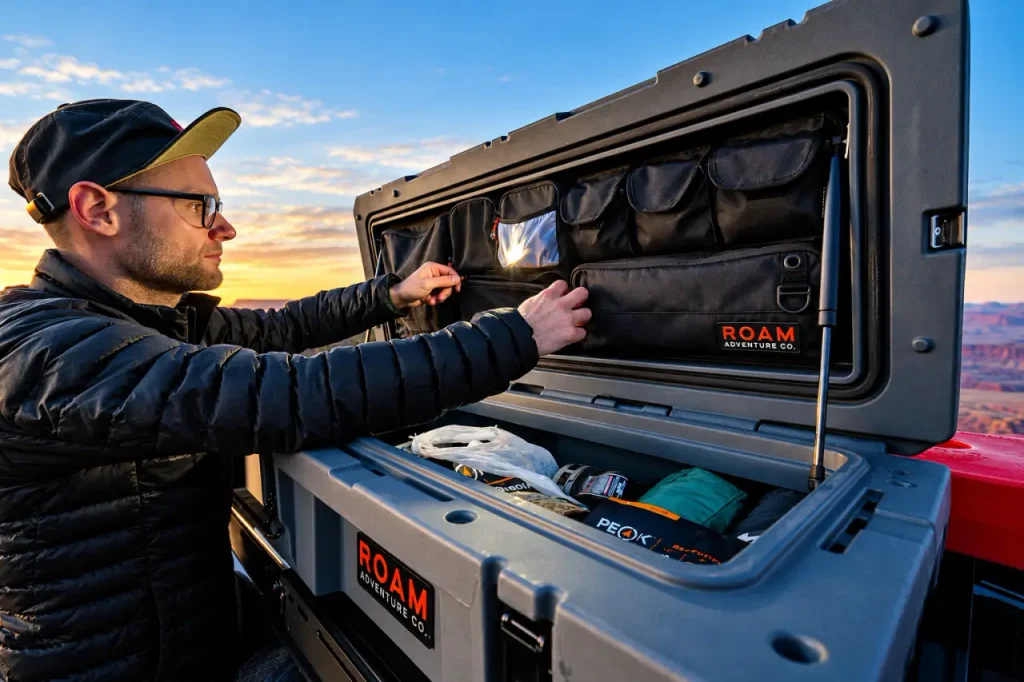
The ROAM Adventure Co. Rugged Case offers more protection for gear stored on roof racks or in exposed truck beds. Milwaukee PACKOUT is better for tools and highly organized small equipment, while the Plano Sportsman’s Trunk provides affordable storage for bulkier camping gear.
The real decision comes down to five things: stackability, access, lid design, dimensions, and SUV fit.
Here’s how the four systems compare, where each one works best, and how to build a repeatable storage setup that makes sense for your vehicle.
Best Modular Storage Systems for Car Camping: Quick Comparison
| Storage System | Best For | Main Advantage | Main Tradeoff |
|---|---|---|---|
| Front Runner Wolf Pack Pro | SUV camping and overlanding | Compact, consistent dimensions and secure stacking | Limited internal organization |
| ROAM Rugged Case | Roof racks and exposed storage | Protective construction and weather-resistant sealing | Heavy, bulky, and expensive |
| Milwaukee PACKOUT | Tools and specialized equipment | Locking modules and customizable organization | Weight, cost, and less efficient bulk storage |
| Plano Sportsman’s Trunk | Budget camping and bulky gear | Generous capacity at a lower cost | No true modular locking connection or weather seal |
Best overall for SUV camping: Front Runner Wolf Pack Pro
Best for exposed gear storage: ROAM Adventure Co. Rugged Case
Best for tools and accessories: Milwaukee PACKOUT
Best budget alternative: Plano Sportsman’s Trunk
One important distinction: these aren’t four versions of the same storage system.
Front Runner and ROAM use designs that allow compatible cases to stack. Milwaukee PACKOUT uses positive-locking connections between compatible modules. Plano offers conventional stackable trunks without mechanical connections between containers.
That difference affects how securely equipment stacks, how easily you can access it, and how efficiently it fits inside your vehicle.
1. Front Runner Wolf Pack Pro — Best Overall for SUV Camping
Best for: SUV owners, overlanders, and frequent car campers who want matching storage boxes for a repeatable packing system.
The Front Runner Wolf Pack Pro is one of the most practical options for organizing camping equipment inside a vehicle.
Its biggest advantage is simple: a compact, rectangular design that makes arranging several storage containers easier than working with mismatched household bins.
Each box measures approximately 20.1 x 15.7 x 9.1 inches externally, with a capacity of about 30 liters.
That manageable footprint makes the Wolf Pack Pro particularly useful for separating gear into dedicated modules rather than storing everything in one oversized trunk.
The polypropylene construction, strong latches, and gasket-lined lid also provide protection against dust and water exposure.
Why it works for car camping
The Wolf Pack Pro uses a nesting design that allows compatible boxes to stack securely.
Unlike a basic storage tote with a shallow lid groove, the molded design helps keep stacked containers aligned.
That is useful when organizing several boxes across an SUV cargo floor or incorporating them into a larger vehicle storage system.
A simple arrangement might include:
- One box for cookware, utensils, and kitchen accessories.
- One for lanterns, headlamps, cordage, and campsite essentials.
- One for tools, repair supplies, and vehicle accessories.
Because the containers share the same dimensions, you can rearrange them between trips without redesigning the entire cargo layout.
The system also works with compatible Front Runner accessories, including Transit Bags, foam dividers, rack-mounting hardware, and certain drawer systems.
An optional Hi-Lid adds approximately 2.3 inches of height when extra vertical space is needed.
Lid design and access
The Wolf Pack Pro uses a removable lid secured with metal latches.
This makes it easy to load equipment from above, but access becomes less convenient when several boxes are stacked.
If the kitchen box is at the bottom, you’ll have to move the containers above it before removing the lid.
The solution is to keep frequently accessed equipment in an upper box or arrange the modules side by side.
For more permanent vehicle setups, compatible drawer systems can improve access without requiring multiple boxes to be unstacked.
What to consider
The Wolf Pack Pro is primarily an open container without extensive built-in compartmentalization.
Small utensils, batteries, repair parts, and other accessories will benefit from smaller organizers or dividers.
Its relatively shallow interior also limits the height of cookware and other bulky objects.
Another consideration is compatibility. The Wolf Pack Pro isn’t designed to nest securely with the older standard Wolf Pack.
And while its sealing system offers strong protection against ordinary outdoor exposure, the box shouldn’t be treated as a submersible waterproof case.
Who should choose it?
The Wolf Pack Pro is particularly well suited to campers who regularly travel with the same equipment and want a few dedicated storage boxes that remain packed between trips.
It’s also a sensible choice if you may eventually expand into a Front Runner drawer or roof-rack organization setup.
For a typical SUV camping arrangement, its balance of dimensions, stacking stability, and portability is more useful than the additional bulk of many premium protective cases.
Check the Front Runner Wolf Pack Pro
2. ROAM Adventure Co. Rugged Case — Best for Exposed Storage
Best for: Overlanders and campers who need protective storage for roof racks, truck beds, or other exposed cargo areas.
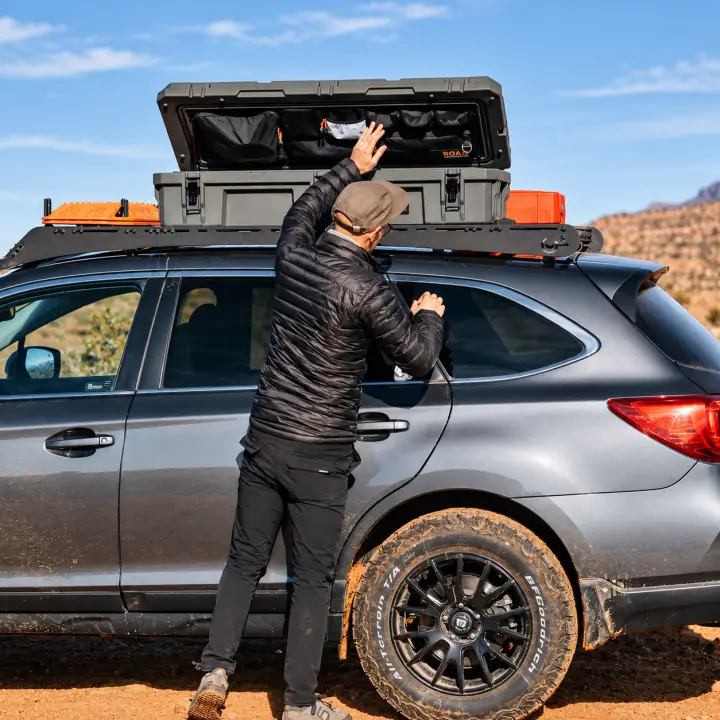
The ROAM Rugged Case takes a more protective approach to camping gear storage.
Its molded polyethylene construction, gasket sealing, steel latches, and assisted lid-opening hardware are designed for equipment that regularly travels outside the passenger compartment.
Instead of focusing on compact, standardized interior storage, ROAM offers cases in different capacities and shapes to accommodate larger or more specialized gear.
The 83L Rugged Case is a particularly useful example.
Its long, shallow design measures approximately 51.1 x 19.5 x 7.8 inches externally, making it better suited to lengthy equipment than conventional deep storage bins.
Why it works for car camping
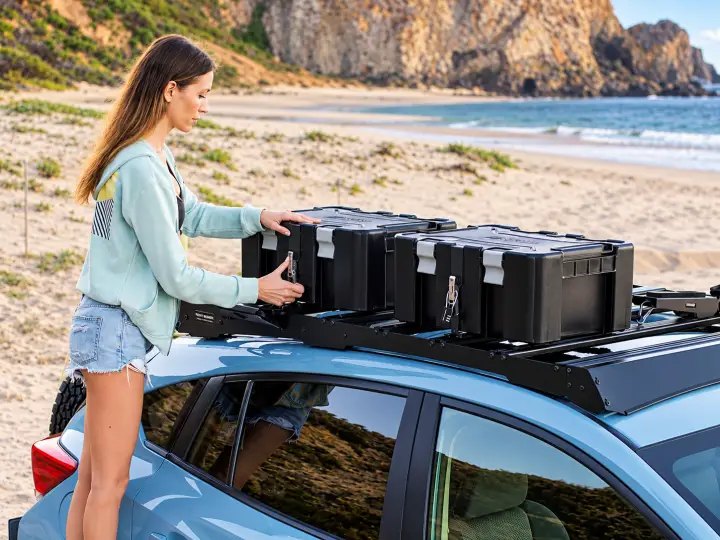
A ROAM Rugged Case makes the most sense when a vehicle’s interior cargo space is already occupied by passengers, a sleeping platform, a refrigerator, or other equipment.
Moving appropriate gear to the roof rack or truck bed can free up substantial interior space.
Depending on the case size, it may accommodate:
- Camp chairs and longer campsite accessories.
- Recovery straps and related equipment.
- Camp kitchen supplies.
- Tools and spare vehicle accessories.
- Other equipment that benefits from a protective enclosure.
Compatible mounting accessories can help integrate the case into a roof-rack setup.
The cases also feature tie-down channels that allow suitable restraints to be used without necessarily blocking lid access.
Lid design and access
ROAM’s hinged lid is a practical advantage.
The assisted lid-opening hardware helps hold the lid open while you’re loading or retrieving equipment.
Unlike a removable lid, it doesn’t need to be placed somewhere else while the case is open.
That convenience is particularly useful for a case mounted on a vehicle, provided the installation leaves sufficient clearance for the lid.
The locking steel latches add security against accidental opening, although they shouldn’t be considered a guarantee against theft.
What to consider
ROAM cases have two significant tradeoffs: weight and space.
The 83L case weighs approximately 25 pounds empty.
That weight matters when lifting it onto a roof rack, particularly after filling it with tools or other dense equipment.
Its long footprint can also make it impractical inside smaller SUVs.
A compact storage box that fits neatly between the wheel wells may be more useful than a premium protective case that occupies most of the cargo floor.
The protection is also only valuable when you need it.
If your camping gear spends every trip inside an enclosed vehicle, paying substantially more for a heavy protective case may not improve your packing experience.
For roof-rack installations, confirm that the specific case, mounting hardware, rack, and vehicle can safely support the total loaded weight.
Who should choose it?
Choose a ROAM Rugged Case if exposed storage is a regular part of your camping setup.
Its construction and mounting options are easier to justify for longer trips, overlanding vehicles, and equipment that must travel outside the cabin.
For campers who only need to organize the back of an SUV, Front Runner boxes or simpler storage containers are generally a more practical starting point.
Explore ROAM Adventure Co. Rugged Cases
3. Milwaukee PACKOUT — Best for Tools and Custom Organization
Best for: Campers who carry tools, repair equipment, small accessories, and specialized gear that benefits from dedicated compartments.
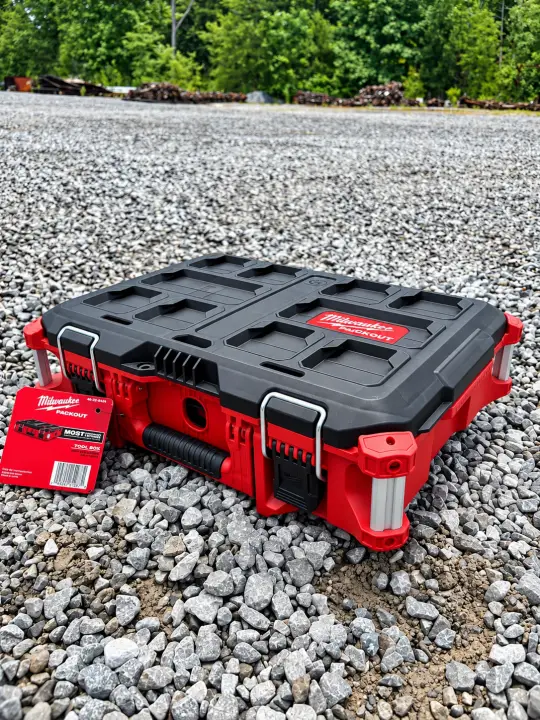
Milwaukee PACKOUT offers the most extensive modular organization options of the four systems.
Originally designed for tradespeople, it uses integrated locking cleats that connect compatible modules.
That means you’re not limited to stacking identical boxes.
The system includes toolboxes, compact organizers, drawers, crates, rolling units, and other components that can be combined into a customized storage arrangement.
For campers who carry extensive repair equipment or enjoy detailed organization, that flexibility is its main attraction.
Why it works for car camping
PACKOUT makes it easy to assign different modules to specific types of equipment.
For example:
| PACKOUT Component | Practical Camping Use |
|---|---|
| Standard Tool Box | General tools and repair equipment |
| Compact Organizer | Fuses, fasteners, connectors, and small parts |
| Low-Profile Organizer | Tent stakes, hardware, and repair accessories |
| Drawer Module | Frequently accessed tools and supplies |
| Large Tool Box | Bulkier equipment and larger accessories |
The mechanical connections between modules are particularly useful when moving multiple components together.
Many enclosed PACKOUT boxes and organizers also have IP65-rated protection against dust and water jets.
However, protection varies across the product range. Open crates and certain specialty modules don’t offer the same sealing performance as enclosed toolboxes.
Lid design and access
Most traditional PACKOUT toolboxes use hinged lids and reinforced latches.
The standard PACKOUT Tool Box measures approximately 22.1 x 16.2 x 6.5 inches externally.
Its relatively shallow design works well for tools and smaller equipment but can be restrictive for bulky camp kitchen supplies.
As with other stacked systems, accessing a lower toolbox may require removing the modules above it.
PACKOUT drawer modules and cabinet-style components offer an alternative, allowing access to equipment without dismantling an entire stack.
That can be valuable for frequently used tools, although it increases the system’s cost and complexity.
What to consider
PACKOUT’s biggest limitation for camping is that its design priorities come from tool storage.
The reinforced construction, integrated connections, and internal organization features occupy space.
That makes PACKOUT excellent for smaller equipment but potentially inefficient for sleeping bags, clothing, large cookware, and other bulky camping items.
The rolling modules also deserve careful consideration.
Wheels are convenient for transporting tools across garages, driveways, and firm ground, but they add bulk inside a vehicle.
A rolling toolbox may be less practical than a few lift-out containers if you regularly camp on uneven terrain or have limited cargo space.
Who should choose it?
Milwaukee PACKOUT makes sense when tools, repair supplies, and small equipment make up a significant portion of your camping gear.
It’s especially appealing if you already own compatible PACKOUT components for garage or workshop use.
For a general-purpose camping storage system, however, simpler boxes often provide more usable storage volume for the money.
Explore Milwaukee PACKOUT Storage Systems
4. Plano Sportsman’s Trunk — Best Budget Alternative
Best for: Weekend campers, families, and anyone who needs affordable storage for bulky camping equipment.
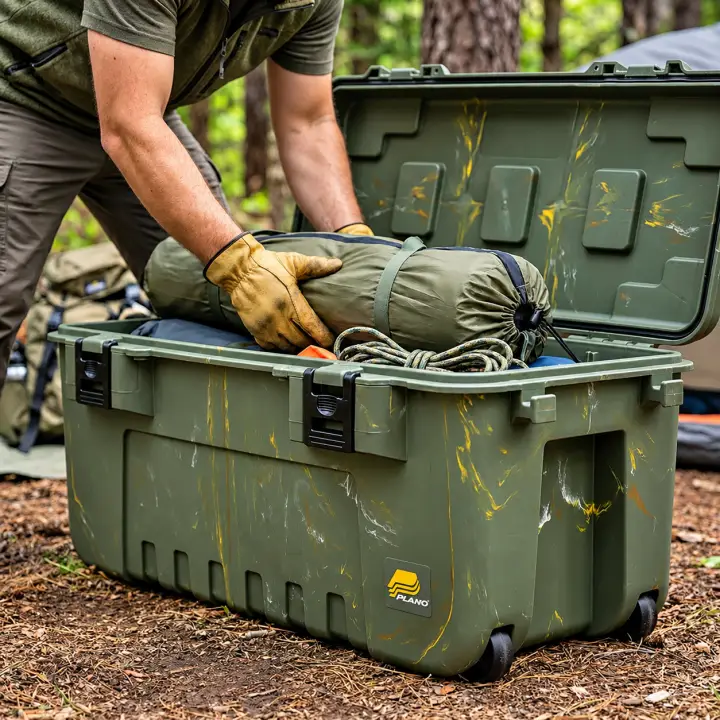
The Plano Sportsman’s Trunk isn’t a fully integrated modular system, but it offers a practical alternative for campers who don’t need specialized connections or premium weather protection.
Its main advantage is affordable storage capacity.
The large 108-quart version provides substantial room for equipment that would otherwise be scattered between bags, grocery totes, and smaller containers.
The trunk uses a reinforced removable lid, molded stacking grooves, and side tie-down points.
Some larger versions also include integrated wheels.
Why it works for car camping
The Plano Sportsman’s Trunk is particularly useful for bulky items that don’t require individual compartments.
Examples include:
- Sleeping bags and spare blankets.
- Tarps and ground covers.
- Camp games and campsite accessories.
- Seasonal clothing and equipment.
- Larger supplies that don’t fit smaller boxes.
The large 108-quart model measures approximately 37.25 x 18 x 14.4 inches externally.
That makes it considerably longer than the Front Runner Wolf Pack Pro.
The extra capacity is useful, but it also means one trunk can occupy a significant portion of an SUV cargo floor.
Lid design and access
The Plano uses a removable lid with basic latches.
The lid is straightforward to remove when the trunk is accessible, but large stacked trunks can be inconvenient to open.
The molded grooves help position one trunk above another, although they don’t create a positive locking connection.
The trunk also lacks the gasket sealing found on the other enclosed systems.
It’s best used inside a vehicle or another protected storage area rather than relying on it for weather-exposed transportation.
What to consider
The biggest problem with large storage trunks is the temptation to overpack them.
A 108-quart container filled with sleeping gear is relatively manageable.
The same container filled with cast-iron cookware, canned food, and tools can become difficult to lift safely.
Large trunks also make separating equipment into useful categories harder unless you add internal organizers.
For campers who constantly need access to multiple types of equipment, two smaller boxes may be more convenient than one oversized trunk.
Who should choose it?
Choose the Plano Sportsman’s Trunk if you want a low-cost way to consolidate camping gear.
It’s particularly useful for occasional trips, family camping equipment, and garage storage.
If you later decide to develop a more specialized vehicle organization system, the trunks can still serve as storage for seasonal or less frequently used equipment.
Check Plano Sportsman’s Trunk Sizes and Options
How Do These Storage Systems Compare in Size, Stacking, and Access?
Exterior dimensions can tell you more about a container’s usefulness than advertised capacity alone.
A large trunk may hold more equipment, but several smaller boxes can be easier to arrange around coolers, sleeping platforms, and wheel wells.
The following measurements refer to specific representative models—not every size available within each product range.
Storage Box Dimensions Compared
| Product | External Dimensions (Approx.) | Storage Capacity | Empty Weight |
|---|---|---|---|
| Front Runner Wolf Pack Pro | 20.1 x 15.7 x 9.1 in | 30.3L | 8.1 lb |
| ROAM 83L Rugged Case | 51.1 x 19.5 x 7.8 in | 83L | 25 lb |
| Milwaukee PACKOUT Tool Box | 22.1 x 16.2 x 6.5 in | Model-specific | Varies by component |
| Plano Sportsman’s Trunk, 108 qt | 37.25 x 18 x 14.4 in | 108 qt | About 10 lb |
The dimensions illustrate an important tradeoff.
The Front Runner Wolf Pack Pro has a relatively compact footprint, making it easier to create an arrangement using multiple matching boxes.
The ROAM 83L Rugged Case is much longer and shallower. That can accommodate certain long items, but it makes the case harder to fit inside many smaller vehicles.
The Milwaukee PACKOUT Tool Box is relatively shallow and well suited to equipment that benefits from individual organization.
The Plano Sportsman’s Trunk offers substantial bulk-storage capacity, but its larger footprint may leave less room for other gear.
Before purchasing, compare the actual external dimensions with the usable floor space in your vehicle.
Don’t assume a box will fit simply because its advertised capacity seems appropriate.
Stackability and Lid Design Compared
| Storage System | Stacking Method | Lid Design | Access Consideration |
|---|---|---|---|
| Front Runner Wolf Pack Pro | Molded nesting design | Removable, gasket-lined lid with latches | Upper boxes must be moved to open lower ones |
| ROAM Rugged Case | Compatible cases stack through molded surfaces | Hinged lid with assisted opening | Convenient access if lid clearance is available |
| Milwaukee PACKOUT | Positive-locking modular connections | Hinged lids, drawers, and other formats | Drawer modules can improve access |
| Plano Sportsman’s Trunk | Molded stacking grooves | Removable lid with basic latches | Large stacked trunks can be awkward to open |
This is where the right choice often becomes clearer.
If you want simple matching boxes, Front Runner is appealing.
If access to a roof-mounted case matters, ROAM’s hinged lid can be useful.
If you need multiple smaller compartments or drawers, Milwaukee PACKOUT provides more options.
If you simply want to keep bulky gear together, Plano may be all you need.
One important safety distinction: Stackable or interlocking boxes are not automatically secured for vehicle travel. Use appropriate cargo restraints and mounting systems, especially when driving on rough roads.
How to Choose the Right Modular Storage System for Your SUV
A storage system that works beautifully in a full-size truck can be frustrating inside a compact crossover.
Before choosing boxes, consider how your equipment actually fits around your vehicle’s dimensions and the things you need to access at camp.
Measure the usable cargo area
Start with four measurements:
- Width between the wheel wells: Often narrower than the full cargo opening.
- Usable cargo depth: Measure from the closed hatch to the rear seats or other fixed equipment.
- Available height: Include cargo covers, sleeping platforms, and rear visibility.
- Hatch clearance: Make sure you can open lids or access equipment without unloading everything.
Measure with the rear hatch closed and account for sloping seats, side panels, and other obstacles.
A cooler or portable refrigerator should also be included in your layout before buying storage boxes.
For example, a Wolf Pack Pro may fit easily on its own, but two boxes beside a large cooler might exceed the available cargo width.
The most accurate approach is to test the actual arrangement rather than relying on general claims that a particular system fits SUVs.
Think about how you access gear at camp
Space efficiency is only one part of the equation.
Imagine arriving at a campsite with three storage boxes stacked beside your cooler.
Your stove and cookware are in the bottom box. Your lantern and headlamp are in the middle box. The top box contains equipment you won’t need until the next morning.
That arrangement looks tidy, but it creates unnecessary work every time you need the kitchen equipment.
A better approach is to position your most frequently used items where they’re accessible from the rear hatch.
For many campers, arranging two or three boxes side by side is more convenient than creating a tall stack.
If vertical stacking is necessary, reserve the bottom boxes for equipment that isn’t accessed frequently.
Consider whether you sleep inside the vehicle
Sleeping inside an SUV changes how you should organize storage.
Boxes that fit neatly behind the rear seats during the drive may need to be moved when the seats are folded down.
Smaller removable modules provide more flexibility because you can transfer them outside the vehicle or rearrange them around a sleeping platform.
A large ROAM case or Plano trunk may be more difficult to reposition inside a compact setup.
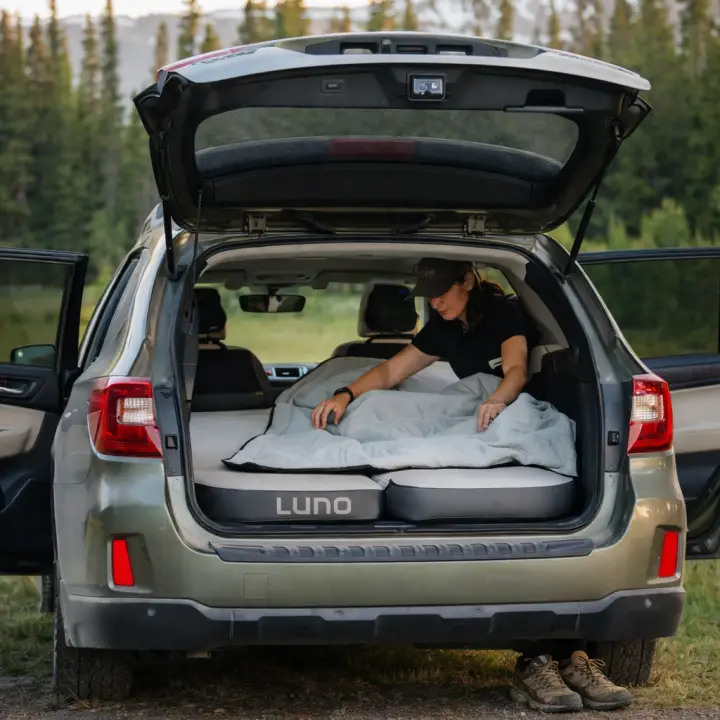
For vehicle sleeping arrangements, it’s worth choosing storage dimensions alongside your mattress and sleeping platform rather than treating those purchases separately.
Don’t pay for more weather protection than you need
For equipment stored inside an enclosed SUV, ease of access and space efficiency generally matter more than heavy-duty weather seals.
For equipment carried on a roof rack or in an exposed truck bed, protective construction becomes more important.
Look at the specific product’s sealing design, intended use, and weather-resistance rating.
An IP65-rated container offers protection against dust and water jets under defined testing conditions. An IP67-rated enclosure provides protection against temporary immersion under specified conditions.
These ratings aren’t interchangeable, and they don’t eliminate the need to maintain clean, properly closed seals.
For valuable electronics or particularly moisture-sensitive gear, additional internal protection is sensible even when using a sealed storage case.
One Large Trunk or Several Smaller Storage Boxes?
For most repeatable car camping setups, several smaller containers are more practical than one oversized trunk.
The advantage isn’t simply having more compartments.
It’s being able to assign a specific function to each container and access equipment without unpacking everything else.
Consider a weekend trip for two people.
One large trunk might contain cookware, lanterns, repair equipment, clothing, and tent accessories.
You may have enough room, but finding a particular item can mean searching through several unrelated categories.
Two or three smaller boxes allow you to organize gear by how it’s used.
| Storage Module | Suggested Contents | Access Priority |
|---|---|---|
| Camp Kitchen | Cookware, utensils, stove accessories, cleaning supplies | High |
| Campsite Essentials | Lanterns, headlamps, stakes, cordage, small accessories | High |
| Tools and Repair | Basic tools, repair kits, fasteners, vehicle accessories | Medium |
| Backup Gear | Spare clothing, additional supplies, less frequently used items | Low |
Not every category requires its own hard-sided storage box.
Soft bags are often more efficient for clothing and sleeping equipment, while smaller organizers can fit inside a larger kitchen module.
For additional ways to separate cookware, utensils, and cooking accessories, see our guide to the best camp kitchen boxes and organizers for car camping.
The goal is to create a system where everything has a predictable location without carrying unnecessary containers.
How to Build a Repeatable Car Camping Storage System
You don’t need to purchase six matching boxes or install a complete vehicle drawer system to get organized.
For many campers, a few carefully chosen containers are enough to create a setup that stays packed between trips.
Step 1: Organize your existing gear before buying boxes
Start by laying out everything you normally bring camping.
Separate it into practical groups, such as:
- Cooking and cleanup.
- Campsite setup.
- Tools and repair supplies.
- Lighting and electronics.
- Sleeping equipment and clothing.
Pay attention to the equipment you use together.
For example, it makes sense to keep your stove accessories, cooking utensils, cutting board, and dishwashing supplies in the same kitchen module.
Avoid buying containers before seeing how much space each category actually requires.
Step 2: Start with two or three modules
A useful starting setup for a typical weekend trip might include:
Module 1: Camp kitchen
A medium hard-sided container for cookware, utensils, and cooking accessories.
Module 2: Campsite equipment
Another container for lanterns, headlamps, cordage, stakes, and general campsite supplies.
Module 3: Tools and repairs
A smaller box or organizer for basic tools, repair materials, and vehicle-related accessories.
Sleeping bags, pads, and clothing can stay in soft bags if that makes better use of the cargo area.
This approach avoids adding rigid boxes where they aren’t necessary.
Step 3: Test your arrangement inside the vehicle
Load the containers alongside your cooler and other large equipment.
Check whether you can reach the things you’ll need first at camp.
Make sure individual boxes are manageable when fully loaded.
If you need to remove three containers just to reach a frequently used item, change the arrangement before committing to more equipment.
You can also make cardboard templates using the external dimensions of boxes you’re considering.
That simple test can reveal whether two containers will fit side by side or whether a larger case will interfere with your cooler or sleeping setup.
Step 4: Secure everything for transportation
Once the layout works, make sure the containers are properly restrained.
Use suitable cargo anchors, tie-downs, or compatible mounting accessories.
Keep heavy equipment low and avoid placing unsecured containers where they could strike passengers during sudden braking or a collision.
If using roof-mounted cases, follow the rack and vehicle manufacturers’ load limits, including the weight of the cases, mounting hardware, and contents.
A neatly stacked arrangement isn’t a substitute for securing cargo.
Step 5: Keep your camping modules ready between trips
The biggest advantage of a repeatable storage system comes after you return home.
Clean and dry equipment before putting it away.
Replace consumables, inspect repair supplies, and keep nonperishable camping essentials in their assigned containers.
Before your next trip, you can focus on food, clothing, water, and destination-specific equipment instead of rebuilding your entire setup.
This routine saves time regardless of whether you’re using premium modular cases or inexpensive storage bins.
Is a Premium Modular Storage System Worth It?
A premium system is worth considering when its specific features solve a problem you encounter regularly.
For example, ROAM’s protective construction makes sense when equipment must travel outside the vehicle.
Milwaukee PACKOUT is easier to justify when you need specialized tool organization or already own compatible components.
Front Runner becomes attractive when you want matching boxes that work with a broader range of vehicle storage accessories.
But for occasional weekend trips, several affordable containers may be perfectly adequate.
Before spending more, ask yourself:
- Do I need protective outdoor storage or simply better organization?
- Will the boxes stay inside the vehicle?
- Do I need locking modular connections?
- How frequently will I access each container?
- Can I comfortably lift each fully loaded box?
- Will the system fit around my cooler and sleeping equipment?
The answers are more useful than choosing a system based solely on rugged styling or an extensive accessories catalog.
The best investment is a layout that fits your vehicle and consistently makes packing easier.
Frequently Asked Questions
What modular storage system works best for car camping?
For many SUV campers, the Front Runner Wolf Pack Pro offers a practical balance of compact dimensions, secure stacking, and compatibility with vehicle organization accessories.
However, the best choice depends on your setup.
ROAM is more appropriate for exposed storage, Milwaukee PACKOUT excels at specialized organization, and Plano offers affordable bulk storage.
Are modular storage boxes better than regular plastic totes?
Modular boxes can provide more consistent dimensions, better stacking features, and access to compatible accessories.
However, regular plastic totes can work well for equipment carried inside an enclosed vehicle.
The biggest advantage comes from using a consistent packing arrangement rather than the price or branding of the containers.
Are Milwaukee PACKOUT boxes good for camping?
Yes, particularly for tools, repair equipment, electrical accessories, and other small items that benefit from dedicated compartments.
Their locking connections and range of compatible modules are useful, but they can be heavier and less space-efficient for bulky camping equipment.
Can modular camping storage boxes be mounted on a roof rack?
Certain outdoor storage cases, including compatible ROAM and Front Runner products, support roof-rack installations when used with appropriate mounting hardware.
Not every stackable box is suitable for exterior mounting.
Always check the specific product’s compatibility, mounting requirements, weather protection, and load limits.
How many storage boxes do you need for car camping?
For many weekend campers, two or three primary storage modules are enough to get started.
A kitchen box, a campsite accessories box, and a smaller repair organizer cover several common categories.
Larger groups and longer trips may require more storage, but it’s better to expand based on actual equipment needs.
Should I use storage drawers or stackable boxes in my SUV?
Stackable boxes are generally more flexible and easier to remove when the vehicle is also used for everyday transportation.
Drawer systems can provide better access to equipment without removing upper containers, making them attractive for frequent camping or more permanent vehicle setups.
The tradeoff is additional weight, cost, and cargo space occupied by the drawer structure.
Final Verdict: Which Modular Storage System Should You Choose?
For most SUV campers who want a reliable, repeatable storage system, the Front Runner Wolf Pack Pro is the strongest all-around choice. Its compact dimensions, stackable design, and compatible accessories make it practical for organizing everyday camping equipment.
Choose the ROAM Rugged Case if your gear regularly travels on a roof rack or in an exposed truck bed.
Choose Milwaukee PACKOUT if tools, repair supplies, and smaller accessories are your main priorities.
And if you want straightforward organization without a large investment, the Plano Sportsman’s Trunk is a sensible budget alternative.
Start by measuring your cargo space and dividing your equipment into a few useful categories. Then choose the smallest combination of boxes that keeps everything accessible and easy to transport.
A simple system that stays packed between trips will make camping preparation easier than an elaborate storage setup that constantly needs rearranging.
Affiliate Disclosure: GearForTheOutdoors.com participates in affiliate programs, including REI, Amazon, REI Outlet, Garage Grown Gear, evo, and other trusted partners. When you purchase through our links, we may earn a small commission at no extra cost to you. That helps support our content and keeps our recommendations useful, practical, and free.
Disclaimer: This post is for informational purposes only. Always verify current product details, fit, compatibility, availability, safety information, and manufacturer instructions before purchase or use. Outdoor conditions and gear performance can vary depending on setup, weather, terrain, vehicle, and experience level.