Summer camping can mean long evenings by the lake, quiet mornings under the trees, and enough daylight to fit a hike, a swim, and a relaxed dinner into the same day.
It can also mean stepping into a tent that feels like a greenhouse, waking up sweaty at 2 a.m., running low on drinking water, or spending dinner swatting mosquitos instead of enjoying the campsite.
The difference usually comes down to preparation.
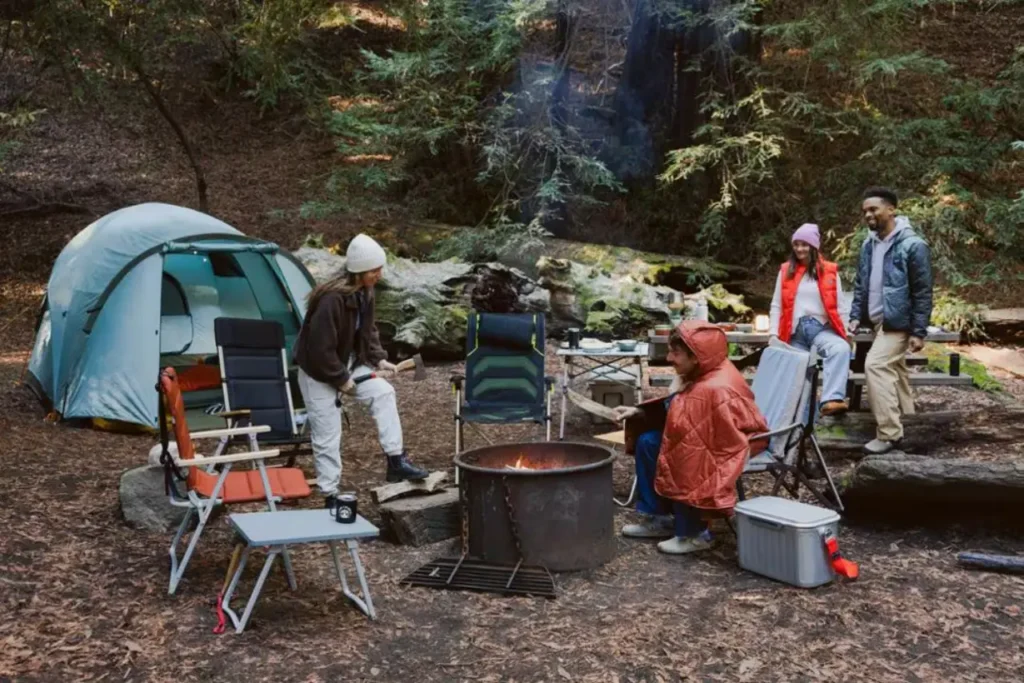
A useful summer camping packing list should do more than remind you to bring a tent and sleeping bag. It should help you choose gear that works in warm weather, plan for sun and insects, keep food safe, and build a campsite that still feels comfortable during the hottest part of the afternoon. ☀️
This guide focuses primarily on summer car camping and developed campground trips. It includes real gear recommendations for the categories where choosing the right product can noticeably improve the experience, along with practical alternatives for campers who already own suitable equipment.
Quick Picks: Useful Gear for Summer Camping
These recommendations are not the only products that can work. They are practical reference points that show what to look for in each category.
| Summer Camping Need | Recommended Product | Why It Makes Sense |
|---|---|---|
| Ventilated Tent | REI Co-op Half Dome 3 Tent with Footprint | A versatile 3-season tent with a mesh inner body, two doors, and enough room for two campers plus summer gear |
| Car-Camping Tent | Kelty Wireless 4 Tent | A roomier choice for couples, small families, and campers who value interior space over packed size |
| Summer Sleeping Bag | Sea to Summit Boab Synthetic 30°F Sleeping Bag | Roomy, easy to vent, and capable of opening into a quilt |
| Simple Sleeping Pad | NEMO Switchback Sleeping Pad | Durable closed-cell foam with no valves, pumps, or punctures to worry about |
| Campsite Shade | Kelty Backroads Shelter | Connects to a vehicle and creates a protected outdoor living area |
| Water Filter | Katadyn BeFree AC 1.0 L Water Filter Bottle | Fast, compact filtration for hikes and campsites near suitable freshwater sources |
| Compact Cooler | YETI Roadie 24 Hard Cooler | Fits well in smaller vehicles and works best for short trips or two-person setups |
| Camp Stove | Coleman Cascade Classic Camp Stove | Familiar two-burner design with good flame control for straightforward campsite meals |
| Sun Shirt | Patagonia Capilene Cool Daily Hoody | Lightweight coverage for exposed trails, paddling, and sunny camp days |
| Rain Jacket | REI Co-op Rainier Rain Jacket | A practical shell for summer showers and fast-moving afternoon storms |
| Headlamp | Black Diamond Spot 400-R Headlamp | Rechargeable, compact, and bright enough for campground use and nighttime trail walks |
| Budget Headlamp | Black Diamond Astro 300 Headlamp | A simpler, more affordable light for basic camp chores |
The 5 Hot-Weather Essentials You Can’t Forget
When time or vehicle space is limited, prioritize these five categories:
- A well-ventilated shelter: Large mesh panels and multiple openings help warm air escape.
- A sleep system matched to the forecast: Avoid packing a heavily insulated winter bag for a mild summer night.
- A reliable water plan: Bring enough carrying capacity and know where additional potable water is available.
- Sun and bug protection: Sunscreen alone is not a complete hot-weather strategy.
- A separate shade area: A tarp, canopy, or vehicle shelter gives you somewhere comfortable to spend the afternoon.
Shelter: Creating a Cooler Summer Campsite
A summer shelter has two different jobs.
The tent needs to provide a secure, bug-resistant place to sleep. A tarp or shade shelter needs to create a comfortable place to cook, eat, and relax during the day.
Trying to make the tent serve both purposes often leads to an overheated sleeping area full of tracked-in dirt, food smells, and damp clothing.
The Right Tent for Hot Nights
Ventilation should be one of the first things you evaluate when choosing a summer tent.
Look for a 3-season design with a mostly mesh inner body, more than one door when possible, and a rainfly that can be vented or partially rolled back in dry weather. A double-wall tent is especially useful because the inner mesh helps with airflow while the separate rainfly provides weather protection when needed.
The REI Co-op Half Dome 3 Tent with Footprint is a useful example for two campers who want more room than a tight two-person backpacking tent. Its 3-person capacity leaves space for sleeping pads and a small amount of gear, while the two-door layout makes nighttime exits easier.
For car campers who care more about elbow room than weight, the Kelty Wireless 4 Tent offers a more traditional campground setup. It is better suited to couples who use wide sleeping pads, parents camping with a child, or anyone who dislikes changing clothes while crouched against the tent wall.
Neither tent will stay cool when pitched in full afternoon sun with the rainfly sealed tightly. Campsite selection and setup still matter. 🏕️
Whenever possible:
- Choose a site with afternoon shade rather than relying only on morning shade.
- Keep doors and vents open while you are awake.
- Orient the main openings toward the prevailing breeze.
- Remove or roll back the rainfly in settled, dry weather when privacy allows.
- Reattach the fly before bed if dew, rain, or changing weather is likely.
- Avoid leaving pets or children unattended inside a closed tent during hot conditions.
A larger tent can feel airier, but bigger is not automatically better. Oversized tents require more level ground, catch more wind, and may be harder to fit on designated campground tent pads.
Tarp or Standalone Sun Shade
A shaded living space may provide more daytime comfort than almost any other summer camping upgrade.
The goal is to create an area where you can sit, prepare food, sort gear, and wait out the hottest part of the day without retreating into the vehicle.
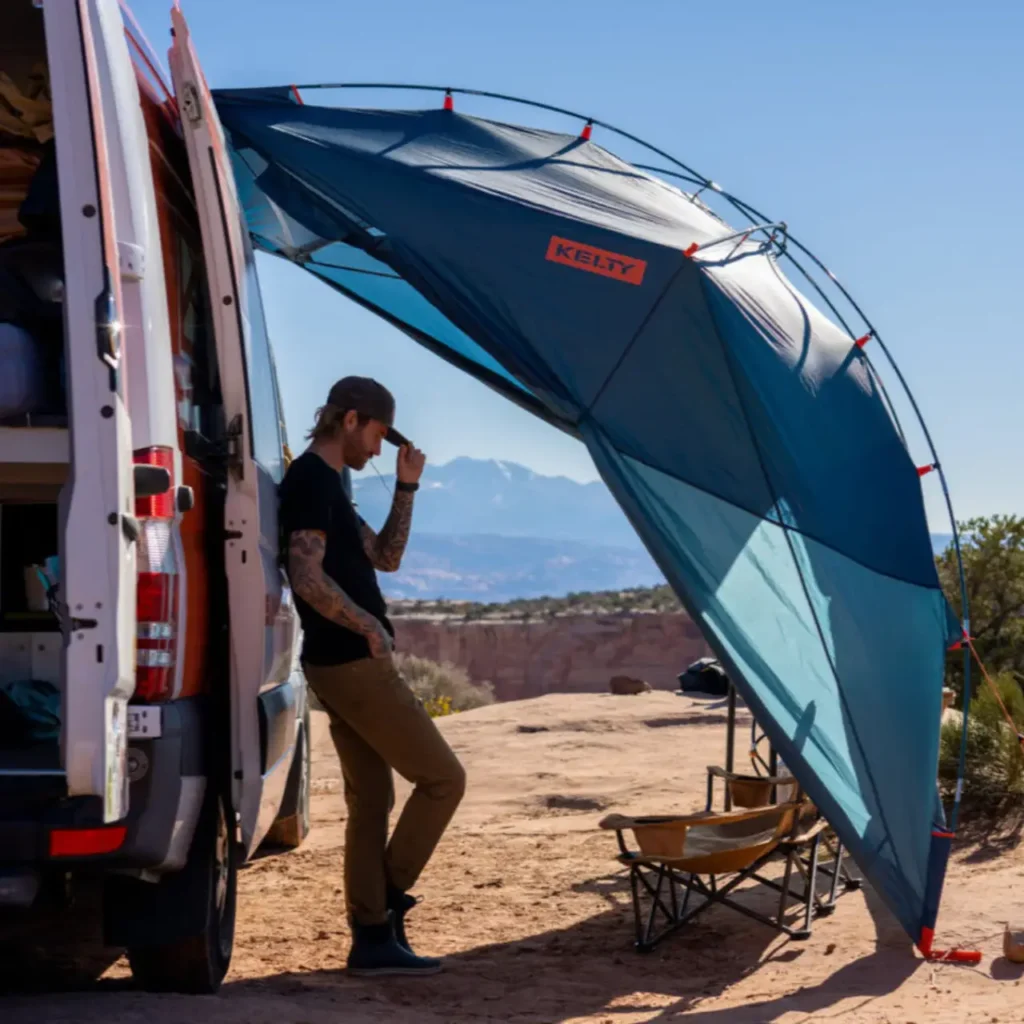
The Kelty Backroads Shelter is worth considering for vehicle-based camping because it attaches to the side or rear of a vehicle. Its adjustable walls can provide additional shade, wind protection, or privacy depending on how it is pitched.
It makes the most sense for:
- Road trips with repeated campground stops
- Tailgate camp kitchens
- Small groups that gather near the vehicle
- Campsites with little natural shade
- Campers who prefer a structured shelter over a traditional tarp
A basic tarp is still the better choice when packed size, versatility, and price matter most. It can be pitched between trees, supported with poles, or angled low to block late-afternoon sun.
A pop-up canopy provides more standing room and quicker setup, but it also takes up more vehicle space and must be anchored carefully. Summer wind can turn an unsecured canopy into a hazard surprisingly quickly.
Stakes, Guylines, and Wind Management
Clear summer mornings can develop into windy or stormy afternoons, especially around mountains, plains, and exposed lakes.
Bring stakes that match the expected ground:
- Standard aluminum stakes for packed soil
- Wider stakes for loose sand
- Stronger steel stakes for large canopies
- Extra guylines for tarps and exposed campsites
Do not wait until the wind begins to secure the shelter. Stake the corners, tension the guylines, and lower or pack away a canopy when severe weather approaches.
A small stake mallet can also be worthwhile for developed campgrounds where the ground has been compressed by years of use.
Sleep System: Staying Comfortable on Warm Nights
Summer sleep systems need flexibility.
A night that begins at 78°F can feel much cooler before sunrise, particularly near water, in dry climates, or at elevation. The best setup gives you enough coverage for the coolest expected conditions while allowing heat to escape easily.
Summer Sleeping Bag or Camping Quilt
Temperature ratings are a starting point, not a guarantee of comfort. Personal metabolism, wind, humidity, clothing, sleeping-pad insulation, and tent ventilation all affect how warm or cold a sleep system feels.
For many summer campground trips, a roomy 30°F to 50°F sleeping bag is more practical than a tightly fitted mummy bag. A rectangular or semi-rectangular design is easier to unzip, drape loosely, or use like a blanket.
The Sea to Summit Boab Synthetic 30°F Sleeping Bag works well as a versatile option because it has a roomy shape and can be opened for ventilation or used more like a quilt. Its 30°F rating also gives it more range than an extremely light 50°F bag when trips extend into higher elevations or cooler shoulder-season nights.
It is a good fit for:
- Campers who want one bag for summer and mild spring or fall trips
- Restless sleepers who dislike narrow mummy bags
- Car campers who value comfort over minimum weight
- Humid environments where synthetic insulation is practical
Campers who only visit hot, low-elevation destinations may find it warmer than necessary. On nights that remain above 70°F, a breathable liner, light blanket, or flat sheet may be more comfortable.
Before packing, check the forecast for the campground itself—not only the nearest city. Elevation changes can create a major difference in overnight temperature. 🌙
Sleeping Pad: Comfort Matters More Than Chasing the Lowest R-Value
A sleeping pad cushions the body and reduces heat transfer between the sleeper and the ground.
For summer use, there is rarely a need to buy a special low-insulation pad if a comfortable 3-season pad is already available. A higher R-value does not generate heat, although heavily insulated pads can reduce the cooling effect of the ground.
The more important questions are:
- Is the pad comfortable in the sleeper’s usual position?
- Does it fit inside the tent without overlapping another pad?
- Is it durable enough for the campsite?
- Can it be inflated and repaired easily?
- Will nighttime ground temperatures be cooler than expected?
The NEMO Switchback Sleeping Pad is a dependable choice for campers who value simplicity. Its closed-cell foam construction cannot deflate overnight, and it can also be folded into a seat around camp.
The tradeoff is cushioning. Side sleepers and campers with sensitive hips or shoulders may prefer a thicker self-inflating or air pad.
For car camping, comfort should usually take priority over saving a few ounces. A thicker pad that helps the reader sleep well has more practical value than an ultralight model designed primarily for backpacking.
Pillow, Sleep Clothing, and Tent Fan
A summer pillow should be breathable and easy to clean. Compressible foam pillows are generally softer, while inflatable pillows take up less space.
Sleep clothing should be dry, lightweight, and separate from the clothing worn during the day. A clean shirt and loose shorts often feel much better than going to bed in sweat-damp hiking clothes.
A compact rechargeable fan can help move air in a still tent, especially in humid climates. Look for:
- A stable base or hanging hook
- Several speed settings
- A rechargeable battery
- Quiet operation
- A protective grille
- Enough runtime for the night
A tent fan does not lower the actual air temperature, but moving air can improve comfort by helping perspiration evaporate. It should supplement ventilation, not replace it.
Camp Kitchen & Hydration: Managing Food and Water in the Heat
Hot weather makes food safety and hydration more important.
The camp kitchen should be organized so that cold food stays cold, drinking water remains accessible, and meal preparation does not require standing over a stove for most of the evening.
Build a Realistic Water Plan
There is no single water quantity that works for every summer trip. Needs change with body size, temperature, humidity, elevation, activity level, diet, access to shade, and individual health considerations.
For vehicle camping without reliable water at the site, one gallon per person per day is a useful planning baseline for drinking and basic food preparation. More may be needed for strenuous hiking, pets, dishwashing, very dry conditions, or extreme heat.
Bring water in more than one container. A large jug is convenient at camp, while a bottle or hydration reservoir is easier to carry on a hike. Splitting the supply also prevents one leak from eliminating all available water.
For campsites near appropriate freshwater sources, the Katadyn BeFree AC 1.0 L Water Filter Bottle offers a compact way to filter water during hikes or refill a personal bottle.
It is best for:
- Individual hikers
- Short day hikes from camp
- Clear freshwater sources
- Campers who want a fast, simple filter bottle
It is not the most efficient option for filtering several gallons for a family or group. A gravity filter is usually better for high-volume camp use because it can process water while other camp chores are being handled.
Always confirm that the selected filtration or purification method is suitable for the destination. Standard backpacking filters do not remove every possible contaminant, including many viruses, chemicals, or harmful algal toxins.
Electrolytes and Hot-Weather Activity
Water should remain the primary drink, but electrolyte mixes can be useful during prolonged heat exposure, heavy sweating, or strenuous exercise.
Pack single-serving packets or tablets rather than a large container that can absorb moisture. Mixing electrolytes in a separate bottle also keeps sugary residue out of hydration reservoirs, which are harder to clean thoroughly.
Do not wait until a headache, dizziness, or unusual fatigue develops to think about hydration. Drink regularly, take breaks in the shade, and adjust the day’s plans when the heat is stronger than expected.
Cooler: Match the Capacity to the Trip
The YETI Roadie 24 Hard Cooler is a practical size for a couple taking a weekend trip, a solo road traveler, or a camper who wants a dedicated beverage cooler.
Its smaller footprint makes it easier to place behind a vehicle seat than a large family cooler. The tradeoff is capacity. It will feel cramped if it needs to hold several days of food for a group.
Choose a larger cooler when packing:
- Food for three or more campers
- Multiple days of meat and dairy products
- Large containers or meal-prep trays
- Drinks and food in the same cooler
- Supplies for a campsite without easy access to replacement ice
For the best performance:
- Pre-chill the cooler before packing.
- Start with refrigerated or frozen food.
- Freeze water bottles for clean, reusable ice.
- Place frequently used drinks near the top.
- Keep raw meat sealed and separated from ready-to-eat food.
- Store the cooler in shade.
- Open it only when necessary.
- Replenish ice before food temperatures become unsafe.
For longer trips, using separate food and drink coolers reduces how often the food cooler is opened. 🧊
Camp Stove and Simple Summer Meals
The Coleman Cascade Classic Camp Stove is a practical starting point for most car-camping kitchens. Its two burners allow one pot and one pan to be used at the same time, while the wind guards help protect the flame in breezy conditions.
It is well suited to:
- Couples and small families
- Campground breakfasts
- One-pan dinners
- Boiling water while cooking another dish
- Campers who want familiar controls without a complex cooking system
A compact single-burner stove may be enough for a solo traveler who mainly heats water. Larger groups or enthusiastic camp cooks may prefer a wider stove that can accommodate two full-size pans without crowding.
Summer meals should minimize cooking time and cleanup. Useful options include:
- Breakfast burritos prepared at home
- Yogurt, granola, and fruit
- Sandwiches and wraps
- Pasta or grain salads
- Pre-cooked sausages with vegetables
- Tacos with prepared fillings
- Couscous bowls
- Burgers or veggie burgers
- Cold snacks for the hottest part of the day
Keep the stove outdoors on a stable, level surface. Never operate it inside a tent, vehicle, or other enclosed sleeping space.
Clothing & Footwear: Dressing for Heat, Sun, and Bugs
The most useful summer clothing manages moisture, dries quickly, and reduces the amount of skin exposed to intense sun and insects.
Lightweight long sleeves can feel more comfortable than bare skin on exposed trails because they create portable shade and reduce the need to cover the arms repeatedly with sunscreen.
A Practical Summer Layering System
A simple summer clothing system includes:
- A moisture-wicking shirt
- Lightweight shorts or hiking pants
- A long-sleeved sun shirt
- A waterproof rain shell
- Dry camp clothing
- A light insulating layer for elevation or cool mornings
The Patagonia Capilene Cool Daily Hoody is a useful reference point for a versatile sun layer. It works for hiking, paddling, fishing, driving, and exposed campsite chores without feeling as heavy as a traditional sweatshirt.
A sun hoodie is especially useful when:
- Shade is limited
- The day includes several hours on the water
- The trail is exposed
- Sunscreen reapplication will be inconvenient
- Mosquitos are active
- The camper burns easily
A sun shirt does not eliminate the need for sunscreen. Exposed areas such as the face, hands, ears, and legs still need protection.
Rain Jacket
Summer forecasts can look clear in the morning and change quickly by afternoon.
The REI Co-op Rainier Rain Jacket is a sensible general-purpose shell for campground use, day hikes, and travel. It is more practical for most casual campers than a heavy ski shell or insulated waterproof jacket.
The jacket should be stored near the top of a daypack rather than buried beneath cooking gear in the vehicle.
A summer rain jacket should:
- Be fully waterproof rather than merely water-resistant
- Fit over a light shirt
- Have adjustable cuffs and hood
- Offer ventilation where possible
- Pack small enough to carry routinely
It can also serve as a wind layer around exposed lakes, overlooks, and cool morning campsites.
Socks and Footwear
Cotton socks absorb moisture and dry slowly. Wool or synthetic hiking socks are better suited to hot-weather walking because they manage sweat more effectively and reduce friction against damp skin.
Darn Tough Hiker Micro Crew socks are a reliable example for hiking boots and mid-height footwear. Lighter quarter-height models may feel better with trail runners.
Bring:
- One pair of hiking shoes, boots, or trail runners
- One pair of sandals or camp shoes
- Clean socks for each active day
- At least one dry backup pair
- Foot powder or blister treatment when needed
Camp shoes allow hiking footwear to air out and give tired feet a break. Closed-toe camp shoes provide more protection, while sandals are convenient around showers, lakes, and clean developed campsites.
Avoid walking barefoot around camp. Small stones, hot surfaces, splinters, insects, and broken glass are common even at maintained campgrounds.
Hat, Sunglasses, and Neck Protection
A wide-brimmed hat provides more coverage than a baseball cap, particularly around the ears and neck. Look for breathable fabric, an adjustable chin strap, and a brim that retains its shape in light wind.
Polarized sunglasses are especially helpful around water because they reduce reflected glare. The lenses should provide full UV protection.
A bandana or neck gaiter can be soaked in cool water and worn around the neck during hot campsite chores. It also works as a sweatband, dust cover, or lightweight bug barrier.
Health, Safety, and Personal Items
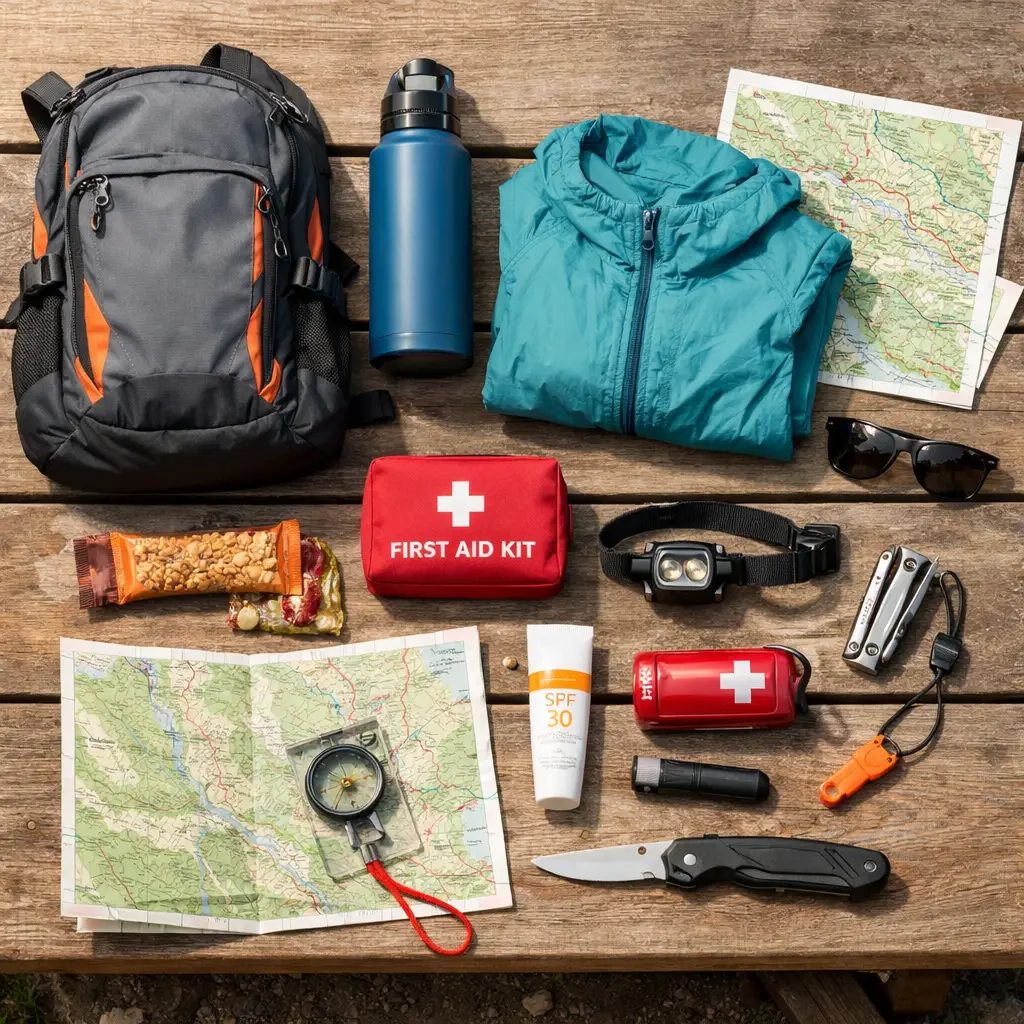
Small safety items are easy to overlook because they do not occupy much packing space. They can also be the gear that matters most when something goes wrong.
First-Aid Kit
A summer first-aid kit should include supplies for:
- Blisters
- Minor cuts and scrapes
- Insect bites
- Minor burns
- Allergic reactions
- Headaches
- Dehydration support
- Personal medical needs
Start with a prepared outdoor first-aid kit, then customize it. Add prescription medications, preferred blister treatments, antihistamines when medically appropriate, and any supplies required for known conditions.
The kit should be easy to find and accessible without unloading the entire vehicle.
Sunscreen and Lip Protection
Choose a broad-spectrum sunscreen rated SPF 30 or higher and follow the application directions on the product.
Pack enough for the length of the trip. A nearly empty travel tube is unlikely to cover several campers for an entire weekend.
Also bring:
- Lip balm with SPF
- Sunscreen suitable for the face
- A water-resistant formula for swimming
- A small container for the daypack
Shade and clothing should be the first line of protection. Sunscreen fills the gaps.
Insect Protection
A layered bug strategy works better than relying on one product.
Use:
- Picaridin or DEET repellent as directed
- Long sleeves and lightweight pants
- A tent with intact mesh
- Permethrin-treated clothing or gear when appropriate
- A head net in extremely buggy areas
Permethrin is intended for fabric and gear treatment, not direct application to skin. Follow the manufacturer’s instructions and keep treated products away from cats until fully dry, as directed by the product label.
Avoid leaving the tent door open while organizing gear. A few seconds of care at dusk can prevent an hour of mosquito hunting before bed. 🦟
Headlamp
The Black Diamond Spot 400-R Headlamp is a strong all-around option for campers who want a rechargeable light for camp setup, nighttime walks, and early trail starts.
Its red-light mode is useful around camp because it is less disruptive to night vision and nearby campers than a bright white beam.
The Black Diamond Astro 300 Headlamp is a simpler choice for campers who mainly need light for cooking, finding gear, and walking to campground facilities.
Pack one headlamp per person rather than expecting the group to share a single lantern. Keep the headlamp in the same pocket every time so it can be found after dark.
Navigation and Power
Download maps before leaving reliable cell coverage. A phone can be useful for navigation, but it should not be the only plan for remote trips.
Bring:
- An offline map
- A paper map when appropriate
- A compass and the knowledge to use it
- A portable battery
- Charging cables
- A vehicle charger
- A satellite communicator for remote itineraries when needed
Keep electronics out of direct sun. A phone left on a hot dashboard can overheat quickly and may not function when needed.
The Complete Summer Camping Packing List
Use this checklist as a base, then adjust it for the campground, weather, activities, trip length, and number of campers.
The Essentials
| Category | Item | Notes |
| Shelter | Ventilated 3-season tent | Check poles, mesh, zippers, and rainfly before leaving |
| Tent footprint | Protects the tent floor | |
| Stakes and guylines | Add extras for wind or loose ground | |
| Stake mallet | Useful at developed campsites | |
| Tarp, canopy, or shade shelter | Creates a separate daytime living space | |
| Sleep System | Summer sleeping bag or quilt | Match it to expected overnight lows |
| Sleeping pad | Prioritize comfort and proper fit | |
| Pillow | Inflatable or compressible | |
| Sleeping bag liner or light sheet | Useful on very warm nights | |
| Tent fan | Optional for still, humid conditions | |
| Lighting | Headlamp for each camper | Recharge or install fresh batteries |
| Lantern | Optional for shared camp areas | |
| Navigation | Offline map | Download before the trip |
| Paper map and compass | Appropriate for remote destinations | |
| Portable battery | Keep it shaded and dry | |
| Safety | First-aid kit | Customize for the group |
| Emergency contact plan | Share the itinerary before leaving | |
| Weather alerts | Check conditions throughout the trip | |
| Knife or multi-tool | Useful for simple camp tasks |
Camp Kitchen and Hydration
| Item | Notes |
| Cooler | Match capacity to trip length and group size |
| Ice or frozen water bottles | Pre-chill the cooler first |
| Camp stove | Use outdoors only |
| Fuel | Confirm compatibility and quantity |
| Lighter or matches | Pack a backup |
| Pot and pan | Keep the cooking kit simple |
| Cooking utensils | Include spatula, serving spoon, and tongs as needed |
| Plates, bowls, and cups | Reusable options reduce trash |
| Eating utensils | Pack one set per person plus a spare |
| Sharp knife | Store with a blade cover |
| Cutting board | Keep raw meat separate |
| Water bottles | One per person |
| Hydration reservoir | Useful for longer hikes |
| Large camp water jug | Easier for cooking and handwashing |
| Water filter or purifier | Match it to local water risks |
| Electrolyte mix | Useful during prolonged heat and exertion |
| Biodegradable soap | Use away from lakes and streams |
| Sponge and camp towel | Let them dry between uses |
| Trash bags | Pack out all waste |
| Food storage system | Follow campground and bear-country rules |
Clothing and Footwear
| Item | Notes |
| Moisture-wicking shirts | Synthetic or merino |
| Long-sleeved sun shirt | Choose a lightweight UPF-rated option |
| Hiking shorts | Comfortable in humid conditions |
| Lightweight hiking pants | Better for bugs and exposed terrain |
| Rain jacket | Keep it accessible |
| Light fleece or insulating layer | Important at elevation |
| Underwear | Quick-drying fabric is helpful |
| Wool or synthetic socks | Avoid relying on cotton |
| Sleep clothing | Keep one dry set for the tent |
| Hiking shoes or trail runners | Match them to the terrain |
| Camp shoes or sandals | Let hiking footwear air out |
| Wide-brimmed hat | Protects face, ears, and neck |
| Sunglasses | Full UV protection |
| Bandana or neck gaiter | Useful for sweat, dust, and cooling |
Health and Personal Items
| Item | Notes |
| Sunscreen | Broad-spectrum SPF 30 or higher |
| Lip balm with SPF | Reapply during the day |
| Insect repellent | Follow product directions |
| Permethrin-treated clothing | Optional for heavily buggy areas |
| Head net | Useful in severe mosquito or black-fly conditions |
| Prescription medications | Bring enough for unexpected delays |
| Blister care | Tape, patches, or moleskin |
| Antihistamine | Pack only when appropriate for the camper |
| Toothbrush and toothpaste | Store with scented items when required |
| Toilet paper | Keep it dry |
| Hand sanitizer | Carry a small bottle in the daypack |
| Quick-dry towel | Useful for swimming and showers |
| Toiletry kit | Keep it organized in one bag |
| Menstrual products | Pack enough plus a backup |
| Camp chair | Choose comfort over minimum weight for car camping |
| Book, cards, or games | Good for hot afternoons and rainy periods |
What Most Summer Campers Can Leave at Home
A better packing list also identifies gear that does not need to come along.
Consider leaving behind:
- A heavy winter sleeping bag when overnight lows remain mild
- Multiple large cooking pots for simple weekend meals
- Cotton clothing for active hiking
- Too many duplicate gadgets
- Large amounts of firewood when local transport restrictions apply
- Delicate household cookware
- An oversized cooler for a one-night solo trip
- A large axe when fires are prohibited or unnecessary
- Excessive clothing “just in case”
- Bright decorative lights that disturb nearby campers
Packing less makes the campsite easier to organize and reduces the amount of hot, dusty gear that must be cleaned after the trip.
Final Thoughts
A successful summer camping setup is not built around owning the most equipment. It is built around solving the season’s real problems.
The tent needs airflow. The campsite needs shade. The sleep system needs to vent. Water needs to be easy to reach. Food needs to stay cold. Clothing needs to handle sweat, sun, and insects.
Real products such as the REI Co-op Half Dome 3, Sea to Summit Boab 30, Katadyn BeFree AC, Coleman Cascade Classic, and Black Diamond Spot 400-R provide useful examples of how those needs can be addressed. They are not mandatory purchases, and campers who already own gear with similar features may not need to replace anything.
Use this summer camping packing list to identify genuine gaps, not to fill the vehicle with unnecessary extras. When the essential systems are handled well, summer camping becomes simpler: a breezy place to sleep, a shaded chair after the hike, cold water within reach, and more time to enjoy the long evening outside. ⛺
Frequently Asked Questions
What temperature sleeping bag is best for summer camping?
A 30°F to 50°F sleeping bag works for many summer trips, but the right rating depends on the campground’s overnight low, elevation, humidity, and how warm or cold the camper normally sleeps.
A roomy bag that opens into a quilt is more adaptable than a narrow mummy bag in warm conditions. In hot climates where nighttime temperatures remain above 70°F, a liner, sheet, or light blanket may be enough.
How can a tent be kept cooler without air conditioning?
Pitch it in afternoon shade, orient the doors toward the breeze, open all available vents, and roll back the rainfly when weather and privacy permit.
A rechargeable fan can improve air movement, but it cannot compensate for a tent sealed in direct sun. Never leave a child or pet unattended inside a hot tent.
Is a low R-value sleeping pad required for summer?
No. A lower R-value is generally sufficient in warm conditions, but there is rarely a need to replace a comfortable 3-season pad solely because it has more insulation.
Comfort, ground temperature, elevation, and the overall sleep system matter more than choosing the lowest possible R-value.
How much water should be packed for summer camping?
One gallon per person per day is a useful starting point for vehicle camping without water at the site. Actual needs may be higher depending on heat, activity level, pets, cooking, hygiene, and individual health factors.
Bring additional capacity for emergencies and confirm whether the campground has reliable potable water before departure.
Is a water filter necessary at a developed campground?
Not always. A filter may be unnecessary when the campground provides confirmed potable water.
It becomes useful when the water system is unavailable, the trip includes hikes near appropriate freshwater sources, or the campsite is primitive. Make sure the treatment method addresses the specific contaminants that may be present.
Should a rain jacket still be packed when the forecast is clear?
Yes. Summer showers and thunderstorms can develop quickly, especially in mountain and humid regions.
A lightweight waterproof shell takes up little space and can also provide wind protection around lakes, ridges, and cool evening campsites.
What is the best way to manage mosquitos at camp?
Combine several methods:
- Use an effective skin repellent as directed.
- Wear lightweight long sleeves and pants.
- Keep the tent zipped.
- Treat clothing with permethrin when appropriate.
- Avoid standing water near the campsite when possible.
- Use a head net in severe conditions.
No single method works perfectly in every location.
Is an expensive cooler necessary?
No. Proper packing habits often matter more than the logo on the cooler.
A premium hard cooler can be worthwhile for repeated trips, hot climates, limited ice access, or multi-day food storage. A well-insulated budget cooler may be completely adequate for short campground weekends when it is pre-chilled, shaded, and opened infrequently.
What should not be worn for summer camping?
Avoid relying on cotton for active hiking, especially socks. Cotton absorbs moisture, dries slowly, and can increase discomfort and friction.
Lightweight synthetic or merino clothing is generally easier to manage when sweating, swimming, or dealing with summer rain.
Affiliate Disclosure: GearForTheOutdoors.com participates in affiliate programs, including REI, Amazon, REI Outlet, Garage Grown Gear, evo, and other trusted partners. When you purchase through our links, we may earn a small commission at no extra cost to you. That helps support our content and keeps our recommendations useful, practical, and free.
Disclaimer: This post is for informational purposes only. Always verify current product details, fit, availability, safety information, and manufacturer warranties before purchase or use. Outdoor conditions and gear performance can vary depending on setup, weather, terrain, and experience level.