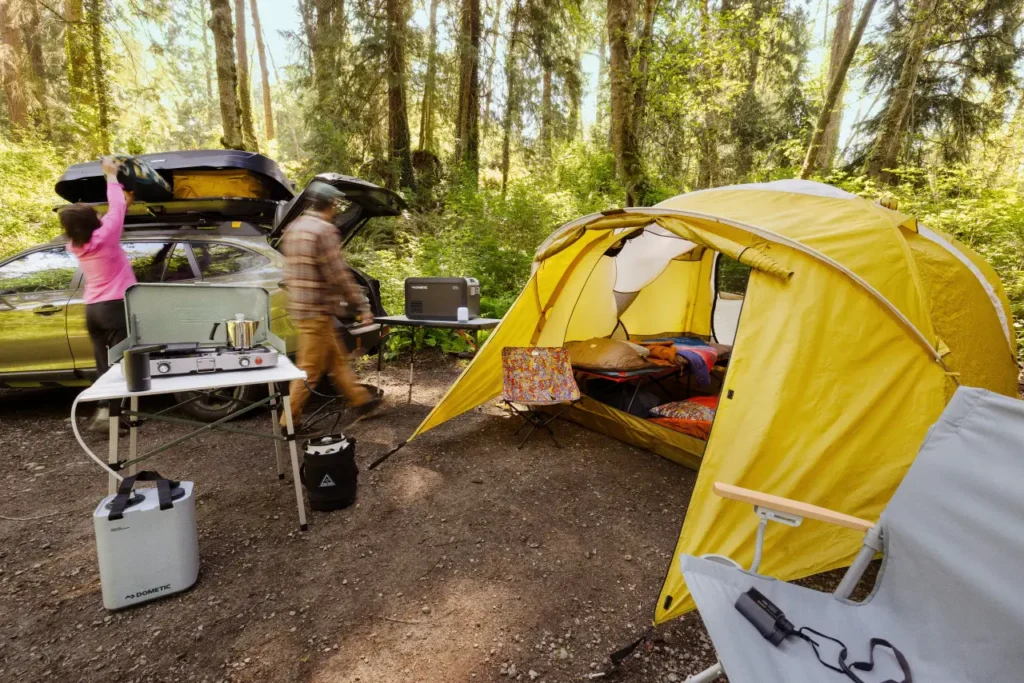
A good weekend camping trip starts with a tent that does its job quietly: easy setup, enough space to sleep comfortably, solid weather protection, and a layout that does not feel chaotic once sleeping pads, duffels, shoes, jackets, and camp pillows come inside.
That is exactly why 4-person camping tents are such a useful size. For two campers, they feel roomy and comfortable. For three campers, they can still work well with smart packing. For a family with small kids, they can be a practical weekend shelter. For four adults, they are usually tight — but still doable when everyone packs light. ⛺
The best 4-person camping tents are not just about square footage. Peak height, wall shape, vestibule space, door placement, ventilation, floor durability, and rainfly coverage all make a big difference once the weather changes or the campsite gets muddy.
This guide focuses on practical, currently relevant 4-person tents that make sense for U.S. car camping, weekend getaways, family campgrounds, festival camping, and casual basecamp-style trips. The goal is simple: help you choose a tent that fits the way the trip actually feels once the cooler is unloaded, the firewood is stacked, and everyone is trying to get settled before dark.
Our Top 4-Person Tent Picks at a Glance
| Tent Model | Best For | Peak Height | Floor Area | Quick Take |
|---|---|---|---|---|
| REI Co-op Base Camp 4 | Best Overall | 63 in. | 59.7 sq. ft. | Durable, weather-ready, and well organized |
| The North Face Wawona 4 | Best Vestibule Space | 75 in. | 58.13 sq. ft. | Huge covered gear storage and great livability |
| Marmot Limestone 4-Person Tent | Best Balance of Weight & Weather Protection | 63 in. | 59.2 sq. ft. | Lighter, protective, and easy to live in |
| Eureka! Copper Canyon LX 4 | Best Standing-Room Comfort | 84 in. | 64 sq. ft. | Cabin-style comfort for fair-weather camping |
| Coleman Skydome 4-Person Tent | Best on a Budget | 56 in. | 56 sq. ft. | Affordable, simple, and beginner-friendly |
In-Depth Tent Reviews
Choosing a 4-person tent gets easier once each model has a clear role. Some tents are built for rainy weekends and exposed campsites. Others are better for warm summer nights, tall campers, or families who want a simple shelter without spending premium gear money.
REI Co-op Base Camp 4: Best Overall
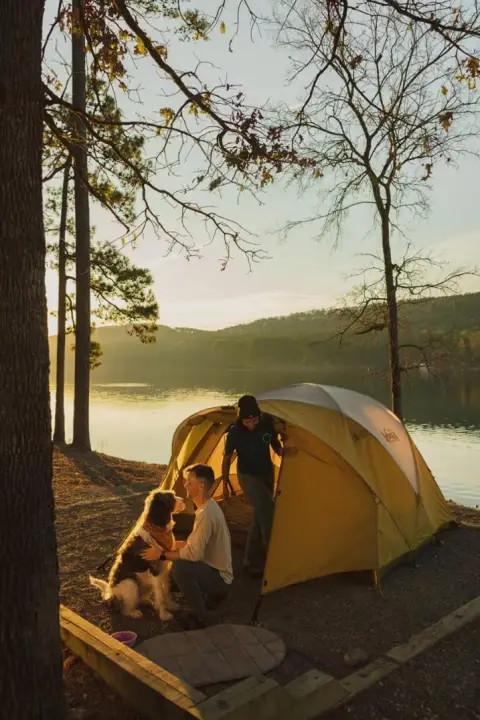
The REI Co-op Base Camp 4 is the kind of tent that makes sense for campers who want one shelter to handle a lot of different weekends. It is not the tallest tent here, and it is not the cheapest, but it hits a strong balance of durability, weather protection, organization, and long-term usefulness.
Its dome-style shape is a big part of the appeal. The structure is lower and more rounded than a cabin tent, which helps it feel more stable when wind moves through a campground or a storm rolls in overnight. The full-coverage rainfly, aluminum poles, two doors, and two vestibules make it especially practical for real weekend camping — not just sunny backyard setups. 🌲
Inside, the Base Camp 4 has enough room for two campers to spread out comfortably or for a small family to keep the sleeping area organized. The two-door layout matters more than it seems. No one has to crawl across sleeping bags for a late-night bathroom trip, and each side gets its own covered storage zone for boots, damp layers, or a small pack.
| Spec | Value |
|---|---|
| Packed Weight | 16 lbs. 14 oz. |
| Floor Dimensions | 100 x 86 inches |
| Floor Area | 59.7 sq. ft. |
| Peak Height | 63 inches |
| Doors | 2 |
| Vestibule Area | 19.5 + 19.5 sq. ft. |
| Pole Material | Aluminum |
What We Like:
The Base Camp 4 feels like a dependable all-around shelter. The full-coverage rainfly gives better protection than tents with small cap-style flies, and the two vestibules make it much easier to keep the sleeping area clean. Interior pockets and gear loops help manage headlamps, phones, beanies, gloves, and other small items that usually disappear into sleeping bags.
Ventilation is another strong point. Low and high vents help move air through the tent, which can reduce condensation on damp mornings. That matters when camping near lakes, rivers, foggy valleys, or forested campgrounds where cool night air settles close to the ground.
What We Don’t Like:
Even with the updated peak height, this is still not a stand-up cabin tent. Taller campers will need to crouch while changing clothes. It is also clearly a car-camping tent, not something to split up for a backpacking trip.
Best For:
Campers who want a reliable, weather-capable 4-person tent for regular weekend trips, shoulder-season campouts, and family campground use. It is especially good for couples who want extra room, small families, and campers who care more about storm protection than standing height.
The North Face Wawona 4: Best Vestibule Space
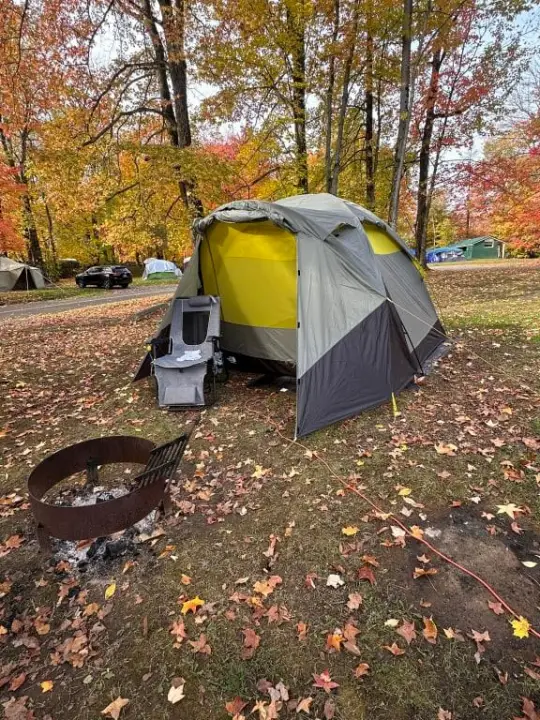
The The North Face Wawona 4 is a smart pick for campers who bring more gear than they technically need — which is most car campers. Camp chairs, kids’ shoes, backpacks, wet jackets, camera bags, dog gear, and muddy sandals all need somewhere to go when rain starts tapping on the fly.
The Wawona 4 solves that problem with a generous vestibule setup that feels more useful than the small awnings found on many budget tents. The front vestibule gives the tent a covered transition area, while the rear vestibule adds extra storage space. That makes a big difference during wet weekends, especially when the inside of the tent needs to stay dry and calm. 🌧️
The interior is also impressively livable for a 4-person tent. With a 75-inch peak height, many campers can stand or move around with less crouching. That extra height is helpful when changing clothes, organizing sleeping pads, or getting kids ready for bed.
| Spec | Value |
|---|---|
| Packed Weight | 13 lbs. |
| Floor Dimensions | 96 x 90 inches |
| Floor Area | 58.13 sq. ft. |
| Peak Height | 75 inches |
| Doors | 2 |
| Vestibule Area | Front: 27.6 sq. ft.; Rear: 14.9 sq. ft. |
| Pole Material | DAC MX Aluminum |
What We Like:
The vestibule space is the main reason to choose the Wawona 4. It creates a useful covered zone for shoes, bins, camp kitchen overflow, and wet gear. That extra protected space can make a rainy trip feel much less cramped.
The high ceiling also gives the Wawona a more relaxed feel than lower dome tents. It is a strong option for campers who want a tent that feels comfortable for hanging out, not just sleeping.
What We Don’t Like:
The larger vestibule footprint means this tent needs more campsite space. In tight forest sites, smaller tent pads, or crowded campgrounds, finding a clean, level pitch may take a little more attention.
It also has more structure to manage than the simplest budget tents. Setup is still very manageable, but it is worth practicing once at home before arriving after sunset.
Best For:
Gear-heavy campers, families, dog owners, and anyone who camps where rain is part of the plan. It is a great choice for Pacific Northwest trips, mountain campgrounds, spring camping, and weekend getaways where covered storage matters.
Marmot Limestone 4-Person Tent: Best Balance of Weight & Weather Protection
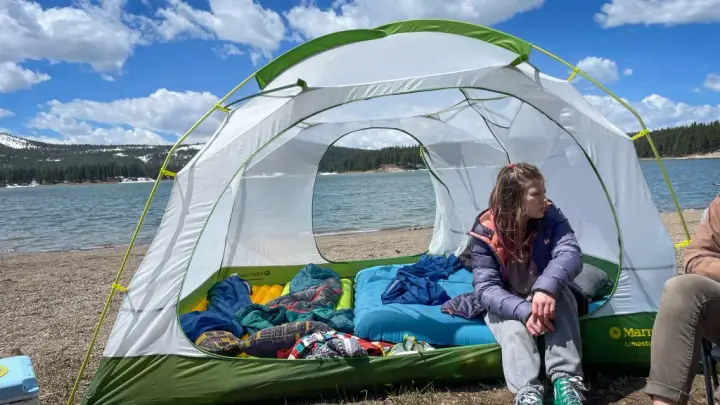
The Marmot Limestone 4-Person Tent is a strong middle-ground option for campers who want reliable weather protection without hauling an oversized family tent. It is roomy enough for car camping, protective enough for typical three-season weather, and lighter than many full-featured 4-person tents.
This tent makes a lot of sense for couples who like extra space, small families who want a manageable setup, or campers who do not need a tall cabin tent but still want room to sit up, organize gear, and sleep comfortably. The shape is more protective than a tall vertical-wall tent, but it still feels open enough for relaxed weekend use. 🏕️
The Limestone includes two doors and two vestibules, which is a big advantage for keeping traffic and gear organized. One person can step out without crawling over everyone else, and wet shoes can stay outside the sleeping area.
| Spec | Value |
|---|---|
| Packed Weight | 11 lbs. 13.6 oz. |
| Floor Dimensions | 100 x 85.8 inches |
| Floor Area | 59.2 sq. ft. |
| Peak Height | 63 inches |
| Doors | 2 |
| Vestibule Area | 19.4 + 8.6 sq. ft. |
| Pole Material | DAC DA17 Aluminum |
What We Like:
The Limestone 4 offers a very practical mix of space, protection, and packed weight. It is lighter than many car-camping tents in this size range, but it still has the features that matter most: two doors, vestibule storage, aluminum poles, and a usable interior layout.
The vestibules are especially helpful for weekend trips where the tent needs to stay tidy. Shoes, rain shells, small packs, and camp clutter can live outside the sleeping space without being fully exposed to the weather.
What We Don’t Like:
This is not the tallest or most spacious-feeling tent in the group. Campers who want to stand fully upright will be happier with a cabin-style option like the Eureka! Copper Canyon LX 4.
The Limestone also has less covered vestibule space than the Wawona 4, so it is not the top choice for gear-heavy families or long rainy weekends.
Best For:
Campers who want a lighter, dependable 4-person tent with real weather protection. It is a good match for couples, small families, and weekend campers who want something more refined than a basic budget tent without going huge.
Eureka! Copper Canyon LX 4: Best Standing-Room Comfort
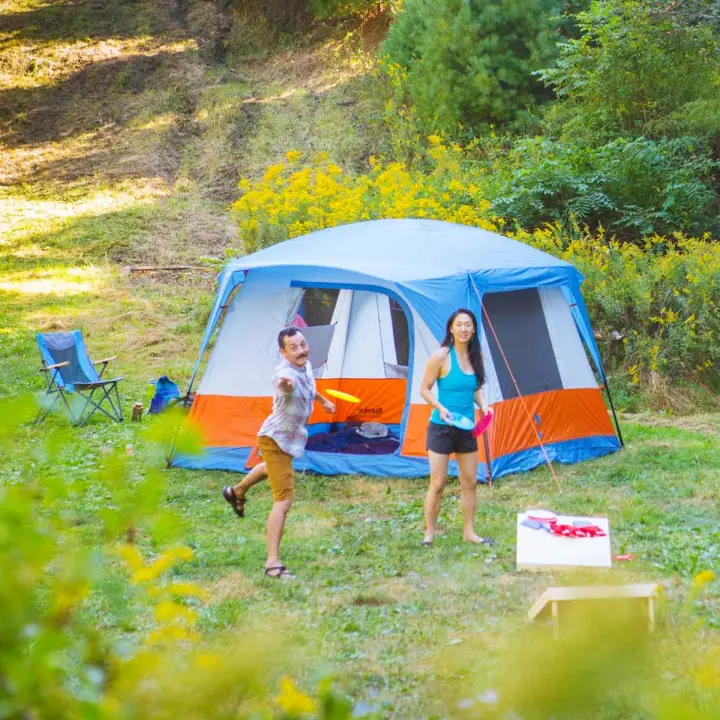
The Eureka! Copper Canyon LX 4 is built for campers who want their tent to feel more like a small room than a low shelter. With a 7-foot peak height and cabin-style walls, it offers the most stand-up comfort in this guide.
That extra height changes the whole camping routine. Changing clothes is easier. Organizing bedding is easier. Moving around with kids is easier. For campers using cots or a thick air mattress, the vertical-wall shape helps make the floor space feel more usable from corner to corner. ☀️
This is also a friendly tent for casual campground weekends. Large windows help with airflow and visibility, and the simple rectangular floor plan makes it easy to arrange sleeping pads, duffels, and camp furniture.
| Spec | Value |
|---|---|
| Packed Weight | 17 lbs. 8 oz. |
| Floor Dimensions | 96 x 96 inches |
| Floor Area | 64 sq. ft. |
| Peak Height | 84 inches |
| Doors | 1 |
| Vestibule Area | None |
| Pole Material | Steel & Fiberglass |
What We Like:
The headroom is excellent. For tall campers or anyone tired of crouching inside a tent, the Copper Canyon LX 4 feels immediately more comfortable than a low dome tent.
The square floor plan is also easy to live with. It works well with cots, sleeping pads, or a full-size air mattress, and the near-vertical walls make the tent feel larger than the floor area alone suggests.
What We Don’t Like:
Tall cabin tents are not the best choice for strong wind. The vertical walls can catch gusts more than a dome-style tent, so this is better for protected campgrounds and fair-weather trips than exposed ridgelines or stormy shoulder-season weekends.
There is also no true vestibule, so muddy shoes and wet gear either need to come inside, sit under a separate tarp, or stay in the vehicle.
Best For:
Fair-weather family camping, established campgrounds, tall campers, cot users, and anyone who values standing-room comfort more than serious storm performance.
Coleman Skydome 4-Person Tent: Best on a Budget
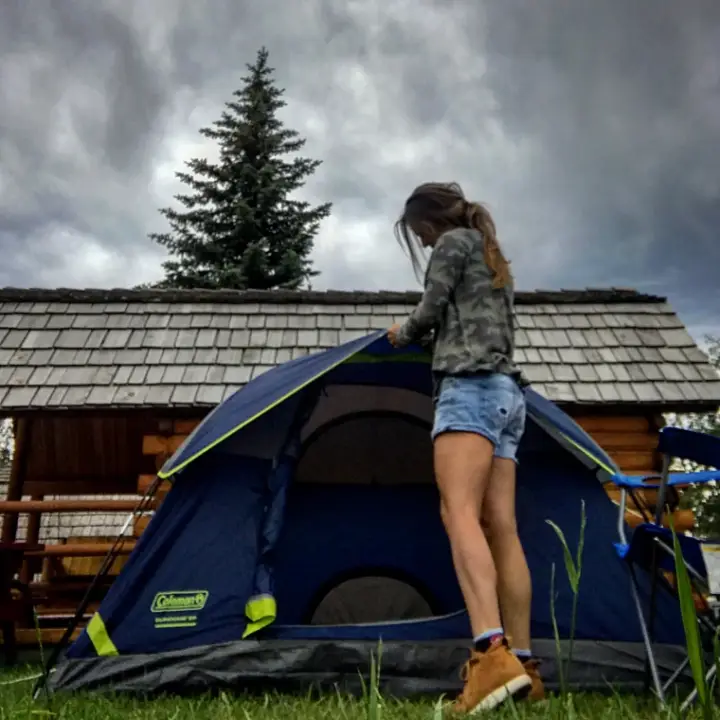
The Coleman Skydome 4-Person Tent is a practical entry-level option for casual campers who want an affordable shelter for summer weekends, festivals, backyard campouts, and easy campground trips.
Its biggest advantage is simplicity. The Skydome design uses pre-attached poles to make setup faster and less intimidating, which is helpful for beginners or anyone arriving at camp late with fading daylight and hungry campers waiting nearby.
It does not have the premium materials, aluminum poles, or large vestibules found on more expensive tents, but it covers the basics: a manageable packed size, enough room for a simple sleep setup, and a design that is easy to understand. 🔦
| Spec | Value |
|---|---|
| Packed Weight | About 11 lbs. |
| Floor Dimensions | 96 x 84 inches |
| Floor Area | 56 sq. ft. |
| Peak Height | 56 inches |
| Doors | 1 |
| Vestibule Area | None or small awning, depending on model |
| Pole Material | Fiberglass |
What We Like:
The price is the main draw. For new campers, occasional campers, or families who only camp a few times each summer, the Skydome keeps the barrier to entry low.
The fast setup is also genuinely useful. A tent that pitches quickly makes the first night easier, especially when camping with kids or setting up at a festival.
What We Don’t Like:
The materials are more basic. Fiberglass poles are less durable than aluminum, and the rainfly coverage is not as protective as the full-coverage designs on higher-end tents.
The single-door layout is also less convenient for multiple campers, and the lower peak height means adults will need to crouch inside.
Best For:
Beginner campers, budget-conscious families, festival campers, backyard overnights, and casual summer trips where severe weather is unlikely.
How to Choose the Best 4-Person Camping Tent
The right 4-person tent depends less on the label and more on how the tent will actually be used. A couple with a dog has different needs than a family with two young kids. A rainy mountain campground asks more from a tent than a dry summer festival field.
What Does “4-Person” Really Mean?
A 4-person tent rating usually means the tent floor can fit four standard sleeping pads side by side. It does not mean four adults will have generous space for gear, clothing, pillows, pets, and midnight movement.
That is the most important thing to understand before buying. Person ratings are useful for basic capacity, but they are not comfort ratings. 🧭
- For 2 people: A 4-person tent feels roomy and comfortable. There is usually space for a queen-size air mattress, duffels, extra blankets, and maybe a dog bed.
- For 3 people: This is often the sweet spot. Three sleeping pads can fit comfortably, with some room left for small gear.
- For a family of 4 with small kids: A 4-person tent can work, especially for short trips. Expect a cozy setup.
- For 4 adults: It will be tight. A 6-person tent is usually a better choice for comfort.
Key Features Explained
- Interior Space & Peak Height: Floor area tells only part of the story. Wall shape matters just as much. Cabin-style tents like the Eureka! Copper Canyon LX 4 feel more spacious because the walls are nearly vertical. Dome-style tents are usually more wind-stable, but the sloped walls reduce usable headroom near the edges.
- Weather Protection: A full-coverage rainfly gives better protection in wind-driven rain than a small partial fly. For wetter climates, look for a tent with a strong fly, sealed seams, a durable floor, and vestibule space for wet gear.
- Doors & Vestibules: Two doors make a tent much easier to share. Vestibules are just as important because they create covered storage outside the main sleeping area. Muddy shoes, wet jackets, and small packs are much easier to manage when they do not have to come inside.
- Setup & Ease of Use: Weekend tents should not feel like a puzzle. Color-coded poles, simple clips, pre-attached pole systems, and intuitive layouts make setup smoother, especially when arriving late or pitching in windy conditions.
- Ventilation: Good airflow helps reduce condensation and keeps warm nights more comfortable. Look for mesh panels, fly vents, and windows that can be adjusted without exposing the tent to rain.
- Packed Weight & Size: For car camping, weight is less important than comfort, but packed size still matters. A huge tent bag can be awkward in a small vehicle, especially when packed with coolers, chairs, sleeping pads, and camp kitchen gear.
- Footprint Compatibility: A footprint helps protect the tent floor from abrasion, pine needles, sharp gravel, and damp ground. It is not always included, but it is usually worth adding for tents used regularly.
Final Verdict
For most weekend campers, the REI Co-op Base Camp 4 is the strongest all-around pick. It has the right mix of weather protection, durability, organization, and usable space for regular car camping. The full-coverage rainfly, aluminum poles, two doors, and two vestibules make it a dependable shelter for more than just perfect summer weather.
For campers who want the most covered gear space, the The North Face Wawona 4 is the better choice. Its vestibule layout is excellent for wet weekends, gear-heavy trips, and families who need a more functional entry area.
For a lighter and still protective option, the Marmot Limestone 4-Person Tent is a smart middle-ground pick. It keeps the two-door, two-vestibule convenience while staying more manageable in packed weight.
Campers who care most about standing room should look at the Eureka! Copper Canyon LX 4, while beginners and occasional campers can keep things simple with the Coleman Skydome 4-Person Tent.
The best 4-person camping tent is the one that fits the real trip: the number of sleepers, the amount of gear, the weather, the vehicle space, and how much comfort matters once the sun goes down and the campsite gets quiet. 🌙
Frequently Asked Questions
Is a 4-person tent big enough for a family of 4?
A 4-person tent can work for a family with small kids, especially on short weekend trips. It will feel snug once sleeping bags, clothing, pillows, and gear are inside. For families with older kids, cots, or a large air mattress, a 6-person tent is usually more comfortable.
Is a 4-person tent good for 2 people?
Yes. A 4-person tent is often ideal for two campers who want extra comfort. It gives space for a larger sleeping setup, duffels, shoes, jackets, and a dog without making the tent feel oversized for typical car camping.
How heavy is a typical 4-person car camping tent?
Most 4-person car camping tents weigh roughly 11 to 18 pounds, though some models are heavier depending on pole materials, fabric thickness, vestibule size, and overall structure. These tents are usually designed for campgrounds and vehicle-supported trips, not backpacking.
Do I need a tent footprint?
A footprint is strongly recommended, especially for tents used often. It protects the tent floor from abrasion, punctures, and moisture. A properly sized footprint should sit under the tent floor without extending beyond the edges, so water does not collect underneath.
What is the best 4-person tent for rainy weather?
For rainy weekends, prioritize a full-coverage rainfly, strong poles, sealed seams, good ventilation, and vestibule space. The REI Co-op Base Camp 4 and The North Face Wawona 4 are especially strong choices for campers who expect wet conditions.
What is the best 4-person tent for tall campers?
The Eureka! Copper Canyon LX 4 offers the most standing-room comfort thanks to its 84-inch peak height. The North Face Wawona 4 is also a good option for campers who want more headroom with better vestibule storage.
Can a queen air mattress fit in a 4-person tent?
Most 4-person tents can fit a queen air mattress, but it may take up a large portion of the floor. For couples, that can be very comfortable. For families or groups, sleeping pads are usually more space-efficient.
How should a camping tent be cleaned and stored?
Let the tent dry completely before storage. If it is dirty, clean it gently with water, a soft sponge, and mild non-detergent soap when needed. Avoid harsh cleaners and washing machines. Store the tent loosely in a cool, dry place instead of leaving it compressed in the stuff sack for long periods.
Affiliate Disclosure: GearForTheOutdoors.com participates in affiliate programs, including REI, Amazon, REI Outlet, Garage Grown Gear, evo, and other trusted partners. When purchases are made through links on this site, GearForTheOutdoors.com may earn a small commission at no extra cost to the reader. This helps support practical, useful outdoor gear content.
Disclaimer: This post is for informational purposes only. Always verify current product details, fit, availability, safety information, and manufacturer warranties before purchase or use. Outdoor conditions and gear performance can vary depending on setup, weather, terrain, and experience level.