A good hiking water bottle is one of those simple pieces of gear that quietly makes every trip better. It keeps water easy to reach, handles trail dust and pack abuse, and helps make hydration feel automatic instead of like one more thing to remember.
But choosing the right bottle is not as simple as grabbing the first one on the shelf. A lightweight plastic bottle makes sense for long trail miles. An insulated stainless bottle feels amazing on hot summer hikes. A filtered bottle can be the difference between carrying less water and confidently refilling from a stream. 💧
The best water bottle for hiking depends on how and where it will be used most. Day hikers usually want easy drinking and enough capacity. Backpackers care about weight and packability. Car campers may care more about durability, ice retention, and how easy the bottle is to clean at camp.
This guide breaks down the best hiking water bottles for different types of outdoor use, from the classic Nalgene to insulated workhorses from Hydro Flask and YETI, plus filter and purifier bottles for backcountry water sources.
Our Top Picks at a Glance
- Best Overall: Nalgene Sustain Wide-Mouth 32 oz. at REI
- Best Insulated: Hydro Flask Lightweight Wide-Mouth 32 oz. with Flex Chug Cap at REI
- Best Ultralight with Filter: Katadyn BeFree Water Filter Bottle 1.0L at Amazon
- Most Durable Insulated: YETI Rambler 36 oz. with Chug Cap at REI
- Best for Water Purity: Grayl GeoPress Water Purifier 24 oz. at REI
- Best Non-Insulated Metal: Klean Kanteen Classic 27 oz. at Amazon
- Best Packable Bottle: HydraPak Flux 1L Bottle at Amazon
How to Choose a Water Bottle for Hiking
Before comparing individual bottles, it helps to think through the kind of trips the bottle needs to handle. A water bottle for casual day hikes has a different job than one for backpacking, desert hiking, travel, or hot-weather car camping.
The right choice usually comes down to five things: material, capacity, lid style, insulation, and whether filtration matters. Once those are clear, the decision gets much easier. 🥾
Material
Bottle material affects almost everything: weight, durability, taste, price, and how the bottle feels in hand.
- Plastic / Tritan: Lightweight, durable, affordable, and great for hiking. Modern bottles like the Nalgene Sustain are BPA-free and tough enough for years of trail use.
- Stainless Steel: Strong, long-lasting, and excellent for taste. Stainless bottles are heavier than plastic, but they are often insulated and feel more premium for daily use, car camping, and hot-weather hikes.
- Collapsible / Soft Plastic: Best for saving weight and space. Soft bottles can roll, flatten, or compress when empty, which is especially useful for backpacking, trail running, and travel.
- Glass-Lined or Glass Bottles: Excellent for taste, but usually too heavy or fragile for real hiking. Better for daily use, van life, road trips, or campground mornings.
- Aluminum: Lightweight and often affordable, but less common for serious hiking bottles. Aluminum can dent more easily and often needs an interior lining.
For most hikers, plastic is the most practical trail material, stainless steel is the most comfortable everyday material, and soft bottles are best when pack space matters.
Capacity
Water capacity should match the hike, weather, refill options, and effort level. A common hiking guideline is to plan for about 0.5 liter, or 16 ounces, of water per hour of moderate activity in moderate temperatures.
That guideline changes quickly in hot, dry, exposed, or high-elevation terrain. A breezy forest loop in spring is not the same as a sun-baked desert trail in July. 🌲
- 16–24 oz. / 0.5–0.75L: Best for short walks, commuting, daily use, and quick hikes with easy refill access.
- 32–40 oz. / 1.0–1.2L: The sweet spot for most day hikes. A 32 oz. bottle fits many backpack side pockets and carries enough water without feeling excessive.
- 48 oz. or more / 1.5L+: Useful for hot hikes, desert routes, long dry stretches, or group camping setups where extra water is helpful.
For most hikers, a 32 oz. bottle is the most versatile starting point. Pairing a 32 oz. bottle with a hydration reservoir or soft flask can also work well for longer days.
Lid & Mouth Type
The lid matters more than many people expect. It affects how easy the bottle is to drink from, fill, clean, and use while walking.
- Wide Mouth: Easy to fill with ice, scoop from water sources, clean with a brush, and use with some water treatment tools. The trade-off is that it can splash when drinking on the move.
- Narrow Mouth: Easier to drink from without spilling, but harder to clean and harder to fill with ice.
- Chug Cap: A great middle ground. It usually has a wide opening for filling and cleaning, plus a smaller spout for controlled drinking.
- Straw Lid: Convenient for daily use and driving, but adds extra parts that need cleaning.
- Filter Nozzle: Used on bottles like the Katadyn BeFree. Great for quick backcountry drinking, but not ideal for flavored drinks or hot liquids.
For hiking, a wide-mouth bottle with a controlled drinking lid is often the most practical setup.
Insulation
Insulation is all about comfort, not necessity. A non-insulated bottle carries water just fine. An insulated bottle makes that water more enjoyable when the weather gets hot or cold.
- Non-Insulated Bottles: Lighter, simpler, less expensive, and better for backpacking or longer hikes where weight matters.
- Vacuum-Insulated Bottles: Heavier and bulkier, but keep drinks cold for hours and can keep hot drinks warm on cold mornings.
An insulated bottle is worth it for summer day hikes, car camping, road trips, workdays, and anyone who drinks more water when it stays cold. For long-distance backpacking, a lighter bottle is usually the smarter call.
Filter vs. Purifier
Filtered and purified bottles are helpful when natural water sources are part of the plan. But the terms are not interchangeable.
A water filter is usually designed to remove bacteria, protozoa, and sediment. This is often enough for many backcountry streams and lakes in the U.S., but filters generally do not remove viruses.
A water purifier offers a higher level of protection and is designed to treat viruses as well as bacteria and protozoa. Purifiers are especially useful for international travel, high-use areas, or uncertain water sources. 🏔️
For most day hikes, a regular bottle is enough. For backpacking or long routes with refill points, a filter bottle can reduce how much water needs to be carried from the trailhead.
The Best Hiking Water Bottles: Detailed Reviews
1. Nalgene Sustain Wide-Mouth 32 oz.
Best Overall
| Specs | Nalgene Sustain Wide-Mouth 32 oz. |
|---|---|
| Material | BPA-Free Tritan Renew Plastic |
| Capacity | Also available in 16 oz. and 48 oz. |
| Weight | About 6.25 oz. |
| Mouth | Wide |
| Insulation | No |
| Best For | Day hiking, backpacking, car camping, travel, everyday use |
The Nalgene Wide-Mouth is the classic hiking bottle for a reason. It is simple, durable, affordable, easy to clean, and light enough to bring on almost any trail. If one bottle needs to cover hiking, camping, road trips, gym days, and everyday hydration, this is the safest pick.
The 32 oz. size hits a great balance for day hikes. It carries enough water for a moderate outing without becoming awkward, and it fits many backpack side pockets. The wide mouth makes it easy to add ice, fill from a sink or stream, clean thoroughly, and use for measuring water at camp.
The volume markings are especially useful for backpackers and campers. Measuring water for oatmeal, freeze-dried meals, coffee, or electrolyte mixes is much easier when the bottle doubles as a measuring cup. 🔥
The main downside is also part of the classic design: the wide mouth can splash if the bottle is used while walking. A splash guard insert or aftermarket cap solves most of that problem. It is not insulated, so water will warm up in hot weather, but the low weight and reliability make that trade-off easy for most hikers.
Pros:
- Lightweight for its capacity
- Very durable for trail and camp use
- Affordable and easy to replace
- Wide mouth is easy to fill and clean
- Volume markings are useful for camp cooking
- Works well with many accessories and water treatment setups
Cons:
- Wide mouth can splash while drinking
- Not insulated
- Plastic can hold odors if not cleaned regularly
Who It’s For:
The Nalgene Sustain Wide-Mouth 32 oz. is best for hikers who want one dependable bottle that works almost everywhere. It is ideal for beginners, day hikers, backpackers, car campers, students, and anyone who prefers simple gear that lasts.
Who Should Skip It:
Skip it if cold water matters more than weight, or if a one-handed drinking lid is important. In that case, an insulated Hydro Flask or YETI may be more enjoyable.
2. Hydro Flask Lightweight Wide-Mouth 32 oz. with Flex Chug Cap
Best Insulated
| Specs | Hydro Flask Lightweight Wide-Mouth 32 oz. |
|---|---|
| Material | 18/8 Pro-Grade Stainless Steel |
| Capacity | Also available in other sizes |
| Weight | About 11.8 oz. for the lightweight 32 oz. version |
| Mouth | Wide with Flex Chug Cap |
| Insulation | Yes, double-wall vacuum insulation |
| Best For | Hot-weather hikes, daily use, car camping, road trips |
The Hydro Flask Lightweight Wide-Mouth 32 oz. is a better trail pick than a traditional heavy insulated bottle. It still keeps water cold for long stretches, but the lighter construction makes it more reasonable for hiking than many full-weight stainless steel bottles.
This is the bottle to bring when the trail is dusty, exposed, and hot enough that lukewarm water starts to feel like a chore. Cold water can be a real morale boost halfway through a summer hike, especially on open ridgelines, desert paths, and long approaches with little shade. ☀️
The Flex Chug Cap is a big upgrade for hiking. It gives the bottle a wide opening for filling and cleaning, plus a smaller drinking spout that is easier to use while moving. That makes it more trail-friendly than a standard wide-mouth cap.
The trade-off is still weight and bulk. Even in its lightweight version, this bottle is heavier than a Nalgene or soft flask. It also costs more. But for day hikes, car camping, commuting, and road trips, it offers a strong balance of comfort and performance.
Pros:
- Keeps drinks cold much longer than non-insulated bottles
- Lighter than many traditional insulated stainless bottles
- Flex Chug Cap is easy to drink from
- Wide mouth makes filling and cleaning easier
- Durable stainless steel construction
- Good crossover bottle for trail, camp, and daily use
Cons:
- Still heavier than plastic bottles
- More expensive than basic hiking bottles
- Can dent if dropped on rock or pavement
Who It’s For:
This is best for hikers who value cold water and want an insulated bottle that is still reasonable to carry on day hikes. It also works well for car campers, road trippers, and anyone who wants one bottle for outdoor and everyday use.
Who Should Skip It:
Skip it for ultralight backpacking, long-mileage hiking, or trips where every ounce matters. A Nalgene, Smartwater-style bottle, or HydraPak soft bottle will be lighter.
3. Katadyn BeFree Water Filter Bottle 1.0L
Best Ultralight with Filter
| Specs | Katadyn BeFree 1.0L |
|---|---|
| Material | Soft flask with hollow fiber filter |
| Capacity | 1.0L |
| Weight | About 2.3 oz. |
| Mouth | 42mm opening with filter nozzle |
| Insulation | No |
| Best For | Backpacking, trail running, fast-and-light hiking, travel |
The Katadyn BeFree 1.0L is part water bottle, part water filter, and part pack-space saver. It is one of the easiest ways to drink from backcountry water sources without carrying a separate pump or heavy filter system.
The design is simple: fill the soft flask from a stream, lake, or other source, screw on the filter cap, and drink through the nozzle. The hollow fiber filter is designed for bacteria and protozoa, making it useful for many backcountry water sources in the U.S.
The real advantage is speed. There is no pumping, no complicated setup, and no waiting for tablets to work. It is especially nice on routes with frequent water crossings, where carrying less water between sources can make the pack feel noticeably lighter. 💦
Because the flask is soft and collapsible, it packs down small when empty. That makes it great for trail runners, backpackers, and minimalist hikers. It can also serve as a backup filter on longer day hikes where water sources are available but not guaranteed to be clean.
The downside is durability. A soft flask will not take abuse like a Nalgene or stainless bottle. It also needs careful cleaning and drying, and the filter can clog faster in silty or murky water. It does not protect against viruses, so it is not the right choice for every travel or water-quality situation.
Pros:
- Very lightweight and packable
- Integrated filter is fast and simple
- Great flow rate when the filter is clean
- Collapses small when empty
- Useful for backpacking and long hikes with water sources
Cons:
- Soft flask is less durable than rigid bottles
- Filter can clog in silty water
- Filter cartridge eventually needs replacement
- Does not protect against viruses
Who It’s For:
The Katadyn BeFree 1.0L is best for backpackers, trail runners, and hikers who want a fast, light way to drink from natural water sources.
Who Should Skip It:
Skip it for everyday bottle use, car camping durability, or international travel where virus protection may be important. The Grayl GeoPress is a better pick when purification matters.
4. YETI Rambler 36 oz. with Chug Cap
Most Durable Insulated
| Specs | YETI Rambler 36 oz. |
|---|---|
| Material | 18/8 Stainless Steel |
| Capacity | Wide range of sizes available |
| Weight | About 21.9 oz. |
| Mouth | Wide with Chug Cap |
| Insulation | Yes, double-wall vacuum insulation |
| Best For | Hard use, car camping, road trips, worksites, daily abuse |
The YETI Rambler 36 oz. is not the lightest hiking bottle, and it is not trying to be. This is the bottle for people who are tough on gear and want something that can handle campsites, truck beds, dusty trailheads, workdays, and daily use without feeling delicate.
The 36 oz. capacity is generous without becoming as bulky as larger half-gallon bottles. For hot day hikes, beach days, road trips, and long errands, that extra water is useful. The double-wall insulation keeps drinks cold, and the stainless steel build feels noticeably sturdy in hand.
The Chug Cap is one of the biggest reasons this bottle works well outside. It allows controlled drinking through a smaller spout, while the full wide-mouth opening underneath makes it easy to add ice and clean the bottle later. That design is much easier to live with than a plain wide-mouth lid. 🏕️
The downside is obvious: weight. At well over a pound empty, this bottle is heavy for hiking and overkill for backpacking. It shines more in car camping, basecamp, road travel, paddling days, and short hikes where durability and cold water matter more than packed weight.
Pros:
- Extremely durable stainless steel build
- Excellent insulation
- Chug Cap is practical and easy to drink from
- Wide opening makes cleaning and adding ice simple
- Great for car camping and everyday hard use
Cons:
- Very heavy for hiking
- Bulkier than most bottles
- Expensive compared with plastic options
Who It’s For:
The YETI Rambler 36 oz. is best for car campers, road trippers, worksite users, van lifers, and hikers who want a tough insulated bottle for shorter outings.
Who Should Skip It:
Skip it for backpacking, long hikes, or any trip where pack weight matters. It is built for durability and cold retention, not minimalism.
5. Grayl GeoPress Water Purifier 24 oz.
Best for Water Purity & Travel
| Specs | Grayl GeoPress 24 oz. |
|---|---|
| Material | BPA-Free Polypropylene |
| Capacity | 24 oz. / 710 mL |
| Weight | About 15.9 oz. |
| Mouth | Spout with flip-top cap |
| Insulation | No |
| Best For | International travel, backcountry trips, questionable water sources |
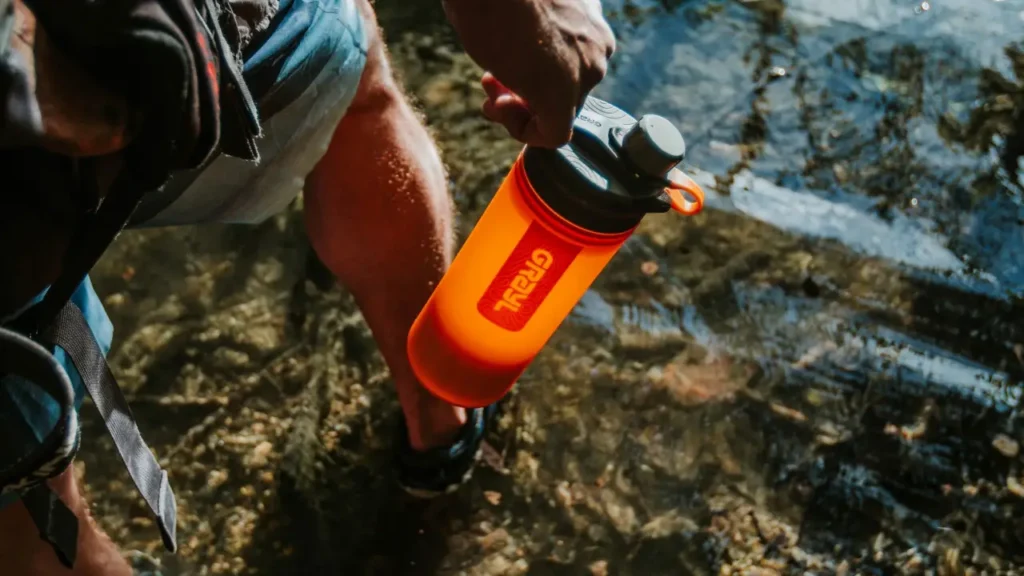
The Grayl GeoPress is the bottle to choose when water quality is the main concern. Unlike a basic backcountry filter, the GeoPress is a purifier designed to reduce viruses, bacteria, protozoa, particulates, many chemicals, and unpleasant taste.
That makes it especially useful for international travel, remote trips, high-use water sources, or any situation where a standard filter may not feel like enough. The operation is also easy to understand: fill the outer sleeve, insert the inner press, and push down to force water through the purifier cartridge.
It is heavier and bulkier than the Katadyn BeFree, but it offers a higher level of water protection. For travel and uncertain water sources, that trade-off can be worth it. 🌍
The GeoPress is not the best bottle for casual day hikes where clean tap water is available from the start. It also has a smaller capacity than many hiking bottles, and replacement cartridges add long-term cost. But when confidence in the water matters most, it is one of the most practical bottle-style options available.
Pros:
- Purifies water rather than only filtering it
- Useful for travel and questionable water sources
- Improves taste and clarity
- Fast press-style operation
- Durable enough for regular outdoor use
Cons:
- Heavy for a non-insulated bottle
- Smaller 24 oz. capacity
- Replacement cartridges add cost
- Pressing can require effort, especially with dirty water
Who It’s For:
The Grayl GeoPress is best for international travelers, overlanders, backpackers, and safety-conscious hikers who want stronger water treatment in a bottle format.
Who Should Skip It:
Skip it if most hikes start with treated tap water and do not require backcountry refills. A lighter, simpler bottle will feel better for everyday trail use.
6. Klean Kanteen Classic 27 oz.
Best Non-Insulated Metal
| Specs | Klean Kanteen Classic 27 oz. |
|---|---|
| Material | 18/8 Food-Grade Stainless Steel |
| Capacity | Also available in other sizes |
| Weight | About 7.5 oz. |
| Mouth | Narrow |
| Insulation | No |
| Best For | Daily use, plastic-free hydration, casual hiking, travel |
The Klean Kanteen Classic is a great option for anyone who wants the clean taste and durability of stainless steel without the weight of an insulated bottle. It feels more refined than a plastic bottle but stays simple enough for hiking and everyday use.
Because it is single-wall stainless steel, it is much lighter than insulated bottles from Hydro Flask or YETI. That makes it a reasonable choice for casual hikes, travel days, gym bags, and daily hydration.
The narrow mouth is comfortable to drink from and helps reduce spills while walking. It also makes the bottle a little less convenient to clean or fill with ice. A bottle brush helps, especially if anything besides water goes inside. ✨
This bottle will not keep drinks cold, and it can dent if dropped hard. But for hikers who dislike plastic and do not need insulation, it offers a clean, durable, and long-lasting alternative.
Pros:
- Lighter than insulated stainless bottles
- Does not hold flavors like some plastic bottles
- Durable and long-lasting
- Comfortable narrow-mouth drinking
- Good plastic-free option for daily use
Cons:
- Not insulated
- Narrow mouth is harder to clean
- Less convenient for adding ice
- Can dent over time
Who It’s For:
The Klean Kanteen Classic 27 oz. is best for hikers and daily users who want a non-insulated metal bottle that is lighter than most stainless options.
Who Should Skip It:
Skip it if cold water, easy ice loading, or wide-mouth cleaning matters. The Hydro Flask Lightweight or Nalgene Wide-Mouth will be more convenient.
7. HydraPak Flux 1L Bottle
Best Packable Bottle
| Specs | HydraPak Flux 1L Bottle |
|---|---|
| Material | Flexible TPU / soft bottle construction |
| Capacity | 1L |
| Weight | About 3.6 oz. |
| Mouth | Twist-drink cap / compatible designs vary by version |
| Insulation | No |
| Best For | Backpacking, travel, extra water capacity, packable hydration |
The HydraPak Flux 1L is a smart pick for hikers who want the structure of a bottle with the packability of a soft flask. It stands better than many floppy collapsible bottles when full, yet compresses down when empty to save space in a pack or travel bag.
This kind of bottle is especially useful as extra capacity. It can ride empty in a side pocket or pack lid, then get filled for long dry stretches, hot afternoons, or camp water. Backpackers often use bottles like this to add flexibility without carrying a bulky rigid bottle all day.
Unlike the Katadyn BeFree, the HydraPak Flux is not a filter bottle by itself. It is simply a lightweight, packable water container. That can be a good thing if a separate filter system is already part of the kit or if the bottle is mostly used with treated water. 🎒
It will not match the durability of a Nalgene or YETI, and it is not the easiest bottle to scrub clean if used with sugary drinks. But for backpacking, travel, and minimalist packing, the space savings are excellent.
Pros:
- Lightweight and packable
- Holds a full liter of water
- More structured than many soft flasks
- Great as extra capacity for backpacking
- Useful for travel and tight pack spaces
Cons:
- Less durable than rigid bottles
- Not insulated
- Not a purifier or filter by itself
- Best used mainly with water
Who It’s For:
The HydraPak Flux 1L is best for backpackers, travelers, and hikers who want a compact bottle that can disappear into a pack when empty.
Who Should Skip It:
Skip it if the bottle will be used every day, dropped often, or tossed around camp. A Nalgene or stainless bottle will handle abuse better.
Comparison of the Best Hiking Water Bottles
| Model | Material | Weight (empty) | Insulation | Best For | Price Tier |
|---|---|---|---|---|---|
| Nalgene Sustain Wide-Mouth 32 oz. | Tritan Renew Plastic | About 6.25 oz. | No | The All-Rounder | $ |
| Hydro Flask Lightweight Wide-Mouth 32 oz. | Stainless Steel | About 11.8 oz. | Yes | Cold Water Without Too Much Weight | $$$ |
| Katadyn BeFree 1.0L | Soft Flask / Filter | About 2.3 oz. | No | Ultralight Filtering | $$ |
| YETI Rambler 36 oz. | Stainless Steel | About 21.9 oz. | Yes | Maximum Durability | $$$$ |
| Grayl GeoPress 24 oz. | Polypropylene / Purifier | About 15.9 oz. | No | Travel & Water Purity | $$$$ |
| Klean Kanteen Classic 27 oz. | Stainless Steel | About 7.5 oz. | No | Lightweight Metal Bottle | $$ |
| HydraPak Flux 1L | Flexible TPU | About 3.6 oz. | No | Packable Extra Capacity | $$ |
Care and Maintenance Tips
A hiking bottle spends a lot of time in dusty side pockets, muddy campsites, hot cars, and damp gear bins. A little regular cleaning keeps it from developing funky smells, off-tastes, or mildew.
- Rinse it after every use: Even plain water can leave a stale smell if a bottle stays sealed while damp.
- Deep clean weekly: Use warm, soapy water and a bottle brush to scrub the inside, threads, lid, and drinking spout.
- Let it dry fully: Store bottles with the cap off until every part is dry.
- Clean lids carefully: Straw lids, chug caps, and filter nozzles have small parts where grime can collect.
- Use vinegar or baking soda for odors: A soak with diluted white vinegar or a spoonful of baking soda can help remove stubborn smells.
- Check dishwasher rules: Some bottles and lids are dishwasher safe, while others should be hand-washed to protect coatings, seals, or filters.
Filtered bottles need extra care. Let filter parts dry according to the manufacturer’s instructions, and replace cartridges when flow slows down or the rated lifespan is reached. Never run filter cartridges through a dishwasher unless the manufacturer specifically says it is safe.
For insulated bottles, avoid using bleach or harsh cleaners unless the brand allows it. Stainless steel is tough, but gaskets, lids, and powder-coated finishes last longer with gentler cleaning. 🧼
Frequently Asked Questions (FAQ)
How much water should I carry for a day hike?
A common guideline is to carry about 0.5 liter, or 16 ounces, of water for every hour of moderate hiking in moderate weather. Carry more in hot, dry, exposed, steep, or high-elevation conditions. It is always smart to bring a little more than expected, especially if the route has no reliable refill options.
Are plastic water bottles safe for hiking?
Yes, modern hiking bottles from reputable brands are typically made from BPA-free materials designed for repeated food and beverage use. Bottles like the Nalgene Sustain are popular because they are lightweight, durable, easy to clean, and practical for outdoor use.
Is an insulated bottle worth the extra weight for hiking?
An insulated bottle is worth it when cold water or hot drinks will noticeably improve the day. It makes sense for summer day hikes, car camping, road trips, and everyday use. For backpacking or long-mileage hikes, the extra weight is usually not worth it.
What is the best water bottle size for hiking?
A 32 oz. bottle is the best size for most hikers. It carries enough water for many day hikes, fits many backpack side pockets, and is not too heavy when full. For hot weather or longer hikes, carry extra water in a second bottle, hydration reservoir, or soft flask.
Should a hiking bottle be wide-mouth or narrow-mouth?
Wide-mouth bottles are easier to clean, fill with ice, and use at camp. Narrow-mouth bottles are easier to drink from while moving. A chug cap offers the best middle ground because it usually combines a wide opening for filling with a smaller spout for drinking.
Can hot liquids go in a hiking water bottle?
Hot liquids can go in most insulated stainless steel bottles, as long as the manufacturer allows it. Hot but not boiling water is commonly used in some plastic bottles like Nalgenes, especially as a cold-weather sleeping bag warmer. Avoid hot liquids in soft flasks, filter bottles, and single-wall metal bottles unless the brand specifically says it is safe.
Do filter bottles remove viruses?
Most hiking filter bottles remove bacteria and protozoa but not viruses. Purifier bottles, like the Grayl GeoPress, are designed for broader protection. For international travel or questionable water sources, a purifier is the safer choice.
Can sports drinks go in hiking water bottles?
Sports drinks can go in many regular bottles, but they require more thorough cleaning because sugar and flavoring can leave residue. Avoid putting sports drinks in filter bottles or hydration filters unless the manufacturer allows it. For easiest maintenance, use filter bottles with water only.
Final Thoughts
The best water bottle for hiking is the one that fits the way it will actually be used.
For most hikers, the Nalgene Sustain Wide-Mouth 32 oz. is still the most practical all-around choice. It is lightweight, tough, affordable, and easy to clean. For hot-weather hikes and everyday use, the Hydro Flask Lightweight Wide-Mouth 32 oz. brings cold-water comfort without as much weight as many insulated bottles. For hard use around camp, truck beds, and road trips, the YETI Rambler 36 oz. is the durability pick.
Backpackers and trail runners who refill from natural water sources will appreciate the speed and packability of the Katadyn BeFree 1.0L, while travelers and cautious backcountry users may prefer the higher protection level of the Grayl GeoPress. The Klean Kanteen Classic is a clean, simple plastic-free option, and the HydraPak Flux 1L is excellent when extra water capacity needs to pack small.
Choosing from the best water bottles for hiking comes down to balancing weight, durability, insulation, capacity, and water treatment needs. Pick the bottle that makes hydration easy, fill it before the trailhead, and keep sipping before thirst catches up. 🌄
Affiliate Disclosure: GearForTheOutdoors.com participates in affiliate programs, including REI, Amazon, REI Outlet, Garage Grown Gear, evo, and other trusted partners. When purchases are made through affiliate links, GearForTheOutdoors.com may earn a small commission at no extra cost to the reader. That helps support the site and keeps recommendations useful, practical, and free.
Disclaimer: This post is for informational purposes only. Always verify current product details, fit, availability, safety information, and manufacturer warranties before purchase or use. Outdoor conditions and gear performance can vary depending on setup, weather, terrain, and experience level.