A good weekend camping cooler does more than keep drinks cold. It protects the food plan, keeps ice from turning into soup by Saturday afternoon, and makes camp cooking feel a lot less chaotic.
For most car camping trips, the goal is simple: pack on Friday, eat well through Sunday, and avoid emergency ice runs. That means the best cooler is not always the biggest or most expensive one. It is the one that matches the trip length, group size, weather, and how far the campsite is from the car. 🧊
A premium rotomolded cooler can be worth it in hot weather, bear country, or on trips where food safety really matters. A lighter injection-molded cooler may make more sense for families who want strong performance without hauling a brick. A wheeled cooler can be the difference between an easy setup and a sweaty walk-in campsite struggle.
This guide breaks down the best coolers for keeping food cold on weekend camping trips, with practical picks for different camping styles, budgets, and packing needs.
Our Top Camping Cooler Picks: A Quick Look
For quick comparison, here are the best camping coolers for most weekend trips.
| Cooler Model | Capacity | Best For | Price Tier |
|---|---|---|---|
| YETI Tundra 45 | 32.9 L / about 35 qt usable capacity | Premium durability and reliable cold retention | $$$ |
| RTIC 52 Ultra-Light | 52 qt | Best value for most weekend car campers | $$ |
| RovR RollR 45 | 45 qt | Wheeled transport, walk-in sites, and beach camping | $$$ |
| Coleman Steel-Belted 54-Quart Cooler | 54 qt | Classic budget-friendly weekend camping | $ |
| YETI Hopper Flip 18 | 17.8 L / about 19 qt | Day trips, drinks, paddling, and side adventures | $$ |
In-Depth Cooler Reviews
Each cooler below solves a slightly different campsite problem. Some are built for maximum ice retention. Some are easier to carry. Some are better for families who just need cold food through Sunday lunch without spending premium cooler money.
YETI Tundra 45: The Indestructible Classic
The YETI Tundra 45 is the cooler many campers picture when they think of a premium hard cooler. It is tough, heavily insulated, and built for years of road trips, dusty campsites, boat days, tailgates, and hot-weather weekends.
For a normal Friday-to-Sunday camping trip, the Tundra 45 can feel like more cooler than necessary. But that extra insulation becomes useful when the weather gets hot, the campsite has no shade, or the trip includes raw meat, dairy, and other food that needs steady cold. It is the kind of cooler that gives a lot of margin for imperfect packing. 🌲
The biggest tradeoff is space and weight. Like many premium hard coolers, the thick insulated walls reduce usable interior capacity. The model name can make it sound bigger than it feels inside, so this is usually best for couples, small groups, or campers who pack food carefully.
| Specs & Features | YETI Tundra 45 |
|---|---|
| Capacity | 32.9 L / about 35 qt usable capacity |
| External Dimensions | 25.6″ x 15.9″ x 15.5″ |
| Empty Weight | 24 lbs 9.6 oz |
| Insulation | PermaFrost™ pressure-injected polyurethane insulation |
| Construction | Rotomolded polyethylene |
| Key Features | T-Rex™ lid latches, NeverFail™ hinge system, BearFoot™ non-slip feet, Vortex™ drain system, tie-down slots |
Where it Shines
- Durability: The Tundra 45 is built for rough use. It can ride in the back of a truck, sit on gravel, double as a camp seat, and handle years of weekend trips without feeling fragile.
- Cold Retention: Thick insulation and a strong lid seal help keep food and drinks cold for multi-day trips, especially when the cooler is pre-chilled and packed with enough ice.
- Camp Use: Non-slip feet, secure latches, tie-down slots, and a sturdy drain plug make it easy to use around camp, on boats, and in truck beds.
- Bear Country Potential: With proper locks, many YETI hard coolers are commonly used for bear-resistant food storage requirements. Always verify local regulations before relying on any cooler in bear country.
Pros:
- Excellent cold retention for weekend and longer trips
- Very durable rotomolded construction
- Strong latches, hinges, and drain system
- Great choice for hot weather and rugged use
Cons:
- Expensive
- Heavy for the interior space
- Smaller usable capacity than many campers expect from the model name
Who It’s Best For:
The YETI Tundra 45 is best for campers who want a long-term cooler investment and do not mind paying more for durability, insulation, and reliability. It makes the most sense for hot climates, frequent camping, fishing trips, truck camping, and campsites where gear takes a beating.
Who Should Skip It:
Campers who mostly take mild-weather overnight trips, pack light, or need the largest interior space for the money may be happier with a lighter or less expensive cooler.
Find the YETI Tundra 45 at REI
RTIC 52 Ultra-Light Cooler: The Smart Value Champion
The RTIC 52 Ultra-Light is one of the most practical coolers for weekend car camping because it hits the sweet spot between performance, size, weight, and price.
Instead of rotomolded construction, this cooler uses an injection-molded build that keeps weight lower while still offering strong insulation. That matters more than it sounds. Once a cooler is loaded with food, drinks, and ice, every extra pound gets noticeable fast. 🏕️
For most families, couples, and small groups camping from Friday afternoon to Sunday, the RTIC 52 Ultra-Light offers more than enough cooling power. It has enough capacity for meals and drinks, yet it is still manageable enough to move around camp without feeling like a two-person chore every time.
| Specs & Features | RTIC 52 Ultra-Light |
|---|---|
| Capacity | 52 quarts |
| External Dimensions | 27.17″ x 17.49″ x 17.33″ |
| Empty Weight | 21 lbs |
| Insulation | Closed-cell foam insulation |
| Construction | Injection-molded |
| Key Features | Lightweight design, freezer-style gasket, heavy-duty latches, non-slip feet, drain system, built-in bottle opener on many versions |
Where it Shines
- Weight-to-Capacity Ratio: A 52-quart cooler at roughly 21 pounds empty is very appealing for car campers who want space without excessive weight.
- Weekend Performance: For two- and three-day camping trips, the RTIC offers the kind of cold retention most people actually need.
- Value: It delivers premium-style cooler features at a lower price than many comparable hard coolers.
- Practical Size: The rectangular shape is easy to pack, and the interior works well for a mix of drinks, meal ingredients, ice packs, and frozen food.
Pros:
- Strong value for weekend camping
- Lighter than many rotomolded coolers
- Large enough for families or small groups
- Good balance of insulation, size, and price
Cons:
- Not as overbuilt as premium rotomolded models
- Still heavy when fully loaded
- Not the best choice if bear-resistant certification is required
Who It’s Best For:
The RTIC 52 Ultra-Light is the best fit for practical car campers who want a cooler that performs well without feeling oversized, overpriced, or unnecessarily heavy. It is especially strong for families, road trips, RV weekends, and casual basecamp setups.
Who Should Skip It:
Campers who need certified bear-resistant storage, extreme durability, or a cooler that can handle frequent abuse in work trucks, boats, or remote conditions may want to step up to a premium rotomolded option.
Check the RTIC 52 Ultra-Light Cooler on Amazon
RovR RollR 45: The Mobile Command Center
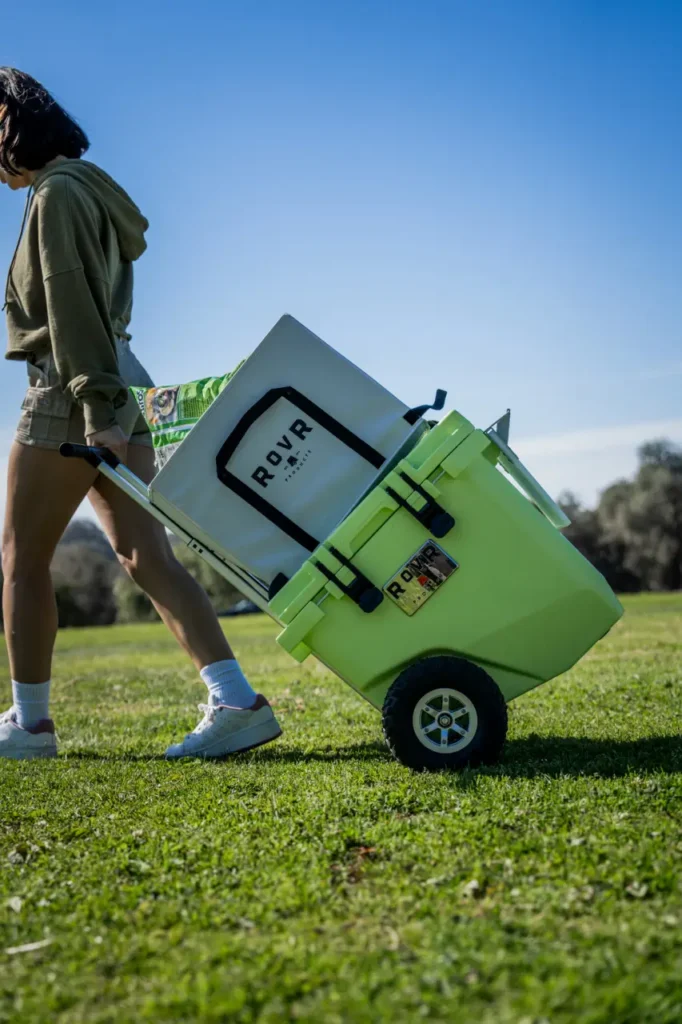
A loaded cooler can become one of the most annoying pieces of camping gear to move. The RovR RollR 45 solves that problem with rugged wheels, a sturdy pull handle, and a design that feels made for real campsites rather than smooth sidewalks.
This is the cooler to consider when the campsite is a few hundred feet from the parking spot, the beach path is soft and uneven, or the group tends to bring a full camp kitchen. The wheels are the main draw, but the organization is just as useful. The included dry storage bin helps keep sandwiches, produce, cheese, and other delicate food away from the slushy bottom of the cooler. 🍉
The RovR is bulkier than a standard 45-quart cooler because the wheels and handle take up extra space. That added footprint is worth it when the cooler needs to roll across dirt, gravel, grass, or sand, but it may feel like too much cooler for campers who park right next to the picnic table.
| Specs & Features | RovR RollR 45 |
|---|---|
| Capacity | 45 quarts |
| External Dimensions | About 22.5″ x 21″ x 19.3″ |
| Empty Weight | About 28 lbs |
| Insulation | High-density foam insulation |
| Construction | Rotomolded |
| Key Features | 9″ all-terrain wheels, telescoping handle, dry storage bin, accessory attachment system, sturdy latches |
Where it Shines
- Mobility: The large wheels and pull handle make it far easier to move a full cooler over uneven ground.
- Organization: The dry bin is genuinely useful for keeping food from getting crushed or soaked.
- Camp Convenience: The cooler can function as both cold storage and part of the camp-hauling system.
- Accessory Potential: RovR’s accessory system can turn the cooler into more of a camp kitchen hub with add-ons like prep boards and storage bins.
Pros:
- Excellent wheels for campsites, beaches, parks, and festivals
- Built-in dry storage helps protect food
- Durable hard-sided construction
- Easier to move when fully loaded than most traditional hard coolers
Cons:
- Bulky compared with non-wheeled coolers
- More expensive than basic weekend coolers
- Wheels and handle add extra footprint in the car
Who It’s Best For:
The RovR RollR 45 is best for car campers, beach campers, festival-goers, and families who regularly move gear more than a few steps from the vehicle. It is also a strong choice for anyone who wants a cooler that helps with hauling, not just chilling.
Who Should Skip It:
Campers with tight trunk space or campsites directly beside the car may not need the added size and cost of the wheeled design.
Check Prices for the RovR RollR 45 at REI
Coleman Steel-Belted Cooler: The Nostalgic Workhorse
The Coleman Steel-Belted 54-Quart Cooler is proof that a weekend camping cooler does not need to be complicated. It has a classic shape, a roomy interior, a sturdy feel, and enough insulation for typical Friday-to-Sunday camping when packed well.
This is not the cooler to buy for extreme heat, remote trips, or maximum ice retention. It is the cooler to buy when the goal is simple: keep burgers, drinks, breakfast food, and snacks cold for a casual weekend without spending premium cooler money. 🔥
The big advantage is capacity. At 54 quarts, it offers generous space for families, group meals, cookouts, and tailgates. The tradeoff is that it does not seal as tightly or insulate as aggressively as high-end rotomolded coolers. In hot weather, adding extra ice or planning a mid-trip top-off may be smart.
| Specs & Features | Coleman Steel-Belted 54-Quart Cooler |
|---|---|
| Capacity | 54 quarts |
| Can Capacity | Up to 85 cans, depending on packing style |
| External Dimensions | About 24.3″ x 16.8″ x 16.8″ |
| Empty Weight | About 18.5 lbs |
| Insulation | Traditional insulated cooler construction |
| Construction | Steel exterior with plastic liner and base |
| Key Features | Steel latch, comfort-grip handles, Have-A-Seat™ lid on many versions, drain plug, retro design |
Where it Shines
- Capacity for the Price: It gives campers a lot of cooler space for far less than premium models.
- Simple Weekend Use: For mild weather and short trips, it keeps things cold without overcomplicating the setup.
- Classic Feel: The steel-belted design looks good at camp, at tailgates, and in the backyard.
- Easy Cleaning: The simple interior is easy to wipe out after melted ice, spills, and camp food messes.
Pros:
- Great capacity for the price
- Classic design with a sturdy feel
- Lighter than many premium hard coolers of similar size
- Good for casual 2–3 day camping trips
Cons:
- Does not match premium ice retention
- Less rugged than rotomolded coolers
- Basic drain and latch system compared with higher-end models
Who It’s Best For:
The Coleman Steel-Belted Cooler is best for casual weekend campers, families, tailgaters, and backyard hosts who want a roomy, dependable cooler without a high-end price tag.
Who Should Skip It:
Campers heading into very hot weather, longer trips, or remote campsites without easy access to ice should consider a more insulated cooler.
Find the Coleman Steel-Belted Cooler on Amazon
YETI Hopper Flip 18 Soft Cooler: The Ultimate Grab-and-Go
A large hard cooler is great at basecamp, but it is not much fun to carry to the lake, picnic area, overlook, or paddle launch. The YETI Hopper Flip 18 fills that gap. It is a premium soft cooler built for side trips, drinks, lunch, and smaller food loads.
The Hopper Flip 18 has a rugged soft shell, strong insulation for its size, and a leakproof zipper. It feels much more durable than a basic grocery-store soft cooler, and it is easier to carry than a hard-sided box. For campers who like to leave the main cooler at camp and take drinks or lunch somewhere else, this is a very useful second cooler. 🚣
The downside is price. It costs far more than a standard soft cooler and holds much less than a hard cooler. It makes the most sense when portability, leak resistance, and durability matter more than maximum capacity.
| Specs & Features | YETI Hopper Flip 18 |
|---|---|
| Capacity | 17.8 L / about 19 qt |
| External Dimensions | 17.7″ x 11.5″ x 12.8″ |
| Empty Weight | 5.1 lbs |
| Insulation | ColdCell™ closed-cell rubber foam |
| Construction | DryHide™ high-density fabric shell |
| Key Features | HydroLok™ leakproof zipper, wide-mouth opening, padded shoulder strap, HitchPoint™ Grid |
Where it Shines
- Portability: The shoulder strap and compact size make it easy to carry to the beach, lake, trailhead, or picnic table.
- Leak Resistance: The zipper helps prevent melted ice from leaking into the car or tent vestibule.
- Durability: The tough shell resists punctures, mildew, and UV exposure better than many cheaper soft coolers.
- Day-Trip Use: It is ideal for drinks, sandwiches, snacks, and a small lunch setup away from the main campsite.
Pros:
- Very portable
- Strong insulation for a soft cooler
- Leakproof zipper
- Durable outer shell
Cons:
- Expensive for the capacity
- Not large enough for most full weekend food plans
- Zipper needs care to stay smooth
Who It’s Best For:
The YETI Hopper Flip 18 is best for campers who already have a basecamp cooler and want a smaller cooler for day trips, paddling, fishing, beach days, or keeping drinks within easy reach.
Who Should Skip It:
Campers looking for one main cooler to hold a full weekend of food should choose a hard cooler instead.
Find the YETI Hopper Flip 18 at REI
How to Choose the Best Cooler for Keeping Food Cold
The best camping cooler is not just about ice retention. It is about how the cooler fits into the trip. A family camping in July needs a different setup than a couple heading out for one mild spring night. A walk-in campsite changes the equation again.
Hard vs. Soft Coolers
Hard coolers are the better choice for basecamp food storage. They usually offer better insulation, better structure, more capacity, and more protection for food. They can also double as a seat, prep surface, or small camp table in a pinch.
Their downside is bulk. A hard cooler loaded with ice, drinks, and food can get heavy fast. For a 45- to 55-quart cooler, expect it to become a two-hand carry once packed. 🧺
Soft coolers are better for movement. They are easier to carry, fit better in tight spaces, and work well for drinks, lunches, paddle trips, and trailhead snacks. They are not usually the best option for holding a full weekend of perishable food.
For most weekend campers, the best setup is one main hard cooler for food and one smaller soft cooler for drinks or day trips.
Capacity: How Many Quarts Do You Need?
Cooler sizing can be confusing because thick insulation reduces interior space. A 45-quart model from one brand may feel very different inside than a 45-quart model from another brand.
Here is a practical weekend camping guide:
- 25–35 quarts: Best for solo campers, couples on quick overnights, or drink-only use.
- 40–55 quarts: The sweet spot for most weekend camping. This size works well for couples for 2–3 days or small families on shorter trips.
- 60+ quarts: Better for larger groups, longer trips, big meal plans, fishing, hunting, or situations where drinks and food need to stay in one cooler.
Pro Tip: Leave room for ice. A cooler packed completely full of food with only a small layer of ice will not perform well. A 2:1 food-to-ice ratio is a helpful starting point for weekend trips.
Ice Retention: Rotomolded vs. Injection-Molded vs. Traditional
A cooler works by slowing heat transfer. Better insulation, thicker walls, tighter gaskets, and stronger latches all help keep cold air in and warm air out.
Rotomolded coolers are made with a thick, seamless plastic shell and heavy insulation. They tend to be extremely durable and offer excellent cold retention. The tradeoff is weight, cost, and reduced interior space.
Injection-molded coolers are usually lighter and more affordable. Modern options like the RTIC 52 Ultra-Light still perform very well for weekend camping, even if they are not quite as overbuilt as premium rotomolded coolers.
Traditional coolers use simpler construction and thinner insulation. They are usually more affordable and lighter, but they will not hold ice as long. For casual weekend camping, that can still be completely fine.
Key Features to Look For
A cooler’s small details matter a lot once it is sitting in the dirt at camp.
- Latches: Rubber T-latches and sturdy metal latches help create a tighter seal than simple snap lids.
- Drain Plug: A good drain plug should be easy to open, leak-resistant, and preferably attached so it does not disappear in the grass.
- Gasket: A freezer-style gasket helps seal cold air inside the cooler.
- Handles: Rope handles are comfortable for two-person carries. Molded handles are sturdy but may be less comfortable when the cooler is heavy.
- Wheels: Wheels are worth considering if the cooler is large, the campsite is far from the car, or the trip includes beaches, parks, or festivals.
- Dry Storage: Baskets and bins help keep bread, cheese, produce, and snacks out of melted ice.
- Bear Resistance: In bear country, follow all campground and land-management food storage rules. Some areas require approved bear-resistant containers or lockers, and not every cooler qualifies.
Final Verdict
The best camping cooler for weekend trips depends on how much food needs to stay cold, how hot the weather is, and how far the cooler needs to move once it is full.
For maximum durability and reliable cold retention, the YETI Tundra 45 is the premium pick. It is expensive and heavy, but it is built for years of hard use and handles hot-weather camping very well.
For most weekend car campers, the RTIC 52 Ultra-Light is the most practical choice. It offers generous capacity, strong cold retention, and a lighter build at a more approachable price.
For campers who hate carrying loaded coolers, the RovR RollR 45 is the most convenient option. Its wheels, handle, and dry storage make a real difference at walk-in campsites, beaches, and festivals.
For a simple, affordable, classic cooler, the Coleman Steel-Belted 54-Quart Cooler is still a strong pick for casual weekend camping. It does not have premium insulation, but it offers plenty of room and dependable performance when packed well.
For side trips and drinks, the YETI Hopper Flip 18 is the best grab-and-go option. It is not a full weekend food cooler, but it is excellent for lakes, trailheads, beach days, and camp drinks. 🏔️
FAQ: Your Cooler Questions Answered
Q: Are expensive rotomolded coolers really worth it for weekend camping?
A: They can be, but not always. A premium rotomolded cooler is worth it for frequent campers, hot-weather trips, rugged use, fishing, boating, and situations where food safety matters. For casual mild-weather camping, a less expensive cooler may be enough.
Q: What size cooler is best for a weekend camping trip?
A: For most campers, 40–55 quarts is the best range. That size usually works for a couple for 2–3 days or a small family on a short weekend, as long as the cooler is packed efficiently with enough ice.
Q: Should food and drinks go in the same cooler?
A: If possible, use separate coolers. A drink cooler gets opened constantly, which lets warm air in and melts ice faster. Keeping food in a separate cooler helps protect perishable items and keeps the main meal plan colder for longer.
Q: How do you pack a cooler so food stays cold longer?
A: Pre-chill the cooler before packing. Add frozen items and block ice on the bottom, refrigerated food in the middle, and delicate items in a dry bin or on top. Fill empty air space with cubed ice, ice packs, or a towel. Keep the cooler shaded and closed as much as possible.
Q: Is block ice better than cubed ice?
A: Block ice lasts longer because it melts more slowly. Cubed ice is better for filling gaps around food and drinks. The best setup is often block ice on the bottom with cubed ice packed around the contents.
Q: How much ice should go in a camping cooler?
A: A 2:1 food-to-ice ratio is a good starting point. For hot weather, longer trips, or coolers that get opened often, use more ice than seems necessary.
Q: Are soft coolers good for weekend camping?
A: Soft coolers are great for drinks, lunches, day trips, paddling, and short overnights. For a full weekend of perishable food, a hard cooler is usually the better choice.
Q: How can food stay dry inside a cooler?
A: Use a dry basket, waterproof food containers, zip-top bags, or a cooler with a built-in dry bin. Keep fragile items like bread, tortillas, cheese, and produce above the ice line whenever possible.
Affiliate Disclosure: GearForTheOutdoors.com participates in affiliate programs, including REI, Amazon, REI Outlet, Garage Grown Gear, evo, and other trusted partners. When you purchase through our links, we may earn a small commission at no extra cost to you. That helps support our content and keeps our recommendations useful, practical, and free.
Disclaimer: This post is for informational purposes only. Always verify current product details, fit, availability, safety information, and manufacturer warranties before purchase or use. Outdoor conditions and gear performance can vary depending on setup, weather, terrain, and experience level.