Summer is the busiest—and often the most complicated—season for a national park road trip.
A July itinerary can include triple-digit heat in the Grand Canyon, freezing nights near Yellowstone’s high country, afternoon lightning in Rocky Mountain National Park, mosquitoes beside an alpine lake, and smoke drifting into Yosemite from a fire hundreds of miles away.
That is why a useful national park packing list needs to do more than name a tent, cooler, hiking boots, and sunscreen. It should help you prepare for the conditions that make summer trips inside U.S. national parks different from ordinary camping weekends.
This guide is built for summer road trips that combine scenic drives, day hikes, campground stays, visitor centers, wildlife watching, and long stretches without reliable cell service. Use it as a starting point, then adjust it for the parks, elevations, trail conditions, and activities on your itinerary. 🏞️
Quick Take: 12 Summer National Park Essentials You Should Not Forget
Packing at the last minute? Start with these.
- Park entrance documents and reservations: Save entrance passes, campground bookings, timed-entry reservations, shuttle tickets, and permits offline.
- More water capacity than a normal day hike requires: Summer heat, elevation, and unreliable water sources can quickly change how much water is needed.
- A paper park map: Phones overheat, lose power, and become much less useful when service disappears.
- A sun hoodie or lightweight long-sleeve shirt: Often more practical than repeatedly applying sunscreen to arms and shoulders.
- A waterproof rain shell: Summer thunderstorms can arrive quickly, even when the morning begins under clear skies.
- A warm insulating layer: Yellowstone, Glacier, Yosemite’s high country, Grand Teton, and Rocky Mountain can feel cold after sunset.
- A headlamp: Essential for predawn trail starts, sunset hikes, campground restrooms, and unexpected delays.
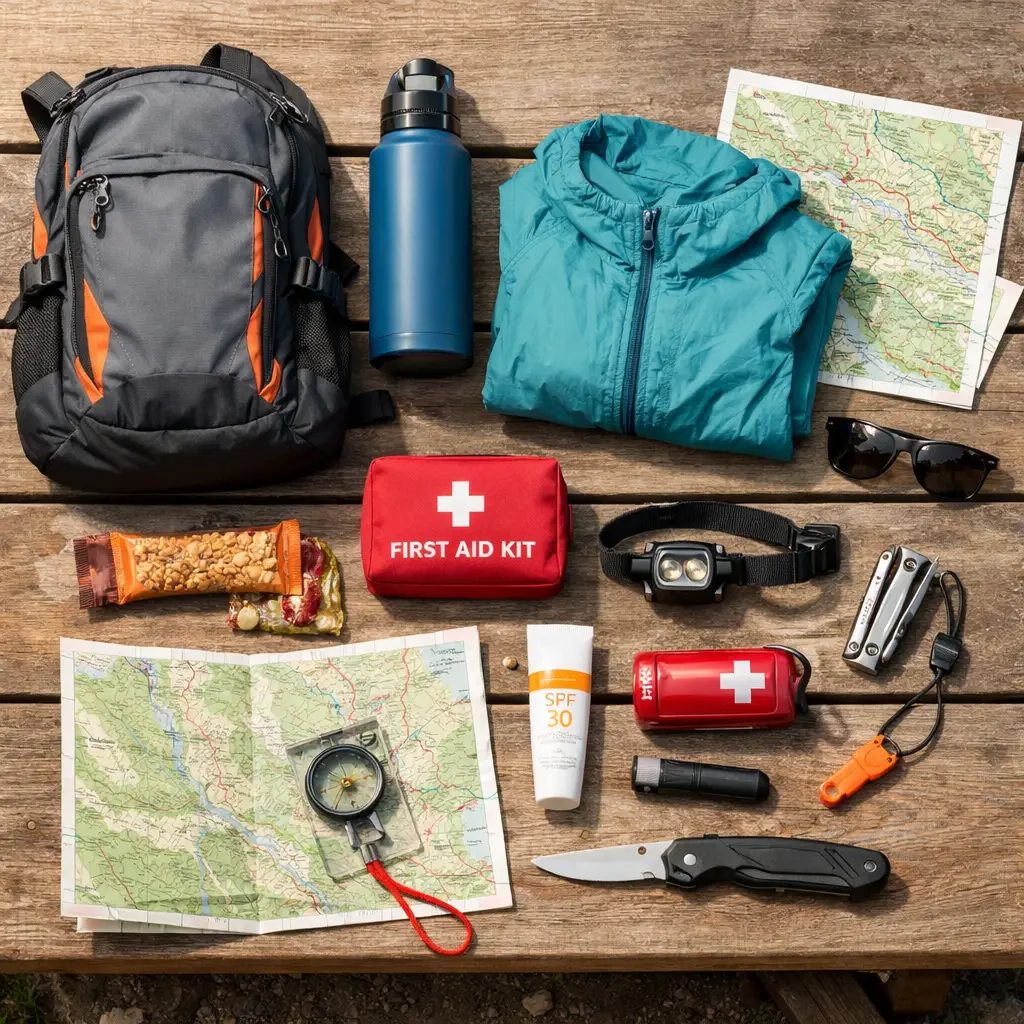
- A properly equipped daypack: Carry navigation, water, food, first aid, emergency shelter, and weather layers on every meaningful hike.
- Insect repellent: Mosquitoes and ticks can be a major part of summer conditions in wet, wooded, and high-country parks.
- Wildlife-safe food storage: Requirements vary by park and may apply to coolers, trash, toiletries, and other scented items.
- A vehicle emergency kit: Summer heat does not make remote roads, damaged tires, dead batteries, or long waits for assistance less serious.
- A flexible backup plan: Smoke, storms, trail closures, full parking lots, shuttle changes, and extreme heat can reshape the day.
Keep the daypack, water, rain shell, park documents, and headlamp accessible. The gear most likely to be needed quickly should not be buried beneath sleeping bags and storage bins.
Before You Pack: Match the List to the National Park
“Summer in a national park” can mean very different conditions depending on the destination.
Use the table below to identify the biggest challenges on the itinerary before deciding what belongs in the car.
| Park Environment | Examples | Common Summer Challenges | Add to the Packing List |
|---|---|---|---|
| Desert and canyon parks | Grand Canyon, Zion, Arches, Canyonlands, Capitol Reef, Joshua Tree | Extreme heat, little shade, exposed rock, limited water, hot vehicle interiors | Extra water capacity, electrolytes, sun hoodie, cooling towel, wide-brimmed hat, early-start lighting |
| High-elevation mountain parks | Rocky Mountain, Glacier, Grand Teton, Yellowstone, Great Basin | Cold mornings, afternoon lightning, altitude, lingering snow, rapid weather changes | Warm layer, rain shell, gloves, warm hat, traction equipment when conditions require it |
| Sierra Nevada parks | Yosemite, Sequoia, Kings Canyon | Heat at lower elevations, cold high country, smoke, bears, seasonal water issues | Bear-safe storage, warm layers, air-quality backup plan, water treatment |
| Pacific Northwest parks | Olympic, Mount Rainier, North Cascades, Crater Lake | Rain, damp trails, mosquitoes, snow at elevation, cool nights | Waterproof shell, pack liner, insect repellent, extra socks, warm layer |
| Humid and forested parks | Great Smoky Mountains, Congaree, Shenandoah, Hot Springs | Humidity, thunderstorms, ticks, mosquitoes, slippery trails | Insect repellent, tick-removal tool, breathable clothing, rain protection |
| Coastal parks | Acadia, Redwood, Olympic Coast | Fog, wind, cool temperatures, wet vegetation, slippery rocks | Wind-resistant layer, rain shell, quick-drying pants, footwear with dependable traction |
| Wildlife-focused parks | Yellowstone, Grand Teton, Glacier, Great Smoky Mountains | Bears, bison, elk, food-storage rules, traffic caused by wildlife | Binoculars, accessible bear spray where recommended, secure food storage, extra driving time |
Do not pack only for the campground elevation. A summer day may begin in a hot valley and end several thousand feet higher where wind, rain, hail, or near-freezing temperatures are possible.
Yellowstone notes that high-elevation trails can remain snow-covered into July and that summer weather may include rain, hail, wind, and overnight temperatures near freezing. Rocky Mountain National Park also warns that snow and ice can remain on high trails during summer.
The Complete Summer National Park Packing List
Organizing the vehicle into clear zones makes a multi-park trip much easier:
- Front-seat zone: Passes, wallet, paper map, sunglasses, phone cable, water, and snacks.
- Day-hiking zone: A fully packed backpack ready to grab each morning.
- Camp zone: Tent, sleep system, chairs, kitchen, and campground supplies.
- Emergency zone: Vehicle tools, first aid, spare water, warm layers, and backup food.
This setup matters during busy summer travel. When a shuttle is leaving, a trailhead parking space opens, or a thunderstorm starts building, there may not be time to unpack the entire vehicle looking for one missing item. 🚙
Documents, Reservations & Park Access
Summer trips often require more planning than simply arriving at the entrance station.
Some parks use timed-entry systems, shuttle reservations, activity permits, parking restrictions, or road-access rules during their busiest months. These systems can change from year to year, so a reservation that was unnecessary during a previous visit may be required for the next one.
For example, Rocky Mountain National Park uses timed entry during certain hours in summer 2026. Glacier National Park is not using a park-wide vehicle reservation system in 2026, but it has introduced ticketed shuttle access and timed parking arrangements at Logan Pass.
Pack or download:
- Photo identification
- Park entrance pass
- Campground and lodging confirmations
- Timed-entry reservations
- Shuttle or transit tickets
- Backcountry and activity permits
- Vehicle reservation details when applicable
- Printed itinerary
- Emergency contact information
- Travel insurance information when relevant
- Credit card and a small amount of cash
- Screenshots or PDFs saved for offline access
Do not rely on an email inbox that requires cell service. Save every reservation directly to the phone and keep a printed backup in the glove compartment.
America the Beautiful Passes in 2026
The America the Beautiful Annual Pass now has separate pricing for U.S. residents and international visitors.
In 2026, the Resident Annual Pass costs $80 and requires proof of U.S. citizenship or residency. The Non-Resident Annual Pass costs $250. Non-U.S. residents age 16 and older may otherwise face an additional $100-per-person fee at 11 heavily visited national parks, including Yellowstone, Yosemite, Zion, Grand Canyon, Glacier, Grand Teton, Rocky Mountain, Acadia, Bryce Canyon, Everglades, and Sequoia and Kings Canyon.
The pass covers entrance fees, but it does not replace campground reservations, permits, shuttle tickets, timed-entry bookings, or activity fees.
Water, Heat & Sun Protection
Water planning should begin with the destination, not with a universal bottle recommendation.
A paved viewpoint loop in Acadia and an exposed canyon hike in Zion may be similar in distance but completely different in heat exposure, shade, elevation change, and water availability.
The National Park Service recommends avoiding strenuous activity during the hottest part of the day when possible, wearing sun-protective clothing, taking breaks, and balancing water intake with food and electrolytes. Grand Canyon specifically advises summer hikers to avoid hiking during the heat of the day and warns that overhydration without adequate food and salt can also be dangerous.
Pack:
- Reusable water bottles
- Hydration reservoir
- Large water container for the vehicle
- Electrolyte mix or electrolyte tablets
- Salty snacks
- Backup water treatment
- Wide-brimmed hat or cap with neck coverage
- Sunglasses
- Broad-spectrum SPF 30+ sunscreen
- SPF lip balm
- Sun hoodie or lightweight long-sleeve shirt
- Cooling bandana or small towel
- Small insulated bottle for cold water
For most full-day summer hikes, an 18- to 30-liter pack provides room for water, food, weather layers, and emergency equipment. The current Osprey Talon 22 and Tempest 22 are practical examples for hikers who want supportive daypacks with hydration compatibility and enough space for a full trail day.
Do not assume water will be available simply because it appears on a park map. Grand Canyon’s seasonal water systems can be shut down by pipeline failures, and the park advises hikers to check current water status immediately before a trip.
Summer Heat Strategy for Desert Parks
In Grand Canyon, Zion, Arches, Canyonlands, Capitol Reef, and other exposed parks, the most important “gear choice” may be the time of day.
Pack the daypack the night before and begin heat-exposed hikes early enough to finish the hardest section before temperatures peak. Carry a headlamp for predawn starts instead of planning to push through the hottest afternoon hours.
Saguaro National Park advises hikers that hot, dry summer conditions may require approximately one quart of water per hour, though personal needs vary with temperature, intensity, fitness, route, and exposure.
Never leave people, pets, medications, electronics, pressurized fuel canisters, sunscreen, or food that can spoil inside a hot parked vehicle.
Hiking & Day Trip Gear
A national park day hike can become much more serious than expected when heat, altitude, weather, route-finding, or transportation problems slow the group down.
Carry the Ten Essentials on any trail where an unexpected delay could leave the group outside after dark.
| Essential | What to Pack | Summer National Park Use |
| Navigation | Paper map, compass, downloaded map, GPS device | Useful when trails intersect, signs are damaged, or service disappears |
| Headlamp | Headlamp with spare batteries or backup power | Important for early heat-avoidance starts and delayed returns |
| Sun Protection | Hat, sunglasses, sunscreen, protective clothing | Essential on exposed trails, snowfields, dunes, and high plateaus |
| First Aid | First-aid kit, blister care, medications | Helps manage hot spots, scrapes, minor injuries, and allergic reactions |
| Knife and Repair Supplies | Multi-tool, tape, cord, patch kit | Useful for pack, shoe, tent, or equipment problems |
| Fire | Lighter or waterproof matches where legal and appropriate | Emergency use only; always follow current fire restrictions |
| Emergency Shelter | Emergency bivy or reflective blanket | Provides basic protection during storms or unplanned delays |
| Extra Food | High-energy food requiring no cooking | Helps during long hikes, traffic delays, and shuttle disruptions |
| Extra Water | Additional water and treatment where appropriate | Creates a buffer when water sources are dry or unavailable |
| Extra Clothes | Rain shell and insulating layer | Protects against thunderstorms, wind, altitude, and cool evenings |
Also consider:
- Trekking poles
- Whistle
- Binoculars
- Small sit pad
- Pack liner or dry bag
- Portable phone battery
- Emergency contact card
- Trail-specific permit
- Water shoes only when the route genuinely requires them
- Traction equipment for verified snow or ice conditions
Leave a trip plan with someone who is not hiking. Include the trailhead, route, vehicle description, expected return time, and instructions for what to do if the group does not check in.
Summer Storms & Lightning
Clear summer mornings can create a false sense of security in mountain and canyon parks.
Thunderstorms frequently build later in the day around high terrain. Yosemite advises hikers to watch for afternoon cloud development and move away from high, exposed areas when storms threaten. In Rocky Mountain National Park, lightning is common from June through September.
Pack:
- Waterproof rain jacket
- Pack liner or internal dry bags
- Quick-drying clothing
- Warm layer
- Weather downloaded before leaving service
- Headlamp in case the route must change
Start exposed summit, ridgeline, pass, and alpine lake hikes early. The safest response to thunder is to reach a substantial building or hard-topped vehicle. Trees, shallow caves, picnic shelters, tents, and rock overhangs do not provide reliable lightning protection.
A rain shell should remain in the daypack even when rain is not forecast. Summer mountain storms can bring wind, hail, and a sharp temperature drop within minutes. ⛈️
Clothing: Summer Layering for National Parks
Packing only shorts and T-shirts is one of the easiest ways to be uncomfortable on a summer national park trip.
A flexible clothing system should handle strong sun, sweat, cool mornings, thunderstorms, mosquitoes, wind, and cold overlooks after sunset.
Base Layers
- Two or three quick-drying hiking shirts
- Lightweight sun hoodie
- Long-sleeve synthetic or merino shirt
- Quick-drying underwear
- Lightweight thermal top for mountain parks
- Thermal bottoms for cold campgrounds or high-elevation lodging
A long-sleeve sun shirt can be cooler and easier to manage than constantly reapplying sunscreen across exposed arms, shoulders, and the back of the neck.
Mid-Layers
- Light fleece
- Packable insulated jacket
- Warm hat
- Light gloves for alpine mornings
- Dry socks reserved for camp
Yellowstone, Grand Teton, Glacier, Yosemite’s high country, and Rocky Mountain can all feel surprisingly cold during summer mornings and evenings. Pack for the elevation of the highest planned activity, not the forecast in the nearest gateway town.
Rain and Wind Protection
- Waterproof hooded rain jacket
- Rain pants for wet regions or long exposed hikes
- Light wind layer
- Pack cover or liner
A lightweight rain jacket is useful even in desert parks. It can serve as wind protection, help retain warmth during an unexpected delay, and provide basic coverage during a short storm.
Hiking and Camp Clothing
- One or two pairs of quick-drying hiking pants
- One pair of hiking shorts
- Comfortable camp pants
- Clean shirt for evenings
- Sleepwear
- Three to five pairs of wool or synthetic socks
- Swimsuit when swimming or paddling is planned
- Bandana or neck gaiter
Avoid packing a separate bulky outfit for every day. A few pieces that dry quickly and work together are more useful than a crowded duffel full of cotton clothing.
Footwear for Hot Trails, Wet Trails & Lingering Snow
Choose footwear for the actual surface.
- Trail runners: Good for maintained trails, warm conditions, and hikers who prefer lighter footwear.
- Hiking shoes: A practical middle ground for rocky day hikes and general park travel.
- Hiking boots: Useful for rough terrain, heavier loads, mud, and hikers who prefer more structure.
- Camp shoes: Give feet a break and make campground showers or restroom trips easier.
- Water shoes: Pack only for paddling, repeated stream crossings, or rocky shorelines.
- Gaiters: Helpful for sand, loose gravel, snow, mud, and trail debris.
Great Sand Dunes warns that sand surfaces can become hot enough to make open footwear uncomfortable or unsafe during summer afternoons. Closed-toe footwear also helps keep sand from rubbing against the feet.
Pack blister tape or bandages inside the daypack, not in the campground bin. Test footwear with the same socks planned for the trip, including downhill walking when possible. 🥾
Core Camping & Sleeping Gear
Summer campgrounds can still become cold, windy, and wet after sunset.
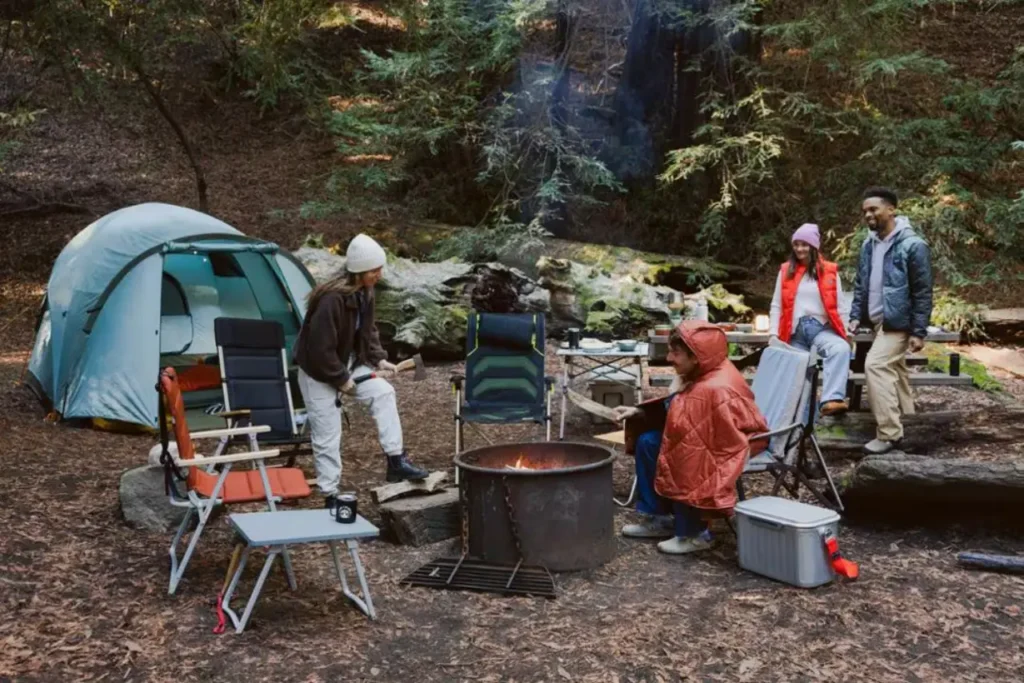
- Three-season tent
- Tent footprint
- Stakes suited to the ground
- Extra guylines
- Stake hammer
- Sleeping bag appropriate for expected nighttime lows
- Insulated sleeping pad
- Camp pillow
- Headlamp
- Backup light
- Camp chairs
- Small table when the site lacks a picnic table
- Tent repair supplies
- Small doormat
- Earplugs for busy campgrounds
For two campers who want more room than a standard two-person shelter provides, the current REI Co-op Half Dome 2 Plus Tent with Footprint offers additional living space, two doors, and a full-coverage rainfly.
Practice setting up a new tent before the road trip. Summer campground arrivals often happen later than planned because of traffic, wildlife jams, construction, or long entrance lines.
Choosing a Summer Sleeping Bag
Do not choose a sleeping bag using only the daytime forecast.
Check the expected overnight temperature at the campground’s elevation. A desert valley may remain warm overnight, while a mountain campground can become cold enough to require a 20°F or 30°F sleeping bag.
The sleeping pad matters as much as the bag. A lightly insulated or uninsulated air mattress can feel cold even during summer because the ground draws heat away throughout the night. 🌙
Camp Kitchen Essentials
A national park camp kitchen should be simple to operate, quick to clean, and easy to secure from wildlife.
- Two-burner stove for campground meals
- Correct fuel
- Manual lighter
- Pot and frying pan
- Cooking spoon, spatula, and tongs
- Sharp knife
- Cutting board
- Reusable plates and bowls
- Mugs
- Eating utensils
- Coffee or tea system
- Cooler
- Food thermometer when needed
- Water container
- Biodegradable soap
- Sponge and scraper
- Camp towel
- Trash and recycling bags
- Can opener
- Food-storage containers
A compact system such as the current Jetboil Flash 1.0 L Fast Boil System is useful for quickly heating water for coffee, oatmeal, soup, or dehydrated meals. It is less practical than a two-burner stove for cooking full campground dinners.
Plan one low-effort arrival meal. A long drive followed by tent setup is rarely the ideal time to unpack several pans and begin an elaborate recipe.
Food Storage Is a Park Rule, Not a Personal Preference
Food-storage requirements vary significantly among national parks.
Some campgrounds provide metal lockers. Other locations allow food inside a locked hard-sided vehicle. Certain backcountry areas require an approved bear-resistant canister. Regulations may cover coolers, trash, cooking equipment, toothpaste, sunscreen, lip balm, deodorant, pet food, and anything else with an odor.
In Yosemite campgrounds, food lockers are required for food storage. Sequoia and Kings Canyon instruct visitors to secure food, coolers, and scented items whenever they are not actively being used.
Do not leave food unattended on a picnic table—even for a quick restroom visit. Ravens, squirrels, raccoons, bears, and other animals can open bags, damage gear, and learn to associate campsites with food.
Bear Spray, Bear Canisters & Wildlife Gear
Bear spray and bear-resistant food storage solve different problems.
- Bear spray is a defensive tool carried in accessible reach where the park recommends it.
- Bear canisters and food lockers prevent wildlife from accessing food and scented items.
- Binoculars allow wildlife to be observed without moving closer.
- Telephoto lenses provide better photographs without approaching animals.
Bear species, food-storage regulations, and bear-spray recommendations vary among national parks. Check the official page for every destination instead of assuming that Yellowstone, Yosemite, Great Smoky Mountains, and Olympic follow the same rules.
Carry bear spray on a hip belt or chest strap where it can be reached immediately. Bear spray buried inside a backpack is not readily available during a sudden encounter.
Maintain the park’s required wildlife distances. A roadside animal sighting can also cause long traffic delays, so keep extra water and snacks inside the vehicle.
Insects, Ticks & Summer Bugs
Insect conditions vary by elevation, moisture, and time of summer.
Yellowstone notes that mosquitoes can be widespread around lakes, streams, and wet areas during June and July. The park also identifies spring and early summer as important tick season in grassy and brushy lower-elevation areas.
Pack:
- Insect repellent
- Long-sleeve shirt
- Light-colored hiking pants
- Head net for heavily affected areas
- Tick-removal tool or fine-tipped tweezers
- Anti-itch treatment
- Screened tent with functioning zippers
Check clothing, children, pets, and gear after hiking through tall grass or brush. Showering and changing into clean camp clothing also makes it easier to find ticks.
In humid parks such as Congaree, Great Smoky Mountains, and Hot Springs, the combination of heat, mosquitoes, ticks, and limited airflow can make lightweight long sleeves more comfortable than exposed skin covered in repeated layers of repellent. 🦟
Vehicle & Road Trip Essentials
A national park road trip may include long distances between fuel stations, repair shops, grocery stores, and reliable phone service.
Pack:
- Driver’s license
- Vehicle registration and insurance
- Spare tire or manufacturer-approved repair kit
- Jack and lug wrench
- Tire-pressure gauge
- Portable tire inflator
- Jumper cables or jump starter
- Reflective warning triangles
- Work gloves
- Roadside flashlight
- Vehicle first-aid kit
- Emergency water
- Nonperishable food
- Blanket or warm layer
- 12-volt and USB chargers
- Power bank
- Phone mount
- Paper road atlas
- Downloaded regional maps
- Small trash container
- Window shade
- Extra windshield washer fluid
- Basic cleaning supplies
Download navigation for the roads surrounding the park, not just the trails inside it. Detours can send drivers through areas with no service, and seasonal roads may close because of construction, flooding, snow, fire, or accidents.
Fill the fuel tank before entering remote areas. Visitor-center fuel, food, and water services may be limited, expensive, seasonal, or far from the trailhead.
A cooler and emergency supplies should remain accessible without unloading the full vehicle. Avoid stacking heavy bins where they can shift forward during sudden braking.
Smoke, Wildfires & Fire Restrictions
Summer wildfire smoke may affect a park even when the fire is far away.
Yosemite warns that summer and fall smoke can reduce visibility and create health concerns. Sequoia and Kings Canyon also experience summer air-quality problems involving ozone and fine particulate pollution.
Before entering a park:
- Check current park alerts.
- Review air-quality conditions.
- Look for active fire information.
- Confirm campground and road status.
- Check fire restrictions.
- Prepare a lower-exertion backup activity.
- Carry necessary medications.
- Know when changing destinations is the wiser decision.
Do not assume a campground fire ring means campfires are currently allowed. Restrictions may prohibit wood fires and charcoal while still allowing certain gas stoves that can be turned off immediately.
Fireworks are prohibited in national parks. Avoid parking over dry grass, secure trailer chains so they do not drag, and fully extinguish any permitted flame.
Toiletries & Personal Items
- Toothbrush and toothpaste
- Prescription medications
- Backup glasses or contact lenses
- Hand sanitizer
- Quick-dry towel
- Sunscreen
- SPF lip balm
- Insect repellent
- Feminine hygiene products
- Toilet paper
- Sealable waste bags
- Trowel only where catholes are permitted
- Human-waste disposal bags where required
- Unscented wipes
- Earplugs
- Small mirror
- Shower sandals
Human-waste rules depend on the trail and ecosystem. Some locations allow properly placed catholes, while others require all human waste to be packed out.
Toilet paper and hygiene products should be packed out unless a park specifically instructs otherwise. Store toiletries with food whenever the park classifies scented items as wildlife attractants.
How to Pack the Car for a Multi-Park Summer Road Trip
Pack according to when items will be needed.
Keep Within Reach
- Park pass
- Reservations
- Paper map
- Wallet
- Sunglasses
- Water
- Snacks
- Phone charger
- Sunscreen
- Insect repellent
- Rain shell
Keep Near the Top of the Cargo Area
- Daypack
- Hiking shoes
- Trekking poles
- Cooler
- First-night meal
- Tent
- Sleeping bags
- Headlamps
- Camp chairs
Keep in Dedicated Bins
- Camp kitchen
- Dry food
- Toiletries
- Clothing
- Vehicle emergency equipment
- Campsite supplies
Label bins clearly and avoid changing the system during the trip. Returning each item to the same location makes early departures much easier.
At the end of each day, refill water, charge electronics, replace snacks, check the next day’s weather, and place the correct layers in the daypack. Ten minutes of evening preparation can save much more time at a crowded summer trailhead. 🌄
What Not to Pack for a Summer National Park Trip
Leaving unnecessary gear at home creates more room for water, food, and items that improve safety.
Consider skipping:
- Multiple heavy cotton hoodies
- A different outfit for every day
- Bulky cookware not required by the menu
- Large knives or unnecessary “survival” tools
- Firewood transported from another region
- Speakers that disturb other visitors
- Large quantities of disposable dishes
- Glass containers
- Shoes that have never been worn outdoors
- Complicated campsite decorations
- Food that requires constant refrigeration when cooler space is limited
- Gear added only because it appeared on a generic camping checklist
The best packing list supports the trip that is actually planned. A hotel-based Yellowstone road trip, a Zion campground weekend, and a week of hiking around Glacier should not produce identical cargo areas.
Final Thoughts: Pack for the Park, Not Just the Season
A strong summer national park packing list prepares for more than warm weather.
It accounts for exposed desert heat, cold mountain mornings, afternoon lightning, limited water, mosquitoes, wildlife rules, seasonal road systems, crowded trailheads, smoke, and long distances without services.
Start with reservations and current park conditions. Build the daypack around water, navigation, weather protection, and the Ten Essentials. Add camping gear only when the itinerary includes campgrounds, and add specialized equipment only when the destination and trail conditions require it.
Most importantly, stay flexible. A successful national park trip is not defined by completing every hike on the itinerary. Sometimes the better day means starting earlier, choosing a shaded route, using a shuttle, watching wildlife through binoculars, or changing parks when heat, smoke, or storms make the original plan less enjoyable.
Good preparation creates space for the moments that matter: cool air at a sunrise overlook, a quiet trail before the crowds arrive, dinner beneath tall pines, and the final light settling across a landscape that feels much larger than the road that brought you there. 🌲
Frequently Asked Questions
What should be packed for desert national parks in summer?
Prioritize water capacity, electrolytes, sun-protective clothing, a wide-brimmed hat, sunscreen, sunglasses, salty food, a headlamp for early starts, and an emergency water reserve in the vehicle.
Avoid scheduling strenuous exposed hikes during the hottest part of the day. Check trail-specific water information and heat alerts shortly before departure.
Is a jacket really necessary in Yellowstone or Glacier during July?
Yes. High-elevation parks can have cold mornings, wind, rain, hail, and low overnight temperatures even during midsummer. Pack a light insulating jacket and waterproof shell.
Some high trails may also retain snow into July, depending on elevation, aspect, and the previous winter’s snowpack.
How much water should be carried on a summer national park hike?
There is no single amount that works for every trail. Needs depend on temperature, humidity, sun exposure, elevation, exertion, body size, route length, and available water sources.
Review the park’s guidance for the exact route. Carry additional capacity in hot or dry areas, eat during long hikes, and bring water treatment when the plan depends on natural sources.
Do all national parks require timed-entry reservations?
No. Requirements vary by park, location, season, and year.
Even parks without general timed entry may require reservations for campgrounds, shuttles, scenic roads, popular trailheads, caves, ferries, tours, or backcountry areas. Check the official park alerts and reservation pages before every visit.
Is the America the Beautiful Pass worth buying in 2026?
For U.S. residents, the $80 annual pass can be worthwhile when visiting multiple fee-charging federal recreation sites.
International visitors should compare the $250 Non-Resident Annual Pass with the entrance and nonresident fees for the exact itinerary. Visiting several of the 11 parks that charge the additional nonresident fee may make the annual pass considerably more practical.
Are bear spray and a bear canister the same thing?
No.
Bear spray is a defensive tool for an encounter. A bear canister or food locker is used to prevent wildlife from accessing food, trash, and scented items. A trip may require one, both, or neither depending on the park and route.
Can summer national park trails still have snow?
Yes. High-elevation routes in parks such as Glacier, Grand Teton, Yellowstone, Rocky Mountain, Yosemite, and Mount Rainier may retain snow well into summer.
Check current trail conditions. Do not carry traction devices, an ice axe, or other technical equipment unless everyone using the equipment has the skills needed for the terrain.
What should stay out of a hot vehicle?
Never leave children or pets inside a parked vehicle. Heat-sensitive medications, electronics, batteries, pressurized fuel, aerosol containers, sunscreen, and perishable food should also be protected from extreme temperatures.
What is the most commonly forgotten national park item?
Downloaded reservations and maps are among the most consequential forgotten items. Headlamps, rain shells, can openers, charging cables, and insect repellent are also easy to overlook.
Affiliate Disclosure: GearForTheOutdoors.com participates in affiliate programs, including REI, Amazon, REI Outlet, Garage Grown Gear, evo, and other trusted partners. When purchases are made through links on this site, GearForTheOutdoors.com may earn a small commission at no extra cost to the reader. This helps support practical, useful, and freely accessible outdoor content.
Disclaimer: This post is for informational purposes only. Always verify current product details, availability, park alerts, permits, reservations, road conditions, water availability, weather, fire restrictions, wildlife regulations, safety information, and manufacturer warranties before purchase, travel, or use. Outdoor conditions and gear performance can vary depending on setup, weather, terrain, destination, season, and experience level.