Van life gets easier when power stops feeling like a constant tradeoff. A cold fridge, a charged laptop, lights after sunset, and enough battery left for a fan or camera gear can make a small space feel far more comfortable. 😊
That is why a portable power station has become one of the most useful upgrades for modern van setups. It gives travelers a quieter, cleaner, simpler way to stay powered without the noise, fumes, or hassle of a gas generator.
The best one is not just the biggest one. It is the one that fits the way the van is actually used. Some people need enough battery for weekend escapes and a few devices. Others need something that can support a fridge, remote work, and longer stretches away from hookups.
The picks below stand out because they solve real van-life needs well. Some are easier to carry. Some give more breathing room for daily use. Some make more sense for bigger rigs and heavier electrical demands. All four are current models from brands that still matter in this category today.
Our Top Picks for Van Life Power Stations
| Product | Best For | Capacity (Wh) | Check Price |
|---|---|---|---|
| EcoFlow DELTA 3 Plus | Overall Performance | 1024 Wh | Check at Amazon |
| EcoFlow DELTA Pro 3 | High-Power Demands | 4096 Wh | Check at Amazon |
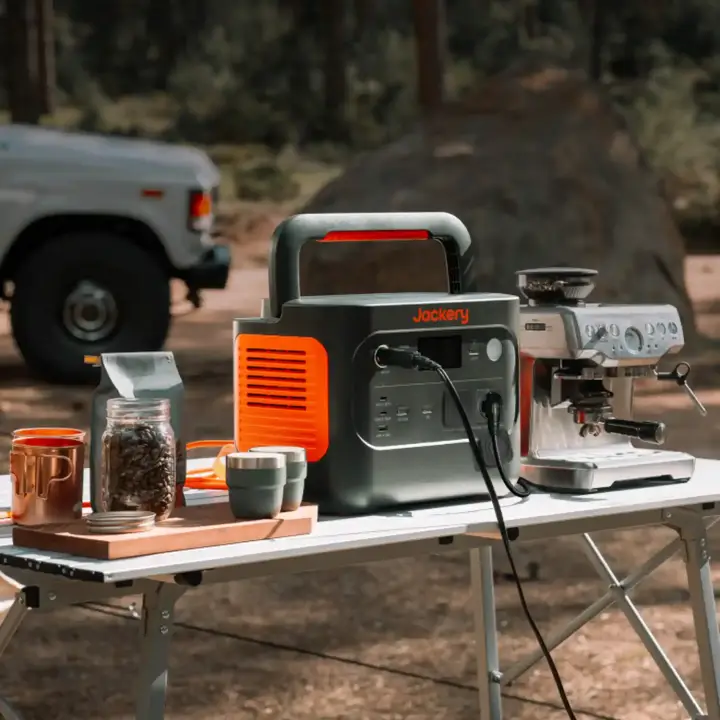
| Jackery Explorer 1000 v2 | Daily Van Use & Portability | 1070 Wh | Check at Amazon |
| Jackery Explorer 500 v2 | Weekend Trips & Simplicity | 512 Wh | Check at Amazon |
In-Depth Reviews of the Best Van Life Power Stations
A good power station should feel like it belongs in the van, not like something that is constantly in the way. Size, weight, charging speed, usable output, and day-to-day convenience all matter once it is living in a real setup.
EcoFlow DELTA 3 Plus: Best Overall Performance
The EcoFlow DELTA 3 Plus feels like the sweet spot for most van travelers. It is big enough to handle real daily use, but still compact enough to fit into a flexible setup without taking over the whole space.
This is the kind of unit that makes sense for people charging laptops, phones, cameras, lights, and smaller camp gear while also wanting enough reserve for a fridge or occasional higher-draw appliance. It feels more like a true part of the van than a backup-only accessory. 😊
One reason it works so well is balance. There is enough battery here to make a noticeable difference in everyday comfort, and enough output to keep the van feeling functional rather than limited. That matters more than flashy claims. On the road, what most people really want is something that can quietly keep up.
It also helps that the DELTA 3 Plus recharges quickly and supports strong solar input for its class. That makes it easier to recover during a short stop, a campground reset, or a sunny afternoon parked outside town. Fast charging is not just a nice feature on paper. It genuinely changes how easy a power station is to live with. ⚡
The port layout is practical too. There are enough AC outlets for a real van setup, along with USB options that make sense for newer devices. It is the kind of unit that feels modern without being fussy.
Key Specs:
- Capacity: 1024 Wh
- AC Output: 1800W continuous
- Battery Type: LiFePO4
- Recharge: About 1 hour via AC
- Weight: About 27.6 lbs.
- Ports: 6 AC outlets, USB-A, USB-C, car port, DC outputs
- Solar Input: Up to 1000W
Who It’s Best For:
Van travelers who want one power station that feels capable, current, and easy to live with for everyday off-grid use.
Shop the EcoFlow DELTA 3 Plus at Amazon
EcoFlow DELTA Pro 3: Best for High-Power Demands
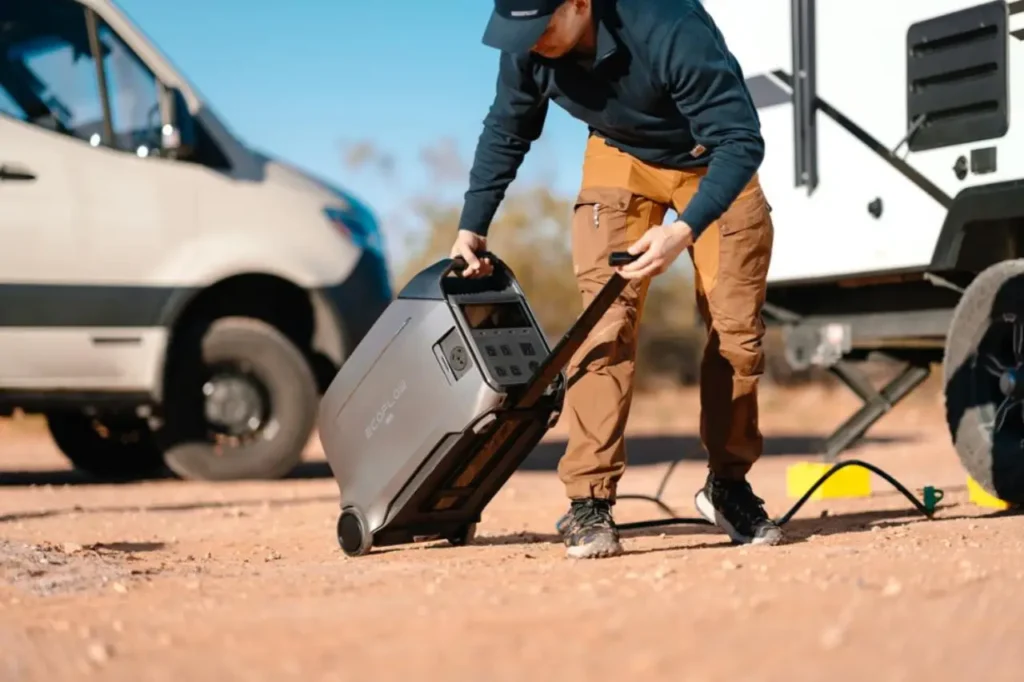
The EcoFlow DELTA Pro 3 is for bigger expectations. This is not the pick for someone who just wants to charge a few devices and run a light at night. It is for van setups where power is part of the whole lifestyle.
If the van runs a fridge full-time, supports work gear every day, or leans more toward comfort-heavy travel, this model starts to make a lot more sense. It offers a very different level of headroom than the smaller units in this guide.
That extra headroom changes the experience. Instead of constantly thinking about what can run together, or whether a certain appliance is pushing the limit, the setup feels calmer and more capable. For some travelers, that kind of ease is worth the extra size and weight.
This is still called a portable power station, but in real life it is much closer to a serious built-out power solution. It belongs in larger vans, RV-style travel, or more ambitious rigs where power use is central to the setup rather than occasional. 😊
The tradeoff, of course, is portability. It is much heavier and less casual than the other picks here. But for travelers who care more about power confidence than easy lifting, that trade can make perfect sense.
Key Specs:
- Capacity: 4096 Wh
- AC Output: 4000W continuous
- Battery Type: LiFePO4
- Power Support: 120V/240V capability
- Battery Life: 4000 cycles to 80%
- Weight: Substantially heavier than typical mid-size units
Who It’s Best For:
Travelers with larger vans, bigger electrical needs, or a more built-out setup where small and mid-size stations would start to feel limiting.
Shop the EcoFlow DELTA Pro 3 at Amazon
Jackery Explorer 1000 v2: Best for Daily Van Use & Portability
The Jackery Explorer 1000 v2 is the kind of power station that feels especially well suited to everyday van life. It has enough battery to be genuinely useful, enough output to cover real needs, and a size that still feels manageable in a small living space. 😊
That combination matters. Plenty of power stations look good on a product page, then feel awkward once they actually have to be stored, moved, and used around camp. The Explorer 1000 v2 avoids a lot of that friction. It feels easier to integrate into a real routine.
This is a strong option for travelers who want to run the basics comfortably: a laptop, a fridge, lights, camera batteries, phones, and some extra gear without having to baby the battery all day. It sits in a very practical middle zone, where the unit feels strong enough to matter without becoming bulky or excessive.
It also brings a more current feel than older Jackery models because it uses LiFePO4 battery chemistry and fast charging. That makes it easier to recommend as a true van-life tool rather than a lighter-duty camping accessory. 🔋
For many people, this is the most natural alternative to the DELTA 3 Plus. It still feels compact, but it gives enough battery and output to support a van setup that gets used regularly rather than only on occasional weekend trips.
Key Specs:
- Capacity: 1070 Wh
- AC Output: 1500W continuous
- Battery Type: LiFePO4
- Recharge: 0 to 100% in about 1 hour
- Ports: Dual 100W USB-C, USB-A, AC outlets
- Weight: About 23.8 lbs.
Who It’s Best For:
Van travelers who want a current, capable, easier-to-carry power station for regular use on the road.
Shop the Jackery Explorer 1000 v2 at Amazon
Jackery Explorer 500 v2: Best for Weekend Trips & Simplicity
Not every van setup needs a large power station. Sometimes the goal is much simpler: keep the essentials charged, run a few small items, and avoid turning the power setup into its own project.
That is where the Jackery Explorer 500 v2 fits in. It feels like a straightforward option for weekend trips, casual van travel, and lighter electrical needs. It is easier to carry, easier to store, and easier to understand than the larger units in this guide. 🙂
For people who mostly want power for phones, lights, laptops, camera batteries, and other everyday basics, this kind of size can be enough. It will not transform a van into a high-demand off-grid machine, but it can make shorter trips feel much more comfortable.
The lower weight is a big advantage too. A lot of portable power stations sound manageable until it is time to lift them in and out of the van. This one feels much more realistic for travelers who care about simplicity and ease of use.
It is also a better fit than older entry-level models because it uses LiFePO4 battery chemistry instead of relying on older battery tech. That gives it a stronger long-term feel, even though it is still clearly the lighter-duty option in this roundup.
Key Specs:
- Capacity: 512 Wh
- AC Output: 500W continuous
- Battery Type: LiFePO4
- Ports: 2 AC outlets, USB-C, USB-A, car port
- Weight: Light enough to move around camp easily
Who It’s Best For:
Weekend travelers, lighter van setups, and anyone who wants a simple entry point into portable van power.
Shop the Jackery Explorer 500 v2 at Amazon
How to Choose the Best Portable Power Station for Your Van
The right portable power station comes down to one simple question: what needs to stay powered, and for how long?
Capacity (Watt-hours): How Much Power Do You Need?
Capacity, measured in watt-hours (Wh), tells you how much total energy the battery holds.
For van life, that matters most when the setup includes things that run for longer stretches, like a fridge, fan, lights, or daily laptop use. A smaller unit may feel fine for charging phones and a camera. It starts to feel much smaller once the van is used for sleeping, working, and spending long hours outside campgrounds. 😊
A few rough examples help:
- Phone: about 10-15 Wh per charge
- Laptop: about 50-80 Wh per charge
- 12V fridge: often several hundred watt-hours per day depending on heat and use
- Roof fan: can add up noticeably overnight
- Lights and small accessories: usually modest, but they still count together
That is why 500Wh-class units often make more sense for shorter or lighter trips, while 1000Wh-class units feel much better for daily van use.
Our Recommendation:
- Under 600Wh: Good for lighter use and shorter trips
- Around 1000Wh: A very practical range for many van setups
- 2000Wh and up: Better for bigger rigs or heavier electrical routines
Output (Watts): What Can You Run?
Output, measured in watts (W), tells you how much the power station can run at one time.
This matters when a van setup includes things like a blender, kettle, induction cooktop, or multiple devices charging together. A battery can have plenty of total capacity and still struggle if the output ceiling is too low.
A few examples:
- Laptop charger: 60-100W
- Portable fridge: usually manageable on mid-size stations
- Blender: 300-700W
- Induction cooktop: often 1200-1800W
- Electric kettle: often around 1200W or more
For most van travelers, this is where a unit like the DELTA 3 Plus or Explorer 1000 v2 starts to feel much more useful than a smaller entry-level station.
Battery Chemistry: LiFePO4 vs. Older Lithium-Ion
Battery chemistry shapes how a power station feels over time.
LiFePO4 has become much more appealing for van life because it generally offers better cycle life and better long-term value for people who charge and discharge their unit regularly. That is part of why the current models in this guide feel like stronger recommendations than many older “best of” picks that relied on older lithium-ion setups.
For a van traveler who plans to use portable power often, that matters. It is not just about today’s trip. It is about whether the unit still feels like a smart buy after many months of actual use.
Recharging Your Power Station on the Road
Most van travelers recharge in one or more of three ways:
- Wall charging before a trip or during stops with hookups
- Solar charging while parked
- Vehicle charging while driving
Fast wall charging can make a huge difference in real life. A unit that recovers quickly is easier to live with during short stops and changing travel days. Strong solar input helps too, especially for vans that spend longer periods off-grid in sunny conditions. ☀️
The EcoFlow DELTA 3 Plus and Jackery Explorer 1000 v2 both stand out here for fast recharge times, while the DELTA 3 Plus also supports strong solar input for its size.
Ports and Outlets
The best port layout is the one that matches the gear already in the van.
Look for:
- Enough AC outlets for chargers and small appliances
- USB-C ports for modern laptops and phones
- A 12V car port for van-friendly gear
- A layout that feels practical, not just impressive
The DELTA 3 Plus is especially strong here, while the Explorer 1000 v2 also brings a very usable mix for day-to-day van travel.
Final Verdict: Which Van Life Power Station Is Right for You?
For most readers, the EcoFlow DELTA 3 Plus is the best overall choice. It has the kind of battery size, output, recharge speed, and port mix that fits real van life well. It feels modern, capable, and versatile without becoming too bulky for everyday use. 😊
The Jackery Explorer 1000 v2 is the strongest alternative for travelers who want something current, useful, and easier to carry. It feels especially well matched to regular van travel where power matters, but space and portability still matter too.
The Jackery Explorer 500 v2 is the simpler option. It makes the most sense for lighter needs, shorter trips, and travelers who want straightforward power without stepping into a larger, heavier system.
And for larger rigs or heavier demands, the EcoFlow DELTA Pro 3 is the clear power-first pick. It is far more machine than many people need, but for the right setup, that extra capability can be exactly the point.
A good power station does more than keep devices charged. It makes the van feel easier to live in. It gives more freedom to stay out longer, work more comfortably, and settle into camp without watching the battery every hour.
Frequently Asked Questions
Can a portable power station run a van fridge?
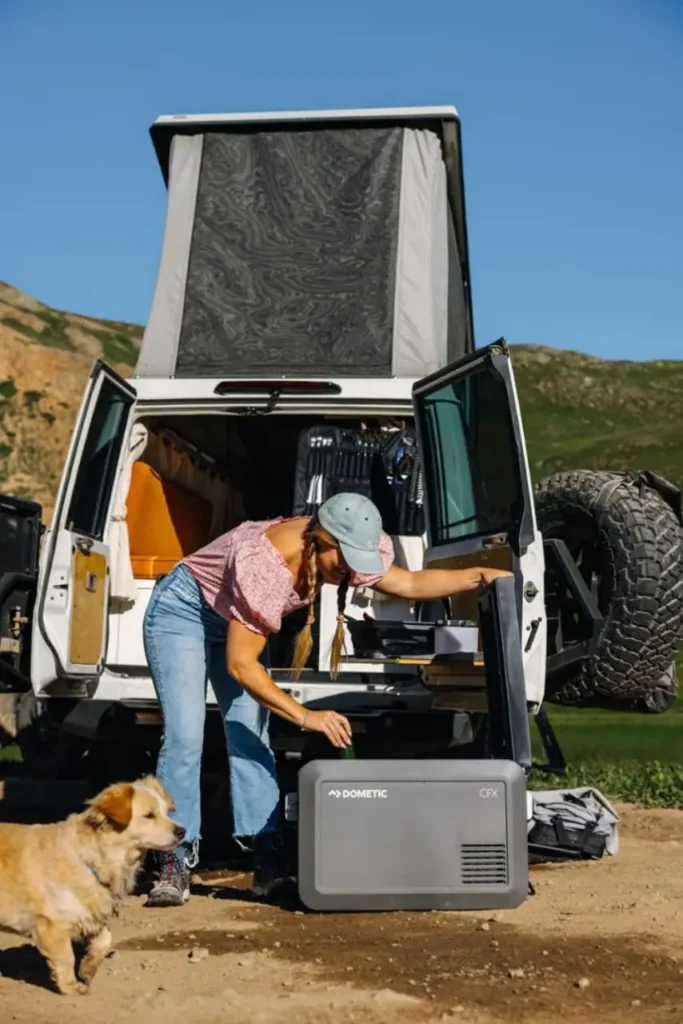
Yes. A portable power station is one of the most common ways to run a 12V fridge in a van. For shorter trips or lighter use, a smaller unit may be enough. For more comfortable daily use, a 1000Wh-class station usually feels much more realistic, especially in warmer weather.
How much capacity is enough for van life?
That depends on what the van is powering. Charging phones and a laptop is very different from running a fridge, fan, lights, and work gear every day. For many van setups, around 1000Wh is where power starts to feel meaningfully comfortable.
Is LiFePO4 worth it for van use?
Usually, yes. For frequent use, LiFePO4 generally makes more sense because it is better suited to repeated charging cycles and longer-term ownership than many older portable power options.
What is the difference between a 500Wh station and a 1000Wh station?
In real use, a 1000Wh station gives much more breathing room. It is not just about charging more devices. It is about feeling less constrained. A 500Wh unit can still be very useful, but a 1000Wh unit fits daily van life much better once the setup includes a fridge, longer stays, or regular laptop use.
Affiliate Disclosure: GearForTheOutdoors.com participates in affiliate programs, including REI, Amazon, REI Outlet, Garage Grown Gear, evo, and other trusted partners. When you purchase through qualifying links, GearForTheOutdoors.com may earn a small commission at no extra cost to you. That support helps keep content practical, useful, and free.
Disclaimer: This post is for informational purposes only. Always verify current product details, fit, availability, safety information, and manufacturer warranties before purchase or use. Outdoor conditions and gear performance can vary depending on setup, weather, terrain, and experience level.