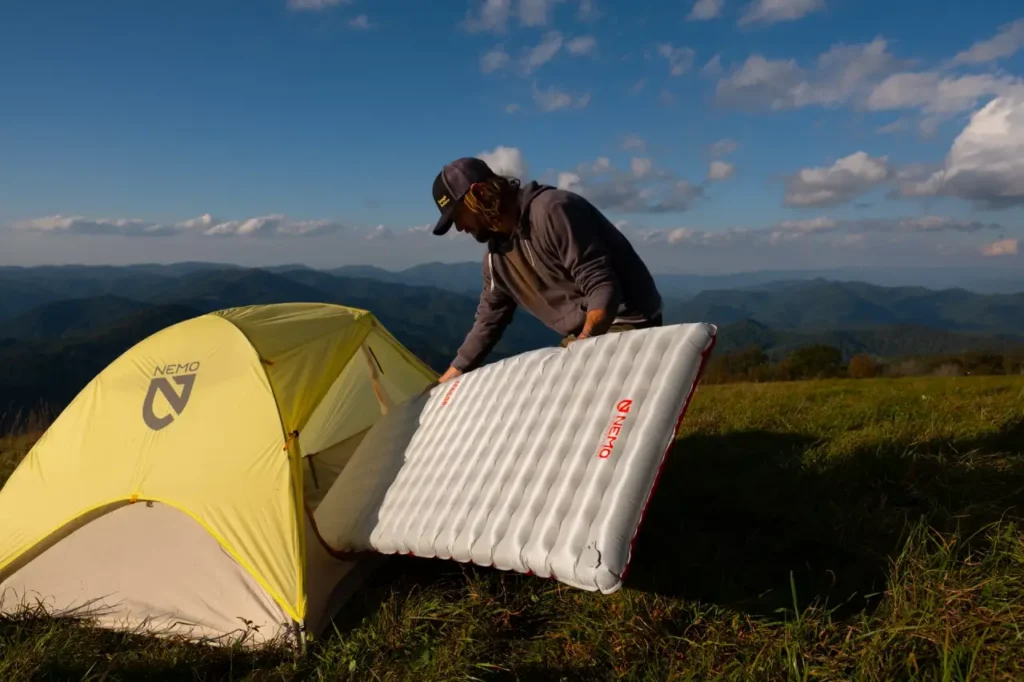
Waking up outside should feel good. Cool air, quiet trees, a little light coming through the tent, and that first slow stretch before coffee. What it should not feel like is sore hips, a stiff back, and shoulders that never really settled in during the night.
That is usually where a bad sleeping pad shows itself. 😅
A lot of campers spend time choosing the right tent or sleeping bag, then treat the sleeping pad like a small detail. In practice, it is one of the biggest factors in how well you sleep. If the pad is too thin, too cold, too narrow, or too unstable, you feel it for hours. That matters even more if you sleep on your side, move around a lot, or just want camp to feel comfortable instead of punishing.
The good news is that sleeping pads have gotten much better. There are now backpacking pads with real cushioning and meaningful warmth, and there are car-camping pads that feel close enough to a mattress that mornings can feel completely different. The best ones do more than get you off the ground. They cushion pressure points, hold warmth better, and make it easier to actually relax at camp.
If waking up sore has become part of the routine, this is one of the easiest gear problems to fix.
Our Top Picks for a Sore-Free Sleep
Here’s a quick look at the most comfortable camping sleeping pads on this list.
| Sleeping Pad | Best For | Thickness | R-Value | Price |
|---|---|---|---|---|
| NEMO Tensor All-Season | Overall Comfort & Backpacking | 3.5 in. | 5.4 | $$$ |
| Exped MegaMat | Ultimate Car Camping Luxury | 4 in. | 8.1 | $$$$ |
| Therm-a-Rest MondoKing 3D | Plush Basecamp Comfort | 4.25 in. | 7.0 | $$$$ |
| Exped Ultra 6.5R | Warm, Backpacking-Friendly Comfort | 3.5 in. | 6.9 | $$$ |
| Sea to Summit Ether Light XR Pro | Side Sleepers Who Want More Cushion | 3.9 in. | 7.4 | $$$ |
| REI Co-op Camp Dreamer XL | Value Car Camping | 4 in. | 6.6 | $$ |
The Best Camping Sleeping Pads for Sore Sleepers
The pads below stand out for a few simple reasons: they offer better cushioning, better support, better warmth, or a better balance of those things than thinner, less comfortable options. Some make the most sense for backpacking. Others are clearly made for campground comfort. All of them are better choices if sleep quality is a real priority.
NEMO Tensor All-Season: Best All-Around Comfort
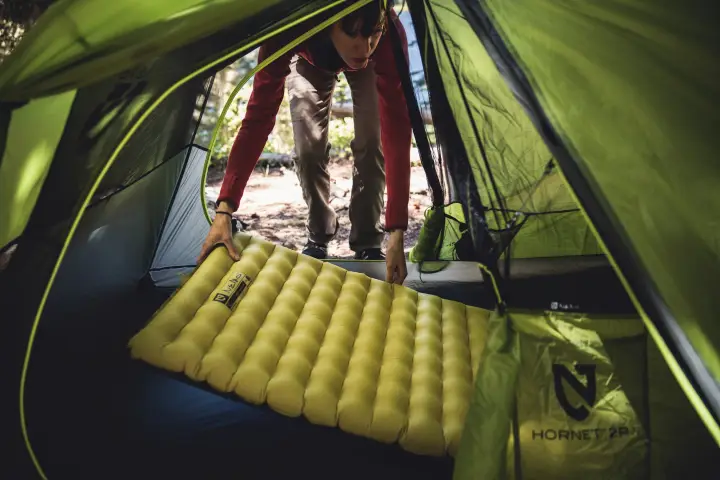
Best For: Campers who want one pad that still works for backpacking but feels noticeably more comfortable than a stripped-down trail pad.
Specs:
- Thickness: 3.5 in.
- R-Value: 5.4
- Best Use: Backpacking
- Price: $$$
The NEMO Tensor All-Season is one of the easiest pads to like because it lands in a very useful middle ground. It is still light and packable enough for backpacking, but it does not feel like a compromise the moment you lie down.
That 3.5-inch thickness is a big part of the appeal. It gives your hips and shoulders more room before they start pressing into the ground, which matters a lot for side sleepers and anyone who tends to wake up stiff after a night outside. It also has a reputation for being more stable and quieter than many backpacking pads, which helps if you are a restless sleeper and do not want every small movement to feel amplified in the tent.
The warmth is another reason it works so well as an all-around pick. With an R-value of 5.4, it reaches beyond simple summer use and feels much more comfortable when nights cool off. That makes it easier to use across a wider range of trips without feeling underbuilt once the temperature drops.
This is a strong choice for campers who want real comfort, but still care about weight and packed size.
Potential Downsides: If most of your camping happens close to the car, you may prefer something larger and more mattress-like. It also costs more than a basic entry-level backpacking pad.
Who It’s For: Backpackers, mixed-use campers, and side sleepers who want one pad that feels genuinely comfortable without stepping all the way into car-camping bulk.
Check Price at REI | Check Price at NEMO
Exped MegaMat: The Car Camping Bed
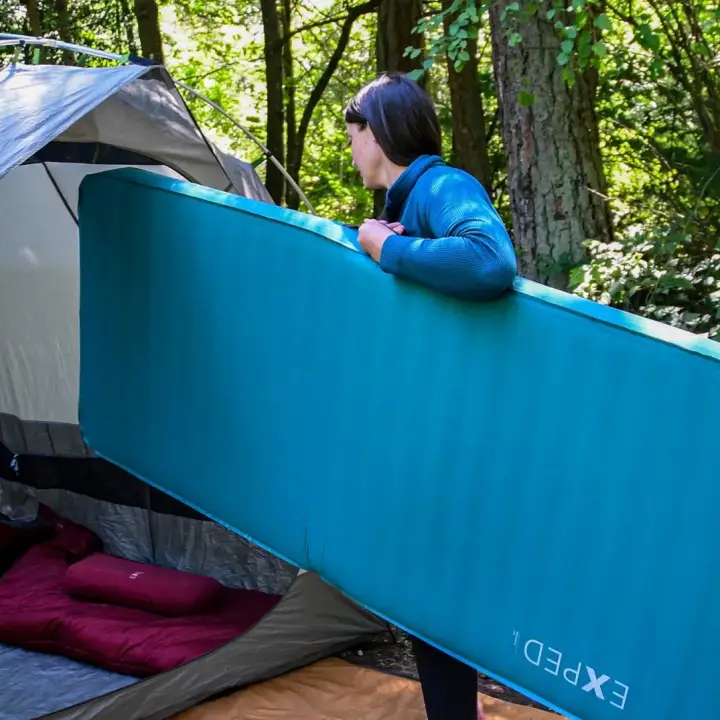
Best For: Car campers, van campers, and anyone who wants camp sleep to feel much closer to home.
Specs:
- Thickness: 4 in.
- R-Value: 8.1
- Best Use: Camping
- Price: $$$$
The Exped MegaMat is one of the clearest comfort upgrades in this category. It is thick, warm, broad, and soft in a way that feels very different from a typical backpacking pad. If your goal is simply to sleep well at camp, this is one of the strongest options out there.
What makes it stand out is not just the extra thickness. It is the overall feel. The pad has a more substantial, pressure-relieving sleep surface that works especially well for side sleepers and anyone who wakes up when a pad feels too firm or too narrow. Its 4-inch build and high R-value also make it one of the better choices for colder nights, shoulder-season trips, and anyone who feels chilled from the ground up.
This is the kind of pad that can make people enjoy camping more simply because they are sleeping better. It is a luxury item in the best sense of the phrase: not essential, but immediately understandable once you use it. 🏕️
Potential Downsides: It is expensive, heavy, and bulky. This is a drive-up campsite, van, or basecamp pad, not something you carry deep into the backcountry.
Who It’s For: Campers who care more about sleep quality than pack size, especially side sleepers, older campers, and anyone who wants a real break from waking up sore.
Therm-a-Rest MondoKing 3D: Maximum Loft and Support
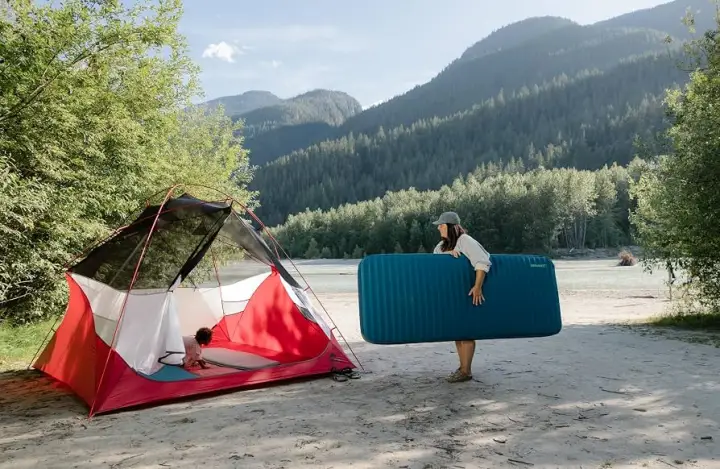
Best For: Basecamp comfort, colder-weather car camping, and campers who want a thick, supportive pad with a planted feel.
Specs:
- Thickness: 4.25 in.
- R-Value: 7.0
- Weight (Regular): 4 lbs. 6 oz.
- Packed Size (Regular): 26 x 10.3 in.
The Therm-a-Rest MondoKing 3D goes after the same kind of camper as the MegaMat: someone who wants real cushioning, real warmth, and enough support that sleeping outside no longer feels like a compromise.
It has even more loft than the MegaMat, and that is part of why it works so well for sore sleepers. A pad this thick does a much better job smoothing out rough tent sites and keeping hips, shoulders, and lower backs from feeling the ground underneath. The 7.0 R-value also makes it a strong choice for colder nights, where a thin pad can leave the whole sleep setup feeling harsher than expected.
This is also the kind of pad that feels best when you want your campsite to feel settled and comfortable. It is not about shaving ounces. It is about making sure sleep feels restorative enough that the next day starts well instead of stiff and slow. The TwinLock valve system is a nice bonus because it makes setup and takedown less annoying on big self-inflating pads.
Potential Downsides: Like other premium basecamp pads, it is bulky and expensive. It makes the most sense when the car is doing the heavy lifting.
Who It’s For: Car campers and basecamp campers who want thick, warm comfort and do not mind carrying a larger pad to get it.
Check Price at Amazon | Check Price at REI
Exped Ultra 6.5R: Warm, Backpacking-Friendly Comfort
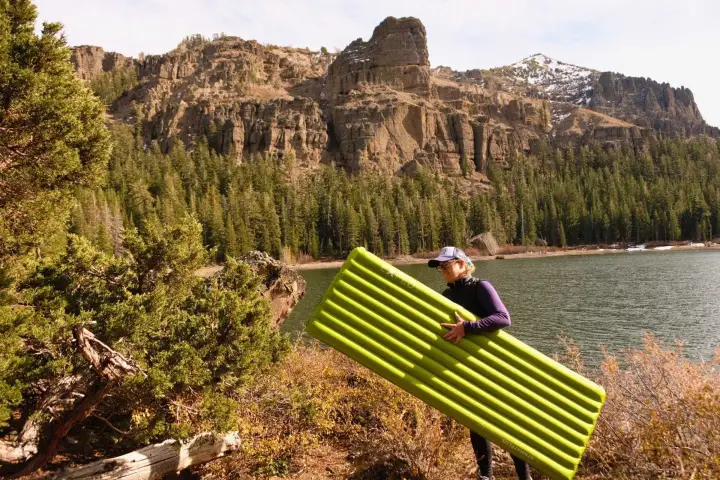
Best For: Backpackers and mixed-use campers who want a warmer pad without giving up too much packability.
Specs:
- Thickness: 3.5 in.
- R-Value: 6.9
- Best Use: Backpacking
- Price: $$$
The Exped Ultra 6.5R is a strong option for campers who still need to carry their pad, but want something warmer and more forgiving than a basic 3-season inflatable. It has enough thickness for meaningful comfort and enough insulation to feel much more reassuring once nights turn cold.
That combination makes it a smart fit for mountain trips, shoulder-season camping, and colder sleepers who already know that a mediocre pad can ruin an otherwise good setup. At 3.5 inches thick, it gives side sleepers a much better chance of staying comfortable through the night, and the high R-value gives it real reach beyond fair-weather use.
It also packs well enough that it still feels practical for backpacking, which is the whole point of a pad like this. You are getting more comfort and more warmth without jumping to full car-camping size. 😴
Potential Downsides: It costs more than many standard 3-season backpacking pads, and not everyone needs this much insulation for summer trips.
Who It’s For: Cold sleepers, shoulder-season backpackers, and anyone who wants a warmer, more supportive pad without giving up backcountry usability.
Sea to Summit Ether Light XR Pro: Best for Side Sleepers Who Want More Cushion
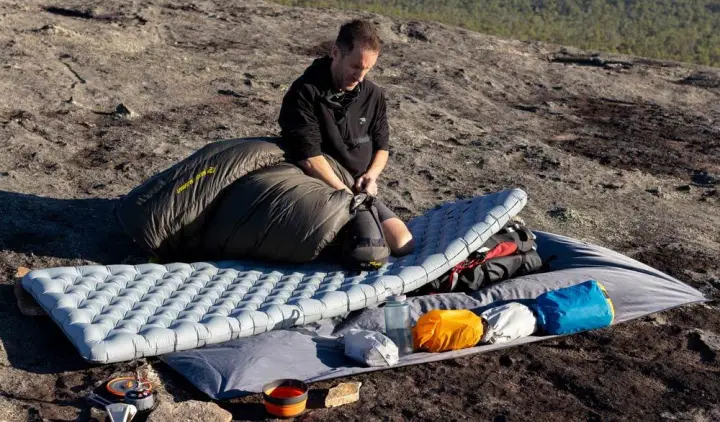
Best For: Side sleepers and comfort-focused backpackers who want one of the thickest trail-friendly pads available.
Specs:
- Thickness: 3.9 in.
- R-Value: 7.4
- Best Use: Backpacking
- Packed Size (Regular Mummy): 4.7 x 8.3 in.
For side sleepers, thickness matters. A lot. And that is where the Sea to Summit Ether Light XR Pro stands out.
At 3.9 inches thick, it offers a deeper cushion than many backpacking pads, which helps keep pressure points from driving the whole night. That extra loft is one of the biggest reasons sleepers who struggle with hips and shoulders often gravitate toward this style of pad. It also pairs that cushion with a strong 7.4 R-value, which makes it useful beyond mild summer conditions.
This is a very appealing kind of pad if you want trail-friendly packability but do not want to feel like you are sleeping on something minimal. It gives more of that “real bed comfort, scaled down for camping” feeling than many slimmer inflatables. For the right sleeper, that can be the difference between just getting through the night and actually resting well.
Potential Downsides: It is not the cheapest option here, and campers who sleep mostly on their backs may not need this much thickness.
Who It’s For: Side sleepers, comfort-focused backpackers, and anyone who wants extra cushioning without moving all the way into a heavy self-inflating camp mattress.
Check Price at REI | Check Price at Sea to Summit
REI Co-op Camp Dreamer XL: Unbeatable Value for Car Camping
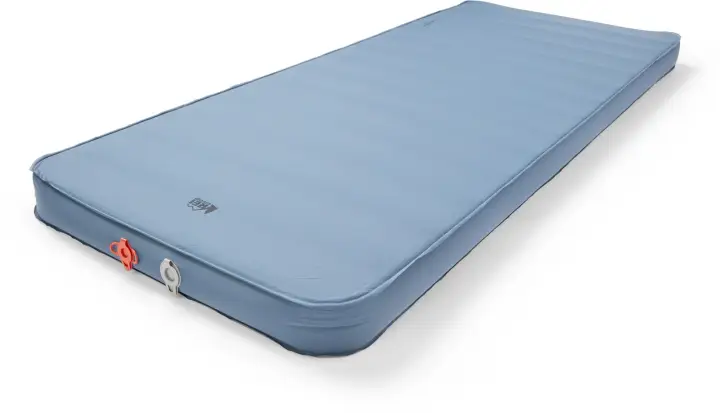
Best For: Campers who want a wider, softer car-camping setup without paying premium-mattress prices.
Specs:
- Thickness: 4 in.
- R-Value: 6.6
- Weight: 5.81 lbs.
- Best Use: Camping
The REI Co-op Camp Dreamer XL makes a lot of sense for campers who want better sleep but do not necessarily want to spend Exped or Therm-a-Rest money to get it. It is thick, warm, and wide enough to feel like a real comfort upgrade for weekend campground trips.
The extra width is a big part of what makes it appealing. Narrow pads can feel confining, especially if you move around a lot. A wider sleep surface makes it easier to relax, easier to stay centered, and less likely that you will spend the night waking up every time you shift positions. The 4-inch thickness and 6.6 R-value also give it enough cushion and warmth to work well well beyond midsummer camping.
This is the kind of pad that feels especially right for casual campers, families, and anyone who wants their sleep setup to be more forgiving without getting too fancy. 👍
Potential Downsides: It is still large and heavy, so it is not a backpacking solution. It also does not feel as premium as the most expensive basecamp pads.
Who It’s For: Value-focused car campers, families, and anyone who wants a plush, roomy pad for drive-up trips.
How to Choose the Best Sleeping Pad for Camping Comfort
A sleeping pad can look great in a product photo and still be the wrong fit for the way you actually camp. A few details make a much bigger difference than they first appear to.
Sleeping Pad Types: Air, Self-Inflating, and Foam
- Air Pads: These are usually the lightest and most packable option. They are a natural fit for backpacking, and the best ones now offer enough thickness and stability to feel far better than old-school inflatables.
- Self-Inflating Pads: These combine foam and air, and they usually feel denser, more grounded, and warmer. That is why they are so popular for car camping and basecamp setups.
- Closed-Cell Foam Pads: These are durable, simple, and affordable, but they offer much less cushioning. If soreness is the problem, they are rarely the most comfortable answer on their own.
For most campers trying to sleep better, the real choice is between a supportive air pad and a thicker self-inflating pad.
R-Value Explained: How to Stay Warm
R-value measures a sleeping pad’s resistance to heat flow. In plain terms, the higher the number, the better the pad insulates you from the ground. REI’s guidance breaks it down this way: R-values below 2 are for warm weather, 2.0 to 3.9 for cool weather, 4.0 to 5.4 for cold weather, and 5.5 and above for extreme-cold conditions.
That matters because cold from below can make a night feel much worse, even if your sleeping bag seems warm enough. A pad that holds warmth better usually helps the whole sleep system feel more comfortable.
Thickness and Baffle Design: The Key to Support
If you sleep on your side or tend to wake up sore, thickness is one of the most important things to look at. A pad around 3 inches thick can already feel much better than a thin basic option. Once you get into the 3.5- to 4-inch range, many campers start noticing a much bigger jump in comfort.
Baffle design matters too. Some pads feel flatter and more stable, while others feel a little springier. The best choice depends on how you sleep, but in general, a stable, well-cushioned pad does more to improve sleep than one that is technically light but feels flimsy once you are on it.
Width and Length: Don’t Skimp on Space
A narrow pad can be fine for some sleepers, but a lot of campers sleep better once they move to a wider size. That is especially true for side sleepers, broad-shouldered sleepers, and anyone who moves around during the night. REI’s sleep advice and testing around wider pads both point to dimensions as a meaningful comfort factor, not just a small bonus feature.
A little extra width can do a surprising amount for overall comfort.
Final Verdict: Your Ticket to a Pain-Free Camping Trip
A better sleeping pad can change camping more than many gear upgrades do. Better sleep usually means better mornings, more energy, and a much better chance that the trip actually feels restorative.
For the best mix of comfort, warmth, and backcountry practicality, the NEMO Tensor All-Season is the strongest all-around pick here. It gives enough cushioning to matter, enough warmth to stay versatile, and enough packability to still make sense on trail.
For the most bed-like campground comfort, the Exped MegaMat is still one of the easiest pads to recommend. If the car is close and sleep quality matters more than anything else, this is a standout.
For side sleepers who want extra loft without going full basecamp-only, the Sea to Summit Ether Light XR Pro is especially appealing. And for value-focused car campers, the REI Co-op Camp Dreamer XL offers a lot of comfort for the money.
No matter which direction makes the most sense, the main takeaway is simple: waking up sore is often a sleeping-pad problem. And once that problem is fixed, camping usually gets better fast.
Frequently Asked Questions (FAQ)
What’s the best type of sleeping pad for a side sleeper?
Side sleepers usually do best with thicker pads, especially models around 3.5 to 4 inches thick. More loft helps keep hips and shoulders from pressing into the ground, which is often the main source of discomfort.
Is a thicker sleeping pad always better?
Usually, thicker helps, but not automatically. A thick pad still needs to feel stable and supportive. The best pads combine enough cushion with a design that does not feel overly bouncy or awkward when you shift positions.
How much R-value do I need for camping?
For many 3-season trips, an R-value around 3 to 5 works well. Once you start camping in colder shoulder-season conditions, higher values become much more useful. REI’s current guidance places pads rated 5.5 and above in extreme-cold territory.
Can I use a backpacking pad for car camping?
Absolutely. A comfortable backpacking pad can work very well for car camping. The reason many campers move to larger self-inflating pads is not because backpacking pads stop working. It is because bigger pads usually feel wider, thicker, and more mattress-like.
What matters more for comfort: thickness or width?
Thickness usually comes first if soreness is the problem. Once a pad is thick enough to protect pressure points, extra width often becomes the next big upgrade for sleep quality.
Are self-inflating pads better for back pain?
For many campers, yes. They often feel denser, warmer, and more stable than standard air pads, which can make them especially comfortable for car camping and basecamp use.
Affiliate Disclosure: GearForTheOutdoors.com participates in affiliate programs, including REI, Amazon, REI Outlet, Garage Grown Gear, evo, and other trusted partners. When you purchase through our links, we may earn a small commission at no extra cost to you. That helps support our content and keeps our recommendations useful, practical, and free.
Disclaimer: This post is for informational purposes only. Always verify current product details, fit, availability, safety information, and manufacturer warranties before purchase or use. Outdoor conditions and gear performance can vary depending on setup, weather, terrain, and experience level.